Article
Getting Started With Decoys
Smarter spreads, cleaner rigs, more ducks down
Summary
- Start with 12–18 floaters; add motion decoys later for realism
- Use smaller spreads and subtle setups in late season or pressured areas
- Rig decoys with tangle-free lines or Texas rigs to avoid frustrating tangles
- Position decoys facing into the wind—ducks land into the wind
- Brands like Avian-X, Higdon, and Mojo offer solid value options
Decoy Types and When to Use Each One
Understanding the different types of decoys—and when each one works best—will help you build a spread that brings ducks in close and keeps them committed.
Floating Decoys (Floaters)
- Best for: Ponds, lakes, rivers, marshes
- Good options: Avian-X Topflight Mallards, Higdon Standard Series, Tanglefree Pro Series
Motion Decoys
- Types:
- Spinning-wing decoys mimic ducks landing
- Water motion decoys add ripple or splash to your spread
- Best for: Calm days when the water’s glassy
- Good options: Mojo Mallard Drake, Higdon Pulsator, Avian-X Power Shaker
Full-Body and Shell Decoys
- Best for: Dry fields, frozen water, or sandbars
- Good options: Dakota X-treme Mallards, Avian-X AXP Full Body Mallards
Confidence Decoys
- Examples: Coots, geese, herons
- Use when: You want to make your spread look extra realistic and relaxed
What Species of Decoys Should You Use?
When it comes to duck decoys, it’s tempting to just grab a pack of mallards and call it good. And to be fair, mallard decoys are incredibly versatile and a great place to start. But if you really want to make your spread more effective, it pays to match the decoys you use to the species that are actually common in the area you’re hunting.
Start with Mallards and Teal
- Mallards: Found almost everywhere in the U.S.; a dozen floaters will work just about anywhere.
- Teal: Great early-season option (blue-winged, green-winged); small, inexpensive, and easy to carry.
Match What You See
As you gain experience and scout more, pay attention to what ducks are using the area. The closer your decoys match the local birds, the more convincing your spread becomes.
- Big water: Add divers like ringnecks, canvasbacks, or redheads if common.
- Late-season flooded fields: Add pintail or gadwall decoys—often mixed with mallards in agricultural areas.
- Around coots or geese: Add a few confidence decoys to reflect what ducks see when approaching.
Tip: Use binoculars during scouting to ID local species, then buy decoys that match what you see most often.
Mix in Subtle Variety
You don’t need a dozen of every species. A small group (3–6) of a second or third species can make your spread look more natural.
- Wigeon
- Gadwall
- Pintail (drakes for visibility)
- Shovelers (high-contrast plumage draws attention)
When Mallards Are Enough
If you’re hunting pressured public land or just starting out, a straight mallard spread can still be very effective—especially early or mid-season. Watch duck behavior and adjust spread size and motion as needed.
Bottom line: Match your decoys to the ducks you're seeing. Start with mallards, add teal, and build from there as you learn what works best.
Decoy Rigging Tips (and How to Avoid Tangling)
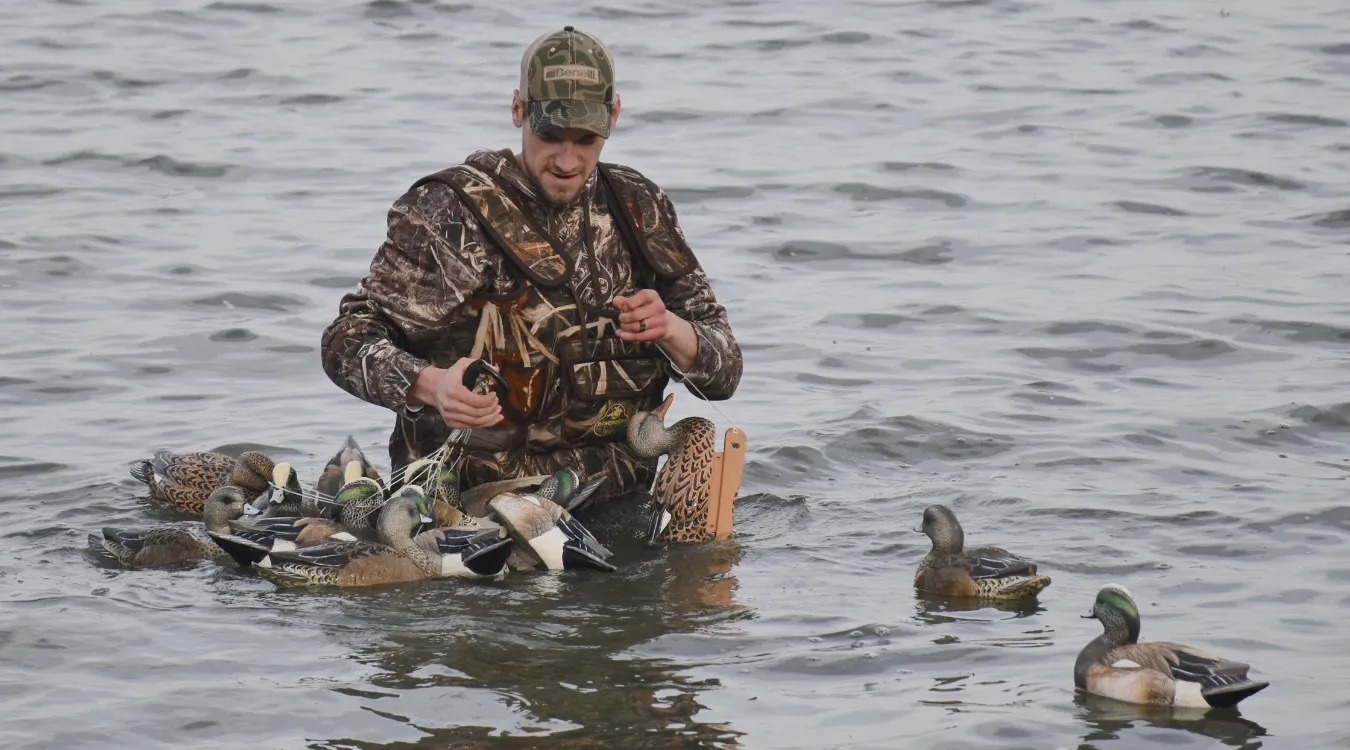
Properly rigging your decoys not only saves time in the field but also prevents headaches from tangled lines and lost gear. The right setup depends on the type of water you're hunting and how mobile you need to be.
Texas Rigs
What they are: Heavy-duty line with a sliding weight crimped at one end and a loop at the other. Weight slides to the keel when deployed.
- Best for: Shallow water (under 5 ft), walk-in hunts, mobile setups
- Advantages:
- Fast to deploy and retrieve
- Minimal tangling
- Easy to carry (bundle with carabiner)
- Limitations:
- Less adjustable for deep water
- Weights can slide off in currents—go heavier in moving water
Tip: For marshes or public land hunts where speed and stealth matter, Texas rigs are tough to beat.
Traditional Rigging
What it is: Decoy line tied directly to keel with an anchor (mushroom, strap, or weight).
- Best for: Deep water, permanent spreads, precise placement
- Advantages:
- Customizable line length and weight
- Ideal for permanent blinds or deep lakes
- Limitations:
- Slower to set/pick up
- Lines tangle if not secured
Tip: Wrap line around keel and tuck weight into a notch or use a wrap hook to prevent uncoiling in your bag.
Decoy Storage Tips
- Use a slotted decoy bag: prevents paint wear, keeps lines tangle-free.
- Avoid line memory: coil loosely or hang decoys by keels in the off-season.
- Label or organize by type: motion, confidence, floaters separate for quick setup.
- Dry before storing: moisture leads to mold and corrosion on weights and clips.
Beginner Decoy Kit Recommendations
Decoys
- 12 mallard floaters (or local species) – Avian-X, Higdon, Tanglefree
- Optional: 6 teal or wigeon floaters for variety
Rigging
- Texas rigs with 4–6 oz weights for shallow water
- Carabiners or decoy clips for bundling
Motion (Optional)
- Start with a jerk string for cheap movement
- Upgrade to a spinner (e.g., Mojo Mallard Drake) for visibility
Decoy Bag
- Rig’Em Right 12-Slot Deluxe Bag – padded slots protect decoys and lines
Common Questions
Do I need species-specific decoys?
Mallards are the most versatile; a dozen will work in almost any setup. Other species add realism but aren’t essential.
How many decoys should I use?
Start with 12–18 and adjust based on pressure and duck behavior.
When should I use motion decoys?
Use them on calm days or when ducks are shy. Avoid overusing if others are heavily employing motion.