Article
Guide to Chokes for Waterfowl Hunting
Pick the right choke, drop more ducks.
Key Points
- Chokes shape your shot pattern — tighter for long range, wider for close shots. Think of it like adjusting a garden hose nozzle.
- Modified is often considered the best all-around choice for most duck and goose hunting within 40 yards.
- Improved Cylinder (IC) Ideal for close-range shots (20–30 yards), early-season teal, or flooded timber hunts.
- Improved Modified (IM) Great for longer-range duck and goose shots (35–45 yards).
- Full chokes are best for long-range shots but can be too tight for steel shot and close-range shooting.
- Aftermarket chokes like Mojo Fatal Shot and Jebs High Voltage can improve pattern density and consistency.
What Is a Choke and Do I Really Need One?
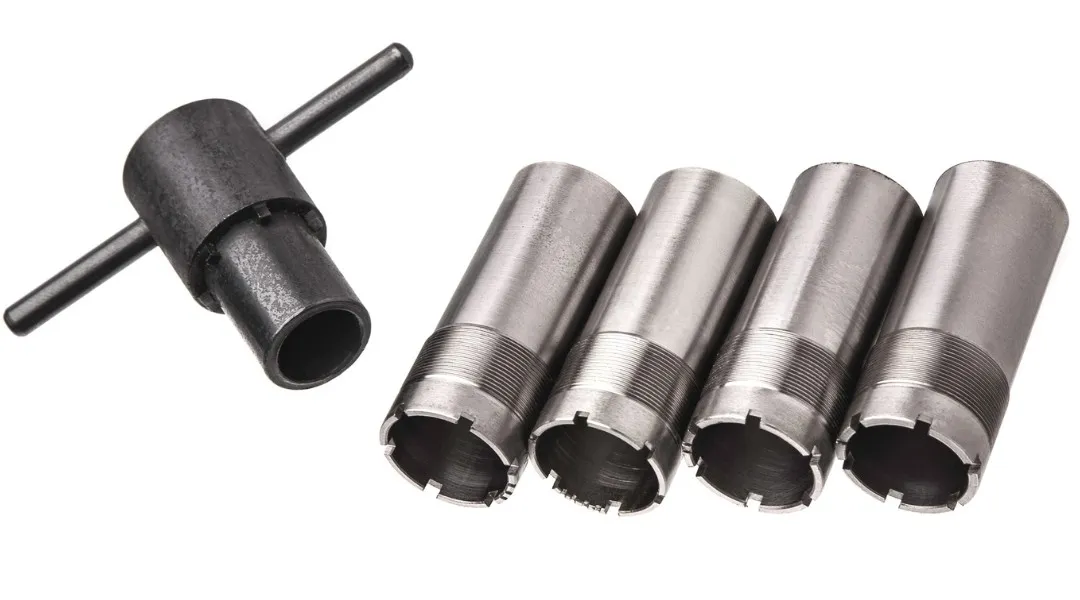
A choke is a small insert (or built-in feature) at the end of your shotgun barrel that controls how wide your shot spreads. Think of it like the nozzle on a garden hose — you can spray wide or tight depending on the setting.
- Tight chokes (like Full) keep your shot pattern narrow, which is great for longer shots.
- Open chokes (like Cylinder or Improved Cylinder) let the shot spread faster, better for close-range targets.
Do you need one?
Yes — if you want cleaner kills and more effective shots. Using the right choke for your typical shooting distance helps put more pellets on target and brings birds down ethically. Without a choke (or using the wrong one), you risk either scattering your pattern too much or having it too tight for close birds.
Bottom line: Even beginners should use a choke — it’s one of the simplest upgrades to improve your success and confidence in the field.
Common Choke Types for Waterfowl – From Tight to Wide
Different chokes shape your shot pattern to match your target distance. Here's a quick breakdown of the most common choke types used in waterfowl hunting, listed from tightest to most open:
- Full: Tight pattern, best for long-range shots (40+ yards), like pass-shooting late-season geese. Use caution with steel shot — not all full chokes are rated for it.
- Improved Modified (IM): Slightly looser than full; a solid choice for long-range duck and goose work with steel, bismuth, or tungsten.
- Modified: The go-to for most waterfowl hunters. Balanced spread and density out to 35–40 yards. Ideal for decoying ducks and mid-range geese.
- Improved Cylinder (IC): Best for close to mid-range shots (20–30 yards). Great early-season teal or decoyed birds in tight cover.
- Cylinder: No constriction. Extremely wide pattern — rarely used for waterfowl, but might be handy for very close-range shots or specialty setups.
Always make sure your choke is rated for steel shot (or Bismuth / Tungsten) — some older full chokes aren’t and can be damaged or produce poor patterns.
Cylinder and Improved Cylinder (IC)
- Best for: Close-range shots (under 25 yards), early-season teal, flooded timber.
- Pros: Wide shot pattern increases hit probability at close range.
- Cons: Limited effective range; not suitable for longer shots.
Modified
- Best for: General-purpose waterfowl hunting, decoying ducks, and geese within 40 yards.
- Pros: Versatile; balances pattern density and spread.
- Cons: May not provide tight enough patterns for shots beyond 40 yards.
Full
- Best for: Long-range shots (beyond 40 yards), pass-shooting geese.
- Pros: Tight patterns maintain density at longer distances.
- Cons: Too tight for close-range shots; risk of missing or damaging meat.
Matching Chokes to Shot Types
- Steel Shot: Harder and less dense than lead; generally patterns tighter. Use more open chokes like Modified or Improved Cylinder to prevent over-constriction.
- Bismuth and Tungsten: Denser than steel; can use tighter chokes like Full for longer-range shots.
- Lead (where legal): Soft and dense; patterns well with a variety of chokes, but always pattern test to be sure.
Aftermarket Chokes Worth Considering
- Mojo Fatal Shot: Offers even patterns and improved performance over factory chokes.
- Jebs High Voltage: Provides dense patterns; ideal for long-range shooting.
- Muller H2O: Known for consistent patterns across various loads.
- Carlson's Cremator: Features Triple Shot Technology for reduced pellet deformation and tighter patterns.
- Patternmaster Code Black: Utilizes a stud ring to shorten shot string and increase pattern density.
Choke Selection by Gauge
- 12 Gauge: Most versatile; wide range of choke options available.
- 20 Gauge: Lighter recoil; suitable for close to mid-range shooting with Modified or Improved Cylinder chokes.
- 28 Gauge and .410 Bore: Limited range; best used with more open chokes like Improved Cylinder for close-range shooting.
Chokes by Distance
- Close Range (Under 25 yards): Use a Cylinder or Improved Cylinder choke. These produce wide patterns, which help with fast-moving birds at close range, like early-season teal or birds dropping right into the decoys.
- Medium Range (25–40 yards): A Modified choke shines here. It balances spread and pattern density, making it ideal for most decoying ducks and geese.
- Long Range (Beyond 40 yards): Full or even Extra Full chokes are best. These keep the shot tighter for longer, helping you connect with birds at the edge of your range — often useful in pass shooting or late-season educated birds.
Bottom line: You want a tighter choke as distance increases to keep enough pellets on target for a clean kill.
Can You Use the Same Choke in Different Shotguns of the Same Gauge?
- Thread Compatibility Matters:
- Not all shotguns of the same gauge use the same choke thread system. For example:
- Beretta 12 gauge may use a different choke thread than a Remington 12 gauge.
- Even within the same brand, models might use different systems (e.g., Remington’s Rem Choke vs ProBore systems).
- Look for Interchangeable Systems: Some aftermarket chokes (like Carlson’s, Patternmaster, or Muller) are made in multiple thread patterns, so you can get one designed for each gun model you own.
Tip: Always check your shotgun’s manual or the manufacturer’s website to confirm the correct choke system before swapping chokes between guns.
Tips for Beginners
- Start with a Modified choke: It's versatile and effective for most waterfowl hunting scenarios.
- Pattern your shotgun: Test different chokes and loads at various distances to see what works best with your setup.
- Consider your typical shooting distance: Choose a choke that matches the range at which you usually engage birds.
- Upgrade thoughtfully: Aftermarket chokes can offer improvements, but ensure they match your hunting style and ammunition.