Article
Proper concealment for hunters and dogs
Master the hide, be invisible to ducks every time
Summary
- Ducks flare from movement and unnatural shapes – focus on breaking up your outline.
- Use natural vegetation to brush in blinds and hide gear.
- Face and hands are highly visible – cover them up.
- Concealment for your dog is just as important as hiding yourself.
- A well-concealed hunter who stays still is more effective than any decoy spread or fancy gear.
Concealment is one of the most important, yet most overlooked, parts of duck hunting. You can be in the perfect spot, have a great decoy spread, and call like a pro, but if a duck spots something off, it’s not finishing. Ducks have exceptional vision and pick up on movement, reflections, and unnatural shapes from a long way off. That means staying hidden – really hidden – is critical if you want birds to finish in the decoys.
Concealment doesn’t just mean sitting in a blind. It means brushing in, hiding your gear, covering your skin, keeping still, and making sure your dog is just as invisible as you are. Here’s everything a beginner needs to know to stay hidden and hunt effectively.
Concealing Yourself Properly
The first step is blending in. Don’t rely on the blind itself to do all the work. Most blinds need to be brushed in with natural materials from the area. Use local grass, cattails, corn stalks, reeds, or willow branches – whatever is growing around your hunting spot. Straight edges and boxy shapes stand out. Break up the outline of your blind and soften hard corners, especially on the roof or upper edges that ducks will see from above.
Once the blind is covered, focus on your personal concealment. Your face and hands are often the most visible parts of your body. Wear camo gloves and use a face mask or camo face paint to eliminate skin glare. Even small movements like blinking or shifting your head can catch a duck’s eye.
Your clothing should match the terrain. In a grassy field, use stubble or grass camo. In a marsh or flooded timber, use patterns with vertical lines and brown tones. Avoid anything shiny or too dark. Also, don’t sit sky-lined with bright light behind you – always have cover behind and above when possible.
Movement is what flares most ducks. Once ducks are in view, stay absolutely still. Don’t shoulder your gun or reach for your call when they’re looking your way. Practice moving slowly and quietly inside the blind so it becomes second nature.
Hiding Your Dog the Right Way
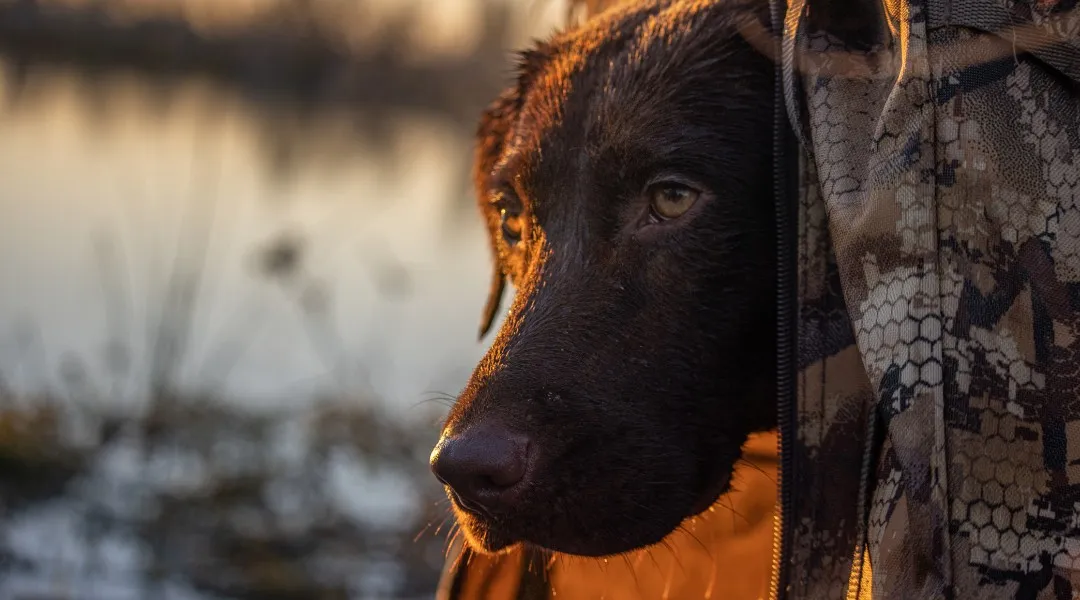
Dogs are a huge asset in the field, but they’re also one of the most common reasons ducks flare before committing – especially if they’re not properly hidden or trained to stay still. An exposed, fidgety dog will ruin more hunts than bad decoy placement. Your dog needs to be still, low, and completely hidden.
Use a dog blind or marsh stand to conceal them. These are low-profile shelters that can be brushed in just like your own blind. In flooded areas, elevate your dog slightly to keep them dry and give them a better view of falling birds, but still keep them out of sight from the ducks.
Steadiness is key. Your retriever needs to stay still until released. Start training this behavior well before the season using place boards or mock hunts. A dog that breaks early or stands up when ducks are circling can alert birds before you ever raise your gun.
If your dog is light-colored or has a shiny coat, it may stand out even when still. A camo dog vest can help blend their body, but make sure the blind or cover hides them completely. Be cautious around the dog's head – leave just enough space for them to see you and mark birds but keep their silhouette broken up.
Mistakes That Ruin Concealment
There are some common errors that even experienced hunters make. Leaving blinds unbrushed or with shiny fabric exposed is one of the most obvious. Letting your face or hands flash in the sunlight is another. Movement, especially when ducks are close, is often the final giveaway. Shiny gear gives you away before you move.
Exposed Skin – Especially Faces and Hands – Is Highly Visible
Your skin is likely the brightest thing in your setup. If you’re turning your head and calling with a bare face and hands, you might as well be waving a flag. Always wear a face mask, neck gaiter, or face paint, and wear gloves or camo up your sleeves. Even if you’re brushed in well, a quick movement of uncovered skin will blow your cover.
Movement at the Wrong Time Ruins the Setup
This might be the most common reason ducks don’t finish. If you’re adjusting gear, shouldering your gun, or calling with exaggerated motions while ducks are circling, they will pick it up and slide off. Stay still when birds are working. Get into a ready position early and only move when their heads are turned or they’re committed to landing.
Sky-lining Yourself Makes You an Easy Target
Sky-lining happens when your body is backlit by open sky – like sitting on a hill, ridge, or in a blind without a back or roof. Even if you’re in full camo, the human shape is easy to pick out against a bright sky. Always ensure you have something behind and above you. Brush behind the blind or position it in front of bushes, trees, or tall reeds when possible.
Dogs That Aren't Hidden or Trained Well Can Flare Birds
Even the best-trained dog can ruin a hunt if it’s not hidden. A dog sitting outside the blind, shifting its weight, or looking around can be just as visible as a fidgeting hunter. Dogs need their own blind, marsh stand, or natural hide that’s brushed in and positioned to minimize exposure. If the dog is moving or standing when ducks are approaching, you're likely getting flared.
Improper Blind Positioning Against Wind and Sun
Hunters sometimes overlook how their blind is positioned relative to wind and sunlight. If the sun is in your face, not only will you have trouble seeing ducks, but your blind will be easier for birds to spot. Similarly, if ducks are landing behind you because of wind direction, you’ll end up sky-lining yourself or twisting to shoot. Always set up with the sun at your back and the wind blowing toward your decoy landing zone, whenever possible.
Leaving Gear and Trash Visible Inside the Blind
A cluttered blind can give off unnatural shapes and colors. Loose gear, trash, bright shell boxes, and even bright snack wrappers can ruin your concealment. Keep the inside of the blind clean, dull, and organized. Tuck bags, buckets, and other gear low or behind brush. A neat blind is not just more effective – it’s safer and easier to hunt from.
Good concealment is about removing every unnatural element from your setup. Ducks are sharp-eyed and cautious, especially late in the season. Take the time to fix these small mistakes and you’ll see better bird behavior almost immediately. The difference between ducks flaring at 80 yards or finishing at 20 usually comes down to whether or not they saw something that didn’t belong. Don’t let it be you – or your dog.