Article
Types of duck blinds: What's right for you
Hide smarter. Hunt better.
Summary
- Layout blinds are ideal for dry fields and open shorelines.
- Boat blinds offer mobility and are perfect for hunting over water.
- Natural blinds are cost-effective and adaptable to various terrains.
- Pit blinds provide comfort and concealment in permanent field setups.
- Choose your blind based on terrain, mobility needs, and hunting frequency.
Selecting the right blind can make or break your day duck hunting. The right blind keeps you concealed, comfortable, and positioned for optimal shooting. Let's explore the main types of blinds and their best use cases.
Concealment Is Everything
No matter what kind of blind you use, how well it blends into the surroundings is what really matters. Ducks have incredible eyesight, especially from above.
- Match your camo to the vegetation around you—don't use cornfield camo in a marsh.
- Brush it in—use local grass, cattails, stubble, or limbs to break up straight edges.
- Cover yourself, not just your blind. Use face masks, gloves, and eliminate shine from gear.
Tip: Sit still when birds are working. Movement ruins more hunts than bad calling.
Layout Blinds: Low-Profile and Portable
Best for: Dry fields, open shorelines, and areas with minimal cover.
Layout blinds are low-profile, portable blinds that allow hunters to lie flat, blending seamlessly into open environments.
Pros:
- Highly portable and quick to set up.
- Excellent concealment in open areas.
- Lightweight and easy to transport.
Cons:
- Limited comfort for extended hunts.
- Less effective in wet or marshy conditions.
Tips:
- Use natural vegetation to brush in the blind for better concealment.
- Ensure the blind's camo pattern matches the hunting environment.
Boat Blinds: Mobility on Water
Best for: Lakes, rivers, marshes, and other water bodies.
Boat blinds are mounted on boats, allowing hunters to navigate waterways and set up in optimal locations.
Pros:
- High mobility to access various hunting spots.
- Provides storage for gear and decoys.
- Offers shelter from wind and rain.
Cons:
- Requires a boat and knowledge of water navigation.
- May be challenging to conceal in open water without natural cover.
Tips:
- Use camouflage materials that match the surrounding vegetation.
- Position the boat near natural cover to enhance concealment.
Pop-Up Blinds
Best for: Budget hunts or ultra-light setups in timber or marsh edges.
Pop-up blinds are soft-sided, portable blinds adapted for waterfowl hunting.
Pros:
- Lightweight and easy to carry.
- Quick deployment.
Cons:
- Limited durability in wind or water.
- Often need extra brushing or reinforcement.
Tip: Reinforce pop-ups with natural brush and blend them into taller vegetation.
Natural Blinds: Cost-Effective and Adaptive
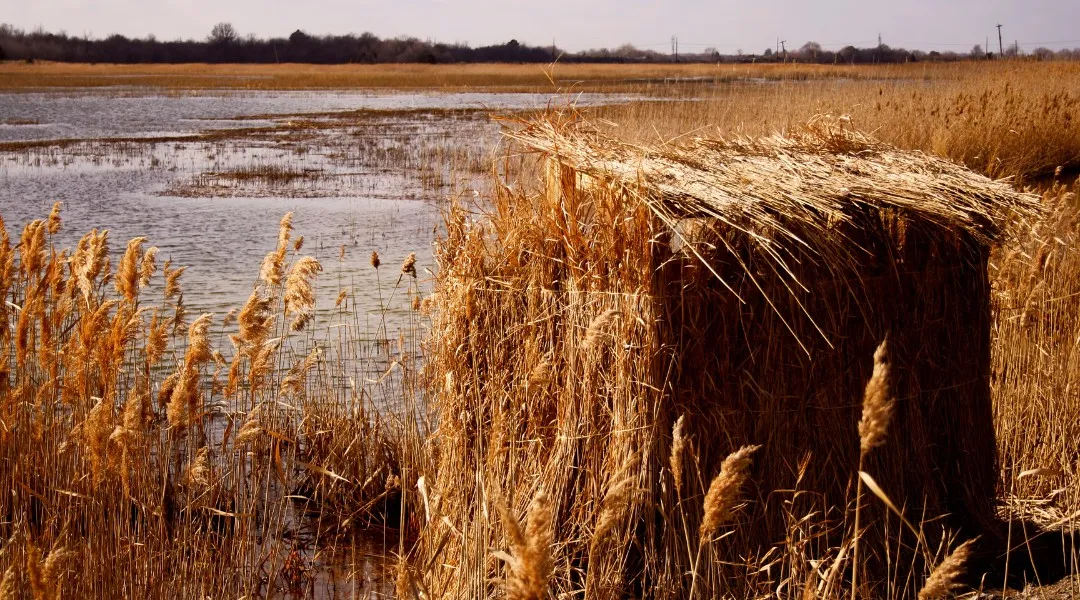
Best for: Areas with abundant natural cover like reeds, bushes, or trees.
Natural blinds utilize the existing environment for concealment, often supplemented with additional vegetation.
Pros:
- Minimal cost and equipment needed.
- Easily adaptable to various terrains.
- Blends seamlessly with the environment.
Cons:
- Time-consuming to construct and maintain.
- Less protection from the elements.
Tips:
- Choose locations with dense natural cover.
- Regularly update the blind with fresh vegetation to maintain effectiveness.
Pit Blinds: Permanent and Comfortable
Best for: Agricultural fields and areas where permanent setups are feasible.
Pit blinds are dug into the ground, providing a concealed and comfortable hunting spot.
Pros:
- Excellent concealment at ground level.
- Offers protection from weather conditions.
- Spacious enough for multiple hunters and gear.
Cons:
- Requires significant effort and permission to install.
- Not suitable for public lands or areas with high water tables.
Tips:
- Ensure proper drainage to prevent flooding.
- Use natural materials to cover the blind and blend with the surroundings.
Other Permanent Blinds (Box Blinds, Fixed Water Blinds, Stilt Blinds, etc.)
Permanent blinds are fixed structures built in a specific hunting location—usually over water, on shorelines, or in agricultural fields. They're made from wood, metal, or other durable materials, often elevated on stilts or framed on platforms.
Best for:
- Private land or managed duck clubs.
- Areas with consistent duck traffic (flight paths, feeding zones, loafing areas).
- Long sits in poor weather.
Pros:
- Extreme comfort: room for chairs, heaters, and multiple hunters.
- All-weather protection: fully enclosed and often roofed.
- Fast setup each hunt: walk in, sit down, and hunt.
- Stable shooting platform: great for kids or longer hunts.
- Great concealment: can be heavily brushed and customized.
Cons:
- Not legal on most public land—usually restricted to private or leased properties.
- Not mobile: if ducks move, you can't.
- Labor and cost: building and maintaining takes time and money.
- Vulnerability to storms and high water—fixed structures need upkeep.
Tips:
- Install a dog platform or ramp if hunting with a retriever—don’t make your dog swim all day.
- Keep it quiet inside: use rubber mats or hay to deaden sound.
Choosing the Right Blind
- Terrain: Match the blind type to the environment (e.g., layout blinds for open fields, boat blinds for water).
- Mobility: Determine if you need a portable blind or a permanent setup.
- Comfort: Assess how long you'll be hunting and choose a blind with adequate comfort.
- Legal Restrictions: Check local regulations on blind installations, especially permanent structures.
Know the Rules for Public Land
- Always check local regulations before building or leaving a blind in place.
- Many states require portable or temporary blinds only on public areas.
- You may be required to remove all brush or materials after your hunt.
Tip: Just because a blind is there doesn’t mean you can use it—respect posted rules and ethics.
Watch the Wind and Sun
- Ducks land into the wind—set up so they land in front of you, not over your head.
- Sun at your back means better visibility for you and more shadow on your blind for concealment.
- Avoid facing directly into the rising or setting sun—it’ll blind you and flare ducks.
Tip: Always check the forecast the night before and adjust your blind location accordingly.
Keep it simple. Stay concealed. Watch the wind. The rest will come with time.