Article
What Kind of Camo Should I Use for Waterfowl Hunting?
Choose the right camo for your waterfowl hunting
Summary
- Match Your Environment: Choose camo patterns that blend with the habitat you’ll be hunting in (e.g., marsh, timber, open water).
- Popular Patterns: Opt for proven waterfowl camo like Mossy Oak Bottomland, Realtree Max-5, or Sitka Optifade.
- Consider Seasonality: Early-season hunts may require lighter tones, while late-season hunts benefit from darker camo.
- Full Coverage: Ensure all gear (waders, gloves, face masks) matches your camo pattern to avoid detection.
- Weather & Conditions: Consider waterproof and windproof camo clothing to stay comfortable in wet conditions.
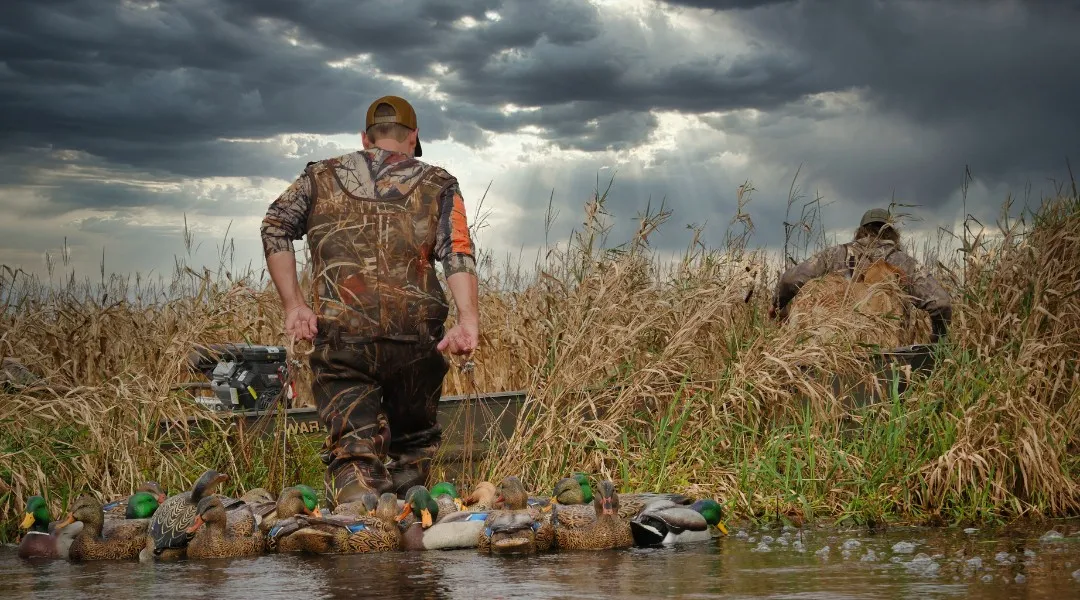
Waterfowl have exceptional vision and can detect unnatural shapes and colors in their surroundings. The key to effective camo is breaking up your outline so that you blend seamlessly into the environment. Here’s a breakdown of the best camo choices based on where you’ll be hunting:
1. Marsh and Wetlands
- Best Patterns: Realtree Max-5, Mossy Oak Shadow Grass Blades, Sitka Optifade Waterfowl Marsh
- Why It Works: These patterns use reeds, grass, and cattail imagery to help you disappear into marsh environments. They feature vertical and diagonal elements to match the natural vegetation of wetlands.
- What Makes a Good Marsh Camo? High contrast with light and dark elements mimics shadows among reeds. Avoid patterns that are too dark or lack vertical disruption.
- Best For: Hunting in flooded fields, riverbanks, and marshy areas.
2. Timber and Forested Areas
- Best Patterns: Mossy Oak Bottomland, Realtree Timber, Sitka Optifade Waterfowl Timber
- Why It Works: These patterns feature tree bark, shadowing, and leaf elements to provide excellent concealment in wooded areas. They focus on blending with dark trunks and shadows rather than grass or reeds.
- What Makes a Good Timber Camo? Patterns with shadowy tones and high-definition tree textures help hunters blend with flooded timber and tree bases. Avoid patterns that are too light, as they can create unnatural contrast in the shade.
- Best For: Hunting in flooded timber, wooded shorelines, and forested waterfowl habitats.
3. Open Water and Boat Blinds
- Best Patterns: Opt for darker, solid colors or blended camo like Sitka Optifade Open Water
- Why It Works: Waterfowl see from above, so open water patterns use more horizontal disruption to blend with reflections and shadows. The absence of grass or tree elements prevents unnecessary contrast on the water.
- What Makes a Good Open Water Camo? Blurred, high-contrast patterns that resemble water movement are best. Avoid patterns with heavy vegetation or tree bark, as they don't match open water environments.
- Best For: Hunting in big water areas, including large lakes and coastal environments.
Seasonal Camo Considerations
- Early Season (Warm Weather & Green Cover): Lighter camo with green and brown elements helps match the early fall landscape. Choose patterns with more contrast to mimic mixed vegetation.
- Late Season (Snow & Bare Trees): Darker camo with more brown and gray tones blends better as vegetation dies off and snow may be present. Some hunters opt for white-based camo when hunting in snowy conditions.
Additional Gear to Complete Your Concealment
- Face Masks & Face Paint: Ducks can easily spot exposed skin, so cover up with camo face masks or paint.
- Gloves: Use camo gloves to keep hands hidden while calling or handling decoys. Bright hands waving in the blind can quickly alert ducks.
- Camo Waders & Jackets: Match your lower body to your environment, especially in standing water where different camo patterns might be necessary.
- Camo Shotgun Wraps: Reduce glare and shine from your firearm to avoid alerting birds.
Final Thoughts
The right camo pattern can make a big difference in your hunting success. Choose a pattern that fits your environment, season, and comfort needs. Whether you’re hunting in a marsh, timber, or open water, blending into your surroundings will keep you hidden and improve your chances of a successful hunt. Remember that camo works best when combined with stillness and proper concealment techniques.