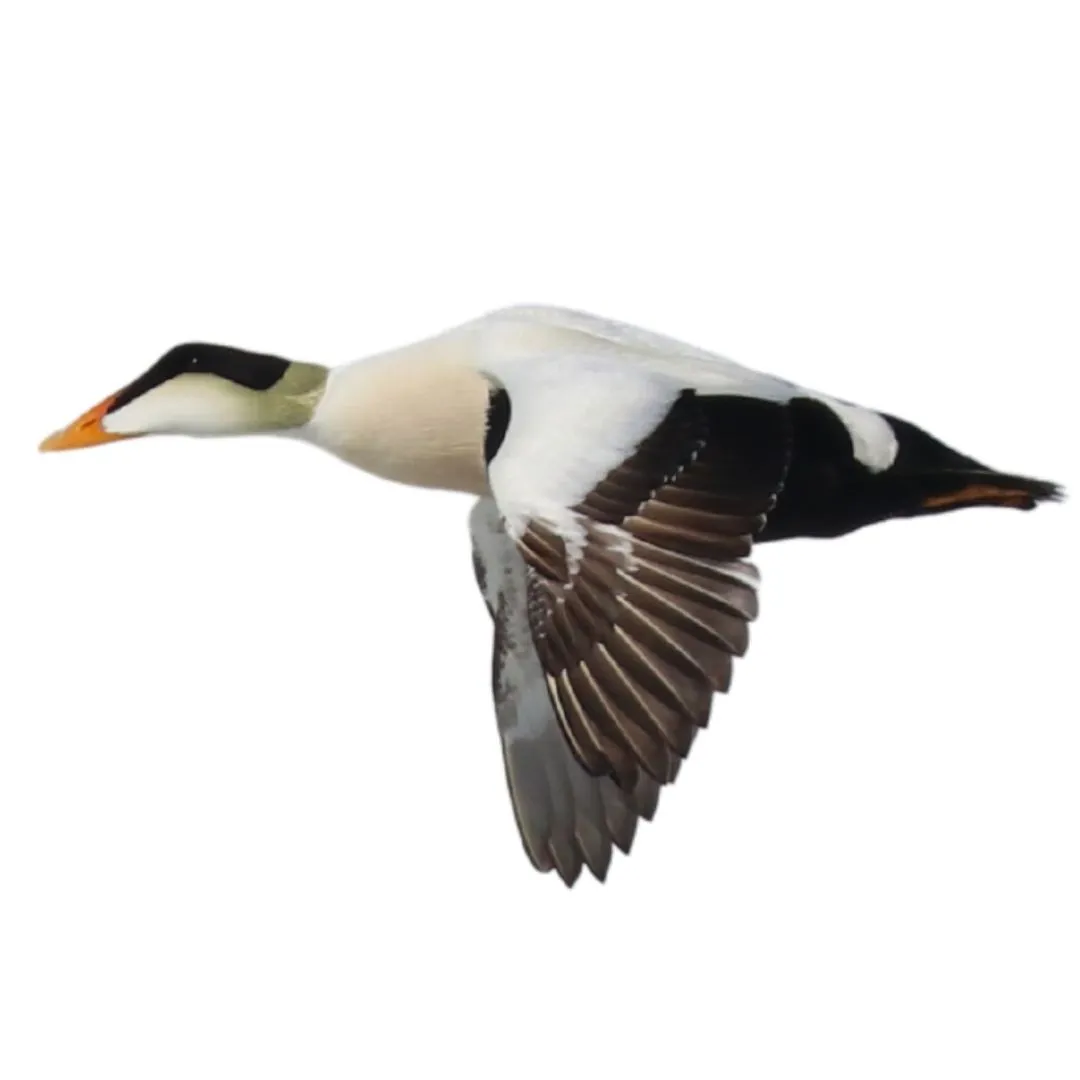
Common Eider
Somateria mollissima
Alternate names: Eider, Sea duck
- Length
- 23.5 in
- Weight
- 5 lb
Overview
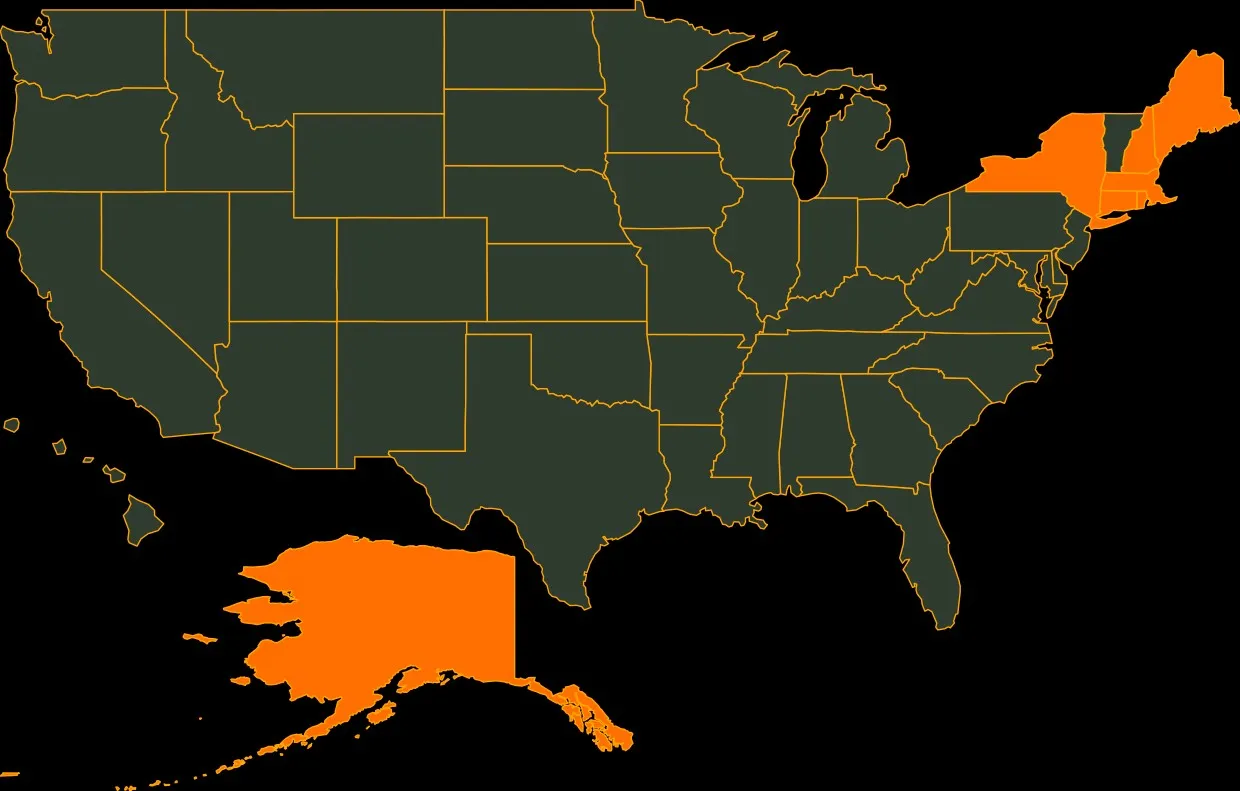
The common eider is the largest duck in North America, known for its heavy body and distinctive sea-going habits. Males are striking with black-and-white plumage and a greenish nape, while females are a mottled brown, providing effective camouflage in rocky coastal environments. Both sexes have a sloping forehead and a distinctive wedge-shaped bill. Eiders are often found in coastal marine habitats, diving for mollusks and crustaceans. Their bulky size, low flight, and preference for rugged coastlines make them a unique and challenging target for hunters, particularly in northern coastal regions.
Identification
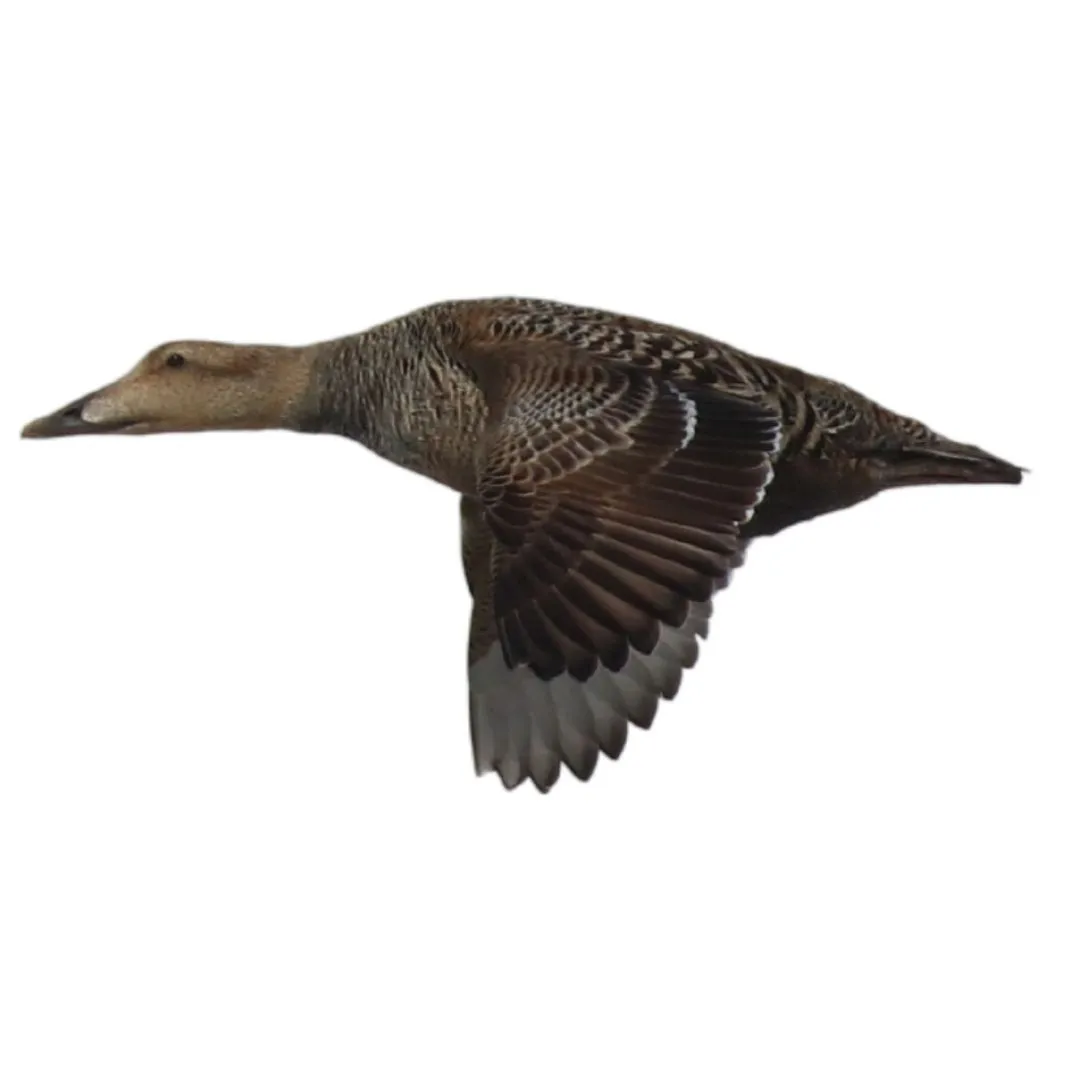
Large size, black-and-white plumage (male), greenish nape (male), mottled brown (female), wedge-shaped bill, diving for mollusks
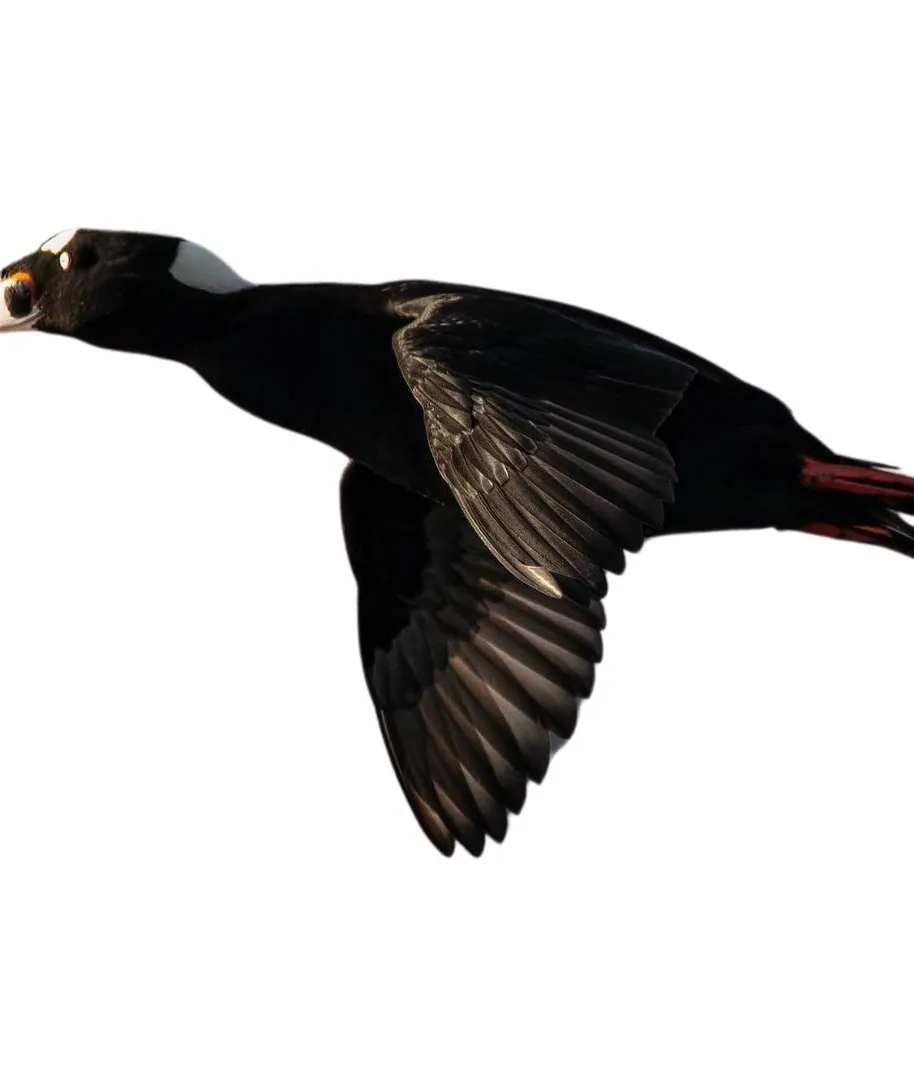
Common eiders are the largest sea ducks in North America and are most often found in coastal waters, rocky shorelines, and cold northern bays. They fly in tight lines or small groups with strong, steady wingbeats and a heavy, football-shaped profile. When crossing open water or running waves, their size and shape make them easy to separate from smaller sea ducks like scoters or long-tailed ducks. They rarely venture inland, so coastal hunters are most likely to encounter them.
Drake
Males are black and white with a pale green wash on the back of the head and a long, sloping forehead that meets a wedge-shaped bill. In flight, their bold white body and black underwings stand out against the water or sky. No other sea duck shows that clean black and white contrast with such bulk.
Hen
Females are heavily barred in warm brown tones with the same long, sloped bill as the male. Their color blends into rocky shorelines, but their size and blocky build are key ID points in flight. Compared to female scoters or mergansers, they’re bigger and fly with a steadier, slower rhythm.
Range
Related Species
In the Field
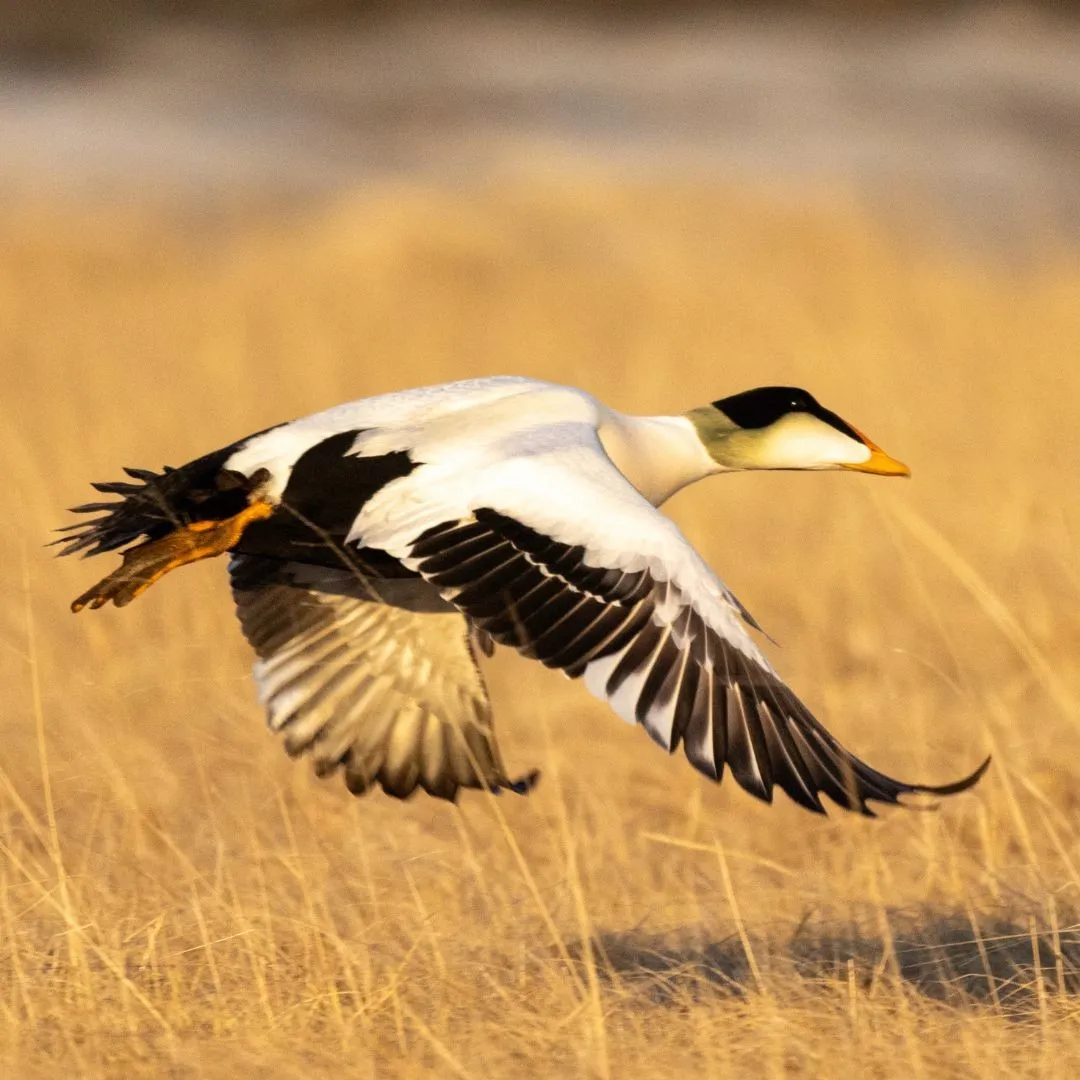
Photo: Mark Lindberg/USFWS