Green-winged Teal
Anas carolinensis
Alternate names: American Green Winged Teal, Greenwing, Teal
- Length
- 15 in
- Weight
- 0.8 lb
- Wingspan
- 20–24 in
Calls
Males give high, clear whistling calls, while females make soft, short quacks – both lighter and faster than Mallards. Green-Winged Teal are highly responsive to drake whistle calls, not hen-style quacks. Keep your cadence quick, sharp, and light – their small size means their voice cuts through subtly, not with volume
- Males: Sharp, high-pitched “peep” or “preep-preep” notes repeated quickly; used in flight and during courtship.
- Females: Soft, short “quack” calls, quieter than a Mallard’s and often used as contact or location calls in flocks.
Green-winged Teal are fairly vocal for their size, with drakes producing noticeable whistles and hens giving soft quacks.
Drake
Drakes give a clear, high-pitched whistling call that carries well over short distances. The tone is sharp and slightly rolling, often heard from small flocks on the water or birds circling. Males use this call frequently during courtship and while interacting in groups.
Hen
Hens produce soft, short quacks that are lower and less sharp than a mallard hen. Their calls are not loud and are usually heard at close range when birds are feeding, moving, or flushing. Compared with other dabbling ducks, hens are quieter and less persistent.
When You'll Hear Them
Vocalizations are most common during fall and spring migration and during winter when birds gather in small groups. Calls are often heard from circling flocks or birds resting on the water, especially during active feeding periods.
Overview
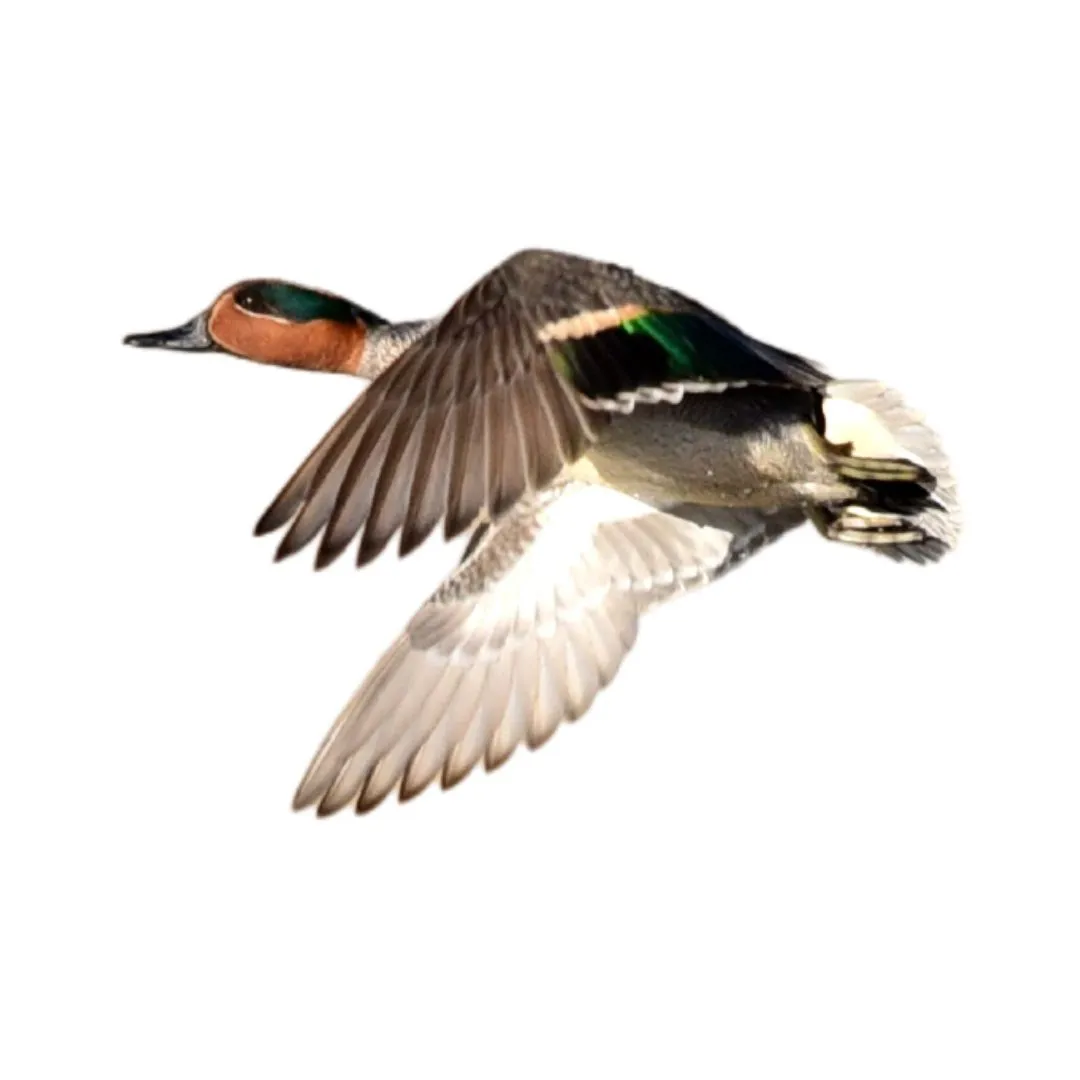
The green-winged teal is one of the smallest dabbling ducks and is highly regarded by hunters for its agility and fast flight. Males are easily recognizable by their chestnut-colored heads with a bold iridescent green stripe running from the eyes to the back of the head. They also have a grayish body and a cream-colored vertical stripe on the sides.
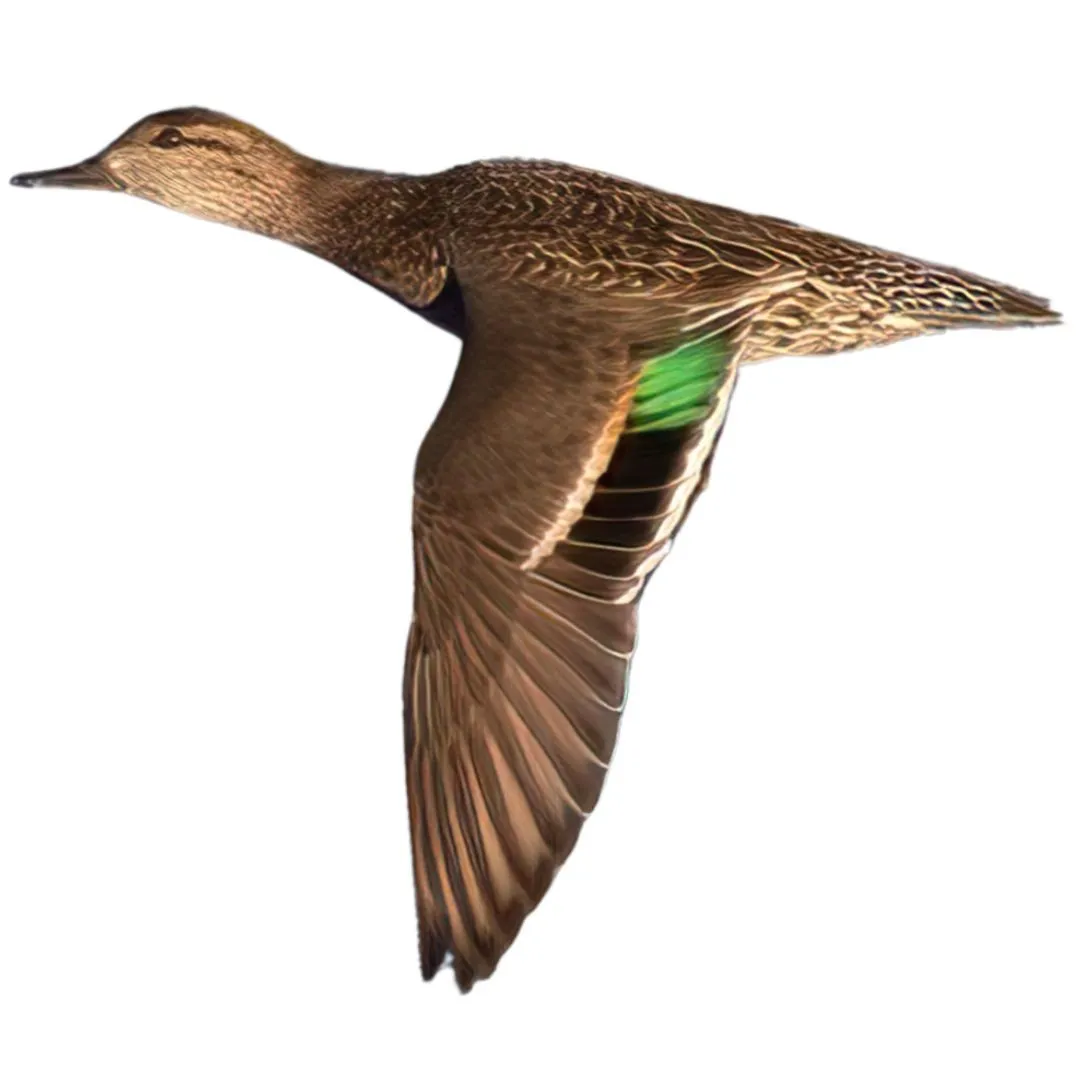
Females are mottled brown with a hint of the green wing patch, which is visible in flight on both sexes. Their compact size, swift flight, and tendency to gather in shallow marshes and ponds make them a challenging target for hunters.
Identification
Green-winged teal are the smallest dabbling ducks in North America, with a compact body, short neck, and quick, darting flight. On the wing they move in tight groups with rapid wingbeats and sharp turns that make them look faster than they are. A flashing green speculum is often visible as they bank. Their small size and erratic flight separate them from larger puddle ducks like mallards and wigeon.
Drake
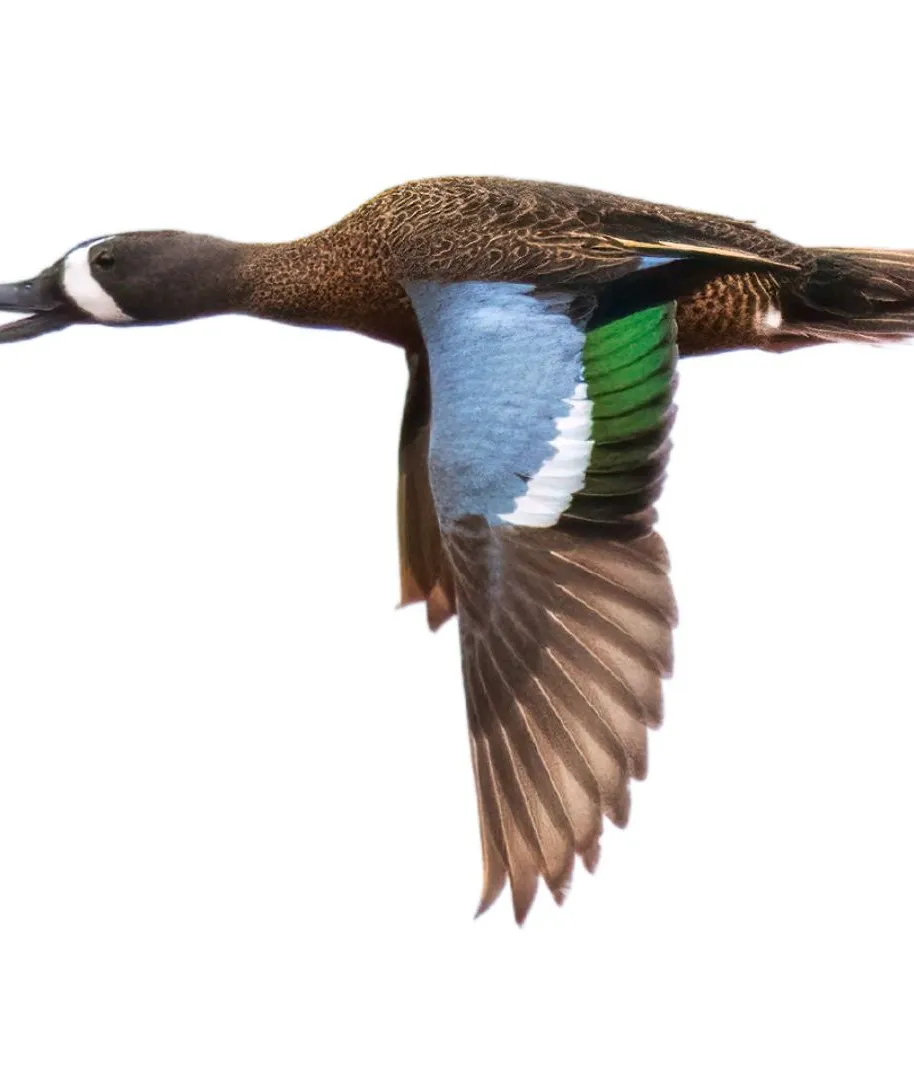
Drakes show a chestnut head with a green eye patch that is visible at close to mid range. A vertical white stripe along the side stands out when birds are on the water or circling. In flight, males show the same fast, twisting movement and green wing flash, but lack the pale blue forewing seen on blue-winged teal.
Hen
Hens are mottled brown with a small bill and compact shape that matches the drake. In flight they appear dark and very small with quick wingbeats and tight flocking. Compared with female blue-winged teal, hens are darker overall and do not show a pale blue patch on the front of the wing.
Range
Year-Round
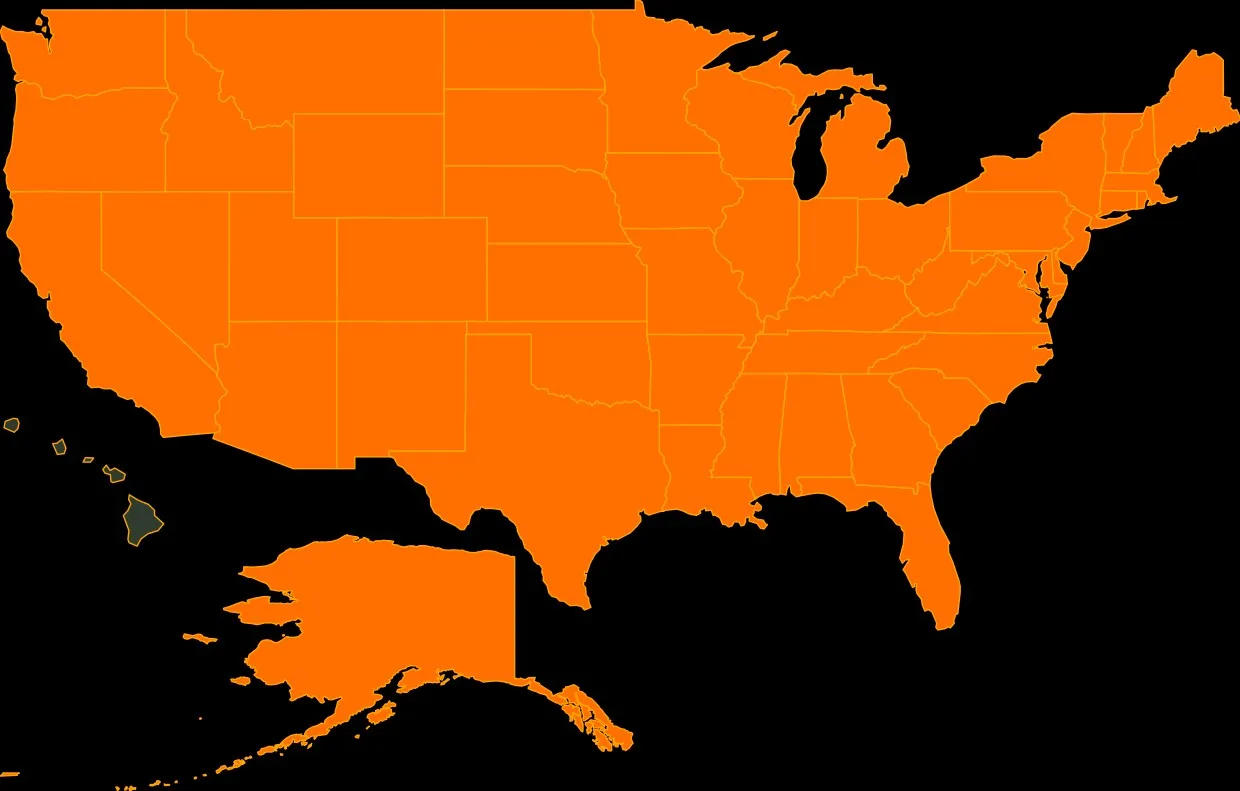
Green-winged Teal are not widely present year-round across most of North America, but small numbers remain in milder regions of the Pacific Coast, Gulf Coast, and parts of the southern United States where water stays open.
Breeding
They breed across Alaska, most of Canada, and the northern United States, with strong concentrations in prairie pothole regions, boreal wetlands, and Arctic tundra. Breeding distribution extends from western Alaska east across northern Canada into the Great Lakes region.
Winter
Most birds winter across the southern United States, from California across the Gulf Coast to the Southeast and along the Atlantic Coast. They are also common in Mexico and Central America, with some remaining along both coasts and inland wetlands where conditions allow.
Migration Timing
Fall migration begins early, often in August and September, with large movements through October and November across all four flyways. Spring migration runs from February through April, with birds moving north in small, fast-moving flocks, often stopping briefly on wetlands and shallow waters along the way.
Related Species
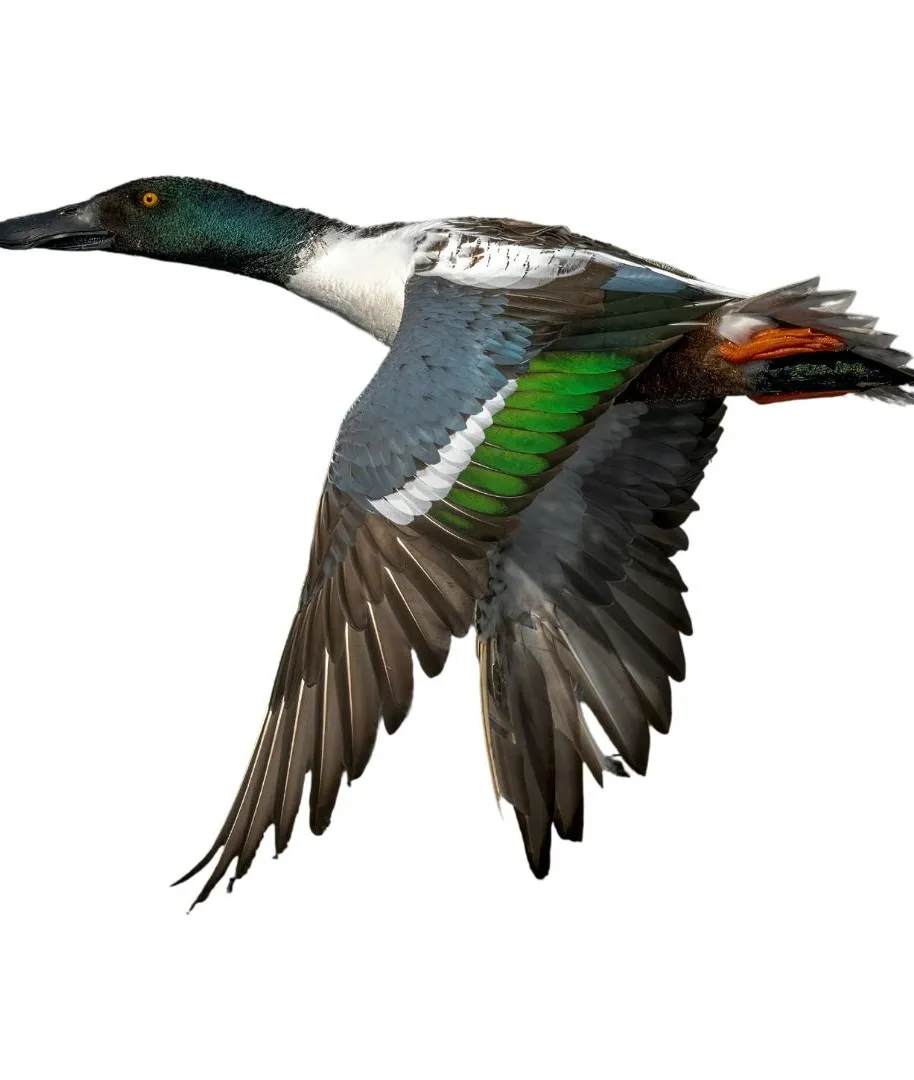
How to ID It
- Very small, compact dabbling duck with short neck and small bill.
- Short body and quick wingbeats give a fast, darting flight profile.
- Drake shows chestnut head with a green eye patch and vertical white stripe on side.
- Hen is mottled brown with a small, delicate bill and compact shape.
- Both sexes show a green speculum that flashes in flight.
- In flight appears fast and erratic with tight, twisting flocks.
- Short tail and rounded wings separate it from longer, sleeker ducks like pintails.
- Differs from Blue-winged Teal by lack of blue forewing patch and smaller, darker overall appearance.
Key Facts
- Bill Color (Drake)
- Dark gray to black
- Bill Color (Hen)
- Dark gray to black
- Primary Habitat
- Shallow wetlands, marshes, ponds
- Breeding Habitat
- Prairie potholes, tundra wetlands
- Winter Habitat
- Marshes, flooded fields, estuaries
- Migration Pattern
- Long-distance migrant across flyways
- North America Status
- Common and widespread
Habitat
Primary Habitat. Green-winged Teal are strongly associated with shallow wetlands, including marshes, flooded fields, ponds, and small lakes with abundant vegetation. They prefer shallow water where they can easily dabble and feed, often using areas with grasses, sedges, and mudflats. Compared with larger ducks, they favor tighter, more sheltered wetland pockets rather than open water.
Seasonal Habitat Differences. During breeding season they use northern wetlands such as prairie potholes, tundra ponds, and boreal marshes. In migration and winter they expand into a wide range of shallow water habitats, including flooded agricultural fields, coastal marshes, estuaries, and river backwaters. They consistently select shallow, food-rich areas rather than deep lakes.
Landscape Features to Look For. Look for shallow water with exposed mud, flooded vegetation, and low cover such as grasses and reeds. Green-winged Teal are often found in small pools, marsh edges, and sheet water in fields rather than large open lakes. They commonly gather in tight groups in protected wetland pockets with easy access to food near the surface.
Frequently Asked Questions
How do you identify a Green-winged Teal?
Green-winged Teal are the smallest dabbling ducks, with a compact body, short neck, and rapid, erratic flight. In flight, look for tight flocks and quick wingbeats with a flashing green speculum. Males show a chestnut head with a green eye patch, while females appear small and mottled brown with a delicate bill.
Where are Green-winged Teal found in North America?
Green-winged Teal breed across Alaska, Canada, and the northern United States, then move south for winter. They are widespread across the southern U.S., Gulf Coast, and Atlantic Coast, with additional numbers in Mexico and Central America. Small numbers remain year-round in milder coastal regions where water stays open.
What habitat do Green-winged Teal prefer?
Green-winged Teal favor shallow wetlands such as marshes, ponds, flooded fields, and mudflats. They prefer areas with shallow water and dense vegetation where they can dabble and feed easily. Compared to larger ducks, they often use smaller, sheltered wetland pockets rather than large open lakes.
When do Green-winged Teal migrate?
Green-winged Teal are early migrants, with southbound movement starting in late summer and peaking through fall. Spring migration begins in late winter and continues into early spring. They travel in small, fast-moving flocks and often make short stops in shallow wetlands along major flyways.
What species are Green-winged Teal commonly confused with?
Green-winged Teal are most often confused with Blue-winged Teal. Green-winged are smaller, darker, and lack the pale blue forewing patch seen on Blue-winged Teal. In flight, the green speculum and tighter, faster flocking behavior help separate them from other small dabbling ducks.
Are Green-winged Teal common?
Green-winged Teal are one of the most abundant dabbling ducks in North America. They are widespread across all major flyways during migration and winter, often found in large numbers in suitable wetland habitats. Their population is stable and widely distributed across the continent.
What do Green-winged Teal eat?
Green-winged Teal feed primarily on seeds, aquatic plants, and small invertebrates. They dabble in shallow water, often tipping up to reach food near the surface or along mudflats. Their diet reflects their use of shallow wetlands, flooded fields, and vegetated marsh edges.
In the Field
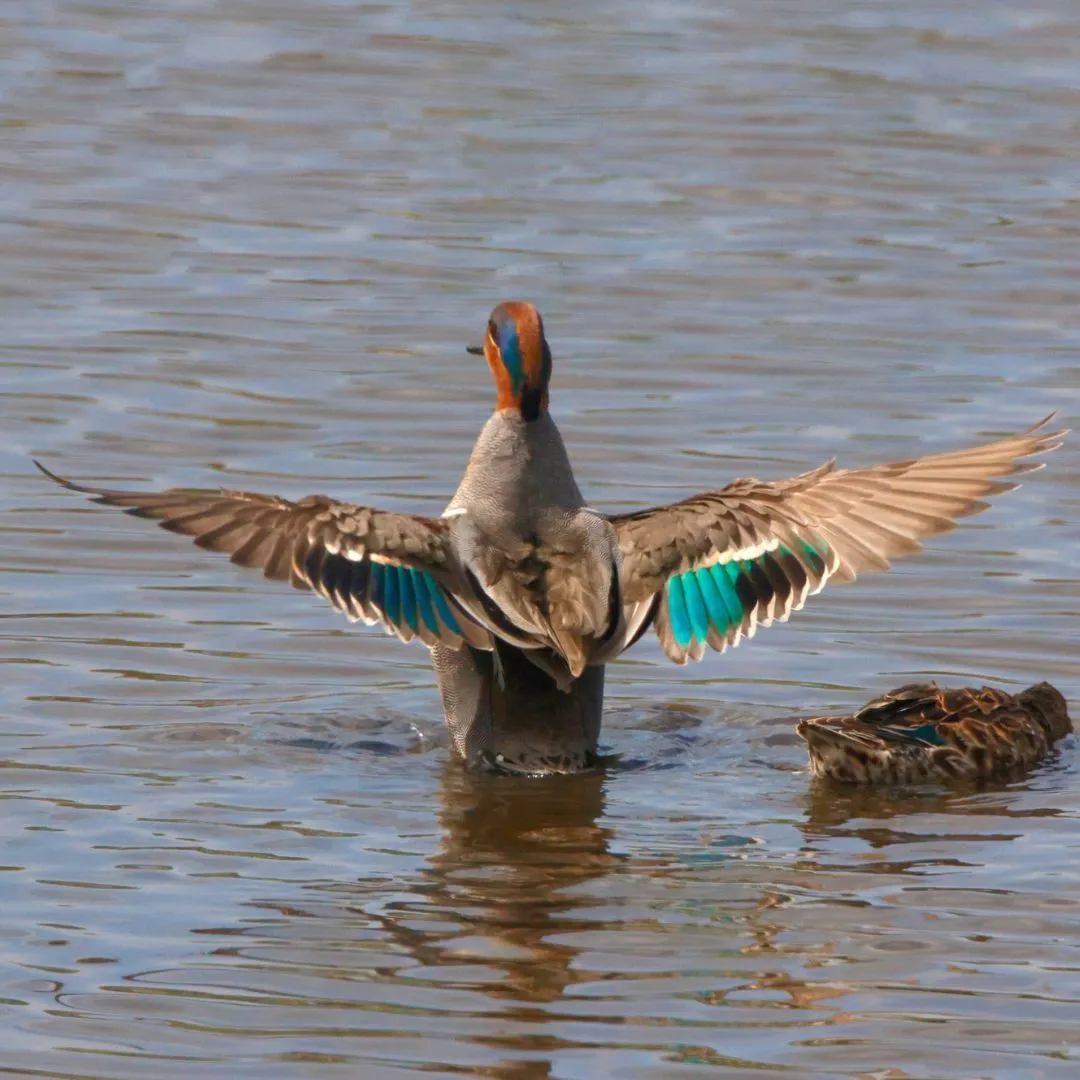
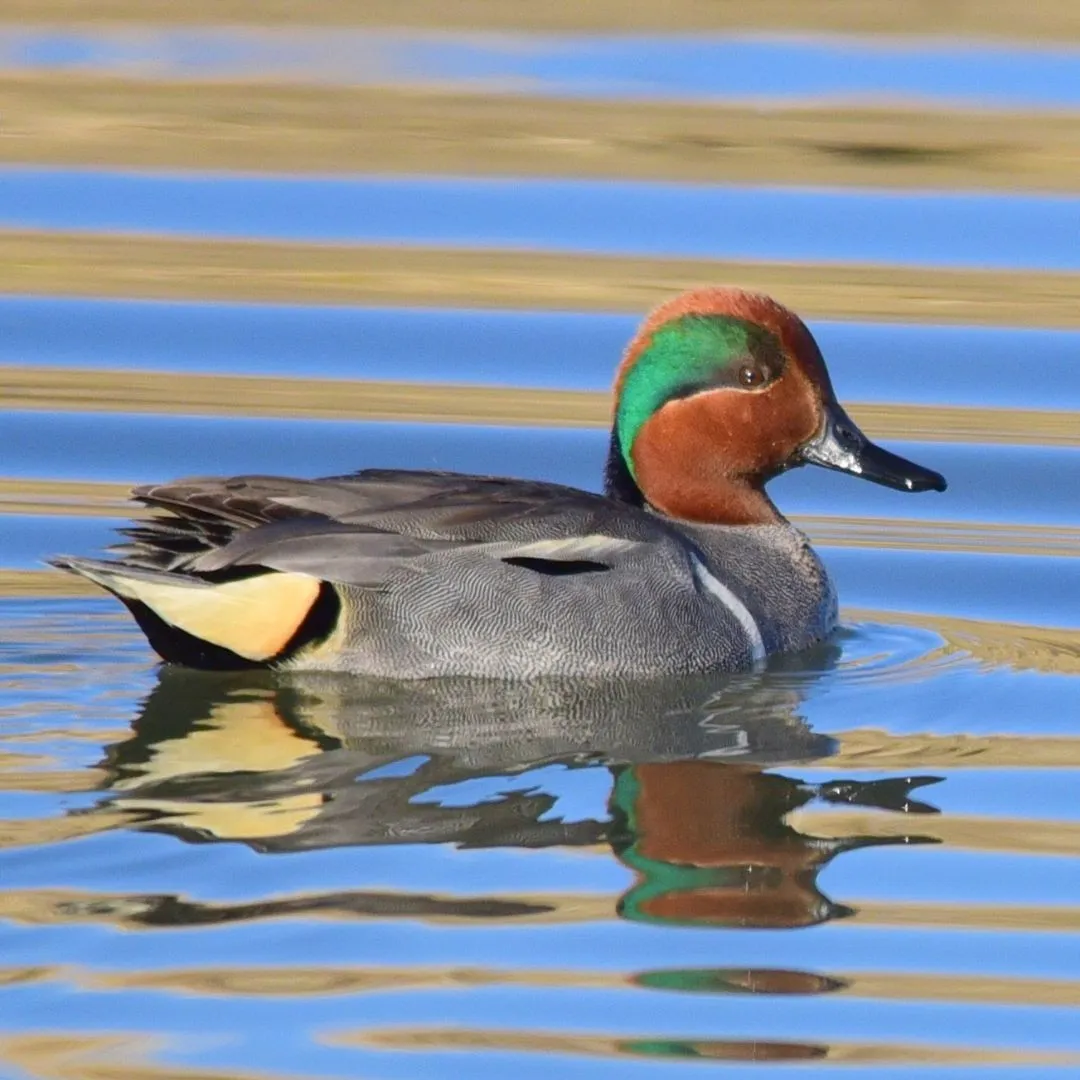
Photo: Tom Koerner/USFWS 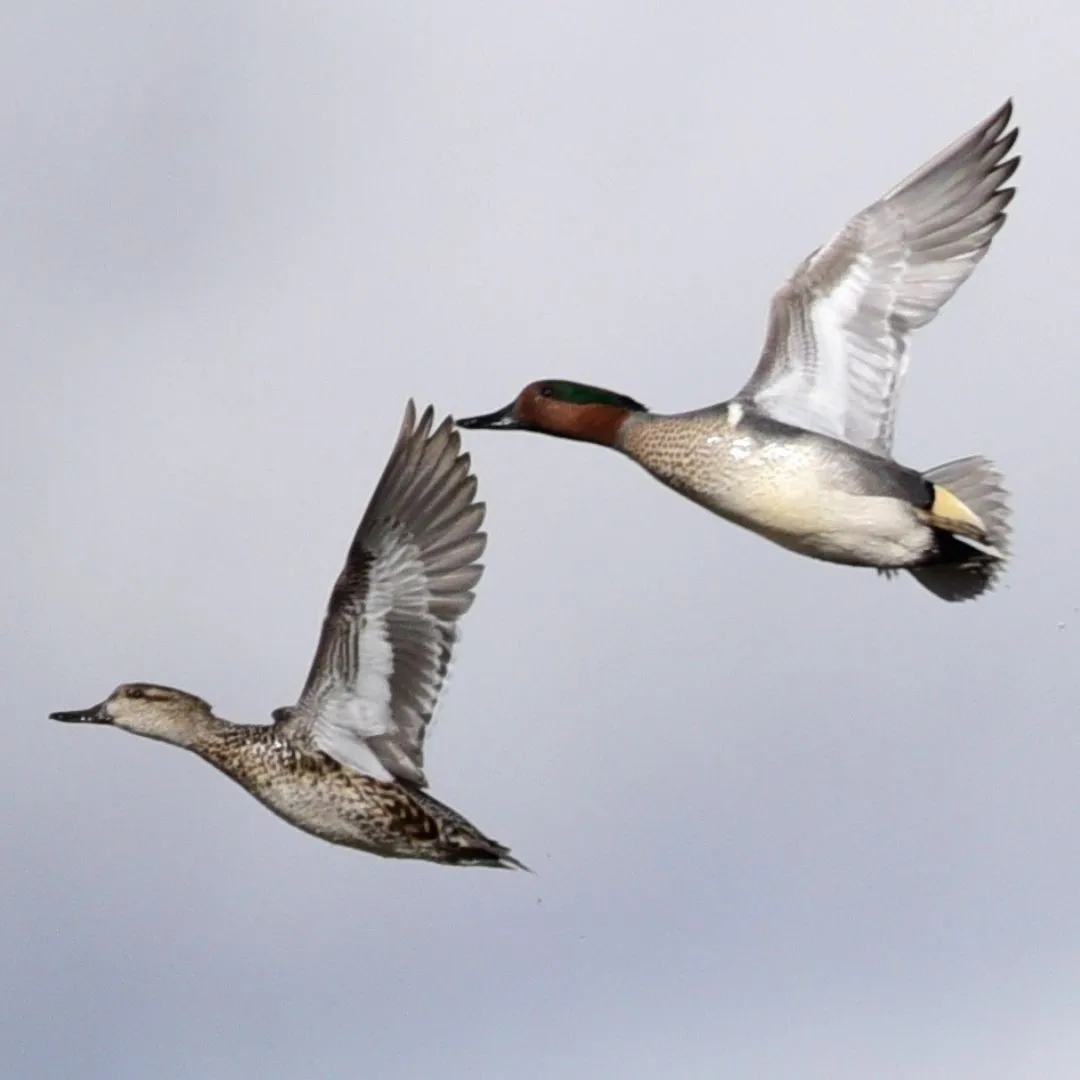
Photo: Robert Keith /USFWS