Wigeon
Mareca americana
Alternate names: American Wigeon, Baldpate, Marsh Duck, Wheat Duck, Poacher
- Length
- 21 in
- Weight
- 1.75 lb
- Wingspan
- 33–37 in
Calls
American Wigeons are moderate callers – males whistle with a distinct “whee-ooo,” while females give quiet, low quacks that resemble subdued Mallards.
- Females: Low, hoarse “quaack” calls, quieter and rougher than a Mallard’s, often used as contact calls.
- Males: High-pitched, three-note “whee-ooo” or “whee-o-whee” whistle, clear and slightly nasal, used frequently in flight and display.
Drake
The male gives a high, clear two-note whistle that carries well over open water and is most often heard during courtship, while birds are on the water, or when flying in small groups. It is sharp and pure in tone, distinctly different from the raspier calls of mallards or gadwall. Drakes may also give softer grunts at close range during social interactions.
Hen
The hen produces a low, short series of rough quacks that are quieter and less ringing than a mallard hen. Her call is subdued and often delivered in brief bursts, making it less noticeable unless birds are nearby.
When You'll Hear Them
Vocalizations are most common during fall staging and spring courtship, particularly when birds are trading between feeding and resting areas or circling before landing.
Overview
Wigeons, particularly the American Wigeon, are medium-sized ducks that are easily recognizable by their distinctive appearance and habits.
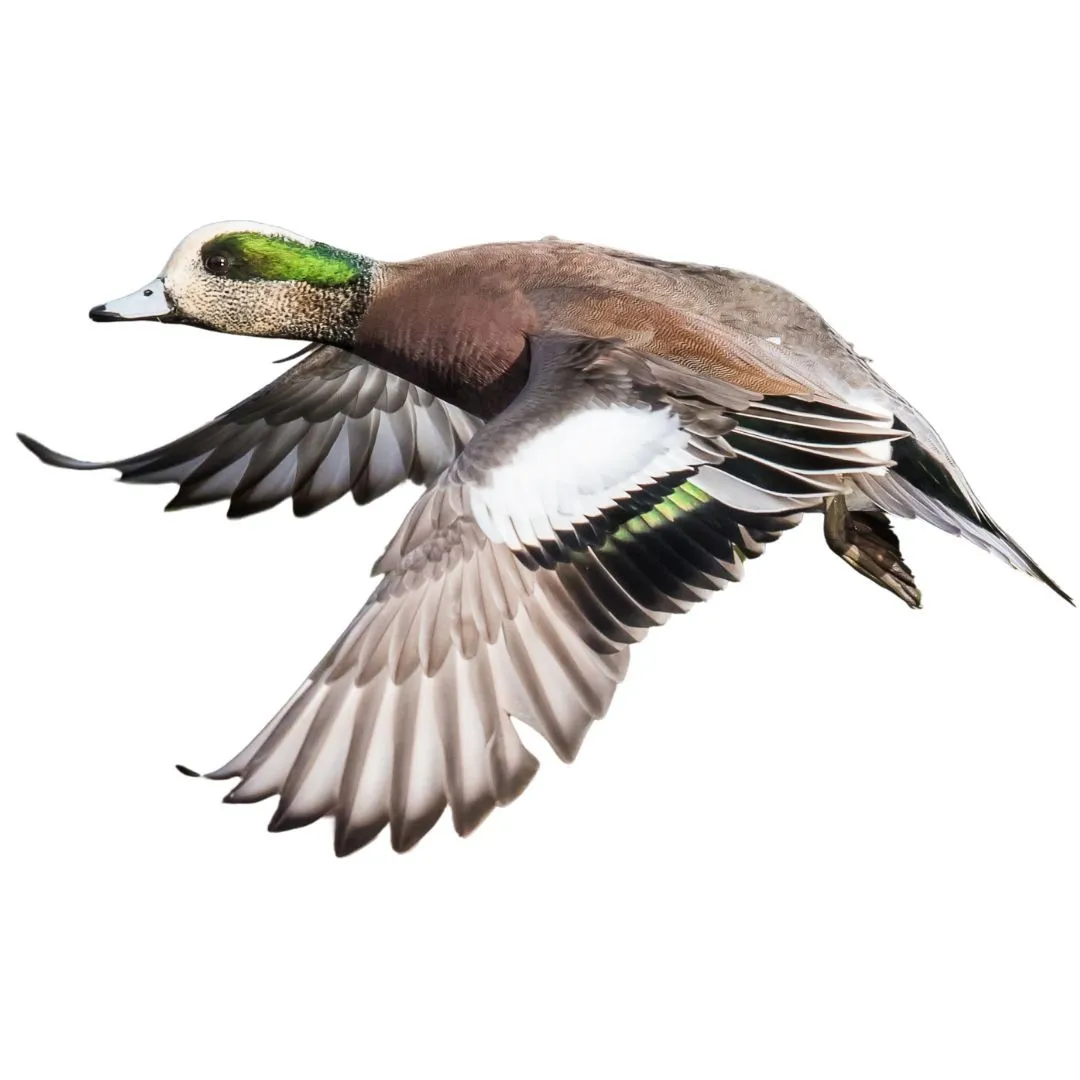
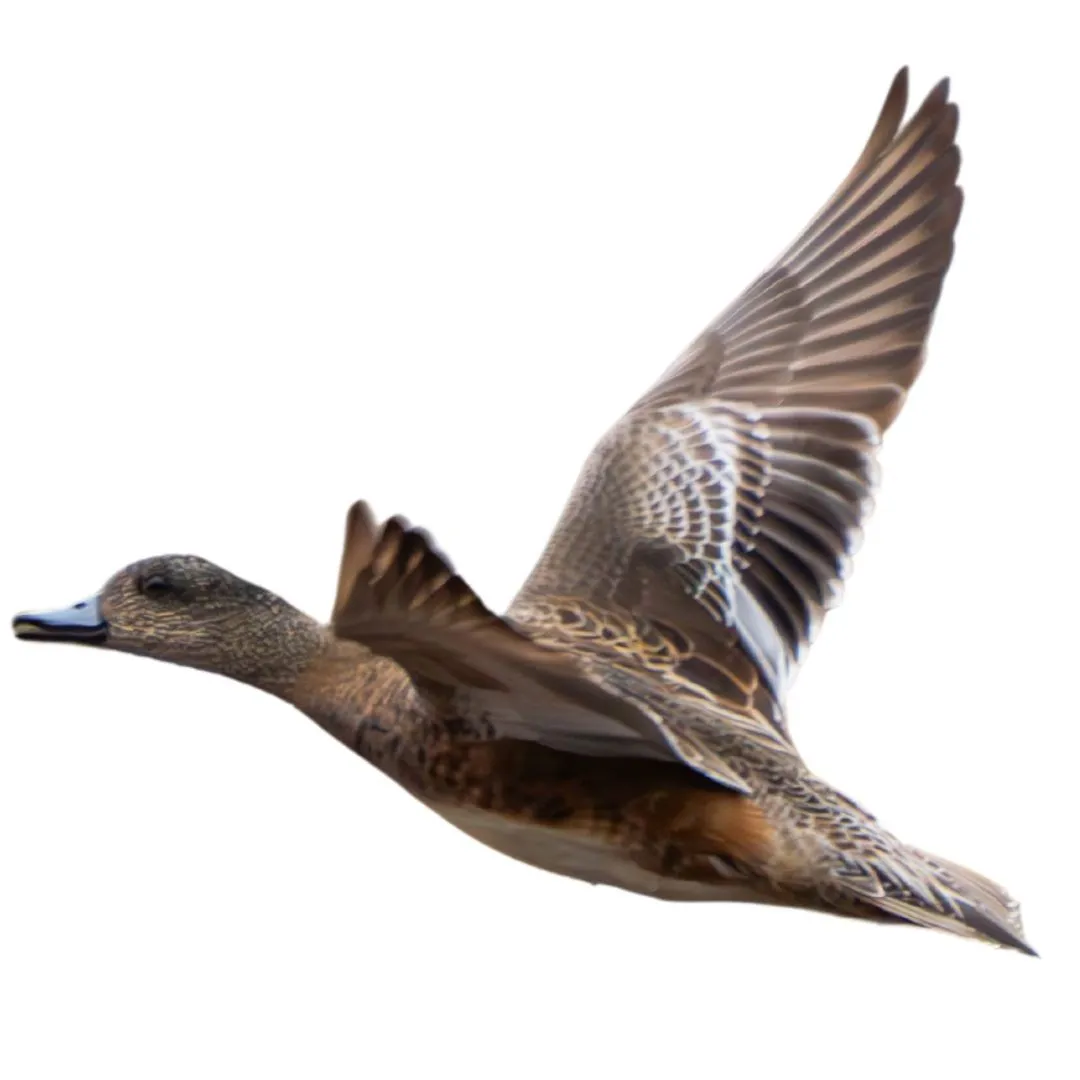
Drakes have a unique white or cream-colored forehead (earning them the nickname “Baldpate”) with a green stripe extending from the eye to the back of the head, while hens are mottled brown.
Both genders have a light blue bill tipped in black and a striking white patch on their wings visible in flight.
Wigeons favor marshes, ponds, and shallow wetlands, feeding primarily on aquatic plants, but they are also known to graze in fields.
They are fast flyers and tend to whistle rather than quack, with drakes producing a distinctive high-pitched call.
Wigeons are often found in mixed flocks, so hunters should look for their characteristic head markings and listen for their soft whistles to differentiate them from other ducks.
Identification
White or Cream Forehead (Drakes), Green Stripe from Eye to Back of Head (Drakes), Mottled Brown Plumage (Hens), Light Blue Bill with Black Tip (Both Genders), White Wing Patch (Both Genders), High-Pitched Whistling Call (Drakes)
Wigeon are compact dabbling ducks with a short neck, round head, and small blue gray bill. They sit low on the water and often feed by grazing in fields or tipping in shallow marshes. In flight they show a fast, tight wingbeat and a bold white patch on the upper wing that flashes at distance. Hunters most often confuse them with gadwall, but wigeon look smaller, rounder headed, and show more obvious white in the wing.
Drake
The drake has a pale white to cream forehead and crown stripe with a green patch behind the eye and a pinkish brown breast. On the wing he shows bright white shoulder and upper wing coverts that stand out even in poor light. In eclipse he resembles the hen but keeps the gray body and white wing patch, which separates him from gadwall.
Hen
The hen is warm brown with a small gray bill and a rounded head profile. In flight she shows the same bold white shoulder patch as the drake, which is the best long range cue. Compared to a hen gadwall she appears smaller with a shorter bill and more contrast in the forewing.
Range
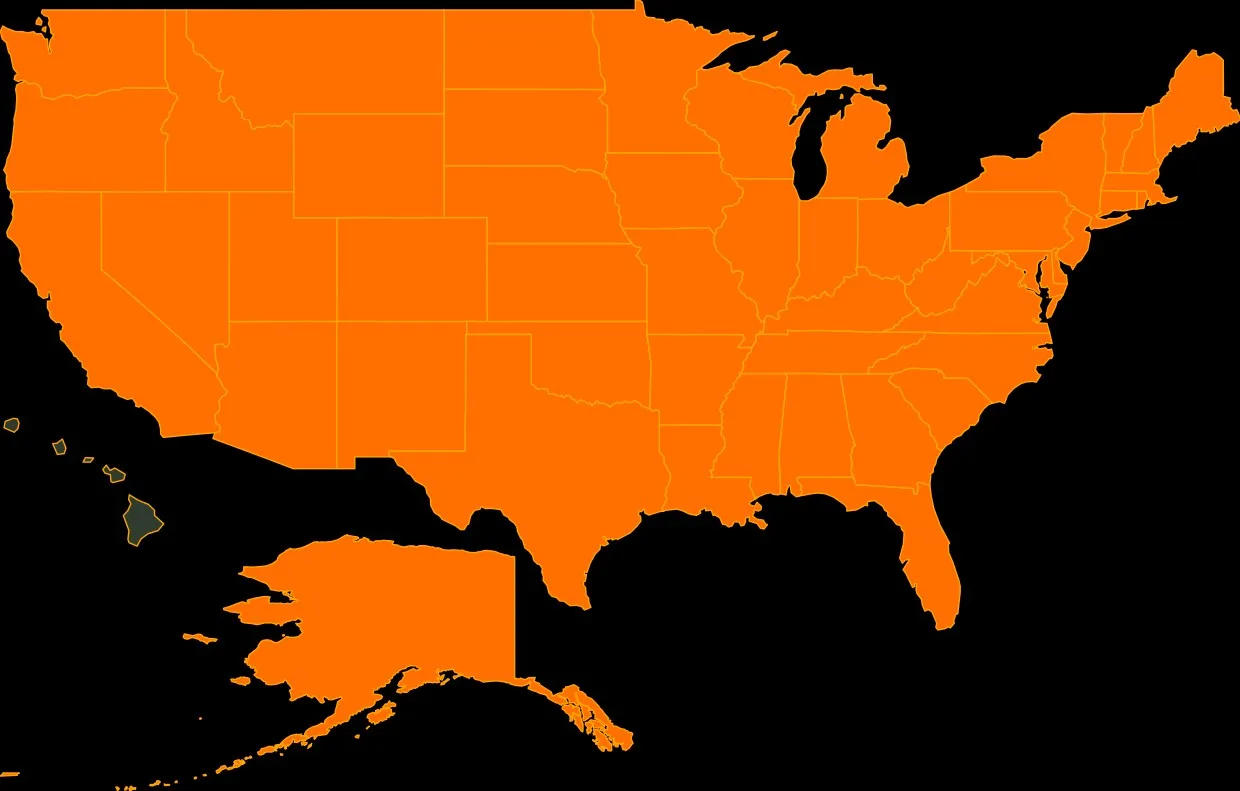
Year-Round
American Wigeon are present somewhere in North America throughout the year, but few areas hold them year-round. Limited resident populations occur in parts of the Pacific Coast, interior California, and portions of the southern United States where wintering and breeding ranges overlap slightly.
Breeding
Breeding occurs primarily across western and central Canada, including the Prairie Pothole Region, boreal forest wetlands, and much of Alaska. Smaller numbers breed in the northwestern United States, especially in Washington, Oregon, Idaho, and parts of the northern Great Basin. The core breeding concentration is in the Canadian Prairies and southern boreal zone.
Winter
Most birds winter in the southern United States, Mexico, and along both coasts. Large concentrations occur in California’s Central Valley, the Gulf Coast, Atlantic coastal states, and throughout Mexico. They are widespread across the southern tier of the U.S. in suitable open wetlands and adjacent agricultural regions.
Migration Timing
Fall migration typically begins in September, with peak movements from October through November along all four major flyways. Spring migration runs from February through April, with birds returning early to prairie and boreal breeding areas soon after ice-out.
Related Species
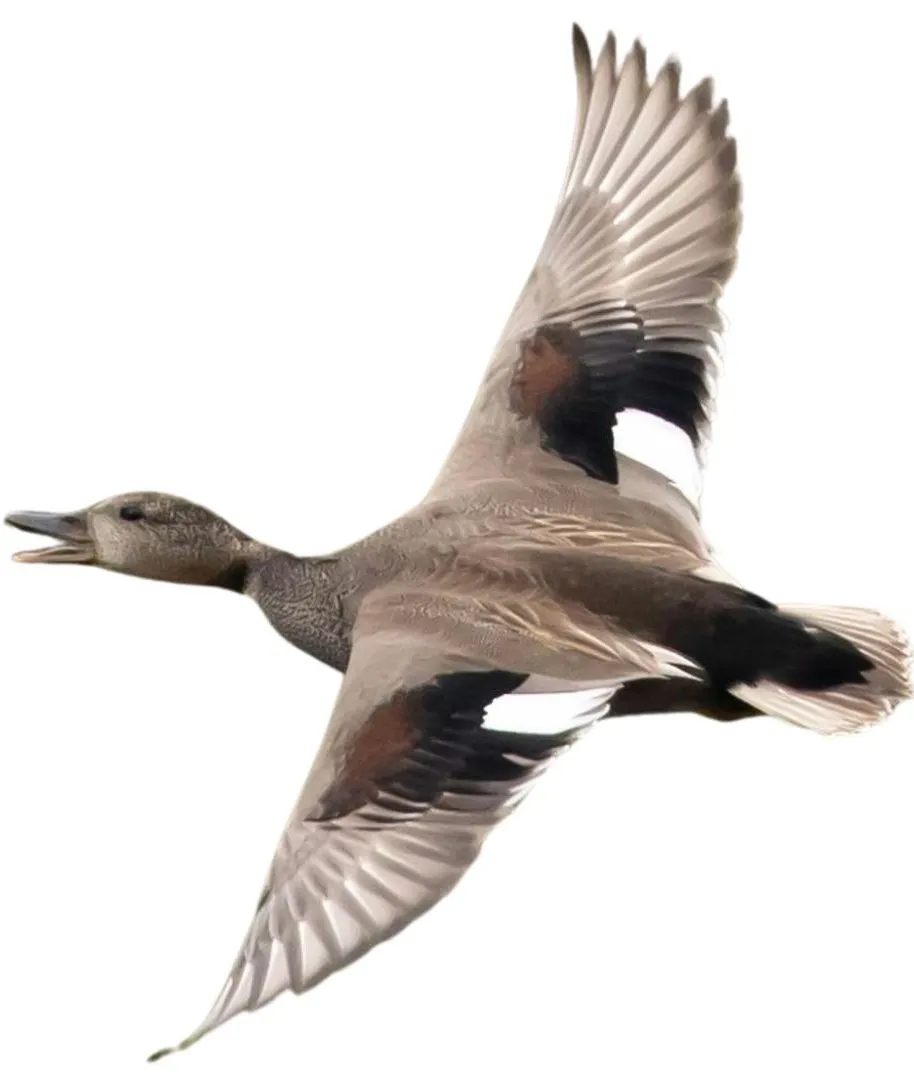
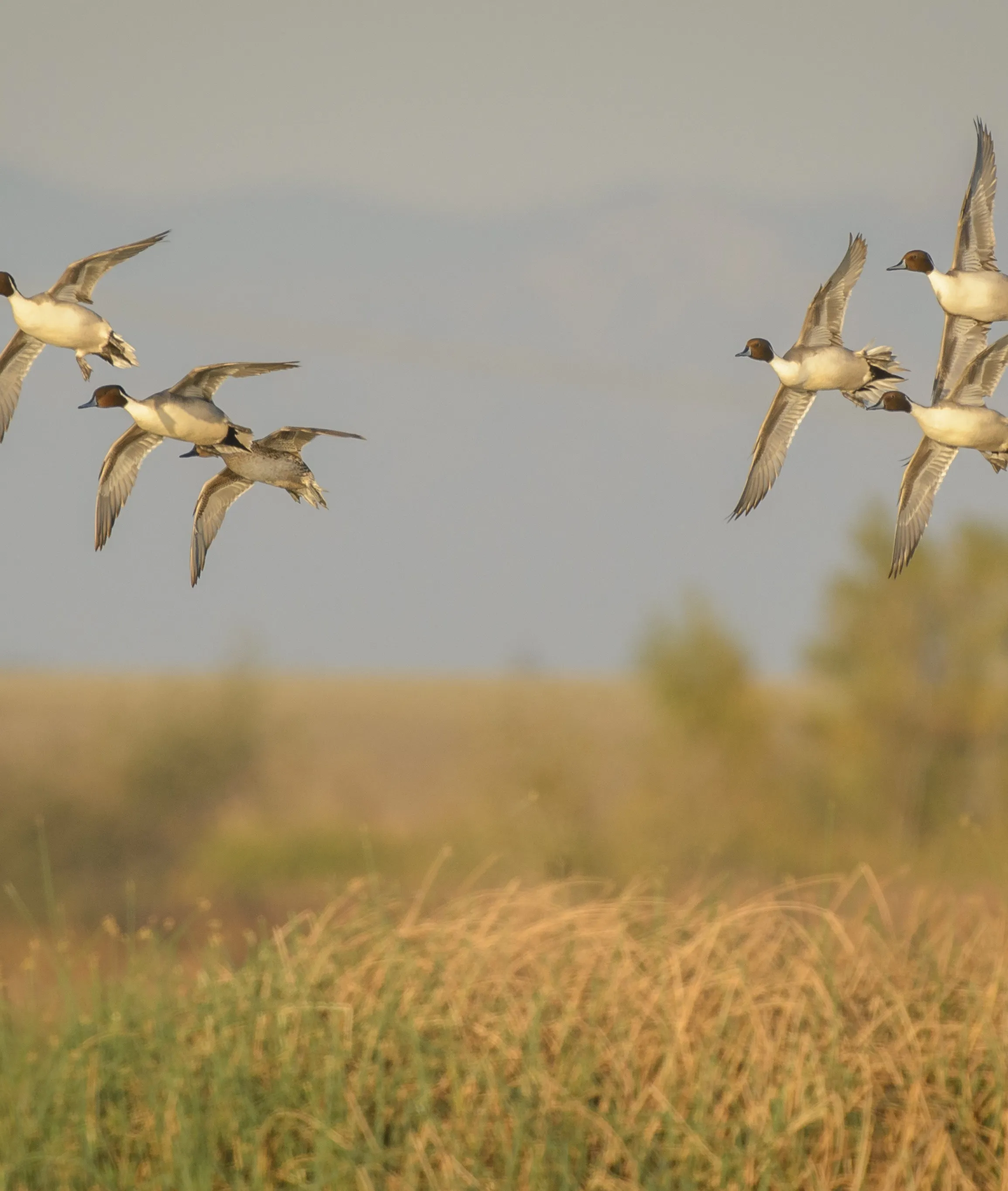
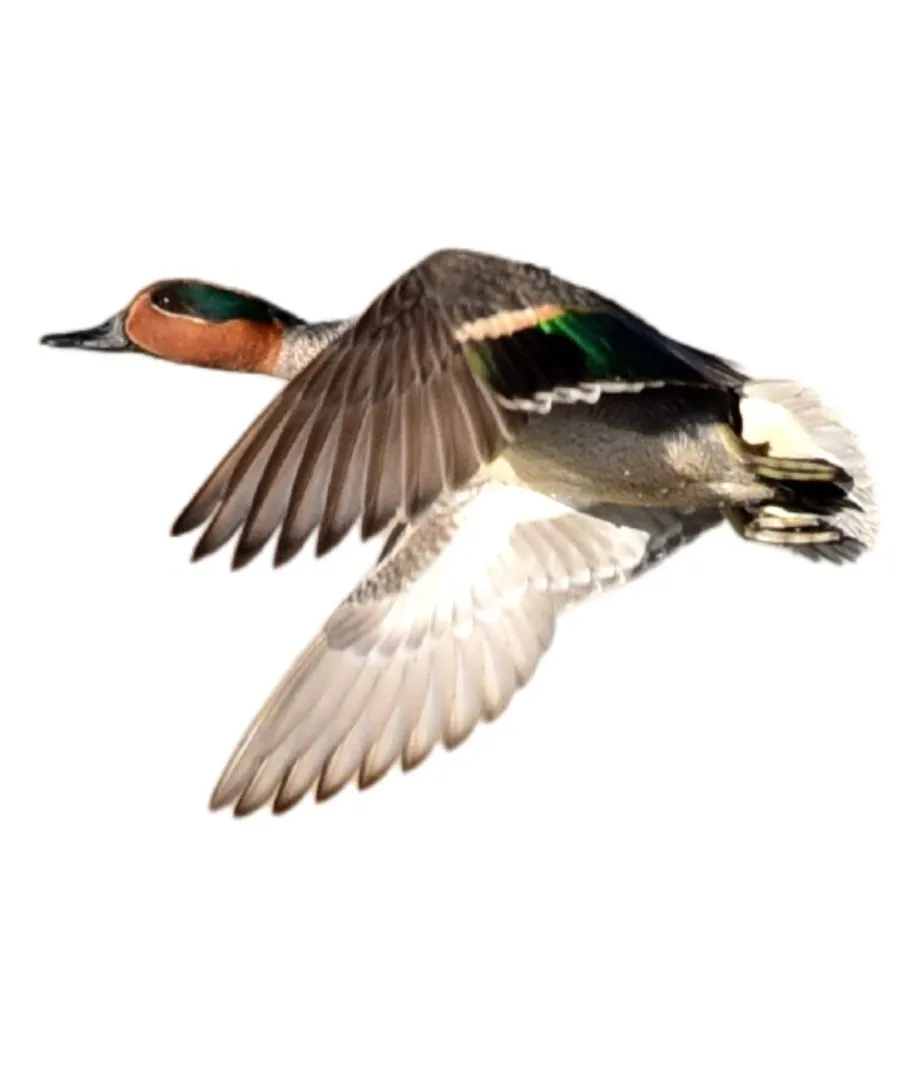
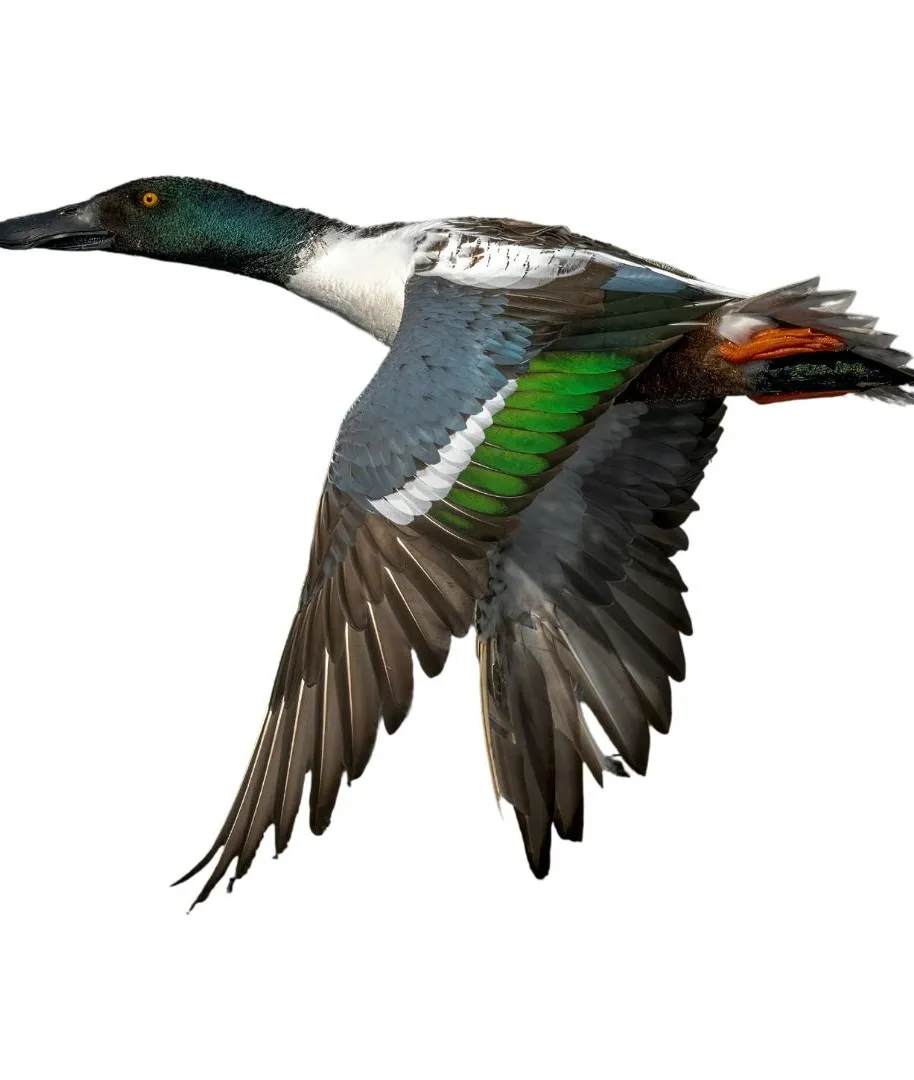
How to ID It
- Compact dabbling duck with short neck, rounded head, and relatively short bill
- Small blue-gray bill with black tip is noticeably shorter than on gadwall or mallard
- Drake shows a white to cream forehead and crown stripe contrasting with green eye patch (eclipse drake resembles hen but retains gray body)
- Hen is warm brown overall with a small gray bill and smudged dark eye line
- Tail is short and pointed, lacking the long central feathers of pintail
- In flight: In flight, both sexes show a bold white shoulder patch and white upper wing coverts
- Speculum appears dark green bordered by black, less obvious at distance than the white forewing
- Smaller body and shorter bill separate it from gadwall; rounder head and white wing patch distinguish it from teal
Key Facts
- Bill Color (Drake)
- Blue-gray, black tip
- Bill Color (Hen)
- Gray, darker tip
- Primary Habitat
- Marshes, ponds, lakes
- Breeding Habitat
- Prairie wetlands, boreal marshes
- Winter Habitat
- Coastal bays, lakes, fields
- Migration Pattern
- Strong migrant; all four flyways
- North America Status
- Common and widespread
Habitat
Primary Habitat. American Wigeon most strongly associate with shallow freshwater wetlands including marshes, ponds, prairie potholes, and shallow lakes with abundant emergent vegetation. They prefer open water interspersed with low aquatic plants and adjacent grasslands or agricultural fields. During much of the year they use wetlands with nearby upland feeding areas, often grazing on short grasses in flooded fields or along wet meadow edges. They also use estuaries, coastal bays, and protected lagoons during the nonbreeding season.
Seasonal Habitat Differences. During breeding season, wigeon concentrate in prairie wetlands, boreal marshes, and tundra ponds across western Canada and Alaska, favoring shallow basins with surrounding grass or shrub cover. In migration and winter, they expand into larger lakes, river backwaters, coastal marshes, estuaries, and agricultural landscapes, frequently using flooded fields and open shoreline areas. Wintering birds are common in coastal lagoons and inland reservoirs with adjacent feeding grounds.
Landscape Features to Look For. Look for shallow water less than a few feet deep, open marshes with scattered emergent vegetation, wet grasslands, and nearby crop fields. Coastal birds favor protected bays, estuaries, and tidal marshes rather than open ocean.
Frequently Asked Questions
How do you identify a Wigeon in the field?
American Wigeon are compact dabbling ducks with a short neck, rounded head, and small blue-gray bill. In flight, a bold white patch on the upper wing is the most reliable field mark. Drakes show a pale forehead and green patch behind the eye, while hens are warm brown with a similar wing pattern.
Where do Wigeon live in North America?
American Wigeon breed primarily in Alaska and across western and central Canada, especially in prairie wetlands and boreal marshes. In winter, they occur across the southern United States, Mexico, the Pacific Coast, Gulf Coast, and Atlantic coastal regions. They are present somewhere on the continent year-round.
What habitats do Wigeon prefer?
American Wigeon favor shallow wetlands such as marshes, ponds, prairie potholes, and shallow lakes with aquatic vegetation. During fall and winter, they also use estuaries, coastal bays, river backwaters, and flooded agricultural fields, often grazing on short grasses near water.
Are American Wigeon migratory?
Yes, American Wigeon are strong seasonal migrants. Most birds move south from Canada and Alaska in September through November and return north in early spring, often soon after ice-out. They migrate along all four major North American flyways.
What species are commonly confused with American Wigeon?
American Wigeon are most often confused with gadwall due to similar size and general gray-brown tones. Wigeon appear smaller with a rounder head and shorter bill, and both sexes show a brighter white forewing patch in flight. Eurasian Wigeon are rare visitors and resemble American Wigeon but have a rusty head.
Do Wigeon feed differently from other dabbling ducks?
American Wigeon feed by tipping in shallow water like other dabblers, but they also graze extensively on land. They commonly feed on short grasses in wet meadows, pastures, and flooded fields, a behavior less frequent in mallards or teal.
In the Field
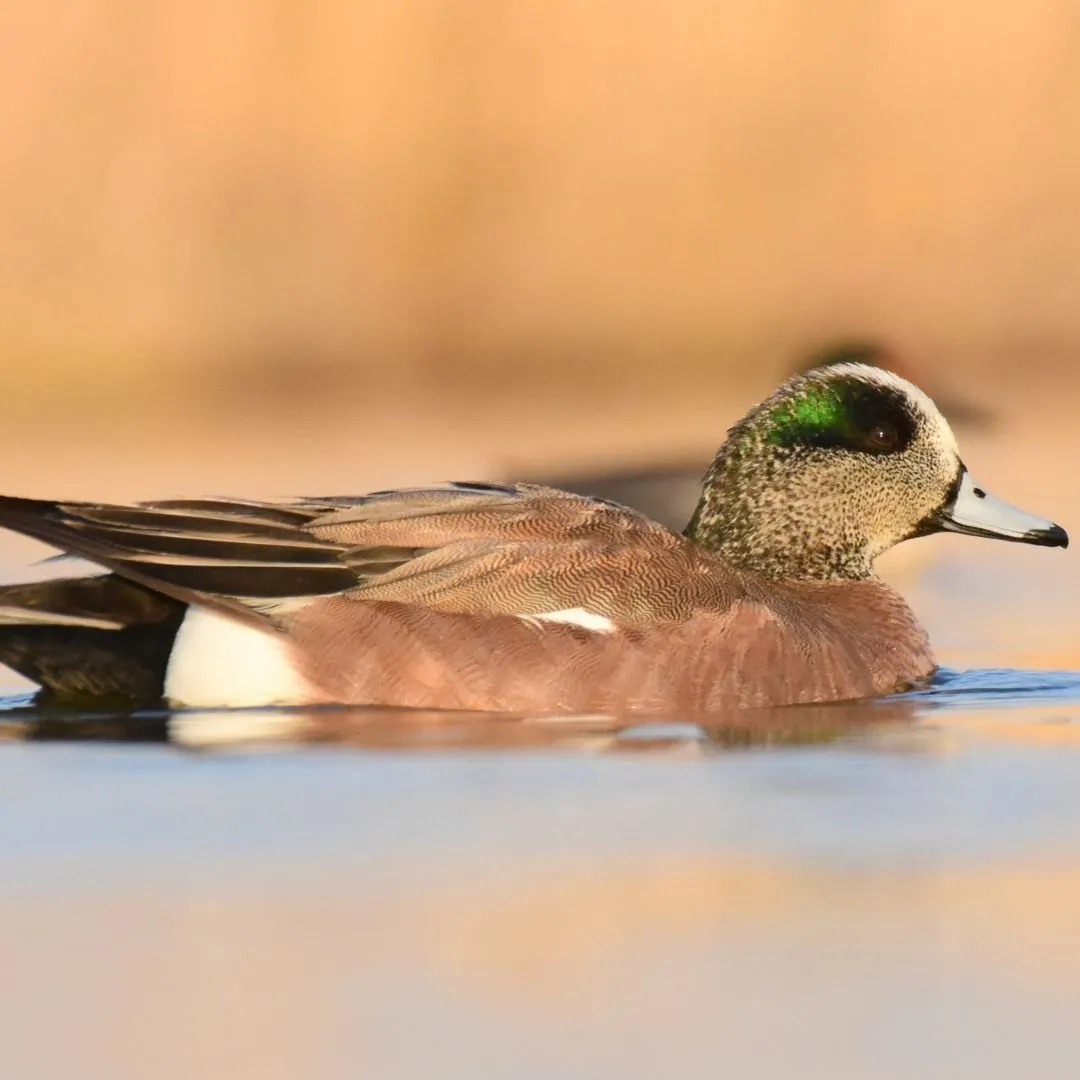
Photo: Tom Koerner/USFWS 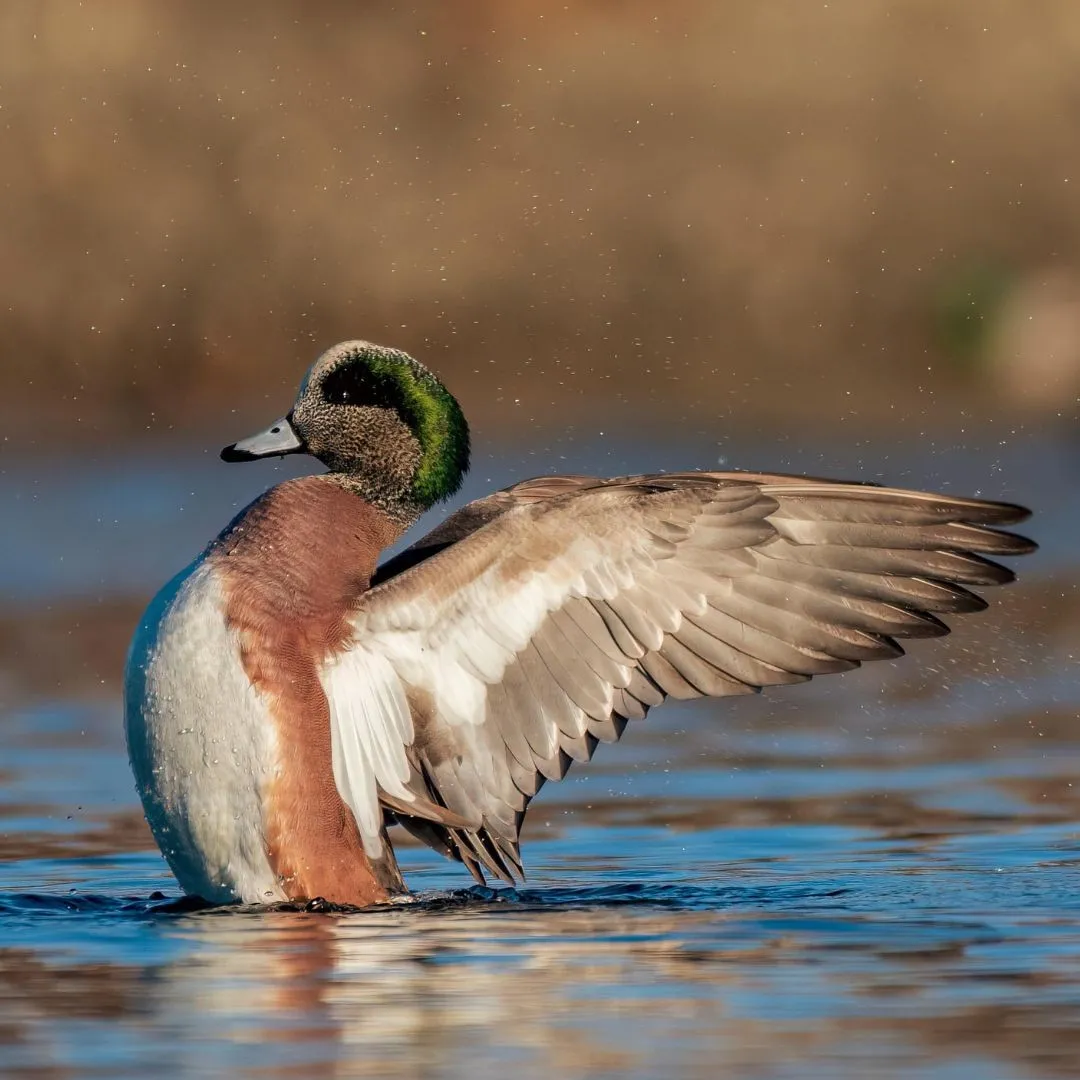
Photo: Frank Cone 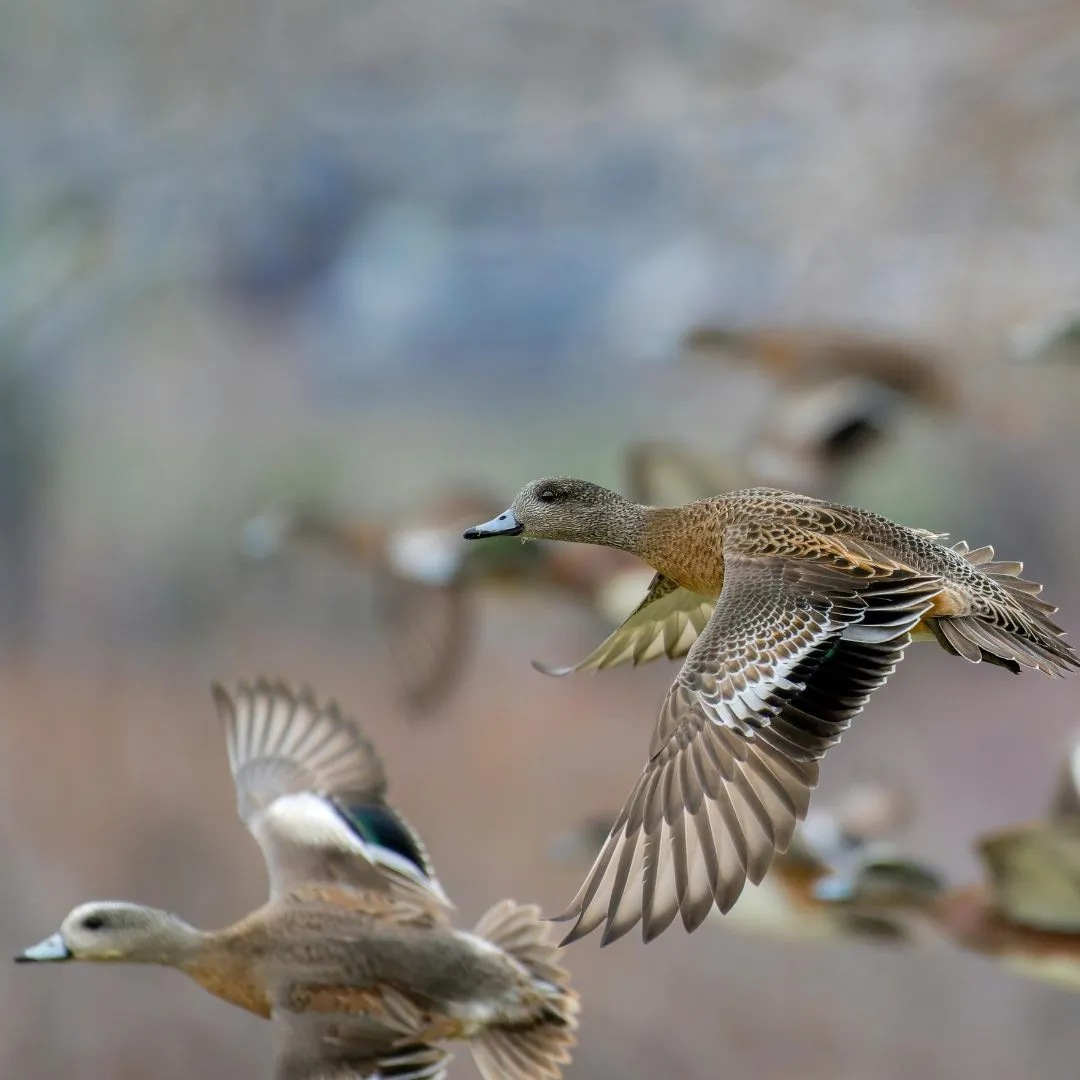
Photo: Frank Cone