Harlequin
Histrionicus histrionicus
Alternate names: Sea mouse
- Length
- 17 in
- Weight
- 1.5 lb
- Wingspan
- 24–28 in
Calls
Generally soft, squeaky, high-pitched vocal style that carries surprisingly well over rushing water and surf.
- Males: The drake gives a thin, mouse-like squeak or whistle — often described as a sharp “squeek” or “peep” — usually delivered singly or in short bursts.
- Females: The hen produces a lower, raspier, gravelly “gak” or “errk” call, especially when alert or communicating with ducklings.
Drake
Drakes give thin, squeaking or high-pitched clicking notes with a sharp, short quality. These sounds are most often heard during courtship or when birds are close together on the water. In flight, males are typically silent and not detected by voice at distance.
Hen
Hens produce low, rough quacks and short croaking notes that are slightly fuller than the drake’s calls. Their vocalizations are still subdued and usually only heard when birds are flushed or interacting at close range. Compared with dabbling ducks, hens call less often and with less volume.
When You'll Hear Them
Vocalizations are most noticeable during the breeding season and late winter pairing period. Outside of these times, Harlequin Ducks are quiet, and most encounters occur without hearing them, especially in coastal wintering areas.
Overview
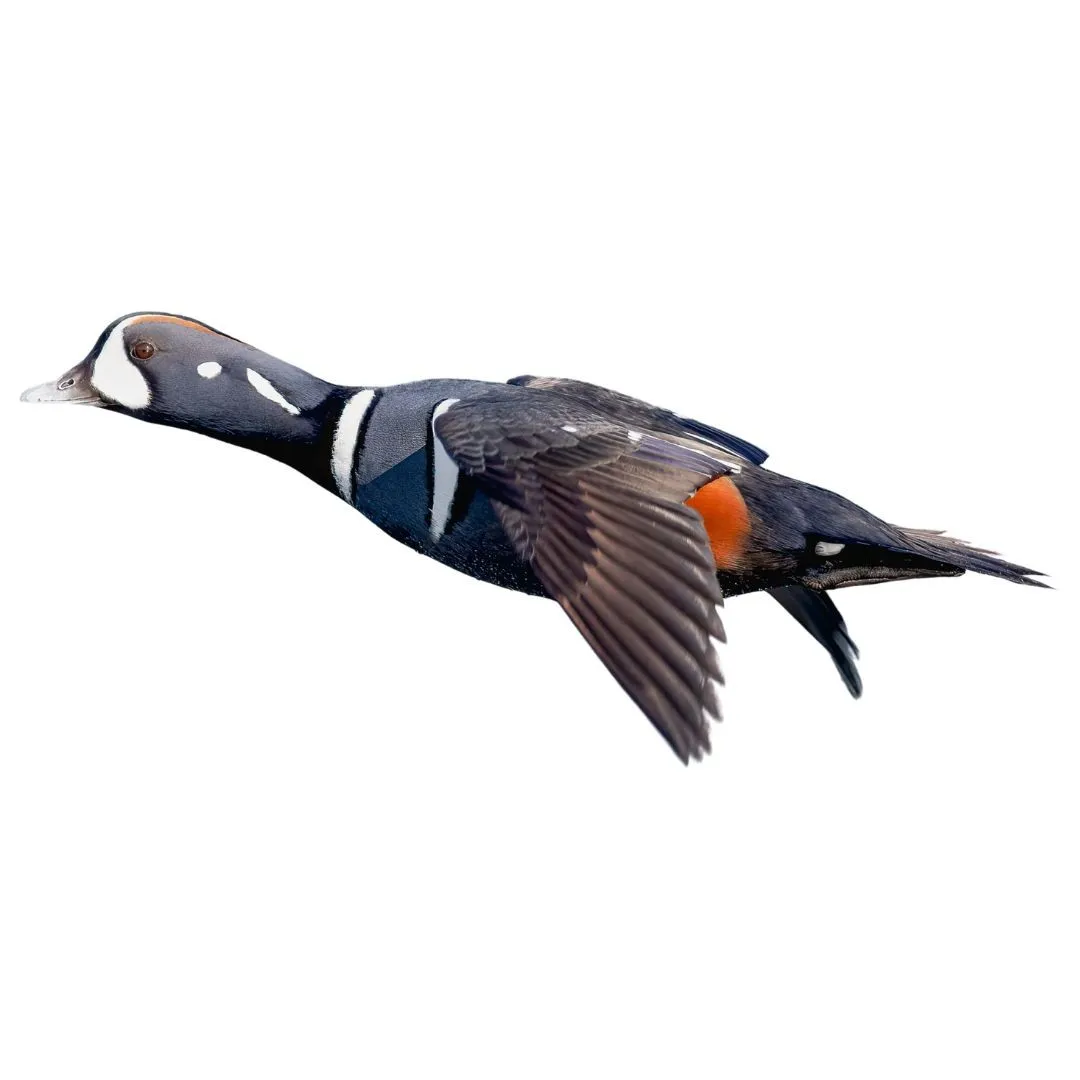
The harlequin duck is a small, strikingly patterned sea duck highly prized for its beauty. Males are adorned with a slate-blue body, bold white stripes and spots, and chestnut sides, creating a dramatic contrast. Females are brown with subtle white facial markings. Both sexes have a compact body and long tail.
Found along fast-moving rocky coastlines, rivers, and coastal waters, harlequins are adept at navigating turbulent waters while diving for crustaceans and mollusks. Their stunning appearance, coastal habitat, and agility in rough waters make them a prized but challenging target for hunters.
Identification
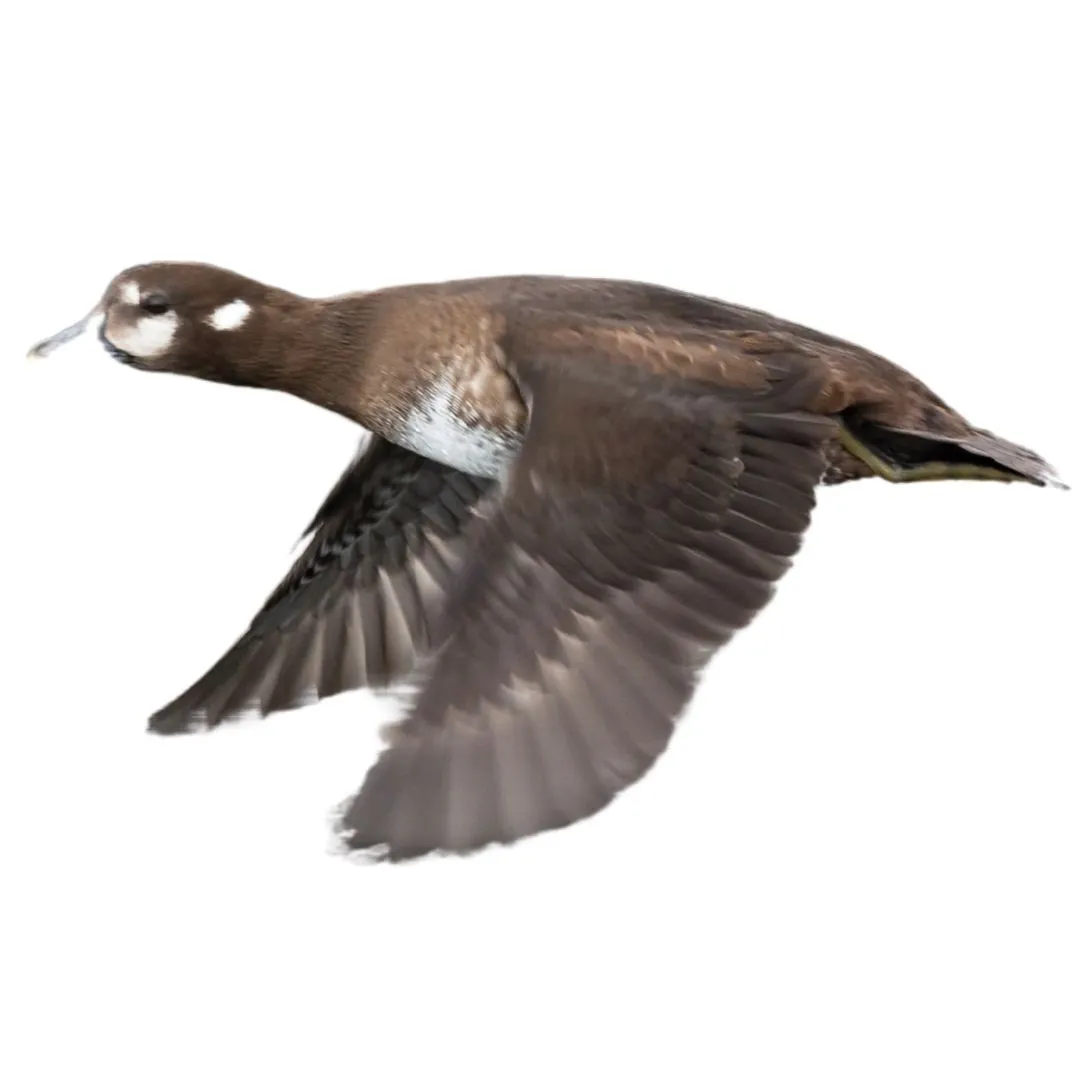
Slate-blue body with white stripes (male), chestnut sides (male), compact body, fast-moving water habitats, white facial markings (female), diving behavior
Harlequin ducks are small, compact diving ducks with a short neck, rounded head, and stubby bill that give them a tight profile on the water. In flight they are fast and low with quick wingbeats and short wings, often staying close to the surface. They lack bold white wing patches, so they show mostly dark wings at distance. Their size and compact shape separate them from larger sea ducks like scoters and eiders.
Drake
Drakes show strong slate-blue, black, and white patterning that holds up even at moderate distance. The face and body markings create sharp contrast that stands out compared to the solid dark look of scoters. In flight, males appear compact and dark overall with no large white flashes in the wings.
Hen
Hens are dark brown with small white spots on the face near the eye and bill that are visible at close to mid range. They keep the same compact shape and fast wingbeat in flight as males. Compared with female scoters, hens are smaller with a shorter bill and tighter profile.
Range
Year-Round
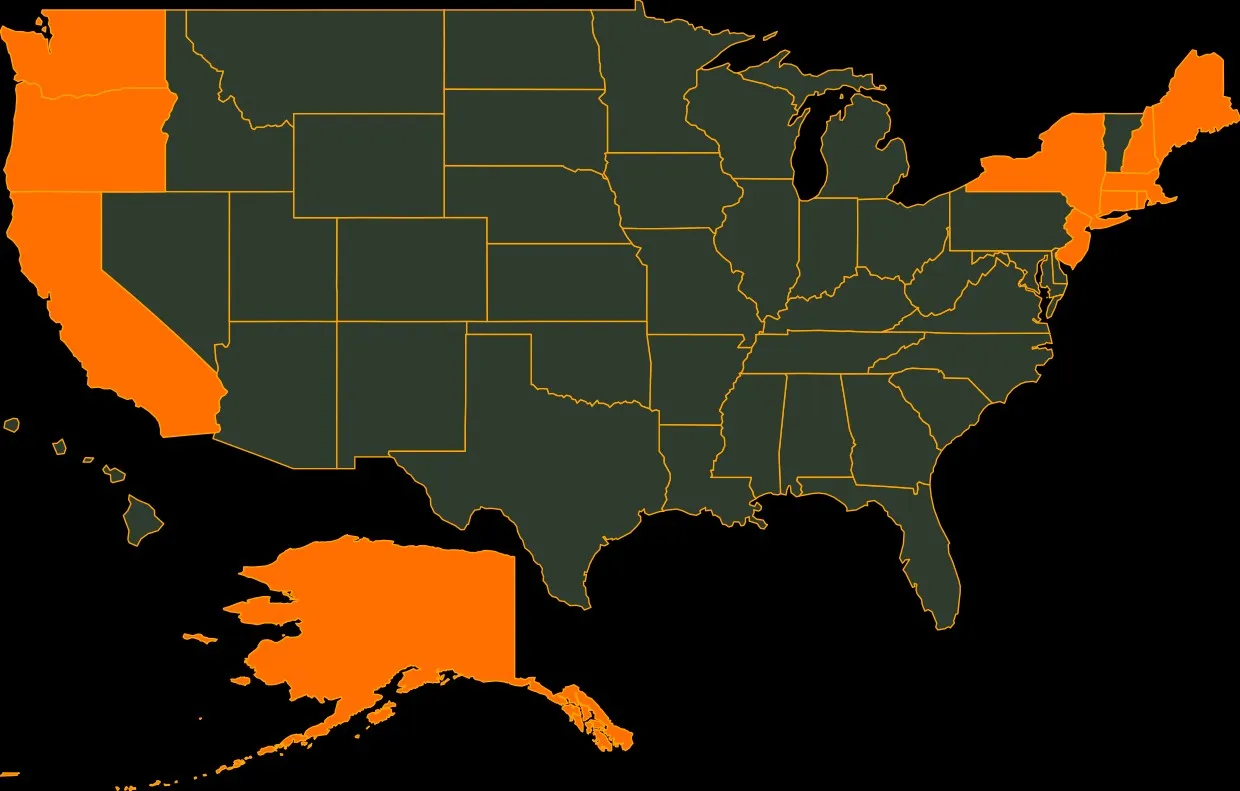
Harlequin Ducks have limited year-round presence, mainly along parts of the Pacific Northwest coast and coastal Alaska, where some birds remain through both breeding and winter periods. Most populations, however, are migratory and shift between inland breeding areas and coastal wintering grounds.
Breeding
They breed in mountainous regions of western North America, from Alaska through British Columbia and into the northern Rocky Mountains, as well as in parts of eastern Canada including Labrador and Newfoundland. Breeding occurs along fast-flowing rivers and streams in these regions.
Winter
Most birds winter along rocky coastlines of the Pacific and Atlantic Oceans. Key wintering areas include coastal Alaska, British Columbia, Washington, and California, as well as Atlantic Canada and the northeastern United States.
Migration Timing
Fall migration begins in late summer through October as birds move from inland rivers to coastal waters. Spring migration occurs from March through May, with birds returning inland to breeding streams. Movements are relatively short-distance and concentrated between mountain regions and nearby coasts.
Related Species
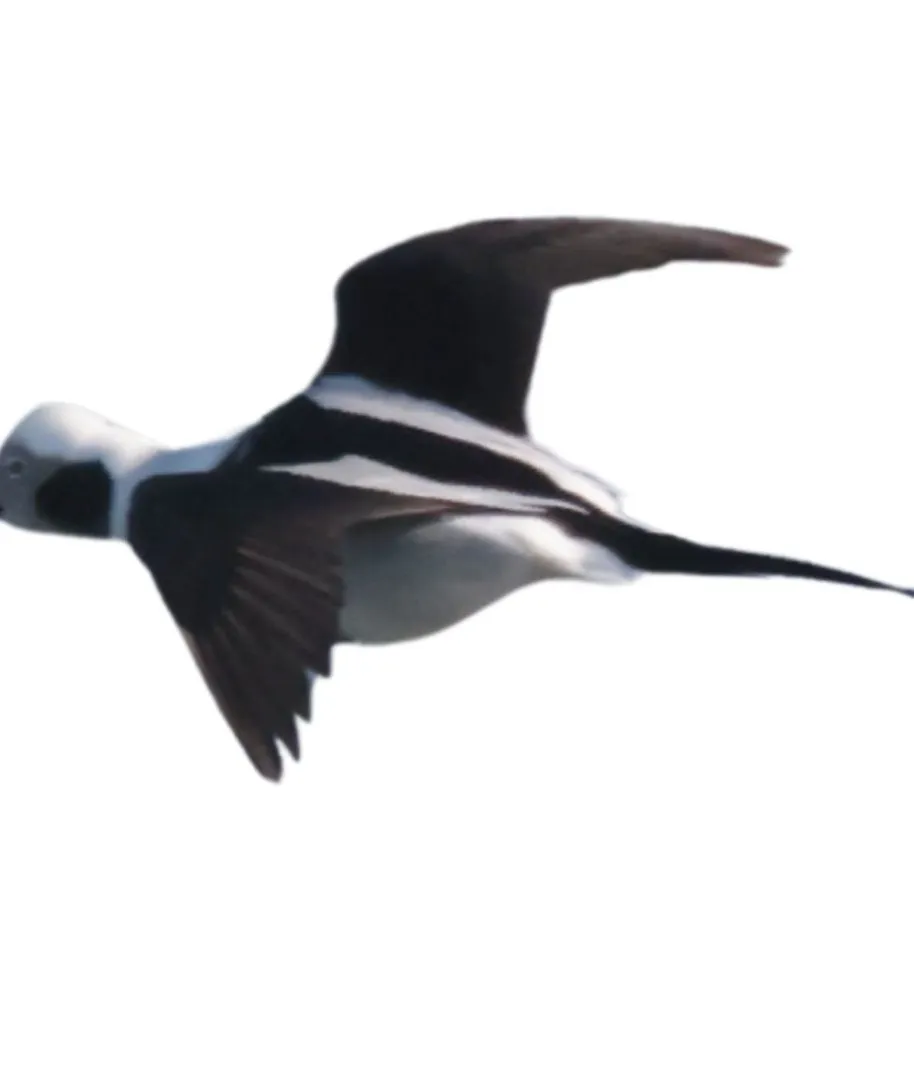 DiverLong-tailed DuckClangula hyemalis
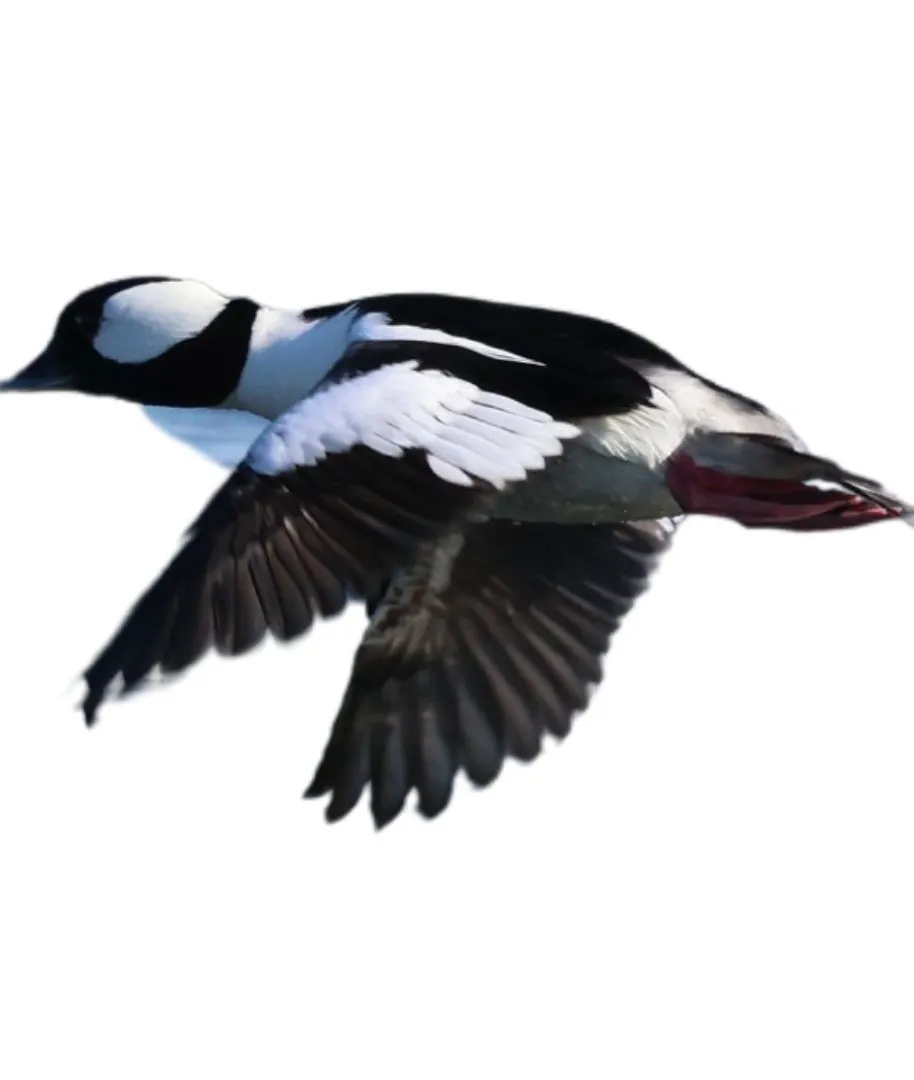 DiverBuffleheadBucephala albeola
- DabblerComing SoonWood DuckAix sponsa
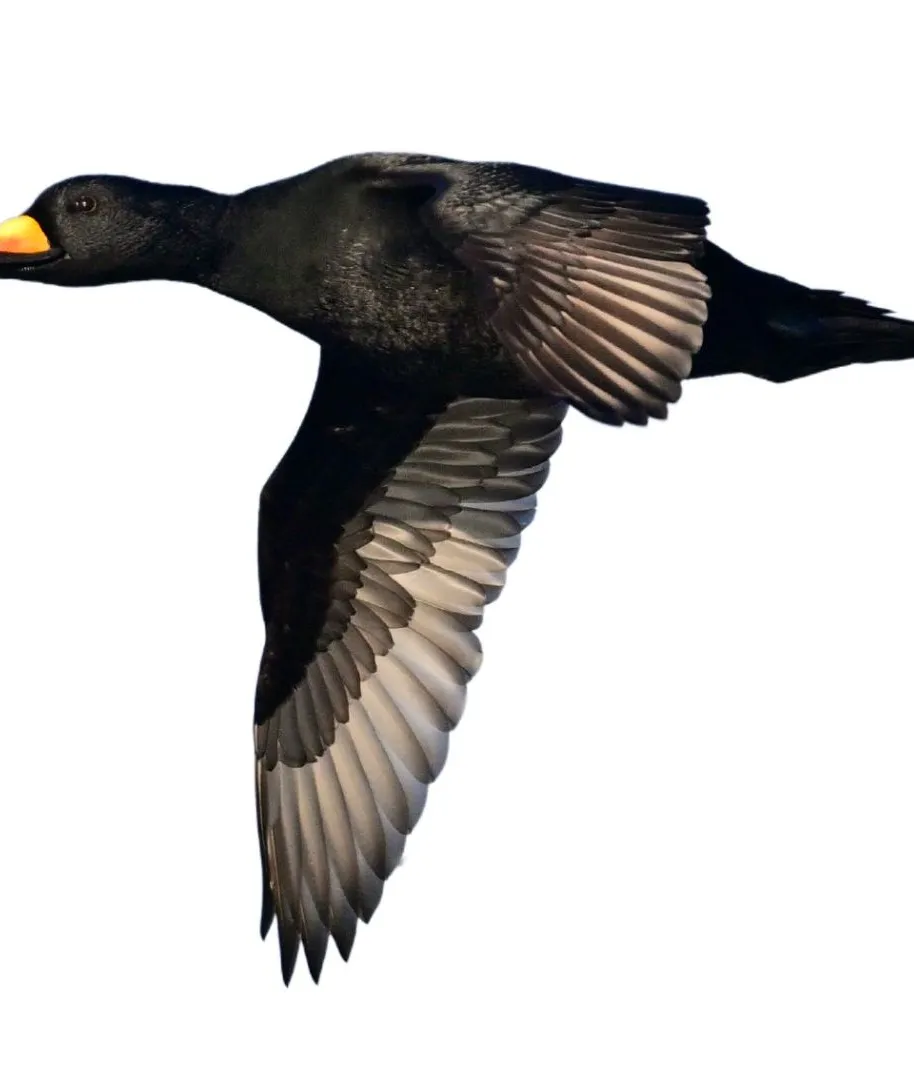 DiverBlack ScoterMelanitta americana
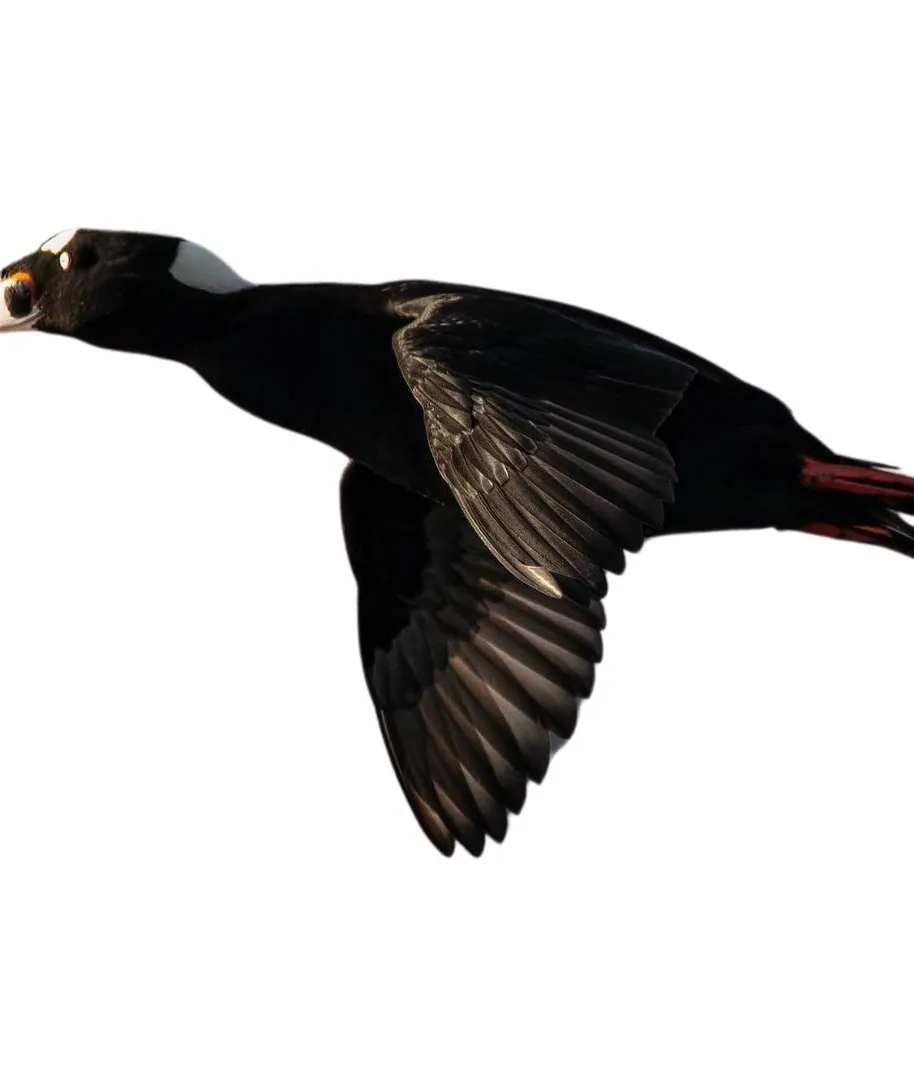 DiverSurf ScoterMelanitta perspicillata
How to ID It
- Small, compact diving duck with short neck, rounded head, and stubby bill.
- Stocky body and short tail give a tight, low profile on the water.
- Drake shows bold slate-blue body with white stripes and spots forming strong contrast.
- Hen is dark brown overall with small white facial spots near eye and bill.
- Bill is short and narrow, lacking the length seen in mergansers.
- In flight appears compact with rapid wingbeats and short wings.
- Wings are mostly dark with no large white patches visible at distance.
- Often confused with scoters, but smaller with shorter bill and more compact shape.
Key Facts
- Bill Color (Drake)
- Blue-gray
- Bill Color (Hen)
- Dark gray
- Primary Habitat
- Coastal waters, fast mountain streams
- Breeding Habitat
- Fast-flowing mountain rivers, streams
- Winter Habitat
- Rocky coastal shorelines, bays
- Migration Pattern
- Short-distance migrant to coasts
- North America Status
- Uncommon, localized populations
Habitat
Primary Habitat. Harlequin Ducks are closely tied to fast-moving water and rugged shorelines, using mountain streams, rocky rivers, and coastal waters. They favor clear, cold water rather than marshes, ponds, or shallow wetlands. Outside the breeding season, they are most often found in coastal bays, rocky shorelines, and exposed marine waters with strong wave action.
Seasonal Habitat Differences. During breeding season they use fast-flowing mountain rivers and streams, often in steep terrain with clean, well-oxygenated water. Outside of breeding, they shift almost entirely to marine environments, including coastal bays, inlets, and nearshore ocean waters. They rarely use inland wetlands, flooded fields, or quiet freshwater outside of breeding areas.
Landscape Features to Look For. Look for turbulent water, including rapids, riffles, and rocky channels in mountain regions, or wave-washed coastlines with exposed rocks and strong currents. Harlequin Ducks are typically found in areas with little vegetation and constant water movement, not in sheltered marshes, shallow ponds, or calm backwaters.
Frequently Asked Questions
How do you identify a Harlequin Duck?
Harlequin Ducks are small, compact diving ducks with a short neck, rounded head, and stubby bill. Males show strong slate-blue and white patterning, while females are dark brown with small white facial spots. Both sexes appear tight-bodied in flight with rapid wingbeats and mostly dark wings.
Where are Harlequin Ducks found in North America?
Harlequin Ducks occur along the Pacific coast from Alaska to California and along the Atlantic coast from eastern Canada to the northeastern United States. They also breed inland in mountainous regions of western North America and parts of eastern Canada before moving to coastal areas outside the breeding season.
What habitat do Harlequin Ducks prefer?
Harlequin Ducks use fast-moving mountain streams and rocky rivers during breeding and shift to coastal marine waters in winter. They favor clear, cold water and rugged shorelines rather than marshes, ponds, or shallow wetlands. Most sightings occur along wave-exposed coasts or turbulent inland rivers.
Do Harlequin Ducks migrate?
Harlequin Ducks are short-distance migrants, moving between inland breeding rivers and coastal wintering areas. Fall movements begin in late summer and continue into October, while spring migration runs from March through May. Most birds travel relatively short distances between mountain regions and nearby coastlines.
What species are Harlequin Ducks commonly confused with?
Harlequin Ducks are most often confused with scoters due to their dark appearance at distance. Scoters are larger with thicker bills and longer bodies. Harlequin Ducks are smaller, more compact, and show faster wingbeats with no large white wing patches in flight.
Are Harlequin Ducks common?
Harlequin Ducks are considered uncommon and are locally distributed in North America. Populations are concentrated along specific coastal regions and mountain breeding areas. They are not widespread across inland wetlands and are usually encountered in smaller numbers compared to more common sea ducks.
What do Harlequin Ducks eat?
Harlequin Ducks feed mainly on aquatic invertebrates such as insects, crustaceans, and mollusks. In rivers they pick food from rocks in fast water, and in coastal areas they forage in shallow marine zones. Their diet reflects their preference for moving water and rocky substrates rather than vegetated wetlands.
In the Field
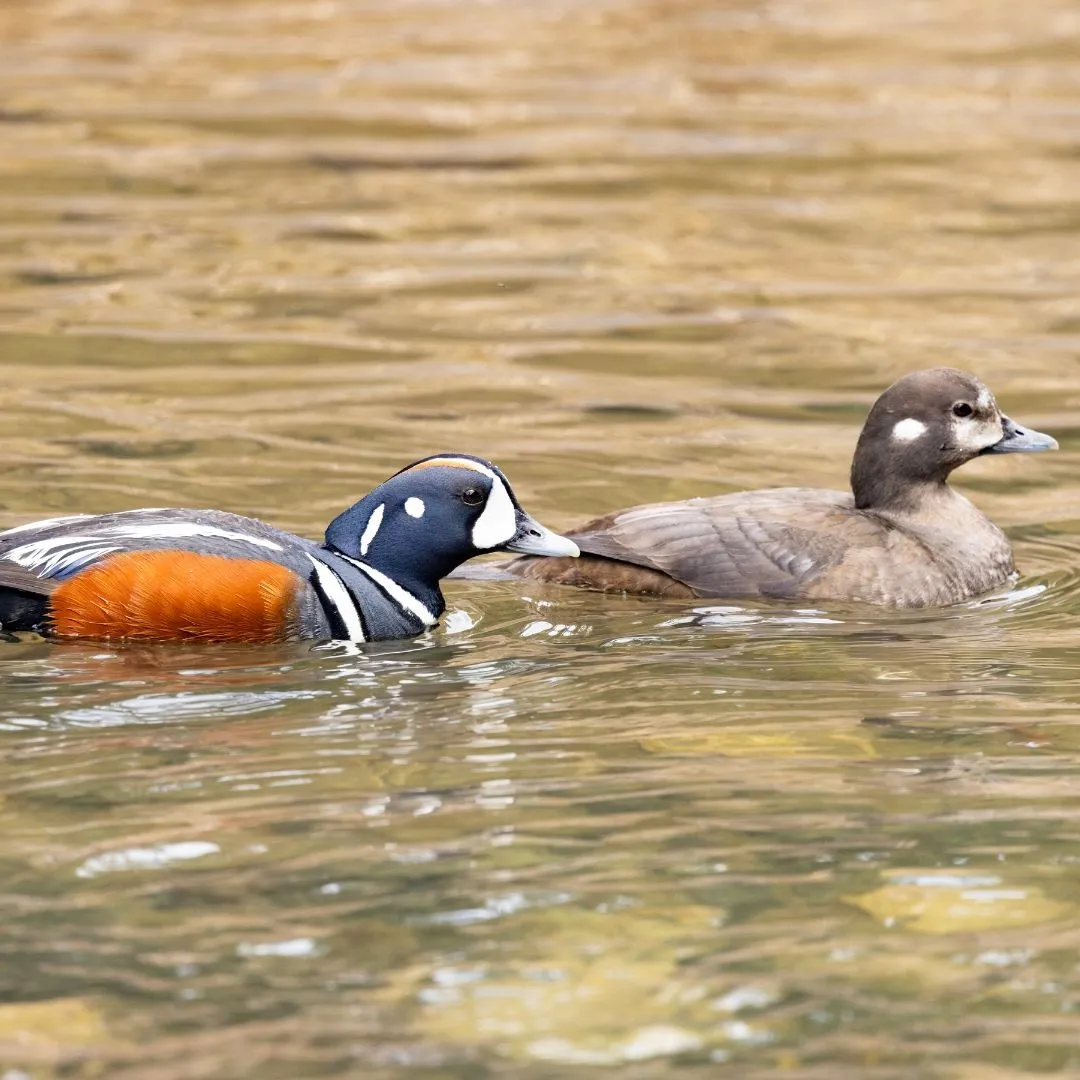
Photo: NPS 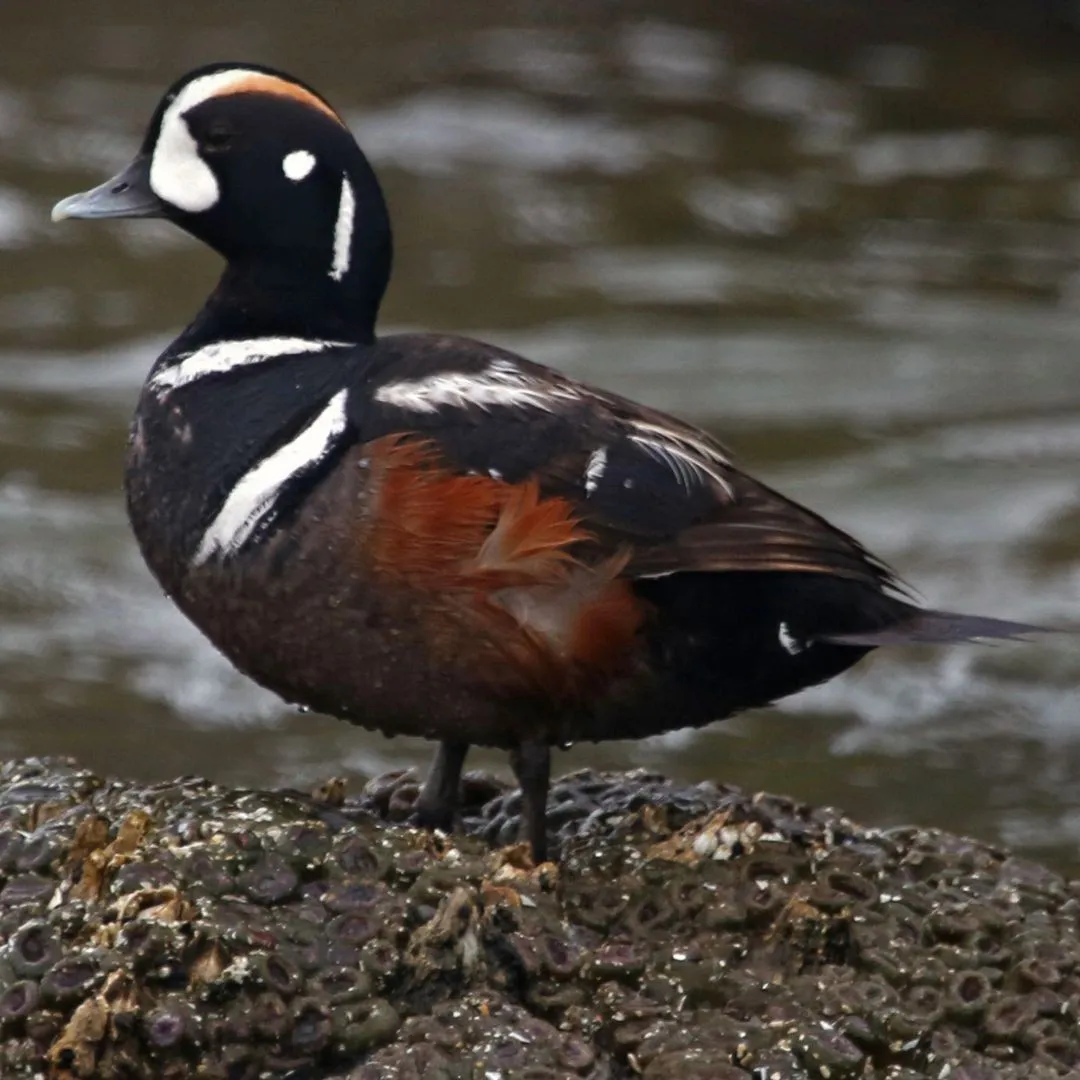
Photo: Peter Pearsall/USFWS 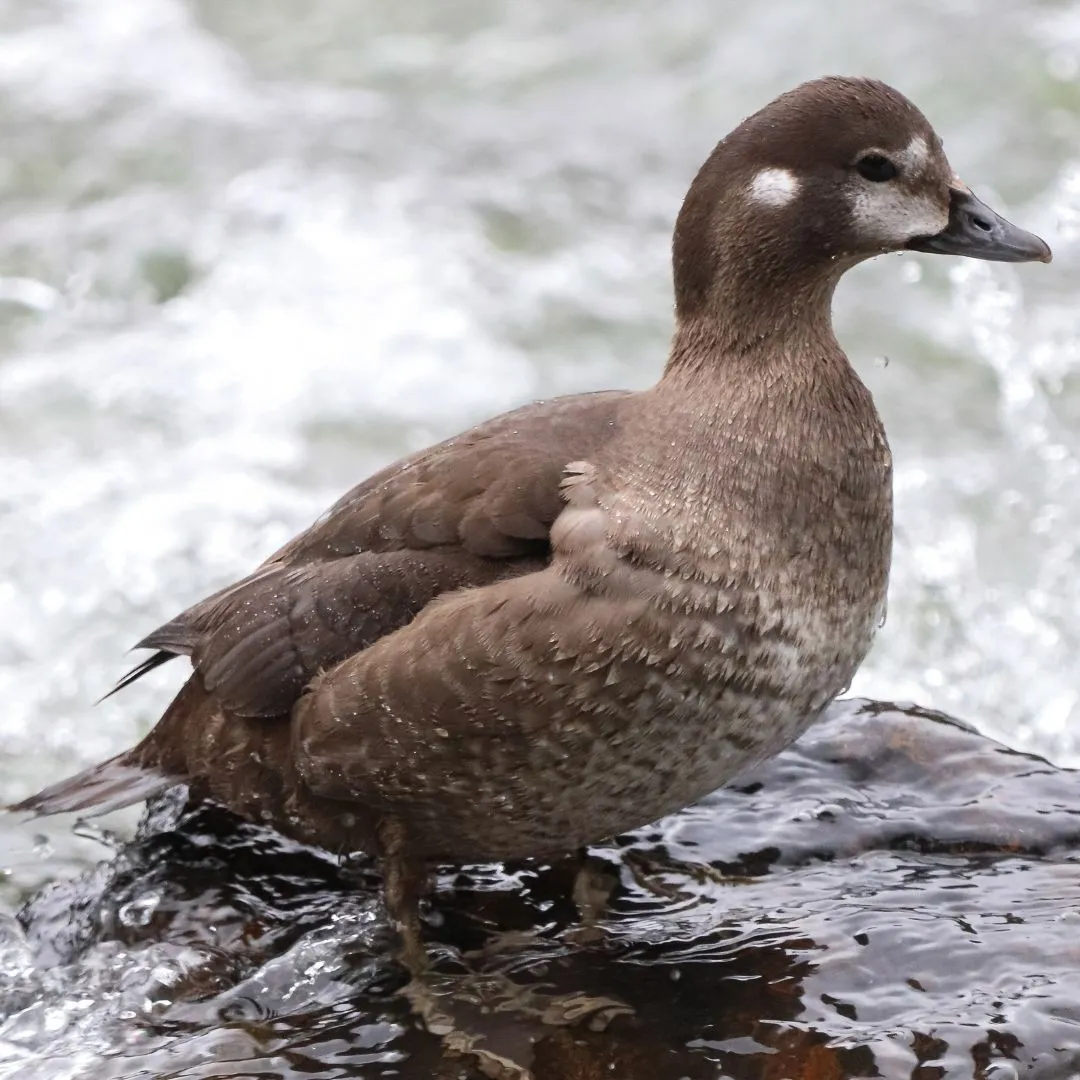
Photo: A. Falgoust/NPS