Long-tailed Duck
Clangula hyemalis
Alternate names: Oldsquaw (historical name), Sea duck
- Length
- 20.5 in
- Weight
- 2 lb
- Wingspan
- 28–31 in
Calls
Long-tailed Ducks are among the most vocal sea ducks, with calls commonly heard from flocks on the water and in flight.
- Males: Clear, high yodeling “caloo” notes, rolling and far-carrying, most common from flying or rafted flocks.
- Females: Shorter, rougher calls with less carry, usually heard only at close range.
Drake
Drakes give a clear, ringing yodeling call often rendered as caloo, caloo, heard frequently during courtship and while birds raft or fly overhead. The tone carries well over wind and water, and hunters often notice it before spotting the birds. Males also give softer notes during close interactions on the water.
Hen
Hens are less vocal and give lower, harsher calls that lack the drake’s musical quality. Their notes are shorter and usually heard at close range within small groups or mixed flocks. Compared with males, hens call less often and with less volume.
When You'll Hear Them
Vocalizations are most noticeable during fall and spring migration and throughout winter on coastal waters and large lakes. Calls are common from flying flocks at dawn and dusk and from resting birds during active movement periods.
Overview
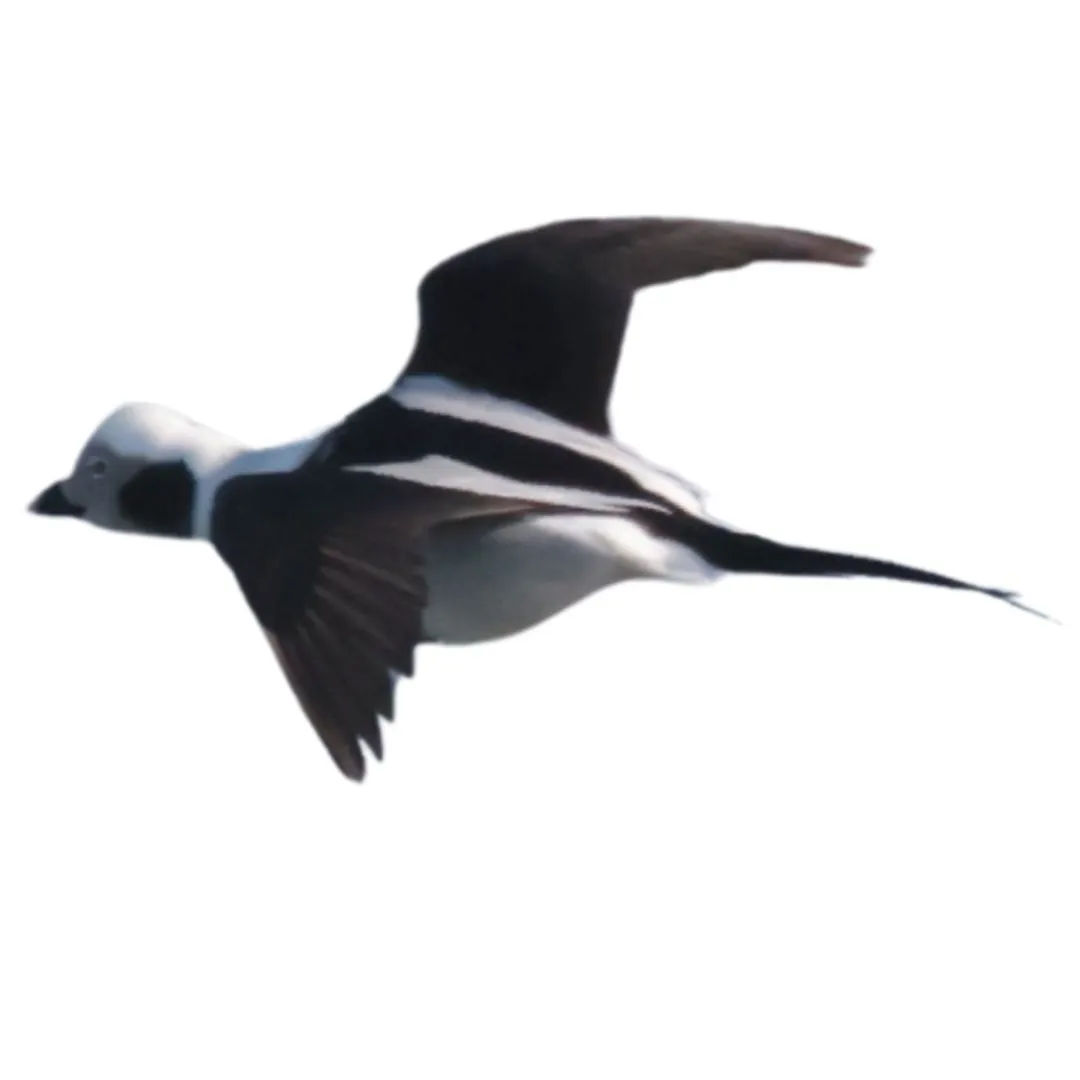
The long-tailed duck is a small, highly distinctive sea duck recognized by hunters for its striking winter plumage and long, pointed tail feathers in males. Males have a white head and neck with black patches and a long, black tail, while females are more muted with brown and white plumage and a shorter tail.
They are known for their deep diving abilities, often submerging to great depths in search of crustaceans and small fish. Found mainly in coastal waters during the winter, long-tailed ducks are fast flyers with erratic flight patterns, making them a challenging target.
Identification
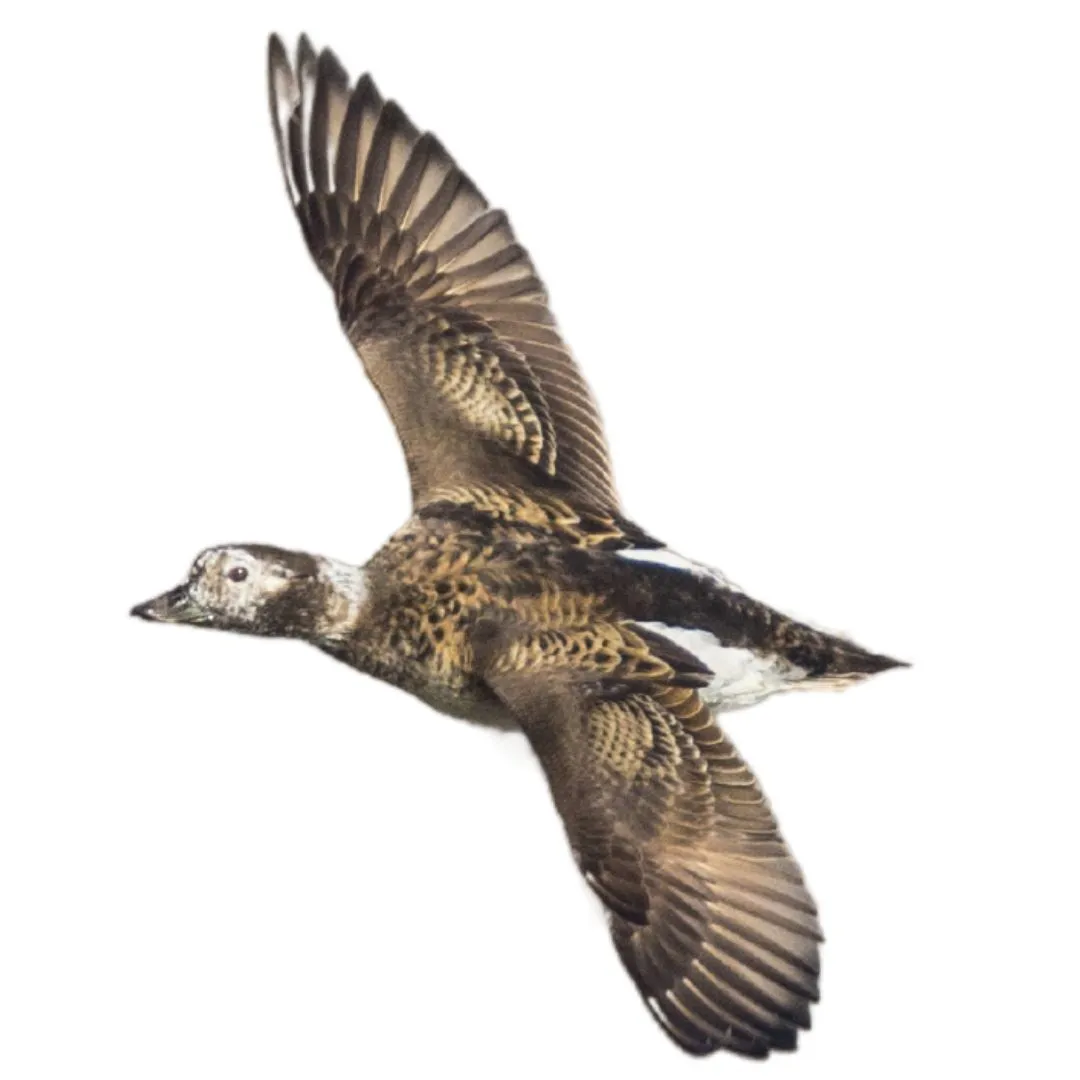
Long black tail (male), white head with black patches (male), brown and white plumage (female), deep diving ability, small size, erratic flight
Long-tailed ducks are small, slim sea ducks with a compact body, small head, and narrow bill that stands out on open water and in flight. The long tapered tail gives them a stretched look that separates them from scoters and eiders. On the wing they fly fast and low with stiff wingbeats and long tails trailing behind the body. Flocks shift constantly in loose groups, and their sharp black and white contrast in winter makes them easier to pick out at distance.
Drake
Drakes show the longest tail streamers, which are obvious even at distance and in flight. Winter males carry strong black and white contrast with a dark chest and back and pale head, while summer birds turn mostly dark with a pale face. Compared with scoters, drakes look slimmer with a smaller bill and much longer tail.
Hen
Hens lack the long tail streamers and appear shorter and browner overall with a pale face and darker cheek patch. In flight they still show the slim shape and long pointed tail that separates them from scoters. Compared with female eiders, hens look smaller with a finer bill and faster wingbeat.
Range
Year-Round
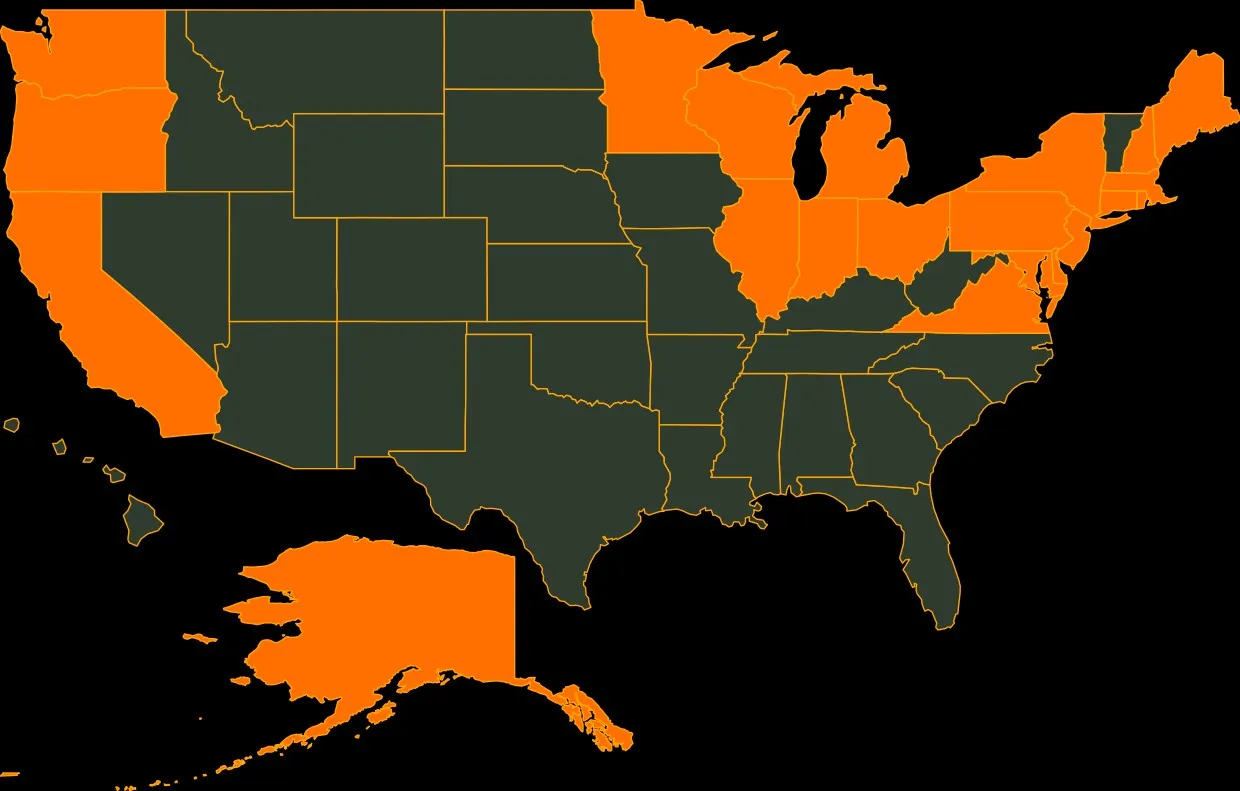
Long-tailed Ducks are not present year-round in most of North America, as they breed far north and winter well south of breeding areas. Limited numbers remain through summer along parts of coastal Alaska and occasionally in the eastern Canadian Arctic.
Breeding
They breed across the Arctic tundra of Alaska, northern Canada, and Greenland, nesting inland on freshwater lakes, ponds, and coastal lowlands. Most breeding occurs well north of the boreal forest across remote tundra regions.
Winter
Most birds winter along both North American coasts from Alaska to California and from Atlantic Canada to the mid-Atlantic, with major concentrations on the Great Lakes. Smaller numbers occur inland where large open waters remain unfrozen.
Migration Timing
Fall migration begins early, with movement south from Arctic areas starting in September and peaking through October and November. Spring migration runs from March into May, with birds moving north along both coasts and through the Great Lakes in loose flocks.
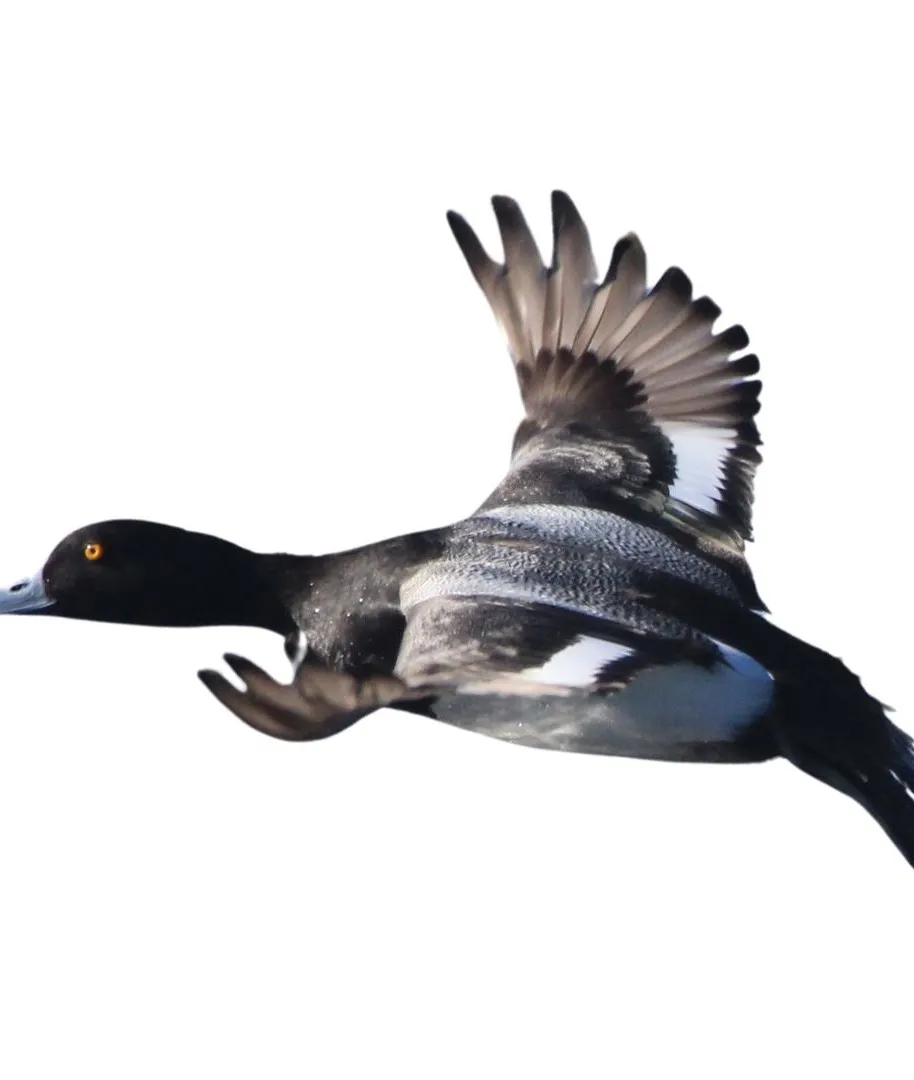
Related Species
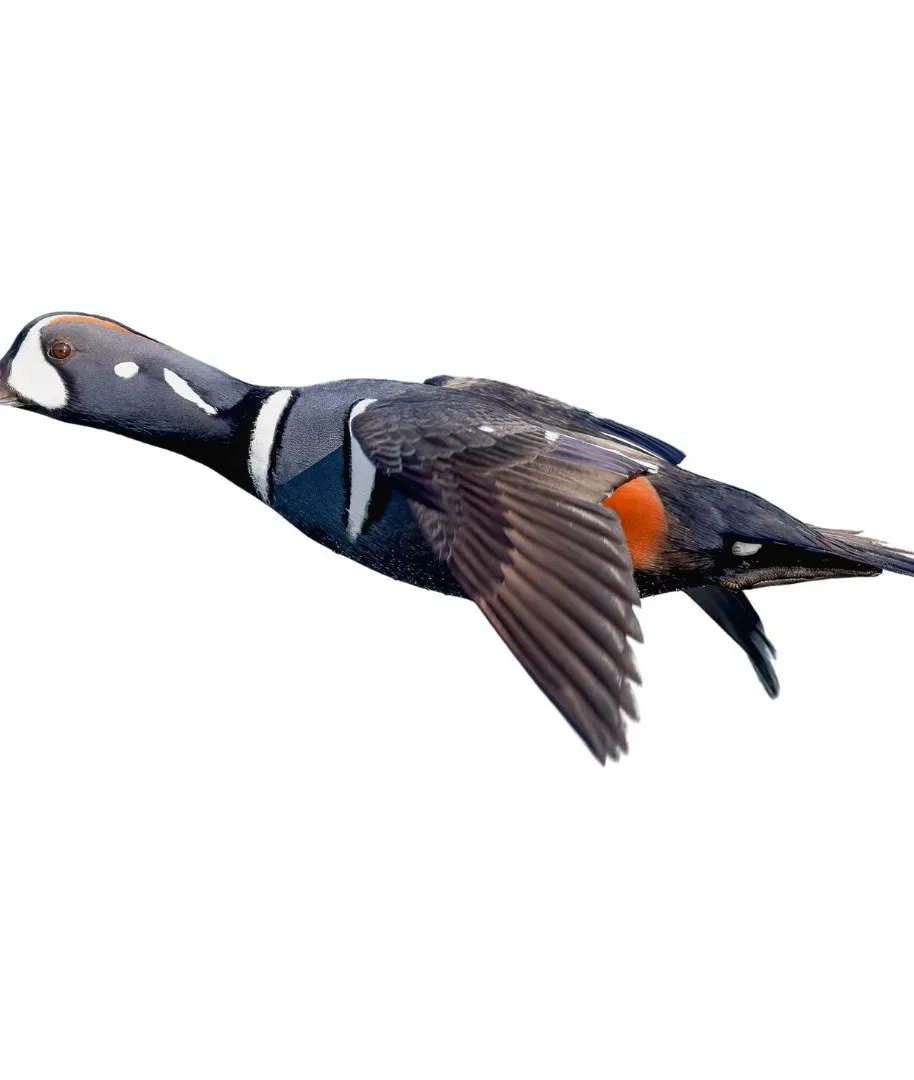
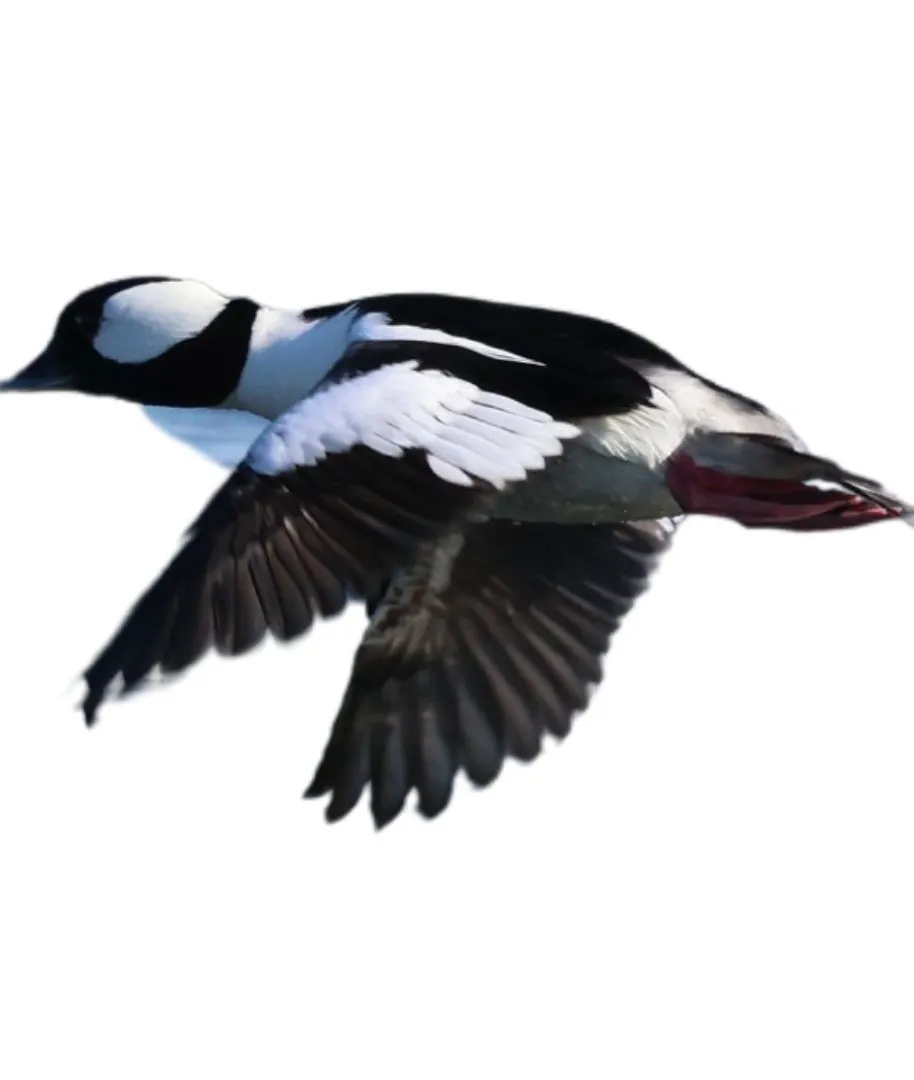
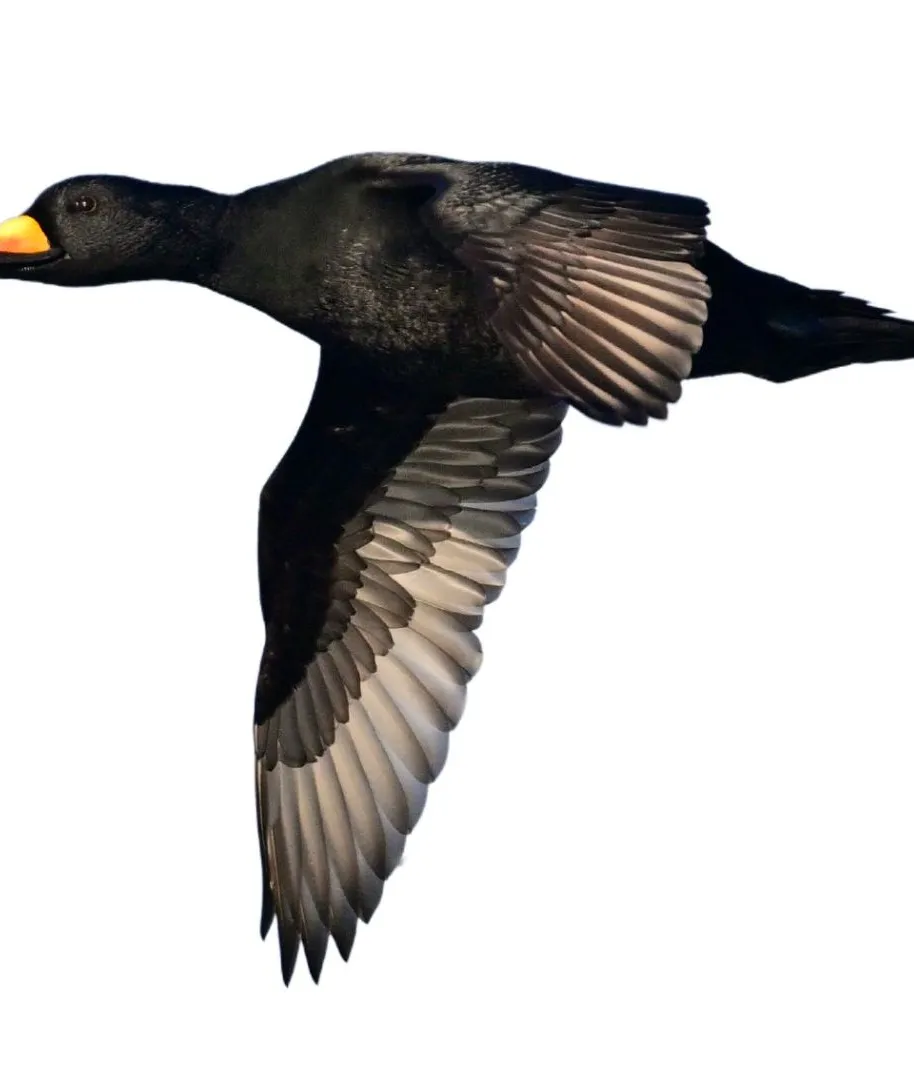
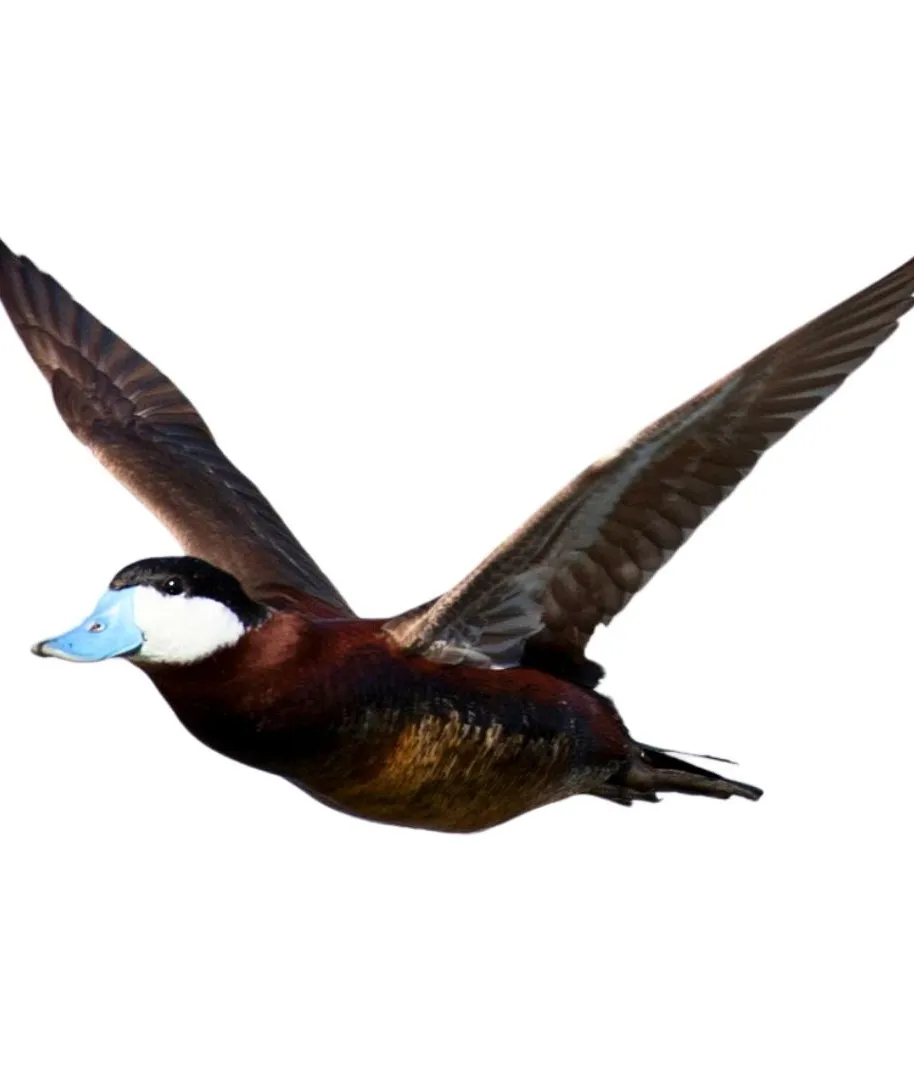
How to ID It
- Very long, narrow tail creates a slim silhouette, with drakes showing elongated central tail feathers extending well beyond the body.
- Small rounded head on a slender neck and compact body give a delicate profile compared with other sea ducks.
- Bill is short and relatively small with a dark base and pale band near the tip.
- Drake in winter shows a white head with dark cheek patch and contrasting dark breast and back.
- Hen is brown overall with a pale face and darker cheek patch, lacking the long tail streamers.
- In flight appears slim with pointed wings and a noticeably long tail trailing behind the body.
- Wings show mostly dark upper surfaces without bold white wing patches seen in many other diving ducks.
- Differs from scoters and eiders by its much slimmer shape and the drake’s elongated tail.
Key Facts
- Bill Color (Drake)
- Dark with pink band near tip
- Bill Color (Hen)
- Dark gray to black
- Primary Habitat
- Coastal marine waters, large lakes
- Breeding Habitat
- Arctic tundra ponds and lakes
- Winter Habitat
- Coastal seas, Great Lakes
- Migration Pattern
- Arctic breeder; winters south on coasts
- North America Status
- Common wintering sea duck
Habitat
Primary Habitat. Long-tailed Ducks are strongly tied to large open waters, especially coastal bays, offshore marine waters, and large inland lakes. They favor deep, cold water rather than shallow wetlands, marshes, or flooded fields, and are most often found in open coastal lagoons, estuaries, and broad lake basins with minimal vegetation. In North America they are closely associated with saltwater environments and large freshwater systems like the Great Lakes.
Seasonal Habitat Differences. During breeding season they shift inland to Arctic tundra landscapes, using freshwater ponds, small lakes, and slow tundra wetlands for nesting and feeding. During migration they concentrate on large lakes, reservoirs, and coastal waters where food is abundant. In winter they rely heavily on coastal bays, offshore waters, and deep inland lakes that remain ice-free.
Landscape Features to Look For. Look for expansive open water with little emergent vegetation, especially cold coastal shorelines, rocky bays, and large wind-swept lakes. They often gather far from shore in open water, forming tight rafts rather than using sheltered marshes or shallow backwaters.
Frequently Asked Questions
How do you identify a Long-tailed duck?
Long-tailed ducks are slim sea ducks with small heads, narrow bills, and long tapered tails that stand out in flight and on the water. Adult males show strong black-and-white contrast in winter and very long tail streamers. Both sexes fly fast and low with stiff wingbeats. Their shape and tail length separate them from bulkier scoters and eiders.
Where are Long-tailed ducks found in North America?
The Long-tailed duck breeds across Arctic Alaska and northern Canada and winters mainly along both coasts and the Great Lakes. Most winter along the Atlantic and Pacific coasts, with large inland numbers on the Great Lakes. They are less common inland elsewhere except during migration on large lakes and reservoirs.
What habitat do Long-tailed ducks prefer?
Long-tailed ducks prefer large open waters, especially coastal bays, offshore marine waters, estuaries, and large inland lakes. Unlike many ducks, they avoid shallow marshes, flooded fields, and vegetated wetlands. During breeding season they use Arctic tundra ponds and lakes, but outside that period they remain closely tied to deep open water.
When do Long-tailed ducks migrate?
Fall migration typically begins in September and continues through November as birds leave Arctic breeding grounds for southern coasts and large lakes. Spring migration runs from March through May. Most movements follow coastlines and major inland waters, with birds traveling in loose flocks that often remain offshore.
What species are Long-tailed ducks commonly confused with?
Long-tailed ducks are most often confused with scoters and eiders. Scoters appear heavier with thicker bills and shorter tails, while eiders are bulkier with larger heads and broader bodies. The Long-tailed duck’s slim shape, long tail, and faster wingbeat are the most reliable field marks in flight.
Are Long-tailed ducks common?
Long-tailed ducks are widespread but unevenly distributed in North America. They are common to abundant in winter along the Atlantic coast, Pacific coast, and Great Lakes, where large flocks gather offshore. Away from these regions they are less frequently encountered and usually seen only during migration on large open waters.
In the Field
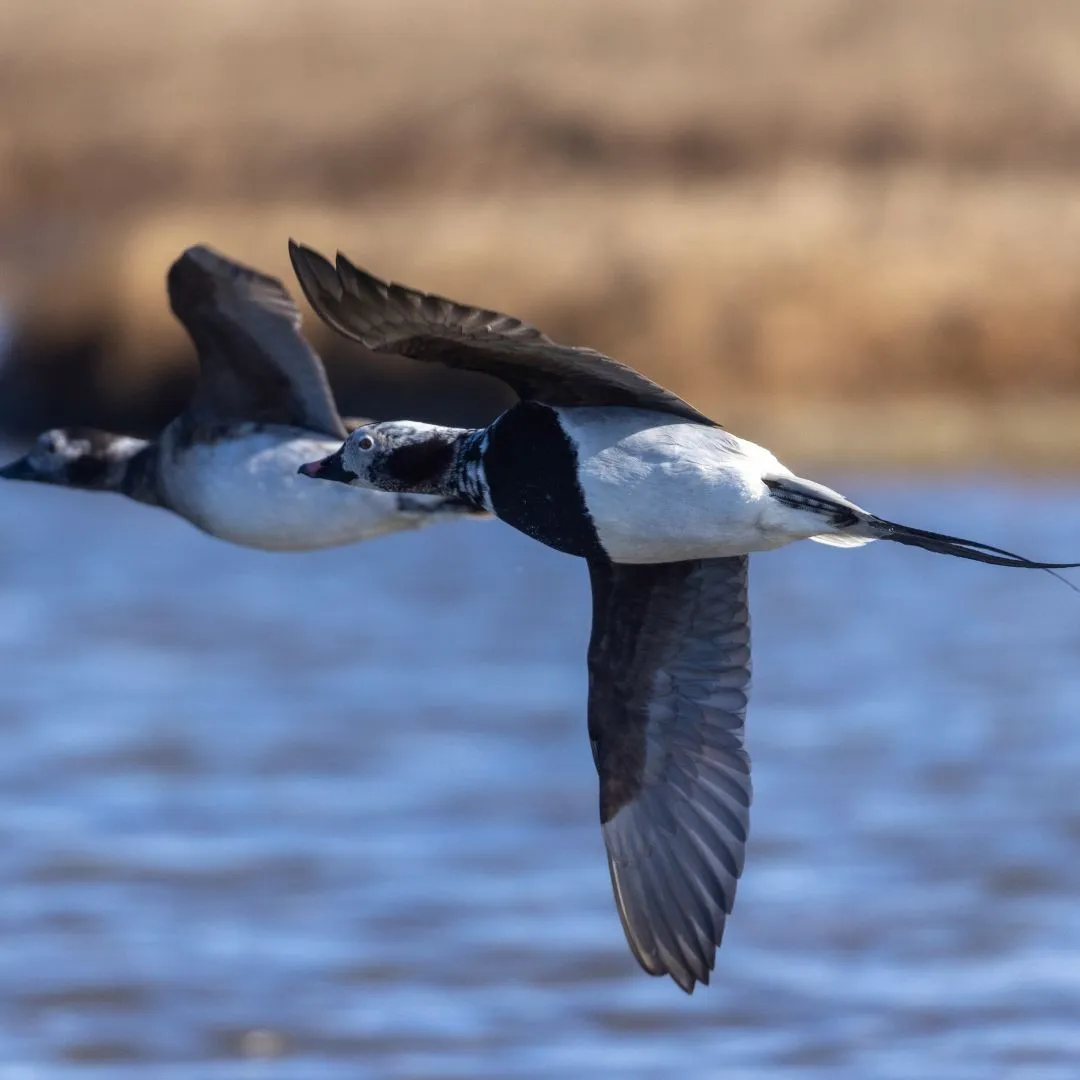
Photo: Mark Lindberg/USFWS 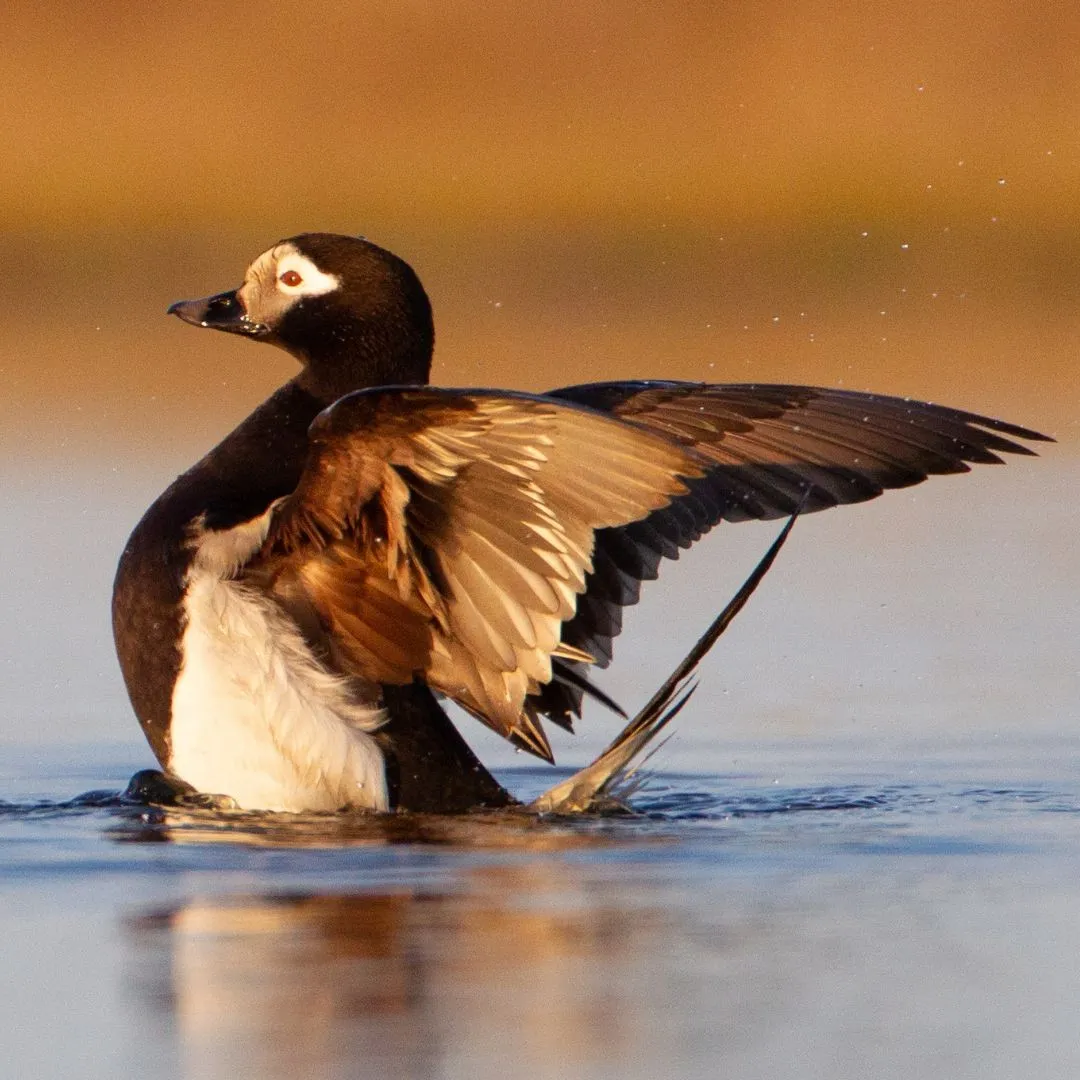
Photo: Peter Pearsall/USFWS 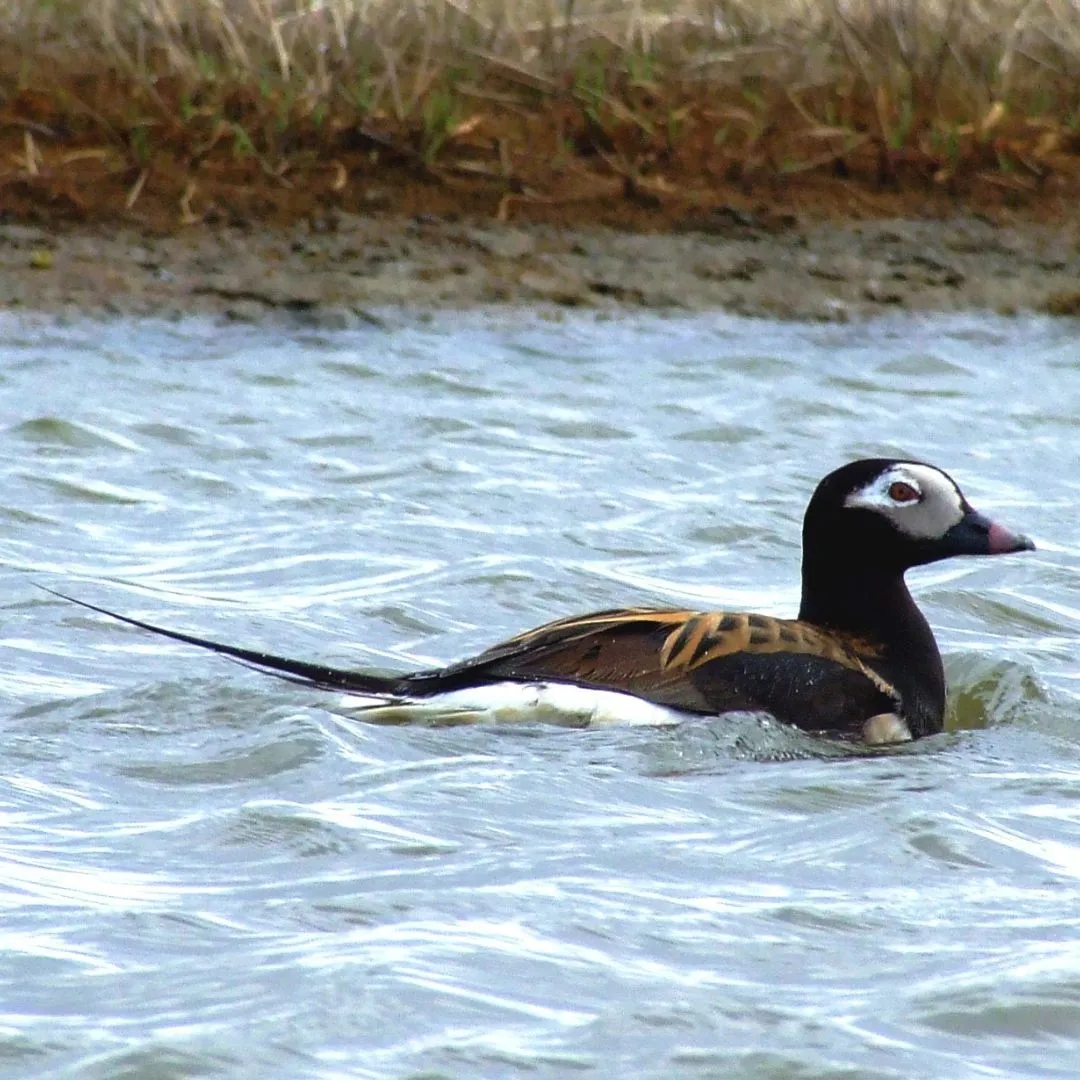
Photo: USFWS