Bufflehead
Bucephala albeola
Alternate names: Butterball, Dipper
- Length
- 14.5 in
- Weight
- 1 lb
Calls
Buffleheads are very quiet and do not respond to calls well.
- Males: Thin, high-pitched “pee-ep” or “whee-oo” whistle, mostly heard during flight or courtship displays.
- Females: Soft, guttural “gurr” or “kuk-kuk” call used occasionally when disturbed or communicating with ducklings.
Overview
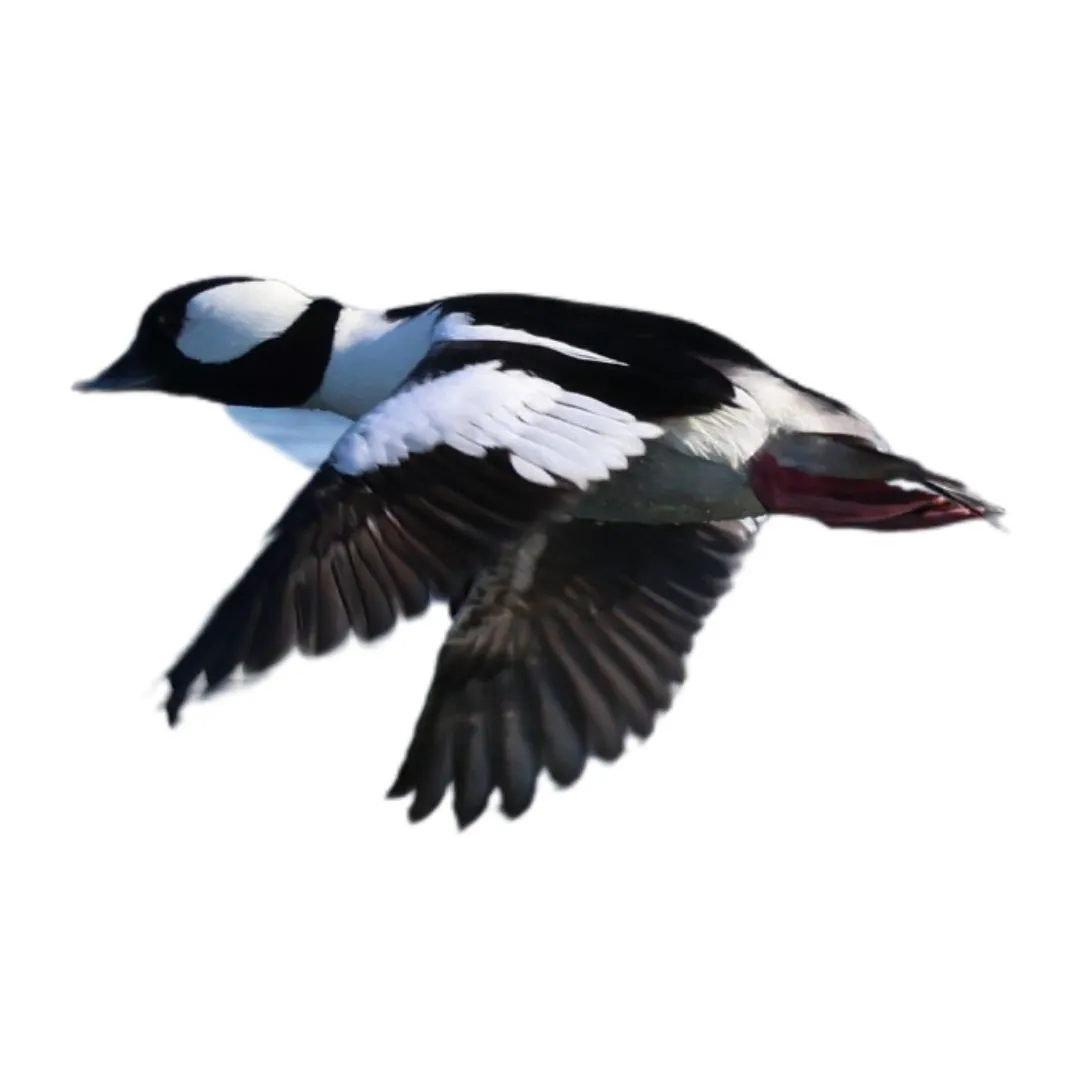
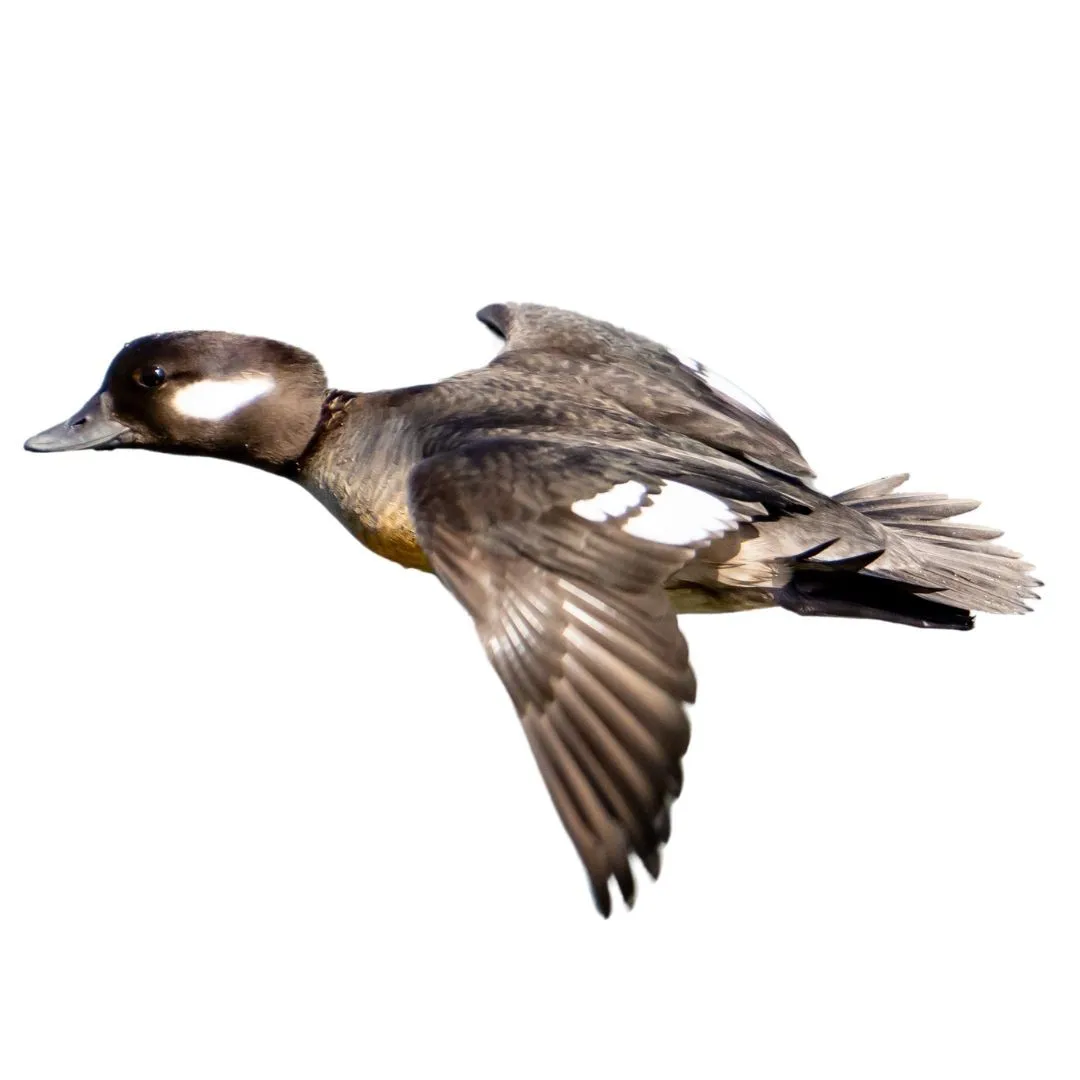
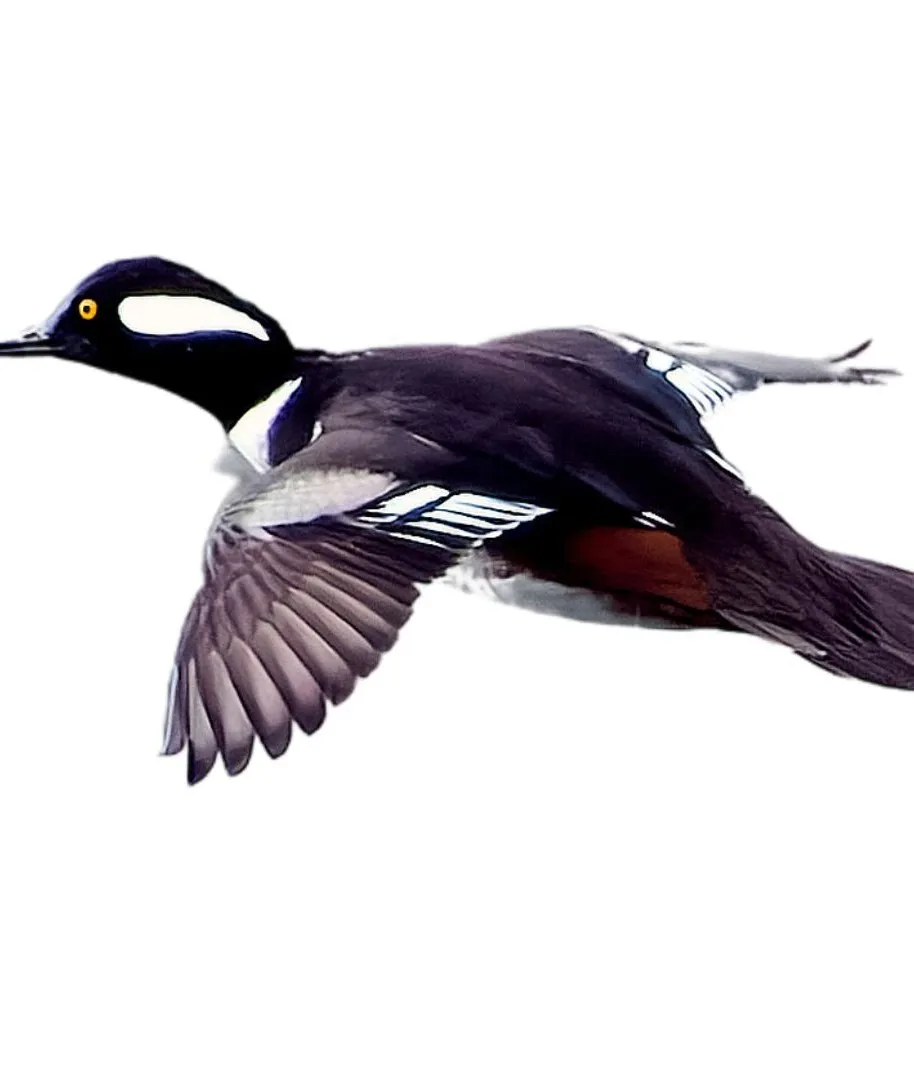
The bufflehead is a small, energetic diving duck, highly recognizable due to the male’s striking black-and-white plumage and large, puffy head. Males display a glossy green and purple head with a prominent white patch behind the eyes, while females are more subdued with a brownish head and a smaller white cheek patch. Buffleheads are one of the smallest diving ducks, known for their quick dives and rapid wingbeats. They prefer small ponds, lakes, and sheltered coastal waters, and their erratic flight and small size present a challenge for hunters.
Identification
Large white head patch (male), small size, puffy head, fast wingbeats, black-and-white body (male), diving behavior
Buffleheads are small, compact diving ducks that use tight water like wooded lakes, ponds, and protected bays. They fly fast and low with rapid wingbeats and often pitch in suddenly. In the air, their small size, white belly, and clean profile make them stand out. Hunters can mistake them for ruddy ducks or goldeneyes, but buffleheads show tighter flocks and more direct flight.
Drake
Males are white below with a black back and a large white patch wrapping around the head. In good light, the black head flashes green and purple iridescence. In flight, they show bold white on the sides and wings, making them easy to pick out from scaup or goldeneye.
Hen
Females are grayish-brown with a single white cheek patch and small body shape. They show a white belly and slight wing flash in flight but stay much plainer than the males. Compared to female goldeneyes, bufflehead hens are smaller with shorter necks and quicker wingbeats.
Range
Related Species
In the Field
Photo: Vincent van Zalinge