Hooded Merganser
Lophodytes cucullatus
Alternate names: Hoodie, Sawbill
- Length
- 18 in
- Weight
- 1.5 lb
- Wingspan
- 24–26 in
Calls
Hooded Mergansers are generally quiet, with vocalizations heard most often at close range rather than from distant flocks.
- Males: Low, rough croaks and grunts, subdued and usually heard only during close interaction on the water.
- Females: Slightly louder rough quacks and croaks, still soft and not far-carrying.
Drake
Drakes give low, raspy croaks and soft grunts with a subdued, throaty tone. These calls are most often heard during courtship displays or when birds are interacting at close range on the water. In flight, males are usually silent and not detected by voice.
Hen
Hens are slightly more vocal and give low, rough quacks and short croaking notes. Their calls are not loud and are usually heard only when birds are flushed or moving short distances between feeding areas. Compared with most dabbling ducks, hens call less often and with less volume.
When You'll Hear Them
Vocalizations are most noticeable during the breeding season and late winter courtship period. Outside of that time, Hooded Mergansers are typically quiet, and most encounters occur without hearing them.
Overview
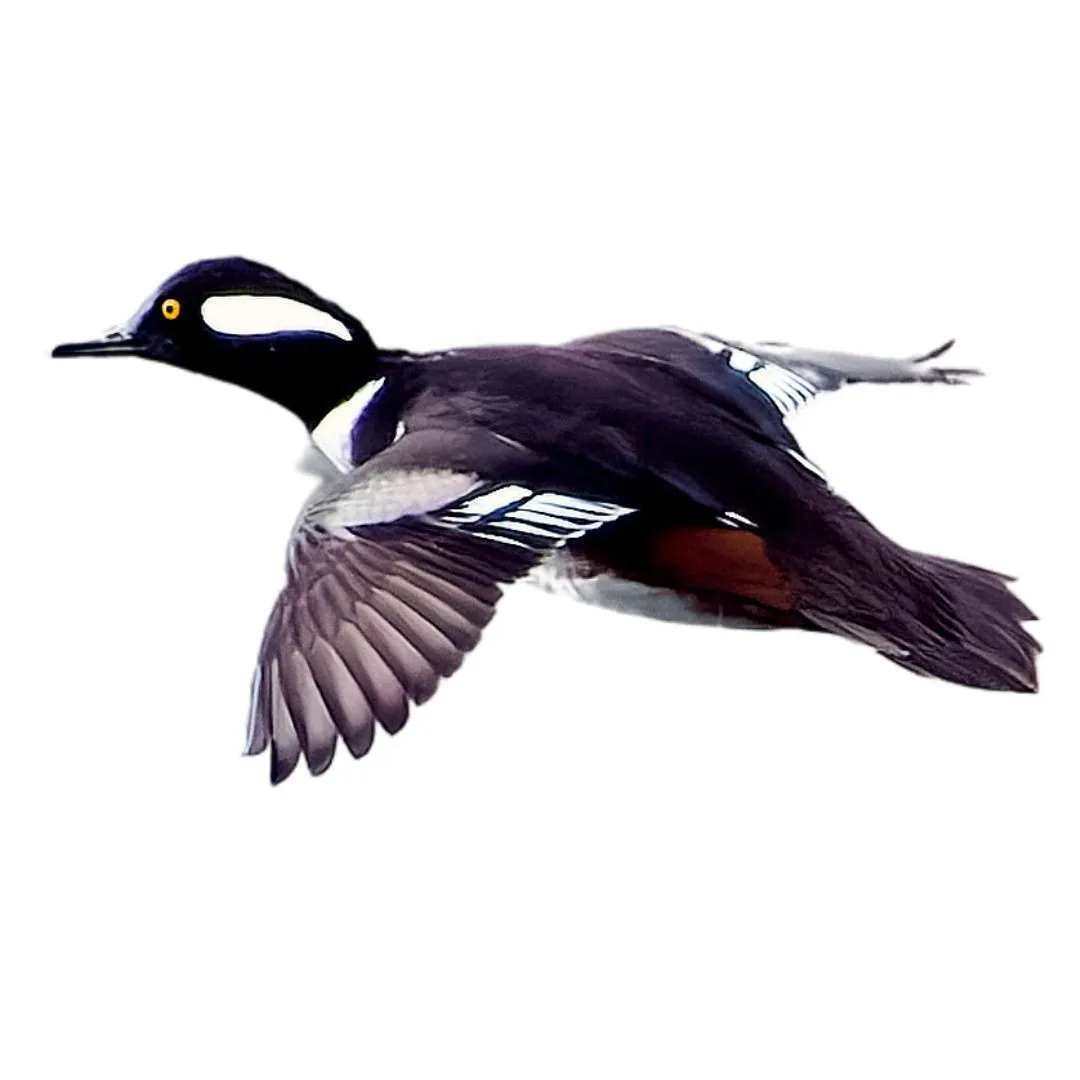
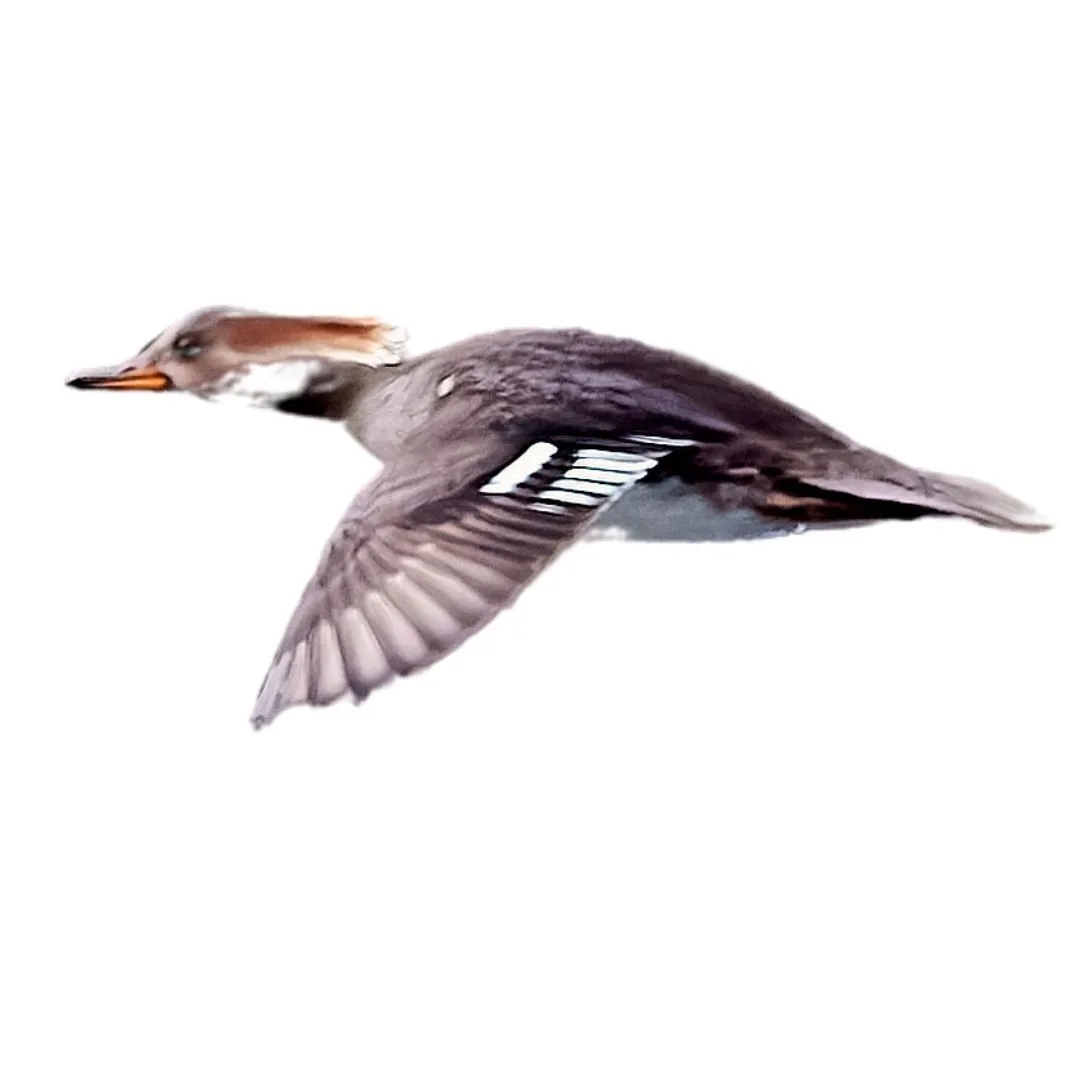
The hooded merganser is a small, striking diving duck known for its distinctive fan-shaped crest, which can be raised or lowered. Males have a bold black-and-white crest, with a black head, white chest, and chestnut-brown sides. Females are brown with a less prominent, reddish-brown crest. Both sexes have the characteristic thin, serrated bill of mergansers, adapted for catching fish.
Preferring wooded ponds, rivers, and small lakes, hooded mergansers are agile divers, often swimming underwater to chase prey, and their striking appearance makes them a popular species for hunters.
Identification
Fan-shaped black-and-white crest (male), chestnut sides (male), thin serrated bill, brown body and reddish crest (female), small size, diving behavior
Hooded mergansers are small, compact diving ducks with a thin bill, short neck, and large rounded head that gives them a top-heavy look on the water. On the wing they show quick, direct flight with rapid wingbeats and bold white wing patches that flash at distance. Their compact size and shape separate them from most puddle ducks. Compared with other mergansers, they are noticeably smaller with a shorter bill and fuller head.
Drake
Drakes show a black head with a large white fan-shaped crest that is obvious even at distance when raised. The body shows strong black and white contrast, and in flight the white wing patches stand out clearly. Compared with Common Merganser, drakes are smaller with a shorter bill and more compact profile.
Hen
Hens are brown overall with a warm cinnamon crest and pale throat that shows well at close range. In flight they appear compact with quick wingbeats and the same bold white wing patch as males. Compared with female Common Merganser, hens look smaller with a shorter bill and rounder head shape.
Range
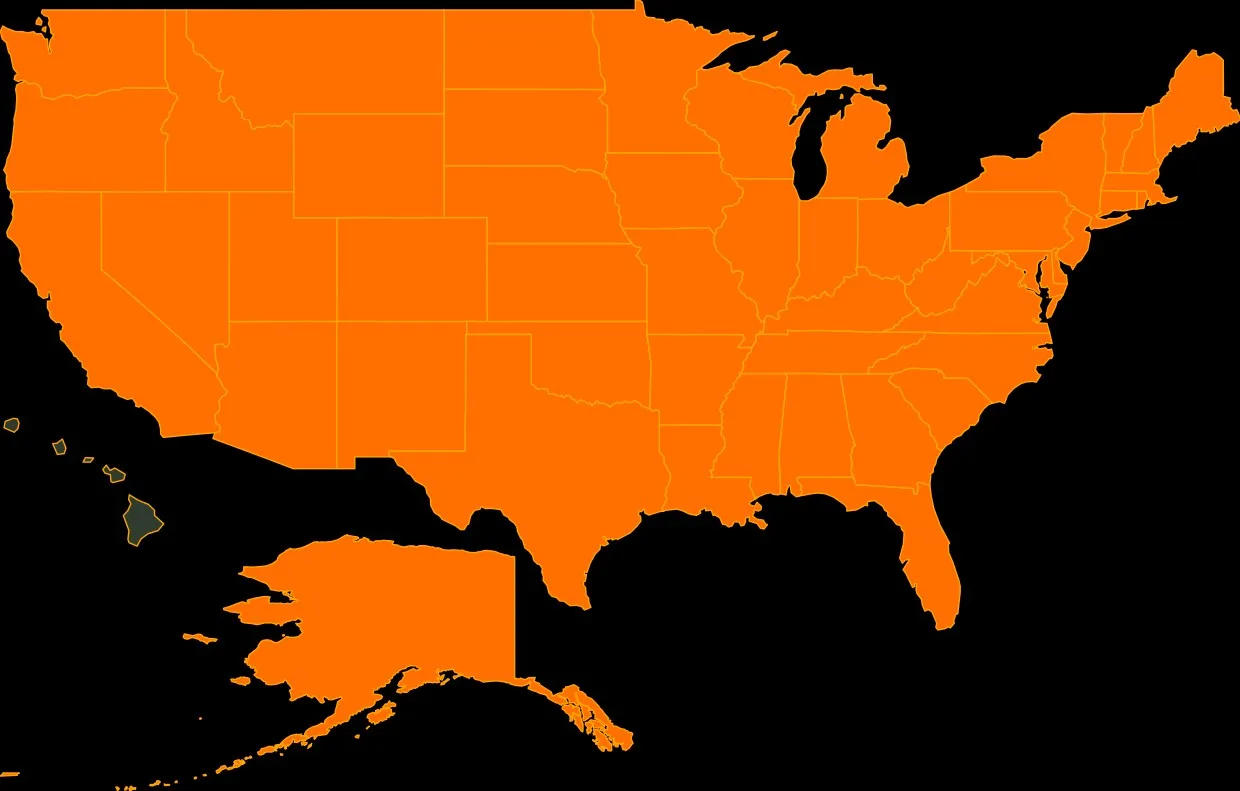
Year-Round
Hooded Mergansers occur year-round across parts of the eastern and Pacific Northwest United States, especially where open freshwater remains available. Resident populations are most consistent in the Southeast, lower Midwest, Mid-Atlantic, and portions of the Pacific coast, with smaller localized pockets elsewhere.
Breeding
They breed across much of southern Canada and the northern and eastern United States, including the Great Lakes region, New England, the Midwest, and the Pacific Northwest. Breeding distribution centers on forested regions from British Columbia east through Ontario and south into the northern U.S.
Winter
Most birds winter across the southern and eastern United States, from the Mid-Atlantic and Great Lakes south through the Mississippi Valley to the Gulf Coast. Wintering birds are also regular along the Pacific coast from Washington south into California.
Migration Timing
Fall migration generally begins in October and peaks through November as northern birds move south. Spring migration runs from February through April, with movement concentrated along inland river systems and across the eastern half of the continent.
Related Species
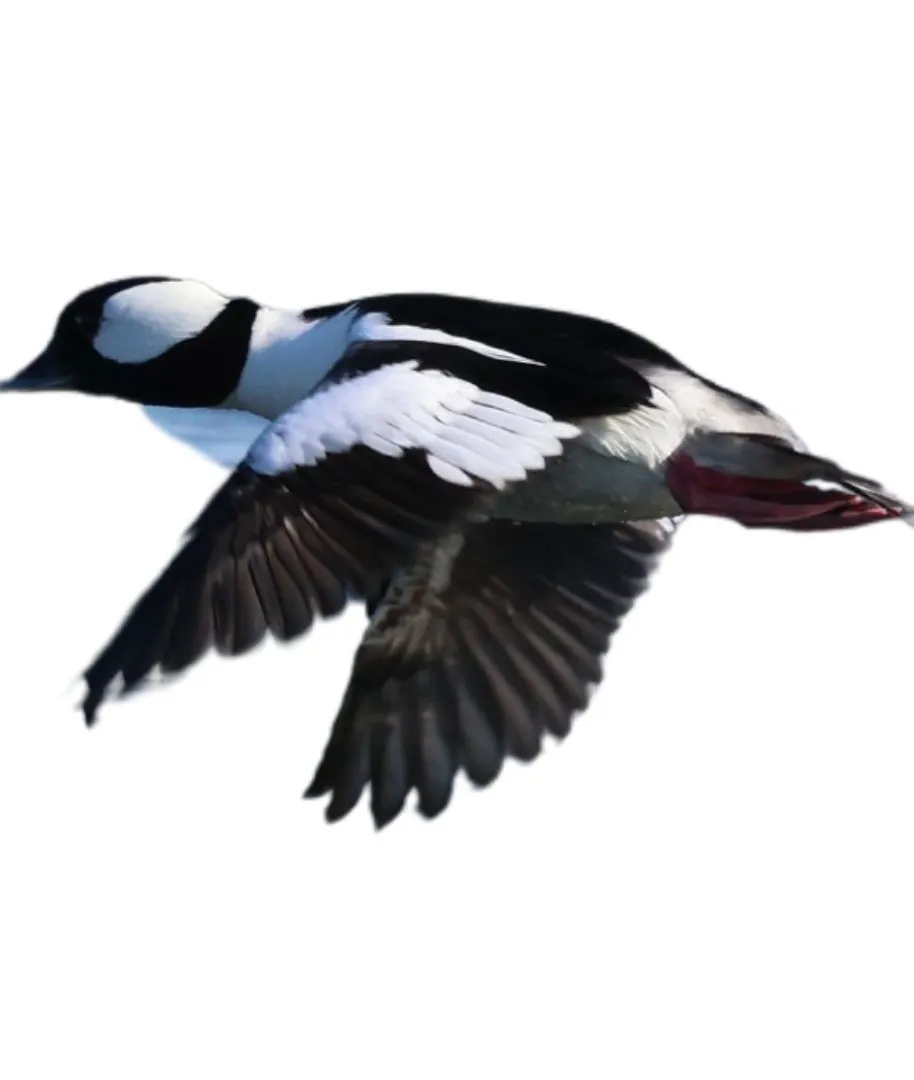 DiverBuffleheadBucephala albeola
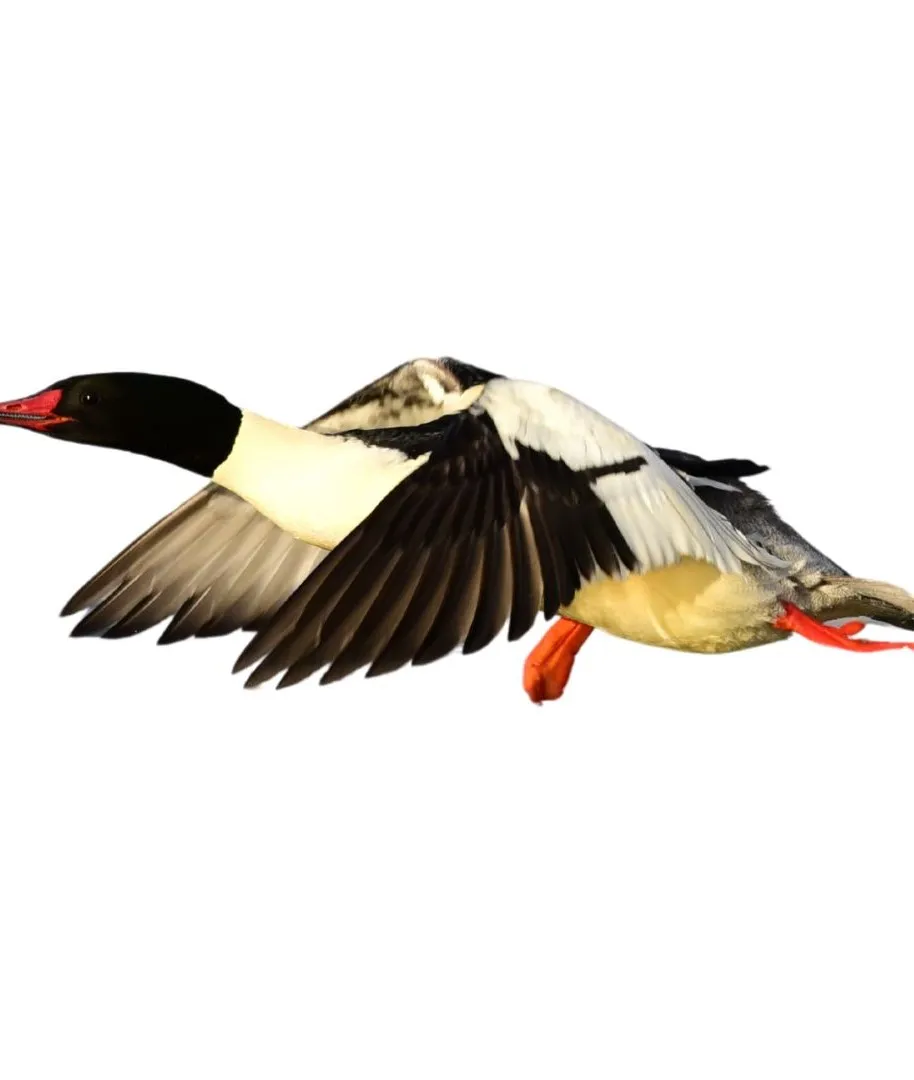 DiverCommon MerganserMergus merganser
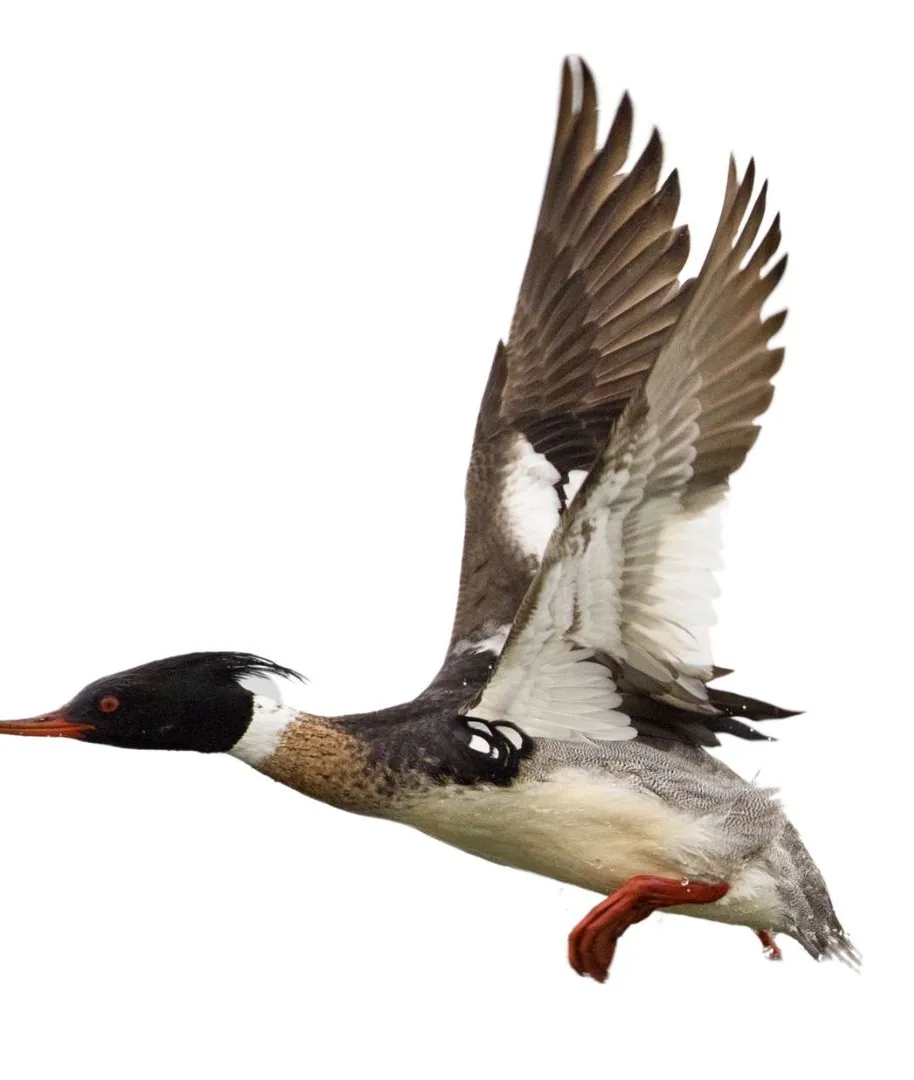 DiverRed-breasted MerganserMergus serrator
- DiverComing SoonGoldeneye
- DabblerComing SoonWood DuckAix sponsa
How to ID It
- Small, compact diving duck with a thin, narrow bill and short neck.
- Large rounded head with obvious crest creates a top-heavy silhouette.
- Drake shows bold white fan-shaped crest bordered by dark head when raised.
- Hen has brown body and cinnamon crest with pale chin and throat.
- Short tail and compact body separate it from longer mergansers in flight.
- In flight shows dark wings with bold white patches visible at distance.
- Drake’s black-and-white body contrast stands out strongly on the water.
- Differs from Common Merganser by smaller size, shorter bill, and fuller head shape.
Key Facts
- Bill Color (Drake)
- Black
- Bill Color (Hen)
- Dark gray to black
- Primary Habitat
- Wooded ponds, lakes, river backwaters
- Breeding Habitat
- Forested wetlands, ponds, swamps
- Winter Habitat
- Lakes, rivers, estuaries
- Migration Pattern
- Short-distance migrant; partial migrant
- North America Status
- Common, widespread breeder
Habitat
Primary Habitat. Hooded Mergansers are most closely associated with wooded freshwater wetlands, including forested swamps, beaver ponds, marsh edges, small lakes, and quiet river backwaters. They prefer shallow to moderately deep water with submerged vegetation and woody cover nearby. Compared with many ducks, they favor sheltered inland waters rather than open lakes, coastal bays, or exposed marshes.
Seasonal Habitat Differences. During breeding season they use forested ponds, wooded swamps, and small lakes near mature timber, often in secluded wetlands. In migration and winter they expand into larger lakes, slow rivers, reservoirs, and protected estuaries, but still favor sheltered coves and backwaters over open water.
Landscape Features to Look For. Look for calm freshwater with tree cover along shorelines, flooded timber, fallen logs, and brushy edges. Hooded Mergansers commonly hold in narrow creek channels, oxbows, wooded ponds, and quiet marsh pockets rather than exposed wetlands or open agricultural fields.
Frequently Asked Questions
How do you identify a Hooded Merganser?
Hooded Mergansers are small diving ducks with a thin bill, short neck, and large rounded head. Males show bold black-and-white contrast and a large white crest when raised. Females are brown with a cinnamon crest and pale throat. Both sexes appear compact in flight with rapid wingbeats and visible white wing patches.
Where are Hooded Mergansers found in North America?
The Hooded Merganser breeds across southern Canada and much of the northern and eastern United States. In winter it occurs widely across the eastern and southern United States and along parts of the Pacific coast. Many populations remain year-round in regions with open freshwater.
What habitat do Hooded Mergansers prefer?
Hooded Mergansers favor wooded freshwater wetlands, including forested swamps, ponds, small lakes, and river backwaters. They prefer sheltered water with submerged vegetation and nearby trees. Compared with many ducks, they use protected inland waters more than open lakes, coastal bays, or exposed marshes.
Do Hooded Mergansers migrate?
Many Hooded Mergansers migrate short distances depending on winter conditions. Northern birds move south as waters freeze, while birds in milder regions often remain year-round. Migration is most noticeable in fall and early spring along inland rivers, lakes, and reservoir systems.
What species are Hooded Mergansers commonly confused with?
Hooded Mergansers are most often confused with Common and Red-breasted Mergansers. They differ by smaller size, shorter bill, and fuller head shape. In flight they appear more compact, with faster wingbeats and bold white wing patches compared with the longer-bodied mergansers.
What do Hooded Mergansers eat?
Hooded Mergansers feed mainly on small fish and aquatic invertebrates such as crayfish, insects, and crustaceans. They dive underwater to catch prey, using their narrow serrated bill to hold slippery fish. Their diet reflects their preference for clear freshwater wetlands and sheltered inland waters.
In the Field
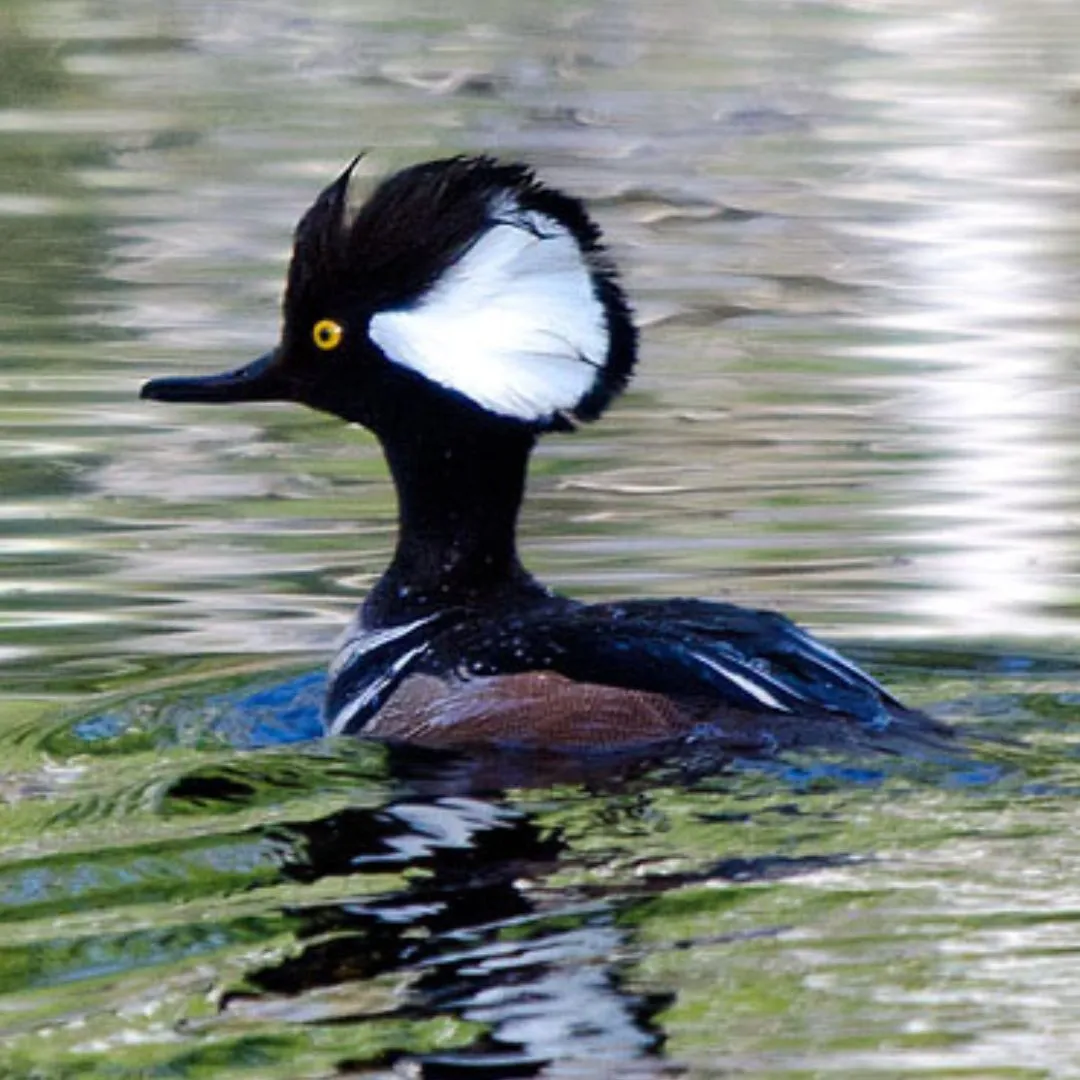
Photo: Matt Poole/USFWS 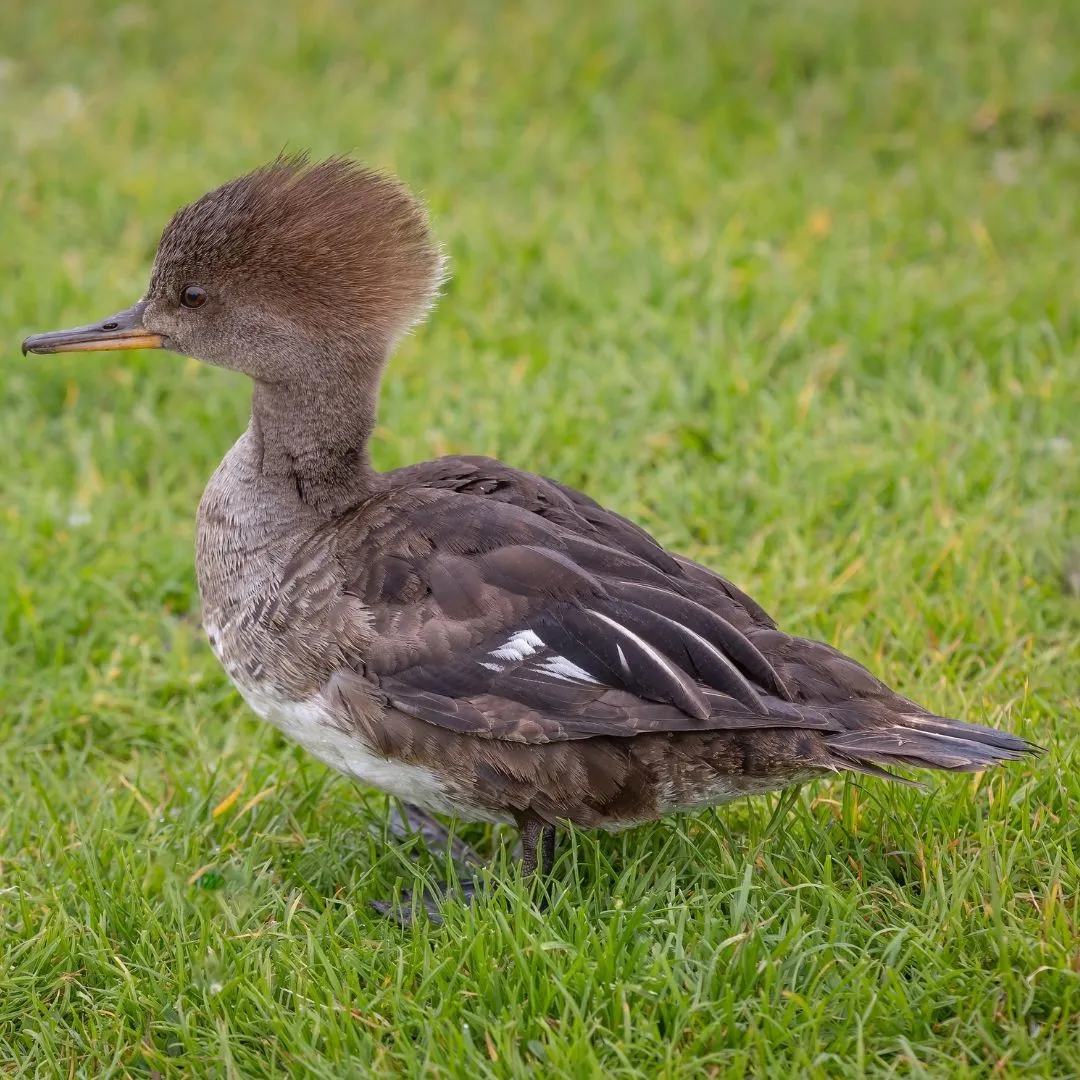
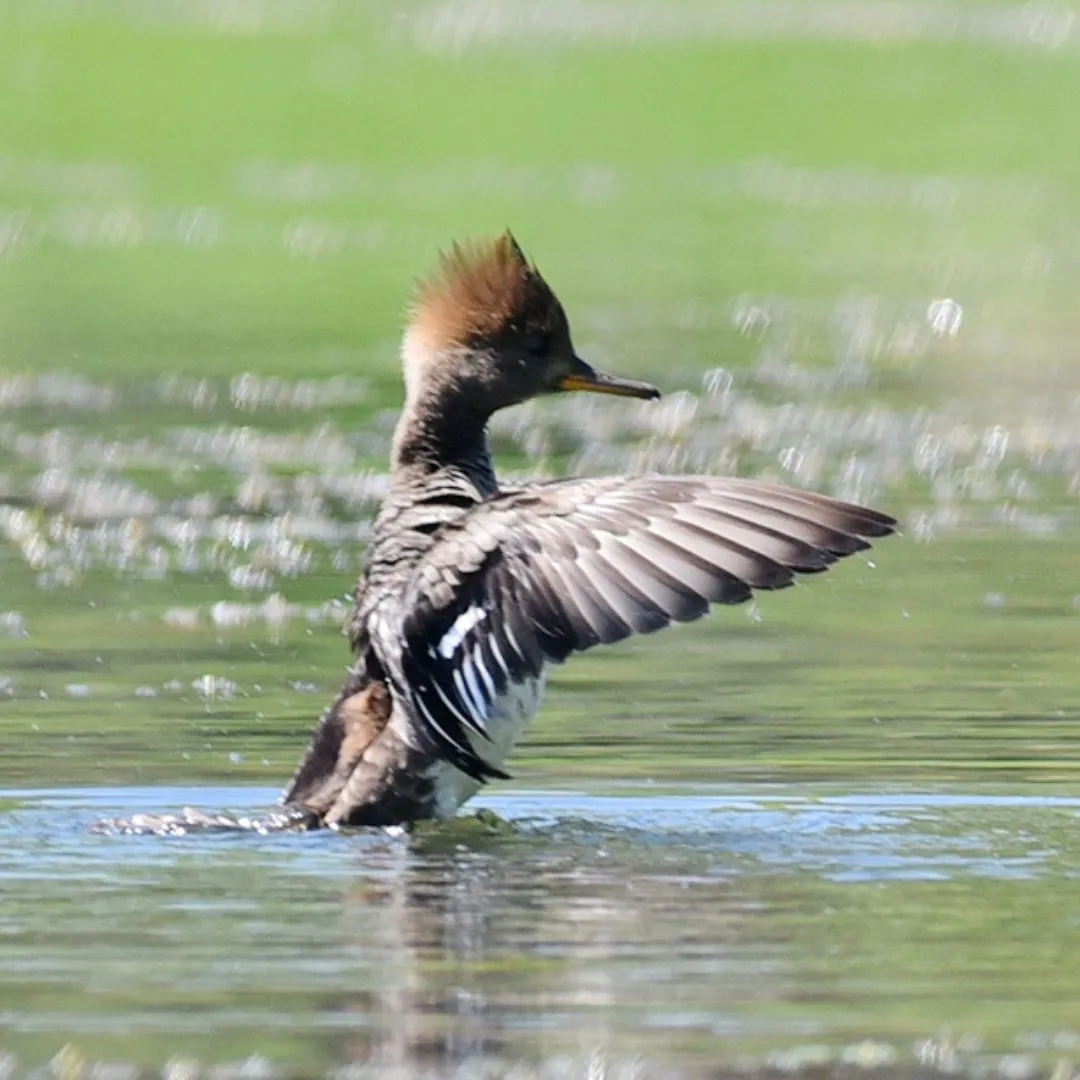
Photo: Courtney Celley/USFWS