Red-breasted Merganser
Mergus serrator
Alternate names: Sawbill, Redbreast
- Length
- 23 in
- Weight
- 2.5 lb
- Wingspan
- 30–34 in
Calls
Red-breasted Mergansers are low, guttural callers that give short, rough contact notes rather than loud, far-carrying calls.
- Males: Low, dry croaking call, rolling and subdued, given mostly during close courtship on the water.
- Females: Harsh, raspy grunt or croak, slightly louder than the male, used in close contact and brood situations.
Drake
Males give a low, dry croaking or grating call during courtship displays, usually delivered at close range on the water. The tone is rough and subdued rather than loud, and it does not carry far. In flight, drakes are typically silent.
Hen
Females produce a harsh, raspy call that is deeper and more guttural than most dabbling duck quacks. It is used mainly in breeding season and in close contact with broods. Outside of nesting periods, hens are usually quiet.
When You'll Hear Them
Vocalizations are most common on northern breeding grounds in spring and early summer during courtship and brood rearing. During migration and winter, Red-breasted Mergansers are largely silent, especially when flying in flocks over open water.
Overview
The red-breasted merganser is a sleek, long-bodied diving duck recognized for its spiky, unkempt crest and slender, serrated orange bill, which is perfect for catching fish.
Both sexes feature the distinctive “sawbill” for which mergansers are known.
Found in coastal bays, large lakes, and rivers, they are excellent divers, often foraging for fish underwater, making them challenging yet rewarding for hunters.
Identification
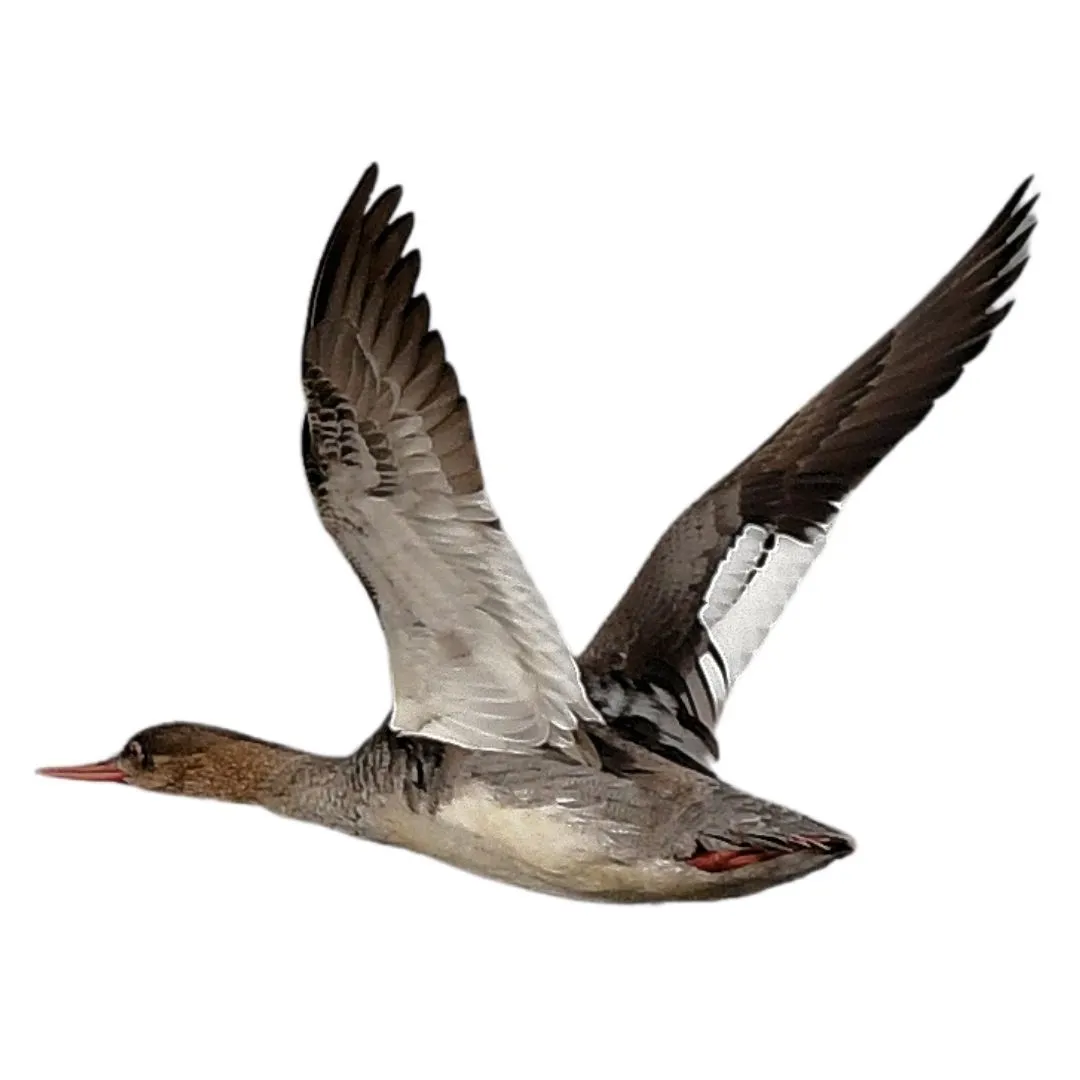
Spiky crest, slender serrated orange bill, reddish-brown chest (male), greenish-black head (male), excellent diving skills, fish-eating habits
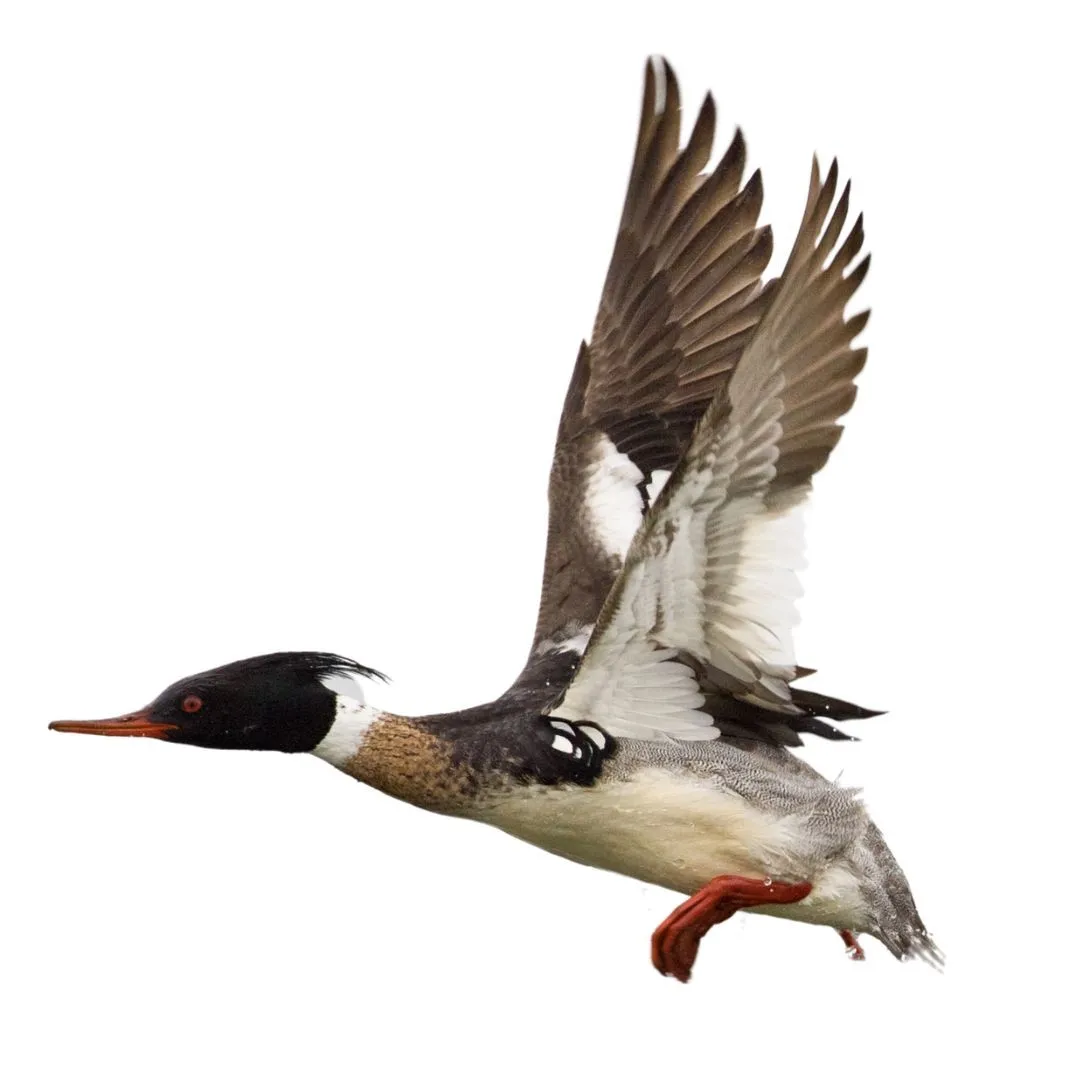
Red breasted mergansers are slim, fast diving ducks built for open water. They carry a long, thin red bill with a serrated edge and a narrow body that sits low in the water. In flight they show a long neck, quick wingbeats, and a strong white patch on the inner wing that flashes against darker outer wings. Hunters often see them moving in tight flocks over coastal bays or big lakes, flying low and fast compared to most puddle ducks.
Drake
Drakes have a dark green head with a shaggy crest, a narrow white collar, and a rusty streaked chest that separates them from the clean gray sided Common Merganser. On the wing, look for the white inner wing panel framed by dark outer feathers and a long thin silhouette. The messy crest and chest color help separate them from Common Mergansers, which have a smoother head and clean white body.
Hen
Hens are gray bodied with a warm brown head and a ragged crest that sticks out behind the crown. They show a sharp contrast between the brown head and lighter gray body, unlike female Common Mergansers which have a cleaner white chin and more defined border. In flight the hen shares the same long neck, narrow wings, and bright white inner wing panel that marks the species at distance.
Range
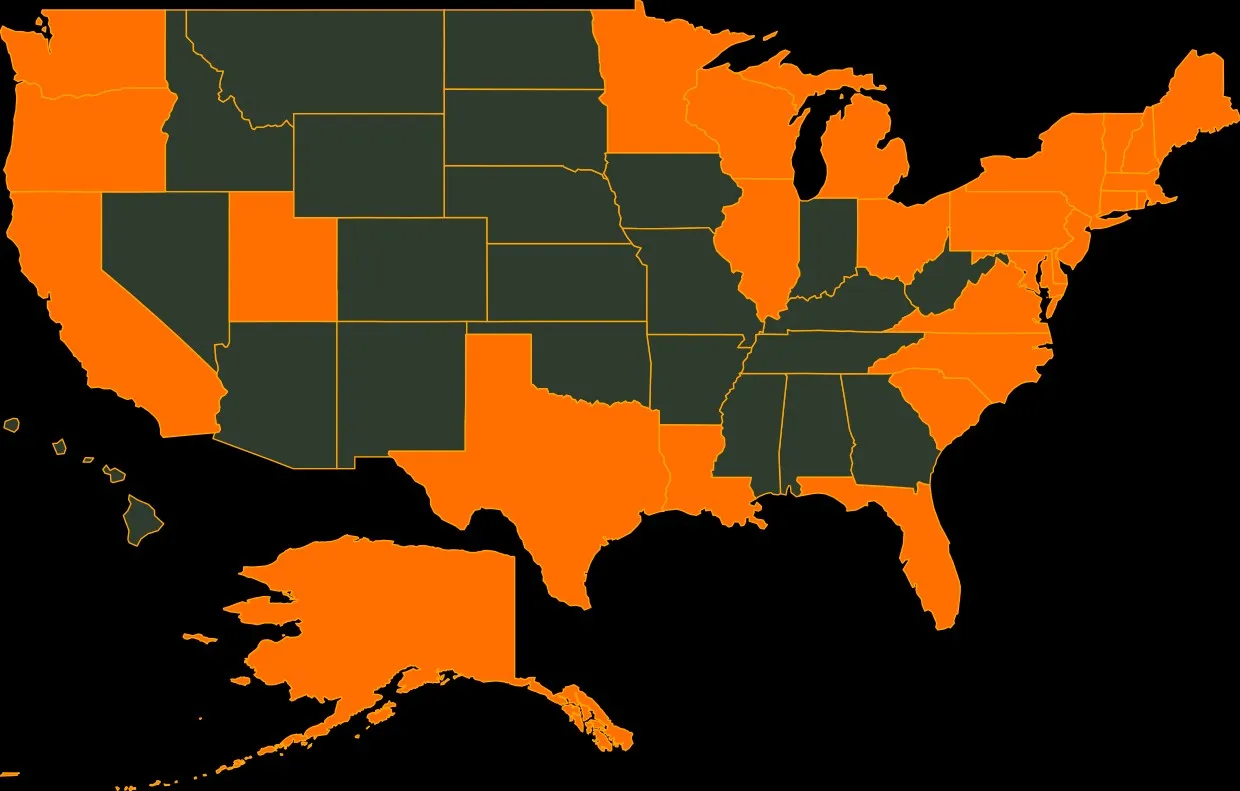
Year-Round
Red-breasted Mergansers have limited year-round presence in parts of coastal Alaska and along sections of the Pacific Northwest where open water persists through winter. Most North American populations, however, are strongly migratory and shift between inland breeding areas and coastal wintering grounds.
Breeding
Breeding occurs across northern North America, including Alaska, much of Canada, and parts of the northern United States. Birds nest near freshwater lakes, tundra ponds, and boreal wetlands, with the highest densities across the boreal forest and subarctic regions from Alaska east to the Maritime provinces.
Winter
In winter, the majority of Red-breasted Mergansers concentrate along both Atlantic and Pacific coasts, the Gulf of Mexico, and the Great Lakes. Smaller numbers winter inland on large reservoirs and major rivers where open water remains available.
Migration Timing
Spring migration typically runs from March through May as birds move north to breeding grounds. Fall migration begins in September and continues into November, with birds following major flyways and staging on large lakes and coastal waters during movement.
Related Species
How to ID It
- Slender diving duck with long thin red bill and narrow profile
- Long neck and shaggy crest give a spiky head shape in both sexes
- Body sits low on the water with tail often held slightly raised
- Drake shows dark green head, white neck collar, and rusty streaked breast in breeding plumage
- Hen is gray-bodied with rusty head and sharp white chin patch
- In flight: In flight, both sexes show large white wing patch on inner wing
- Faster wingbeats and slimmer shape than Common Merganser
- Smaller and more slender than Common Merganser, lacking the heavy blocky head shape
Key Facts
- Bill Color (Drake)
- Red
- Bill Color (Hen)
- Red to orange-red
- Primary Habitat
- Coastal waters, large lakes
- Breeding Habitat
- Northern lakes, tundra wetlands
- Winter Habitat
- Coastal bays, estuaries
- Migration Pattern
- Strong migrant; coastal routes
- North America Status
- Common and widespread
Habitat
Primary Habitat. Red-breasted Mergansers are strongly associated with open water, especially coastal bays, estuaries, tidal inlets, and large lakes. They prefer deeper water than most dabbling ducks and are commonly found on saltwater or brackish coastal lagoons. Inland, they use large freshwater lakes, reservoirs, and broad river backwaters with open, unobstructed water rather than dense marsh vegetation.
Seasonal Habitat Differences. During the breeding season, they shift to northern freshwater wetlands, including tundra ponds, boreal lakes, and shallow lakes with nearby low vegetation for nesting cover. Outside of breeding, they concentrate along marine coastlines and large inland water bodies where fish are abundant. Winter habitat is dominated by saltwater environments such as coastal bays, harbors, and estuaries, with occasional use of large freshwater lakes where ice-free conditions remain.
Landscape Features to Look For. Look for wide expanses of open water, especially coastal shorelines, barrier islands, and large inland lakes. They favor areas with minimal emergent marsh plants and easy access to deeper water. On freshwater systems, focus on broad lake basins and river mouths rather than small ponds or flooded fields.
Frequently Asked Questions
How do you identify a Red-breasted Merganser?
Red-breasted Merganser is a slim, long-bodied diving duck with a thin red bill and shaggy crest. In flight, it shows a bright white patch on the inner wing and fast wingbeats. The long neck and narrow profile separate it from most puddle ducks and scaup at a distance.
Where do Red-breasted Mergansers live in North America?
Red-breasted Mergansers breed across Alaska and much of Canada, especially around northern lakes and tundra wetlands. In winter, they are common along the Atlantic and Pacific coasts, the Gulf of Mexico, and the Great Lakes, favoring open coastal bays and large inland water bodies.
What habitat does a Red-breasted Merganser prefer?
Red-breasted Mergansers prefer open water environments such as coastal bays, estuaries, tidal inlets, and large lakes. During breeding season, they use freshwater lakes and northern wetlands. Outside of breeding, they concentrate on saltwater and large inland reservoirs with minimal marsh vegetation.
How is the Red-breasted Merganser different from the Common Merganser?
Red-breasted Mergansers have a thinner bill, a shaggy crest, and a rusty streaked chest on males. Common Mergansers have a thicker bill, smoother head shape, and clean white body on drakes. Females of both species have brown heads, but the Red-breasted shows a less sharply defined white chin.
Are Red-breasted Mergansers migratory?
Yes, Red-breasted Mergansers are strongly migratory. Most birds move from northern breeding grounds in Alaska and Canada to coastal wintering areas along both coasts and the Gulf of Mexico. Migration occurs mainly in spring and fall, with birds staging on large lakes and coastal waters.
What do Red-breasted Mergansers eat?
Red-breasted Mergansers feed primarily on small fish, which they catch by diving in open water. Their narrow, serrated bill helps grip slippery prey. They may also consume aquatic invertebrates, but fish make up the majority of their diet throughout most of the year.
In the Field
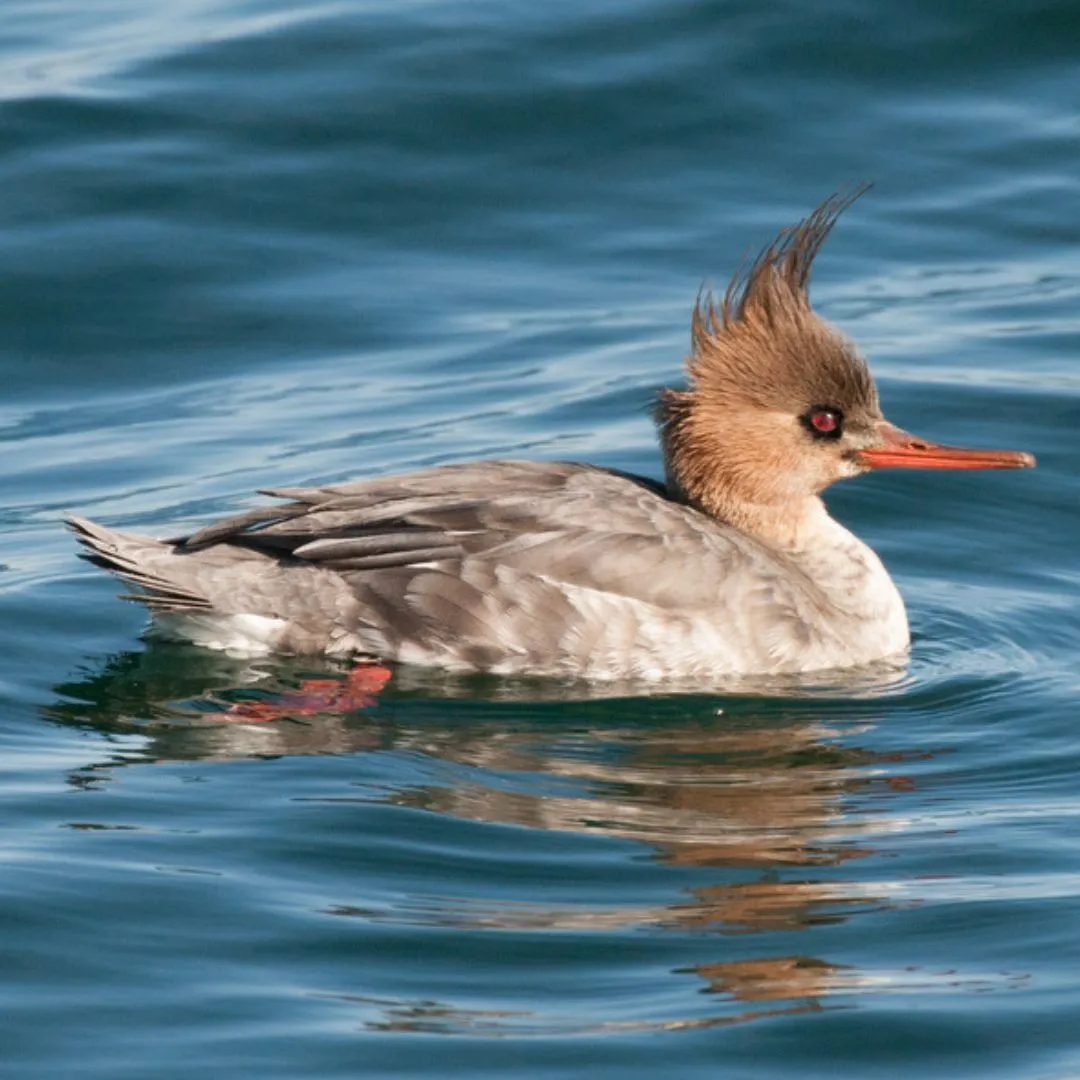
Photo: Bill Thompson/USFWS 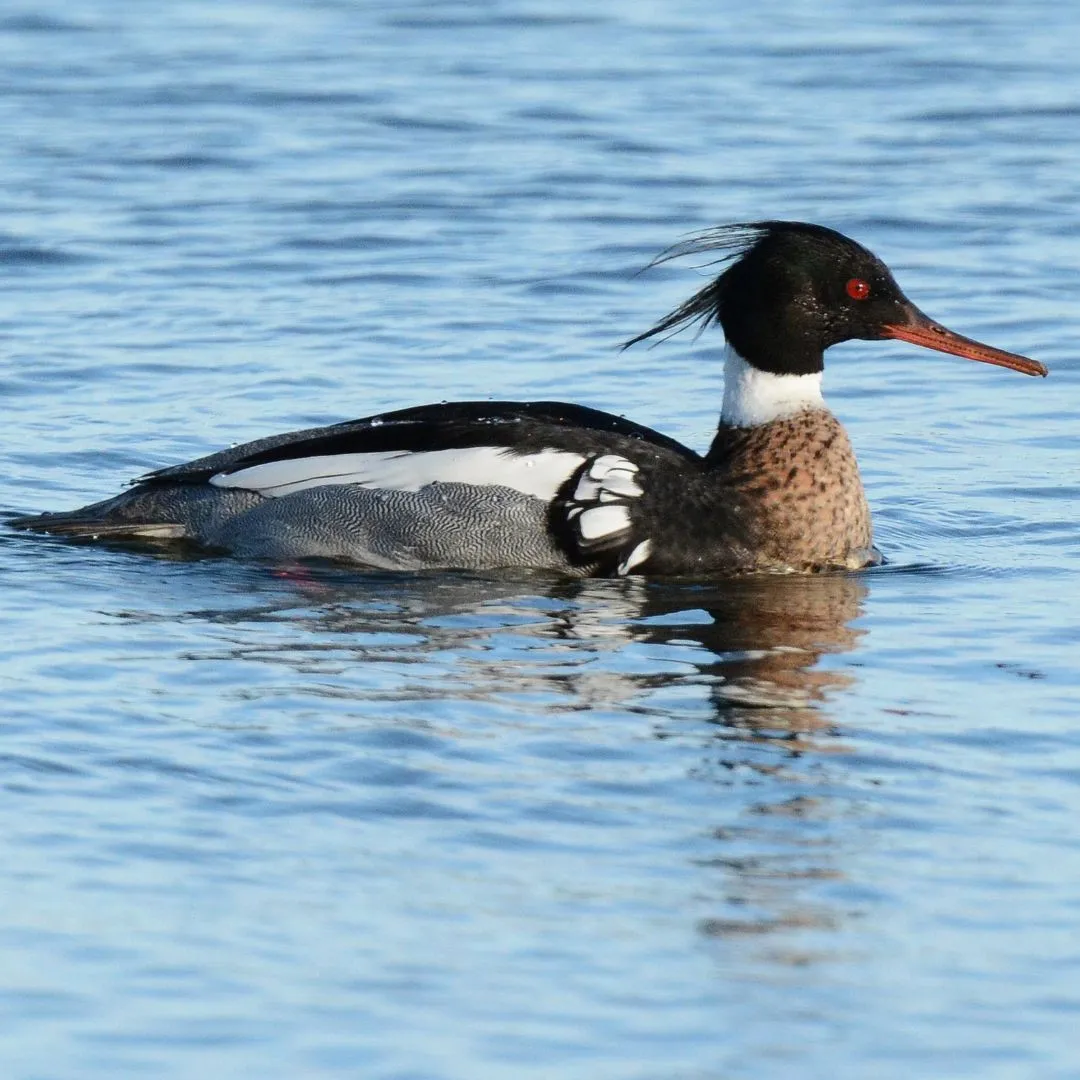
Photo: Jim Hudgins/USFWS 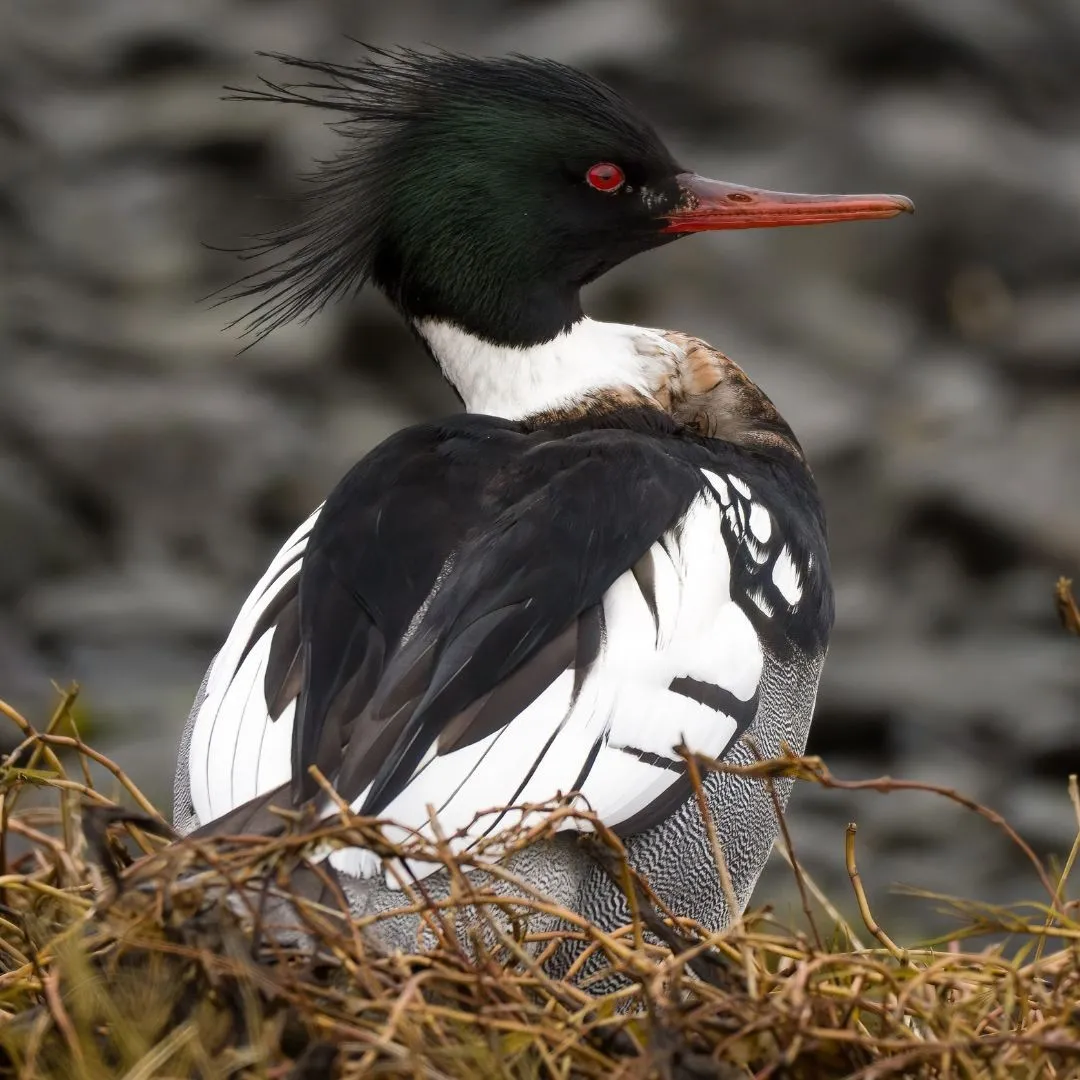
Photo: Jake Bonello/USFWS