Redhead
Aythya americana
Alternate names: Red-headed duck
- Length
- 23 in
- Weight
- 2.5 lb
- Wingspan
- 30–35 in
Calls
Redheads are quiet divers; males produce low, rolling grunts, while females give soft, nasal quacks – neither are strong vocal responders.
- Males: Low, throaty “errrrr” or “prrrooo” grunt, sometimes a short, rolling whistle during courtship or display. May give a soft, wheezy “wee-oww” or meow-like call during courtship or when disturbed which is helpful for identification but isn’t recommended for calling.
- Females: Soft, nasal “quack-quack” or “kurr-kurr” call, often used as a contact or alarm note near the water.
Drake
Males give soft, catlike mewing notes and low, short whistles, most often heard during courtship on breeding marshes. The tone is nasal and subdued, carrying only a short distance across open water. During migration and winter on large lakes and coastal bays, drakes are usually silent.
Hen
Females produce low, rough quacks and short grunting calls. These sounds are brief and muted, lacking the loud, ringing quality of a Mallard hen. Calls are typically given at close range during interactions on the water.
When You'll Hear Them
Vocalizations are most noticeable in spring and early summer on northern breeding wetlands. In fall and winter, Redheads are typically quiet even when gathered in large rafts on open water.
Overview
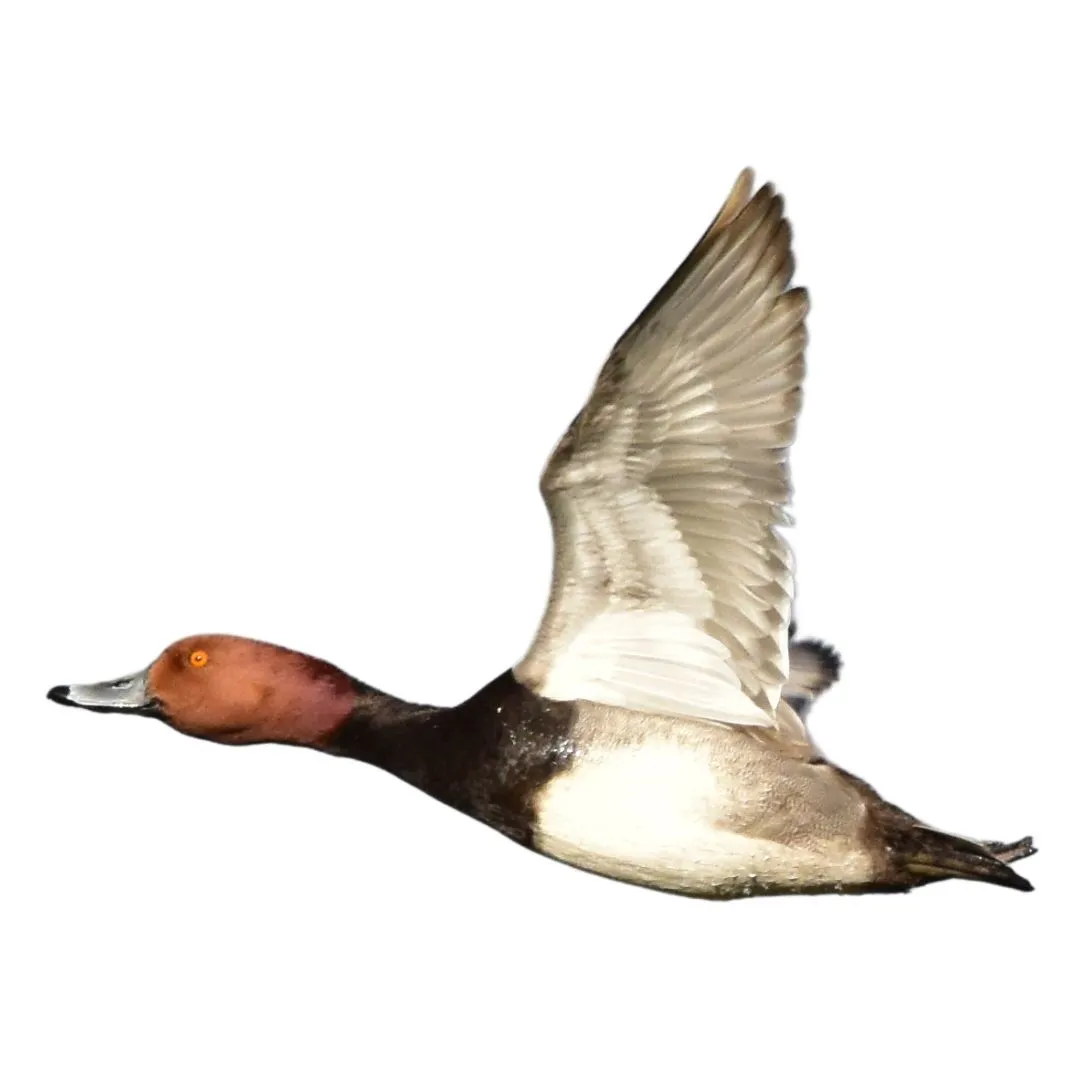
The redhead is a medium-sized diving duck, distinguished by the male’s bright reddish-brown head, black chest, and grayish body.
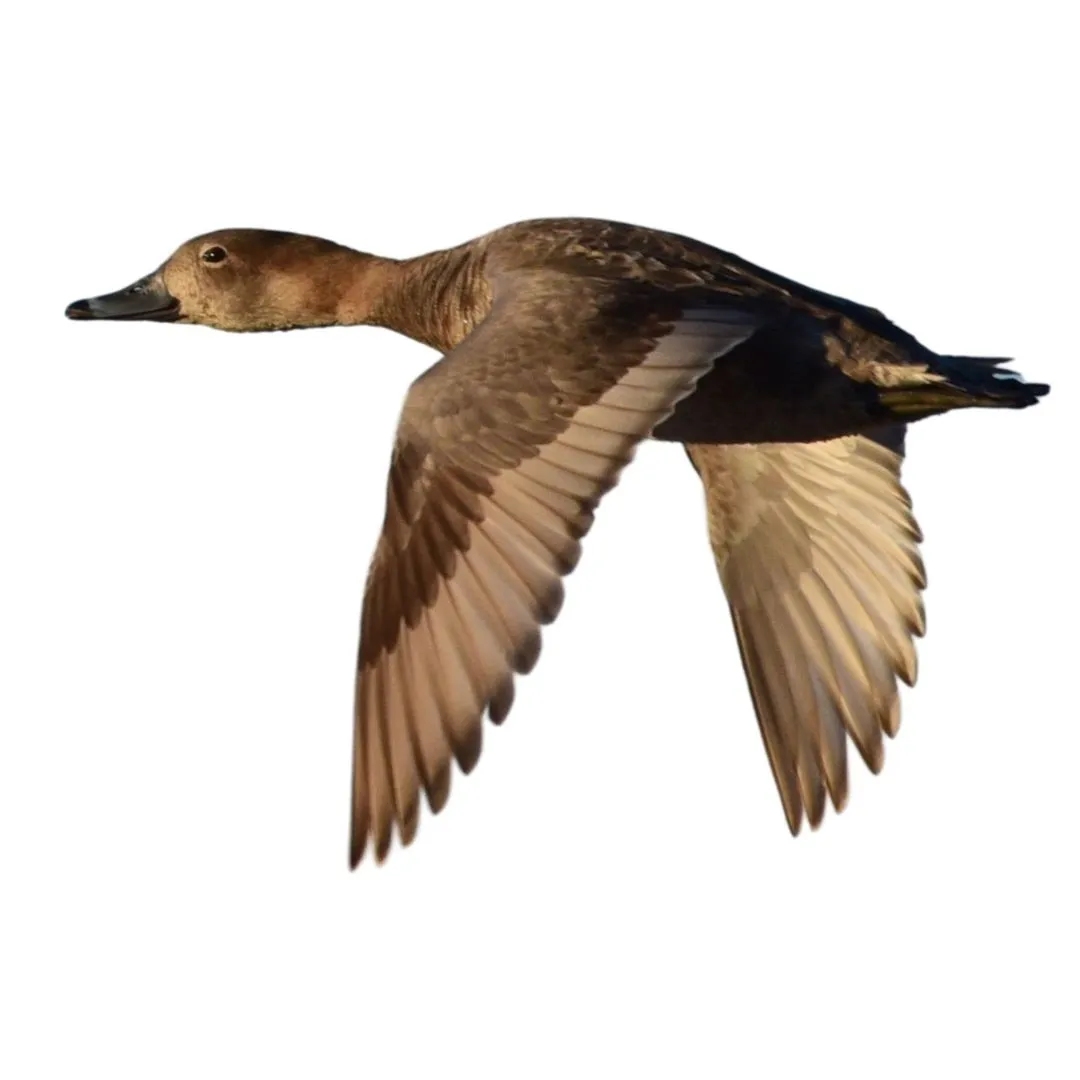
Females are more subdued with a brownish head and body. Both sexes have blue-gray bills with a black tip, helping distinguish them from other similar diving ducks like the canvasback.
Redheads are commonly found in lakes, marshes, and coastal bays. They are known for their strong flight and fast diving capabilities, making them a popular target for hunters, especially in large, open water areas.
Identification
Bright red head (male), blue-gray bill with black tip, black chest (male), medium size, diving behavior, gray body (male)
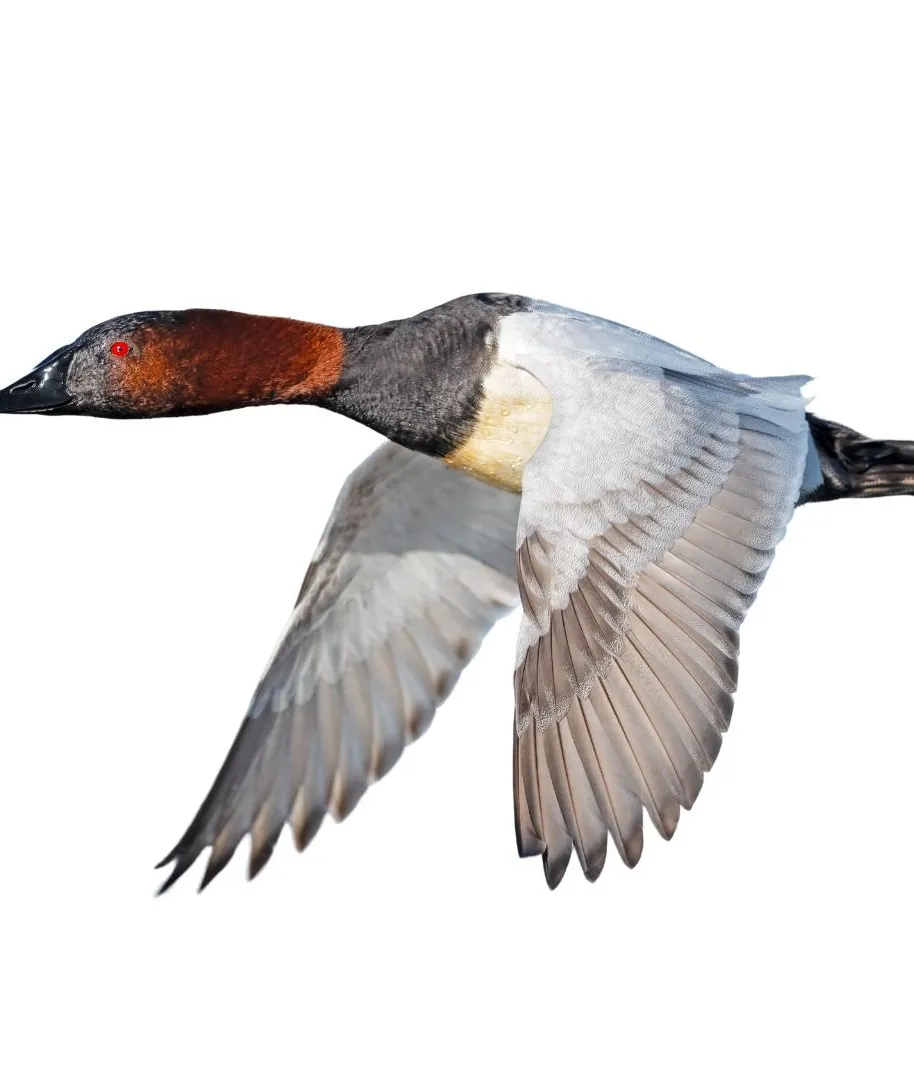
Redheads are medium sized diving ducks with a rounded head and smooth, sloping profile that gives them a clean, compact look on the water. They sit fairly low and raft in tight groups on big lakes and bays. In flight, look for steady wingbeats and a pale gray wing stripe limited to the secondaries. Hunters often confuse them with Canvasbacks, but Redheads look rounder headed with a shorter, broader bill and less stretched silhouette.
Drake
Drakes show a reddish head, black chest, and pale gray back that contrasts clearly even at distance. The head is smoothly rounded, not long and wedge shaped like a Canvasback. In flight, the gray wing stripe is visible but does not extend as far toward the wingtip as on a Canvasback.
Hen
Hens are warm brown with a pale face and darker crown, giving a softer contrast than the drake. They share the same rounded head and compact build. Compared to hen Canvasbacks, they look shorter headed with a stubbier bill and lack the long, sloping profile seen in that species.
Range
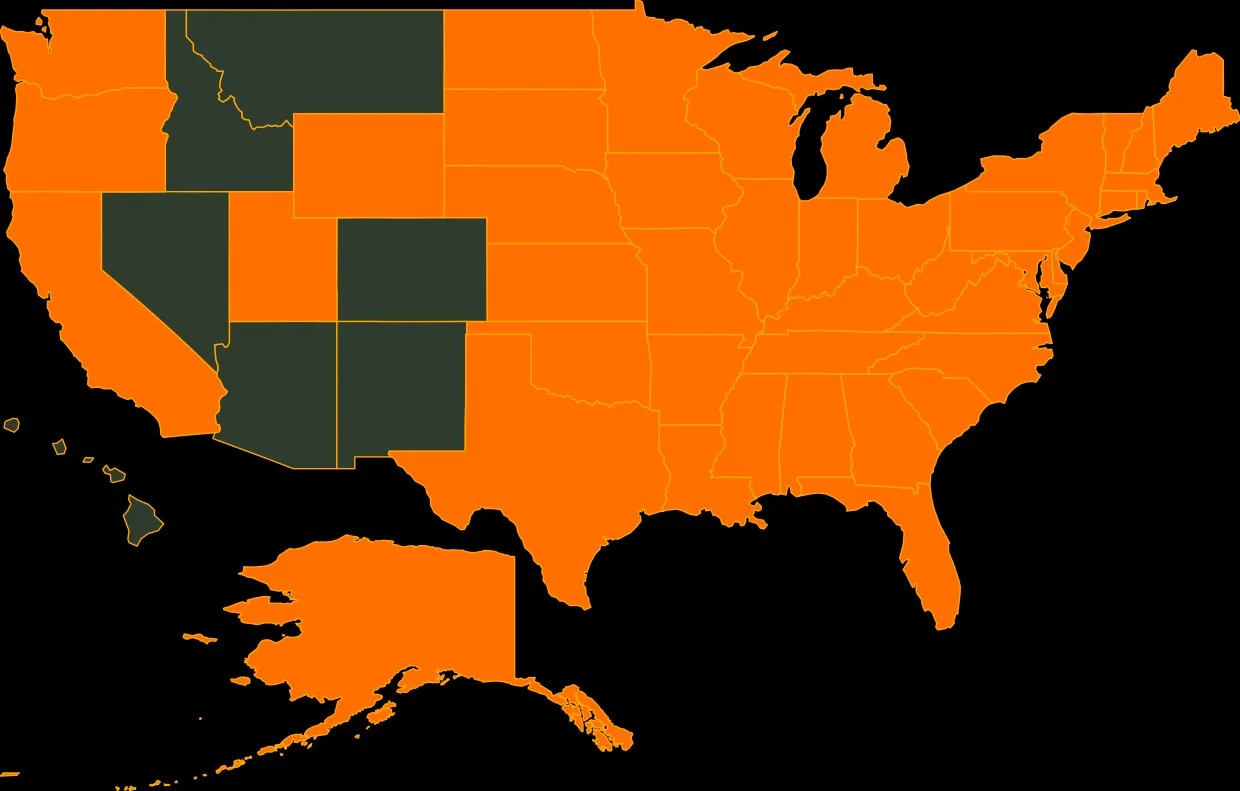
Year-Round
Redheads occur somewhere in North America throughout the year, but few areas support them year-round. Limited overlap of wintering and breeding birds can occur in parts of the western United States, especially California and the southern Great Plains. Most populations move seasonally between northern breeding grounds and southern wintering areas.
Breeding
Redheads breed primarily in the Prairie Pothole Region of the north-central United States and southern Canada. Core breeding areas include North Dakota, South Dakota, Montana, southern Alberta, Saskatchewan, and Manitoba. Smaller numbers breed in interior western states and parts of southern Canada in freshwater marshes and prairie wetlands.
Winter
Most Redheads winter in the southern United States and Mexico. Major wintering concentrations occur along the Gulf Coast of Texas and Louisiana, in coastal Mexico, California’s Central Valley, and along both the Atlantic and Pacific coasts. They also winter on large inland lakes and reservoirs with open water.
Migration Timing
Fall migration generally begins in September, with peak movements in October and November along the Central and Mississippi flyways. Spring migration occurs from February through April, with birds returning north to prairie breeding wetlands soon after ice recedes.
Related Species
How to ID It
- Medium-sized diving duck with rounded head and smooth, sloping forehead
- Broad chest and short neck give a compact, front-heavy profile
- Drake shows reddish head, black chest, and pale gray back
- Drake lacks the peaked head shape of a Canvasback
- Hen is warm brown with pale face and darker crown
- Bill is blue-gray with black tip, broader and shorter than Canvasback
- In flight: In flight, both sexes show pale gray wing stripe confined to secondaries
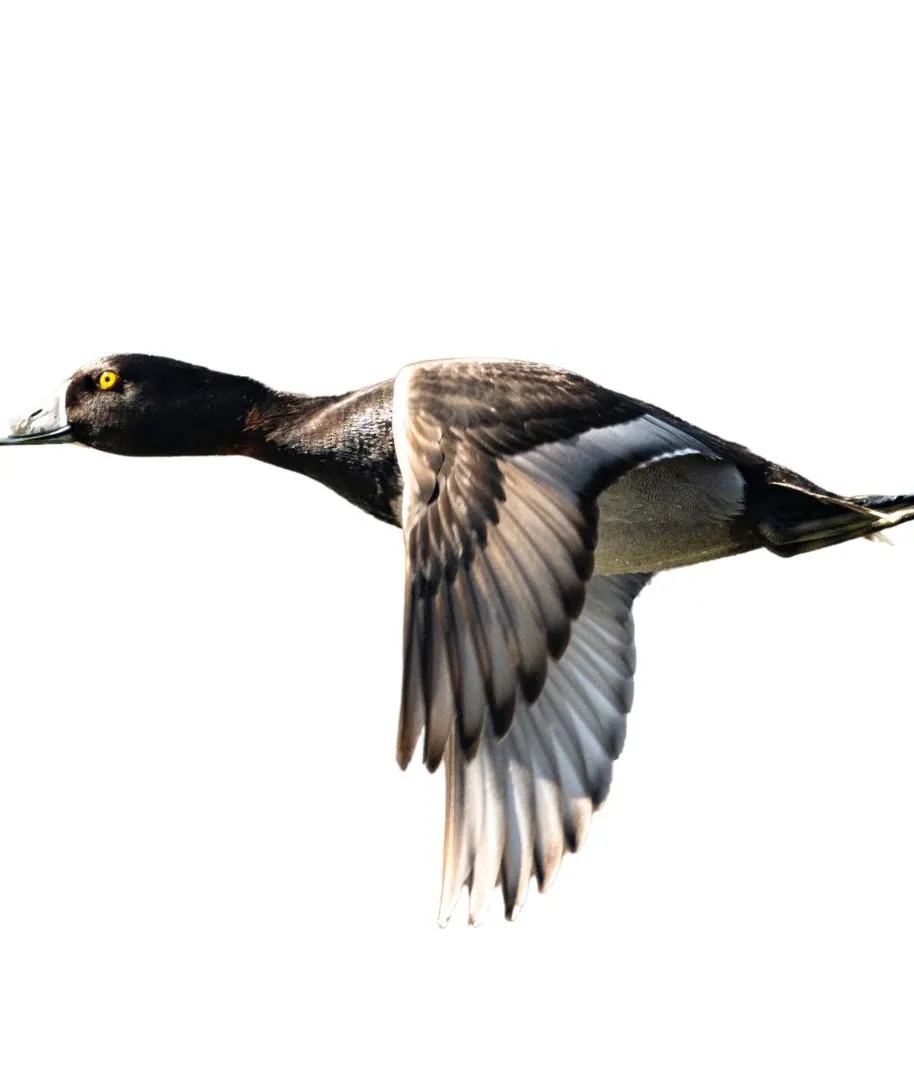
- Larger and more round-headed than Ring-necked Duck with no white bill ring
Key Facts
- Bill Color (Drake)
- Blue-gray, black tip
- Bill Color (Hen)
- Blue-gray, darker tip
- Primary Habitat
- Large lakes, marshes
- Breeding Habitat
- Prairie wetlands, marshes
- Winter Habitat
- Coastal bays, large lakes
- Migration Pattern
- Strong migrant; central flyways
- North America Status
- Common and widespread
Habitat
Primary Habitat. Redheads are strongly associated with freshwater marshes, shallow lakes, prairie potholes, and large inland wetlands. They prefer broad expanses of open water mixed with emergent vegetation such as cattails and bulrushes. Compared to many diving ducks, they use both open lake basins and marsh edges, especially where submerged aquatic plants are abundant.
Seasonal Habitat Differences. During the breeding season, Redheads concentrate in prairie wetlands and freshwater marshes across the north-central United States and southern Canada. They favor shallow lakes and marsh complexes within grassland landscapes. In migration and winter, they shift to larger lakes, reservoirs, coastal bays, estuaries, and coastal lagoons. Wintering birds are common on open coastal waters along the Gulf Coast and in large inland water bodies.
Landscape Features to Look For. Look for wide marsh systems, shallow lakes with emergent vegetation, and open water areas within prairie grasslands during spring and summer. In fall and winter, scan large inland lakes, river backwaters, and sheltered coastal bays with broad open water where diving ducks raft together offshore.
Frequently Asked Questions
How do you identify a Redhead Duck in the field?
Redhead Ducks are medium-sized diving ducks with a rounded head and smooth, sloping forehead. The drake shows a reddish head, black chest, and pale gray body. In flight, both sexes show a light gray wing stripe confined to the secondaries. They appear rounder-headed and shorter-billed than Canvasbacks.
Where are Redhead Ducks found in North America?
Redhead Ducks breed mainly in the Prairie Pothole Region of the north-central United States and southern Canada. In winter, they are common along the Gulf Coast, in coastal Mexico, California’s Central Valley, and on large inland lakes and reservoirs across the southern United States.
What habitats do Redhead Ducks prefer?
Redhead Ducks use freshwater marshes, prairie potholes, and shallow lakes during breeding. In migration and winter, they occupy large lakes, reservoirs, coastal bays, estuaries, and sheltered marine waters. They favor open water areas with access to submerged aquatic vegetation.
Are Redhead Ducks migratory?
Yes, Redhead Ducks are strong seasonal migrants. Most birds leave northern breeding wetlands in fall before freeze-up and move south along the Central and Mississippi flyways. Spring migration begins in late winter as birds return north to prairie marshes.
What species are commonly confused with Redhead Ducks?
Redhead Ducks are most often confused with Canvasbacks. Redheads have a rounded head and shorter, broader bill, while Canvasbacks show a long, sloping head and bill profile. In flight, the Redhead’s gray wing stripe does not extend as far toward the wingtip as the Canvasback’s.
What do Redhead Ducks eat?
Redhead Ducks feed mainly on submerged aquatic vegetation, including pondweeds and wild celery, along with aquatic invertebrates such as mollusks and insects. They dive to forage in freshwater wetlands and coastal bays.
In the Field
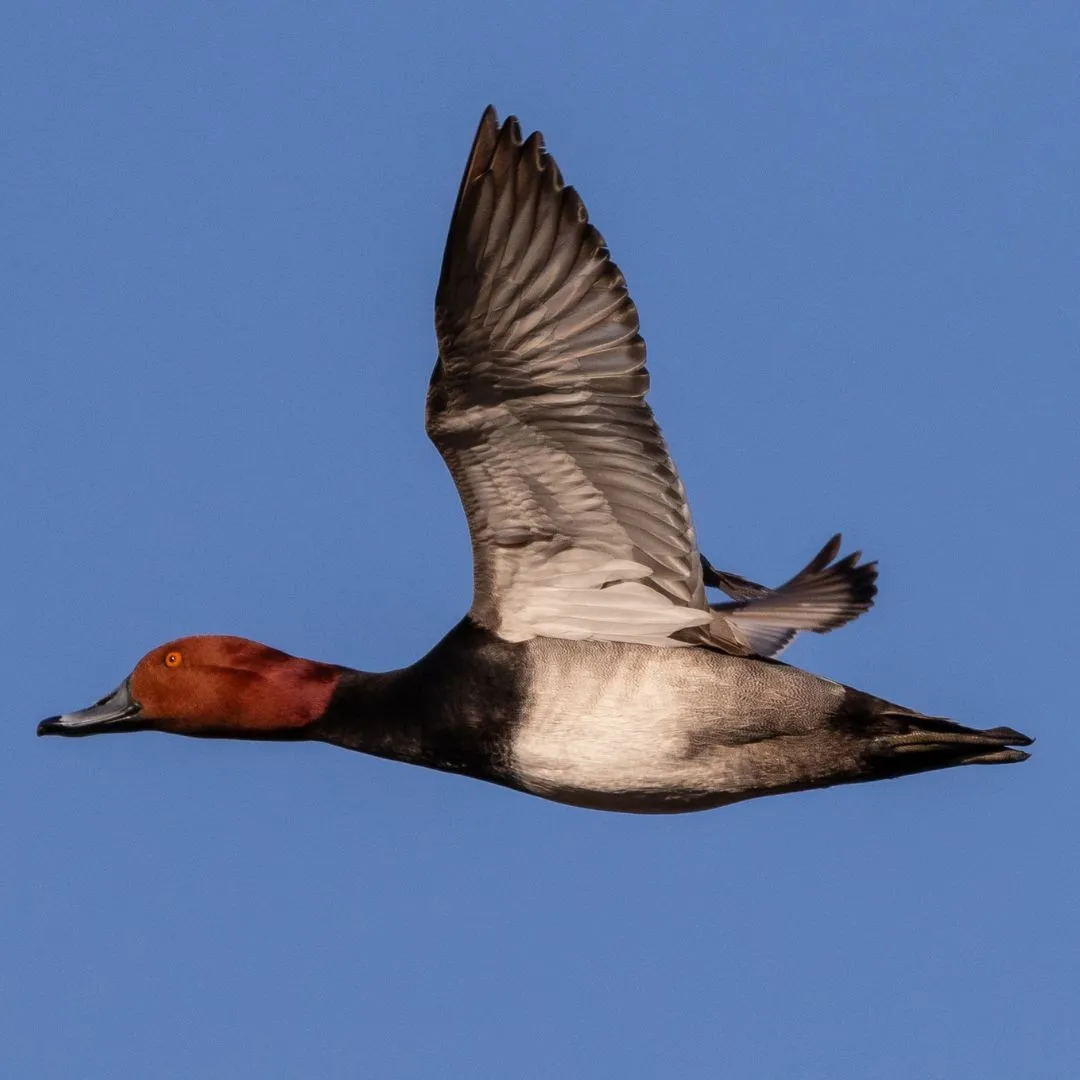
Photo: Mike Budd/USFWS 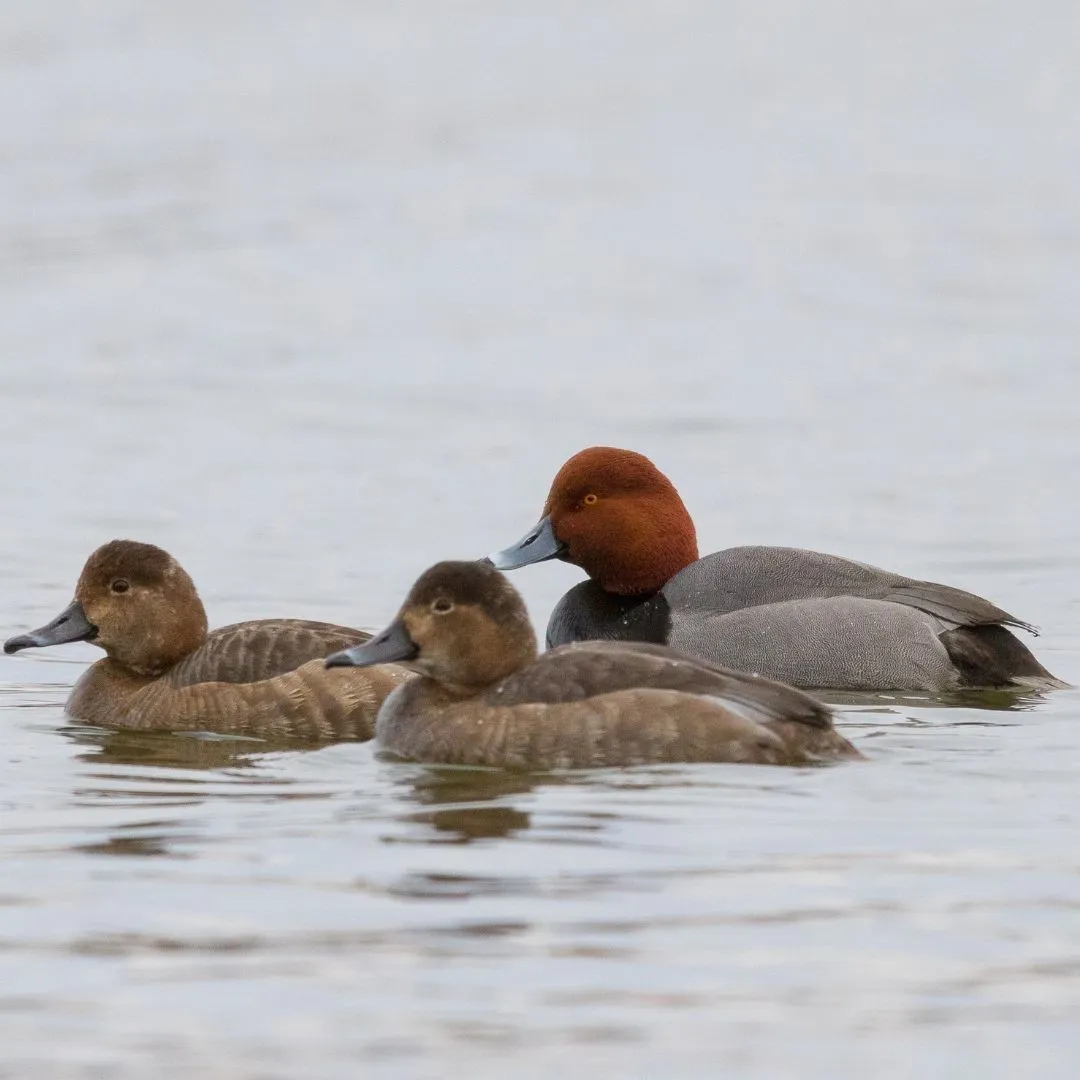
Photo: Mike Budd/USFWS 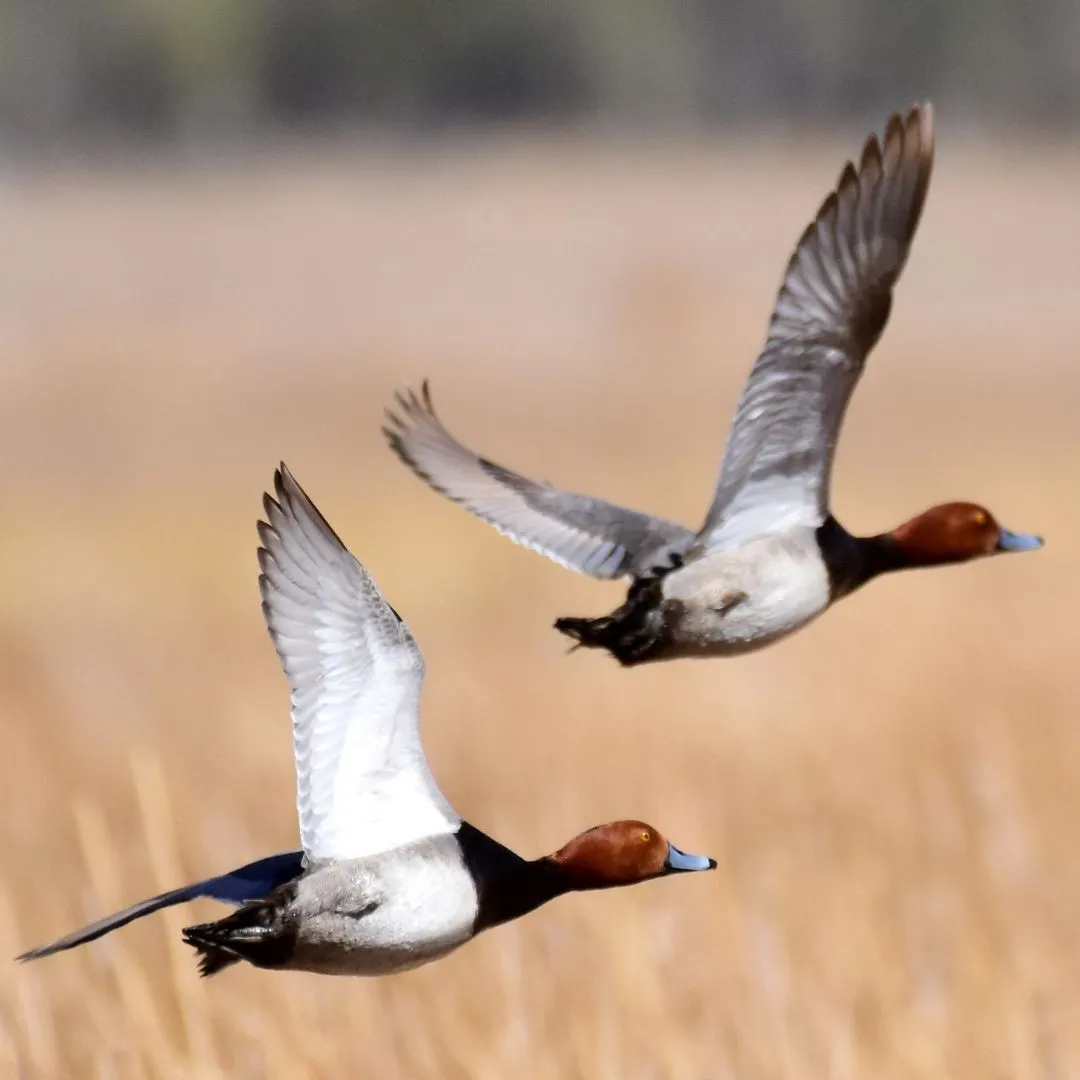
Photo: Tom Koerner/USFWS