Scaup
Aythya marila (greater scaup), Aythya affinis (lesser scaup)
Alternate names: Bluebill, Greater scaup, Lesser scaup
- Length
- Greater: 18.5 in Lesser: 17 in
- Weight
- Greater: 2 lb Lesser: 1 7/6 lb
- Wingspan
- 28–32 in
Calls
Scaup are generally quiet outside the breeding season and are not highly vocal compared to most dabbling ducks.
- Males: Drake lesser scaup give a soft rolling “purr,” while drake greater scaup make a rougher, raspy “scaup-scaup.”
- Females: Hens are mostly silent in fall and winter, rarely vocalizing on the water.
Drake
Male scaup give low, short whistled notes and soft purring calls, most often heard during courtship on northern breeding waters. The tone is subdued and does not carry far. In migration and winter flocks, drakes are usually silent and rarely call in flight.
Hen
Females produce low, harsh grunts and short, rasping notes. These calls are brief and infrequent, typically given during close interactions on the water. They lack the loud, ringing quack of puddle ducks and are seldom heard at distance.
When You'll Hear Them
Vocalizations are most noticeable in spring and early summer on breeding lakes and wetlands. During fall migration and winter on large lakes or coastal waters, scaup are typically quiet even in large rafts.
Overview
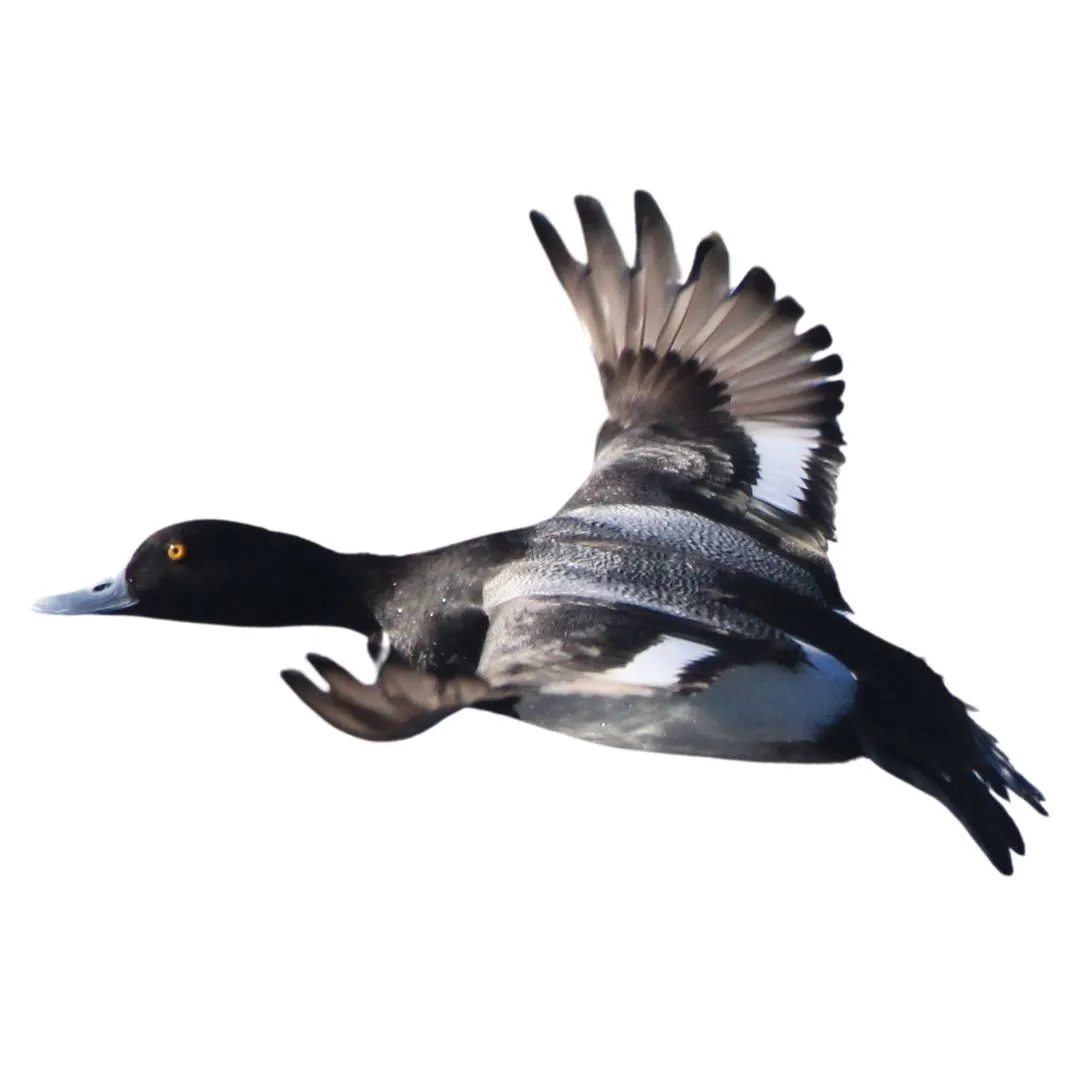
Scaup are medium-sized, compact diving ducks known collectively as “bluebills” for their distinctive slate-blue bills.
Both Greater and Lesser Scaup sport rounded heads, bright white sides, and darker backs, and in flight their rapid wingbeats and sudden dives make them prized targets for hunters. Females are brown with a white patch at the base of the bill.
Greater Scaup are the larger of the two, with a slightly more rounded head and a greenish sheen on the black plumage of breeding males. They typically favor expansive, deeper waters, large lakes, reservoirs, and coastal bays, where they form tight, gregarious flocks. Their forehead slopes more gradually into the bill, giving the head a smoother profile.
Identification
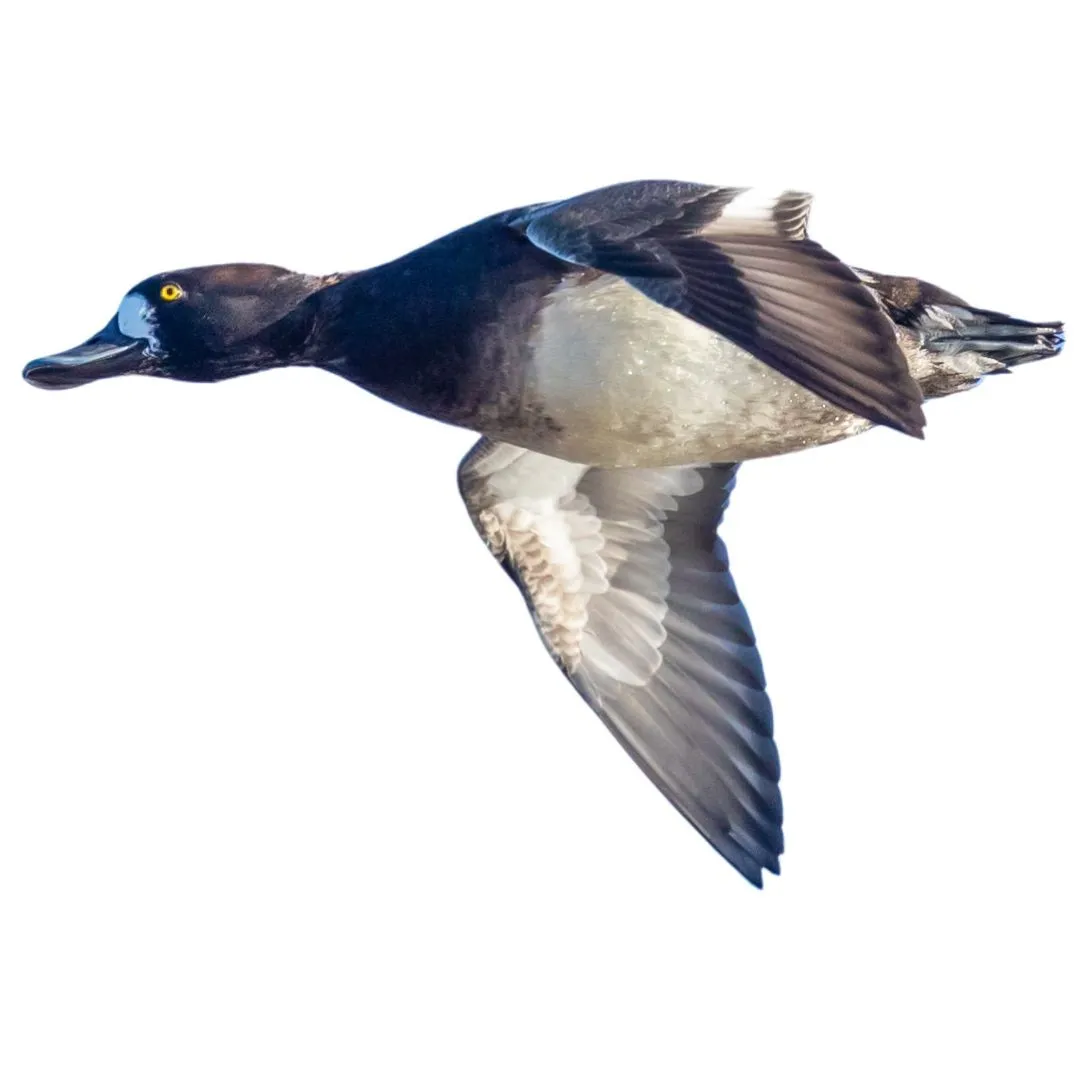
Blue-gray bill, black head with green or purple sheen, white sides, dark back, rapid wingbeats, diving habits, female brown plumage with white bill patch, difficult to distinguish species
Scaup are medium sized diving ducks with a broad chest, short neck, and rounded head that give them a compact, front heavy look on the water. They sit low and raft tightly in large groups on big water. In flight, look for fast wingbeats and a bold white stripe across the wing that shows clearly at distance. Hunters most often confuse them with Ring-necked Ducks, but Scaup look stockier with a wider bill and cleaner gray backs on drakes.
Greater Scaup: Larger body size, greenish sheen on male head, rounded head profile, gradual forehead-to-bill slope, deep-water preference (lakes, reservoirs, coastal bays)
Lesser Scaup: Smaller body size, purplish sheen on male head, peaked head silhouette, steep forehead-to-bill angle, shallow-water preference (ponds, marshes, inland wetlands)
Drake
Drakes show a black head and chest with white sides and a pale gray back that looks light even in poor light. The head shape helps separate the two species, with Greater Scaup showing a rounder head and Lesser Scaup often showing a slight peak at the rear. On the wing, the white stripe is broad and obvious, extending farther toward the tip in Greater than in Lesser.
Hen
Hens are brown overall with a pale face and a white patch at the base of the bill. They share the same white wing stripe as males, which is the best cue when birds are flying. Compared to hen Ring-necked Ducks, Scaup hens look bulkier with a broader bill and lack the sharp white ring on the bill.
Range
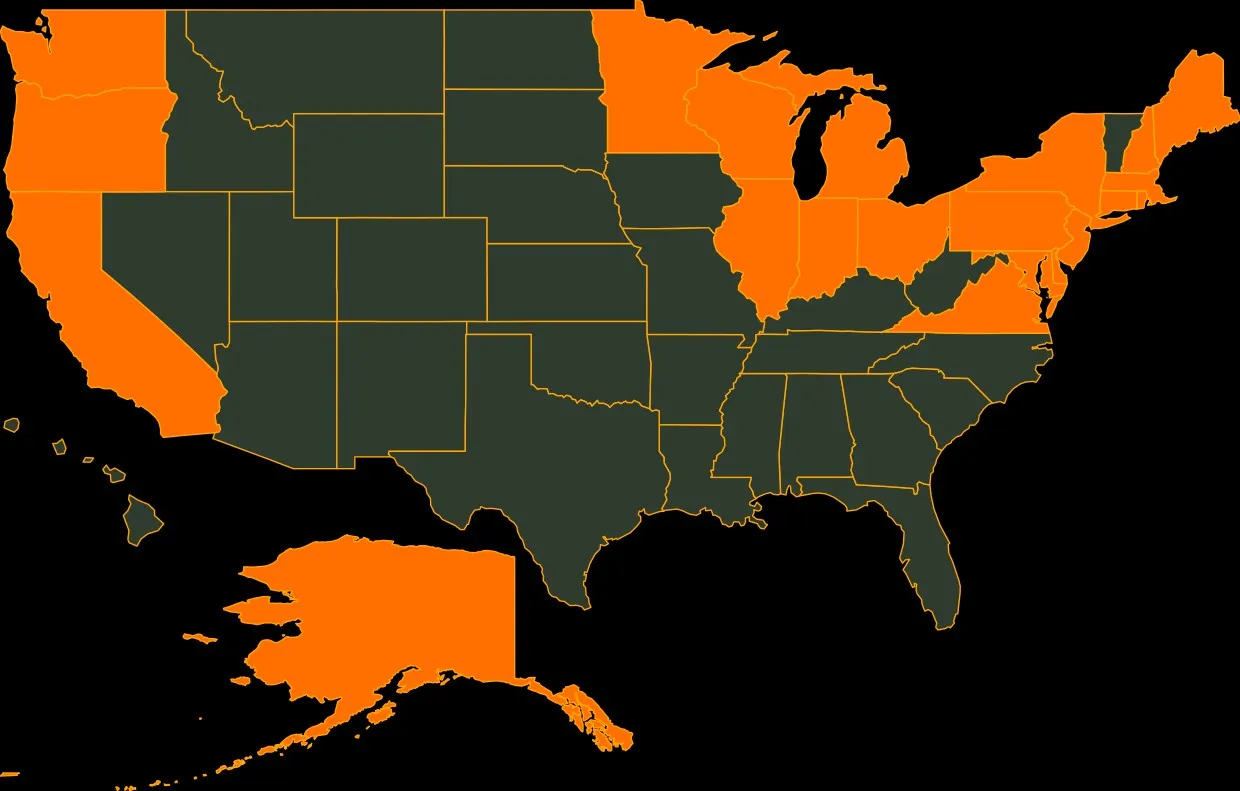
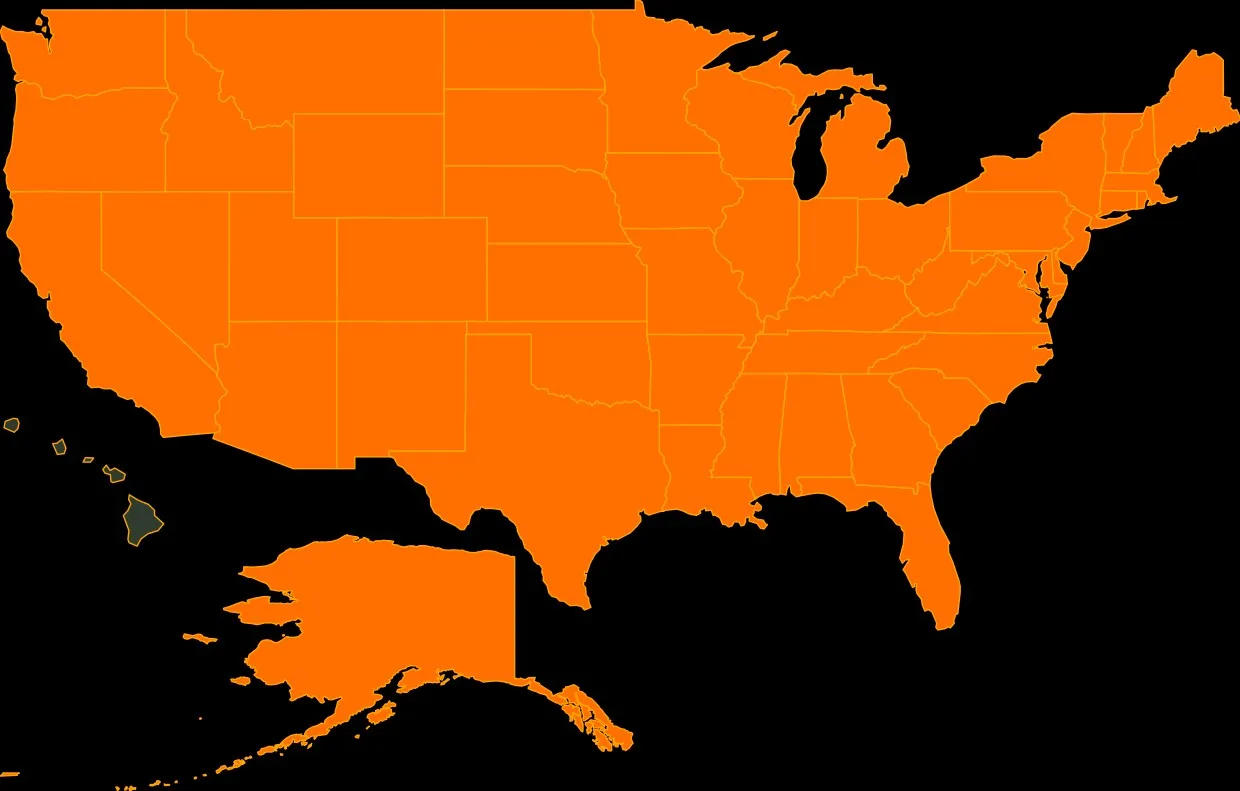
Year-Round
Greater Scaup. Greater Scaup are present somewhere in North America throughout the year, but there are few true year-round locations. Limited overlap of late-wintering and early-breeding birds can occur in parts of Alaska and coastal British Columbia. Most populations shift fully between northern breeding grounds and southern wintering areas.
Lesser Scaup. Lesser Scaup are present somewhere in North America throughout the year, but few areas support them continuously. Limited overlap of wintering and early breeding birds can occur in parts of the Pacific Northwest and the northern Great Plains. Most populations move seasonally between northern breeding grounds and southern wintering regions.
Breeding
Greater Scaup. Greater Scaup breed across the Arctic and subarctic regions of Alaska and northern Canada. Core breeding areas include northern Alaska, the Yukon, Northwest Territories, northern Manitoba, and areas extending east to Hudson Bay and the northern Quebec region. They nest on tundra wetlands and large northern lakes within Arctic and boreal landscapes.
Lesser Scaup. Lesser Scaup breed primarily across the boreal forest and prairie regions of Alaska and Canada. Core breeding areas include interior Alaska, the Yukon, northern British Columbia, Alberta, Saskatchewan, Manitoba, and western Ontario. They also nest across the Prairie Pothole Region and parts of the north-central United States, including the Dakotas and Minnesota.
Winter
Greater Scaup. Most Greater Scaup winter along coastal marine waters. Major concentrations occur along the Atlantic Coast from the Canadian Maritimes south to the mid-Atlantic states, and along the Pacific Coast from Alaska to California. They also winter in significant numbers on the Great Lakes and other large inland waters when open water is available.
Lesser Scaup. Most Lesser Scaup winter in the southern United States and Mexico. Large concentrations occur along the Gulf Coast, Atlantic Coast, Pacific Coast, and throughout the Mississippi Flyway. They are widespread on the Great Lakes and major inland reservoirs where open water persists.
Migration Timing
Greater Scaup. Fall migration typically begins in October, with peak movements in November as Arctic waters freeze. Spring migration occurs from March through May, with birds moving north along the Atlantic, Mississippi, and Pacific flyways toward Arctic breeding areas soon after ice-out.
Lesser Scaup. Fall migration generally begins in September, with peak movements in October and November along all four major flyways. Spring migration occurs from February through April, with birds returning north to prairie and boreal breeding areas soon after ice recedes.
Related Species
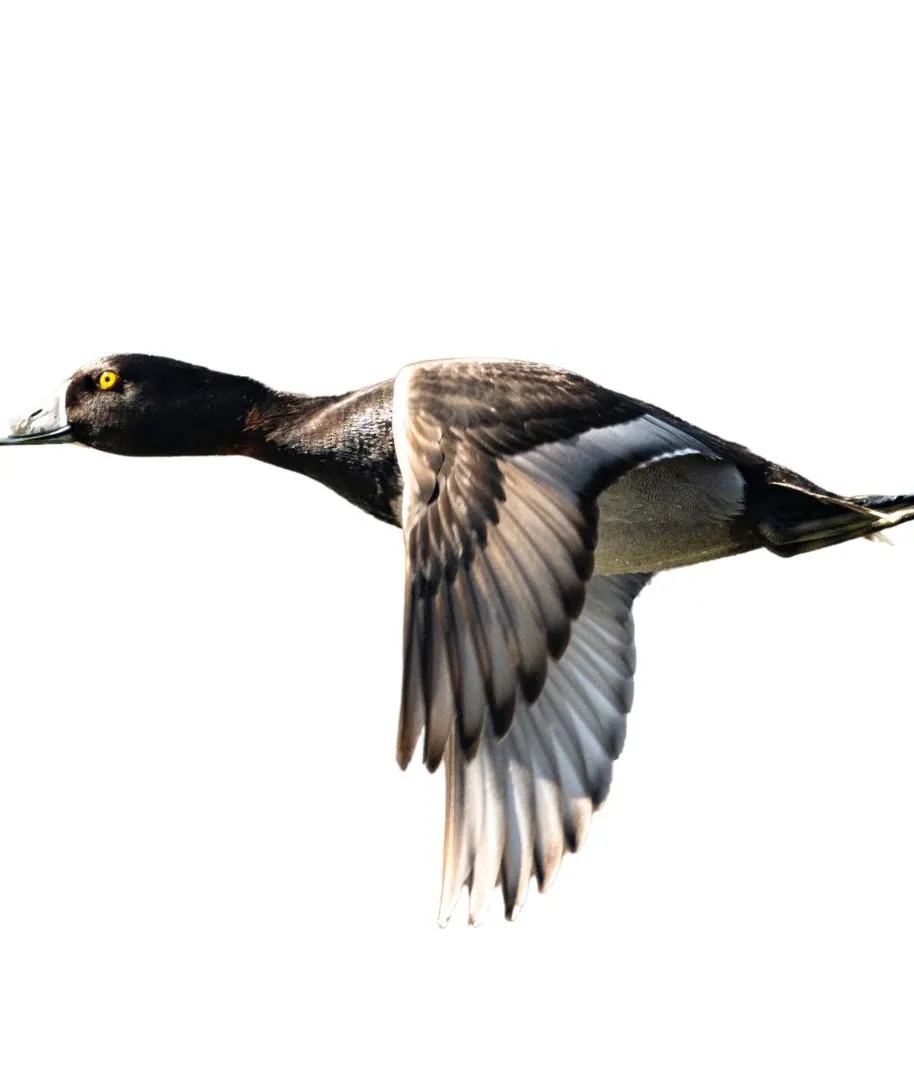
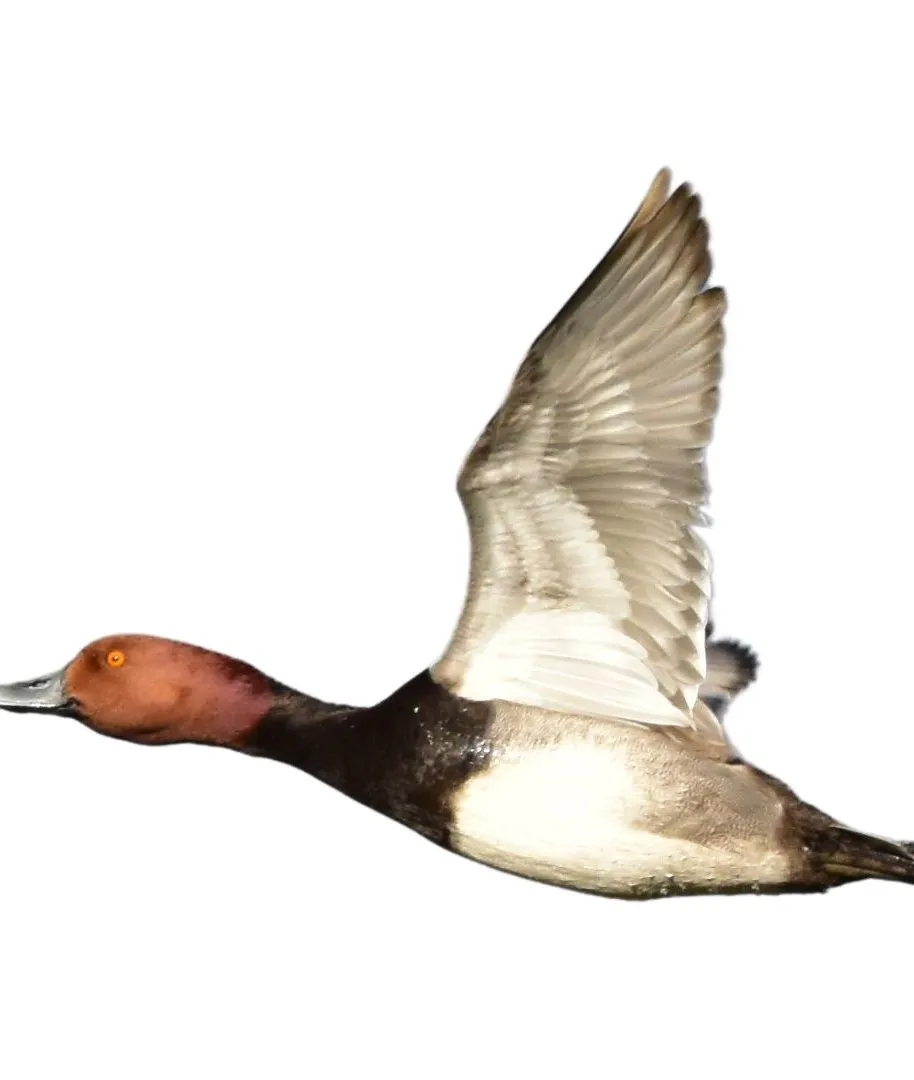
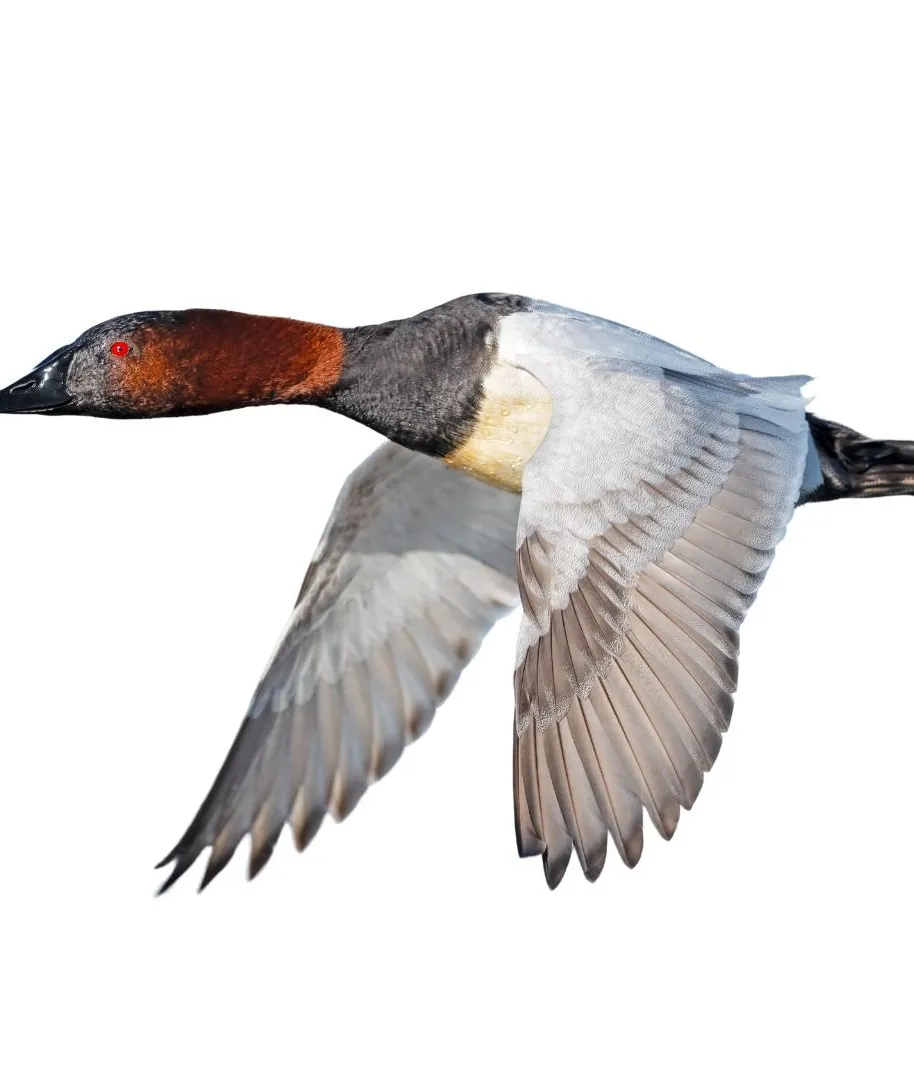
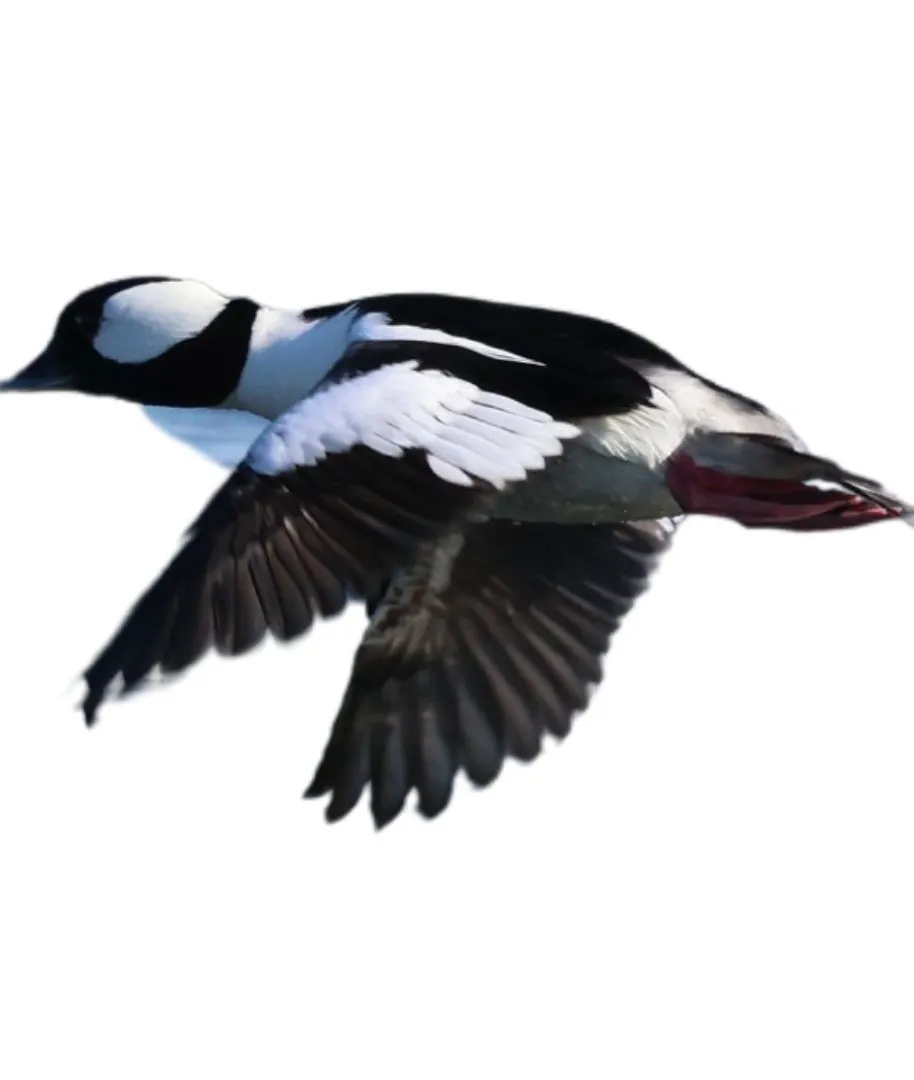
How to ID It
- Medium-sized diving duck with broad chest, short neck, and rounded head profile
- Short, wide blue-gray bill with black tip appears broader than on Ring-necked Duck
- Drake shows black head, chest, and rear with pale gray back and white sides
- Hen is brown overall with pale face and white patch at base of bill
- In flight: In flight, both sexes show a bold white wing stripe across the secondaries
- Greater Scaup has rounder head and longer white wing stripe extending toward wing tip
- Lesser Scaup often shows slight peak at rear of head and shorter wing stripe
- Tail is short and squared, lacking pointed shape of puddle ducks
- Larger body and heavier build separate them from Ring-necked Duck in mixed flocks
Key Facts
- Bill Color (Drake)
- Blue-gray, black tip
- Bill Color (Hen)
- Blue-gray, black tip
- Primary Habitat
- Large lakes, coastal waters
- Breeding Habitat
- Boreal lakes, tundra wetlands
- Winter Habitat
- Coastal bays, Great Lakes
- Migration Pattern
- Strong migrant; late fall
- North America Status
- Common and widespread
Habitat
Primary Habitat. Scaup are diving ducks most strongly associated with large bodies of open water. They prefer large lakes, reservoirs, coastal bays, estuaries, and deep marshes rather than shallow ponds or flooded fields. Compared to dabbling ducks, scaup use deeper water with less emergent vegetation and often gather in open lake basins or broad river backwaters.
Seasonal Habitat Differences. During the breeding season, scaup use boreal wetlands, tundra ponds, prairie potholes, and shallow northern lakes across Alaska and Canada. They nest near freshwater marshes and grassland wetlands with nearby open water. In migration and winter, they shift to larger inland lakes, major river systems, coastal lagoons, and estuaries. Greater Scaup are more tied to coastal marine waters, while Lesser Scaup commonly use inland lakes and reservoirs.
Landscape Features to Look For. Look for broad stretches of open water with limited vegetation, such as large freshwater lakes, coastal bays, and deep marshes. Wintering birds often raft far from shore on open water rather than along cattail edges or flooded grasslands.
Frequently Asked Questions
How do you identify a Scaup in the field?
Scaup are medium-sized diving ducks with a broad chest, short neck, and rounded head. In flight, both Greater and Lesser Scaup show a bold white wing stripe across the secondaries. Drakes have black heads and chests with pale gray backs, while hens are brown with a white patch at the base of the bill.
What is the difference between Greater and Lesser Scaup?
Greater Scaup have a rounder head and a white wing stripe that extends nearly to the wingtip in flight. Lesser Scaup often show a slight peak at the rear of the head and a shorter white wing stripe. Greater Scaup are more common on coastal waters, while Lesser Scaup are more widespread inland.
Where are Scaup found in North America?
Scaup breed across Alaska and Canada in boreal wetlands, tundra ponds, and prairie regions. In winter, they occur along the Atlantic and Pacific coasts, the Gulf Coast, the Great Lakes, and major inland reservoirs. They are present in all four major flyways during migration.
What habitats do Scaup prefer?
Scaup prefer large lakes, coastal bays, estuaries, and deep marshes with open water. During breeding, they use northern wetlands and prairie potholes. In winter, they concentrate on coastal marine waters and large inland lakes rather than shallow ponds or flooded fields.
Are Scaup migratory?
Yes, scaup are strong seasonal migrants. Most birds leave northern breeding grounds in fall before freeze-up and move south along all major flyways. Spring migration occurs as ice recedes, with birds returning to boreal and prairie breeding areas.
What species are commonly confused with Scaup?
Scaup are often confused with Ring-necked Ducks. Scaup appear bulkier with a broader blue-gray bill and lack the sharp white ring near the bill tip seen on Ring-necked Ducks. In flight, the bold white wing stripe on scaup is usually more prominent.
What do Scaup eat?
Scaup feed primarily on aquatic invertebrates such as mollusks, crustaceans, and insect larvae. In freshwater wetlands, they consume aquatic insects and plant material. They dive to forage, often in deeper water than dabbling ducks.
In the Field
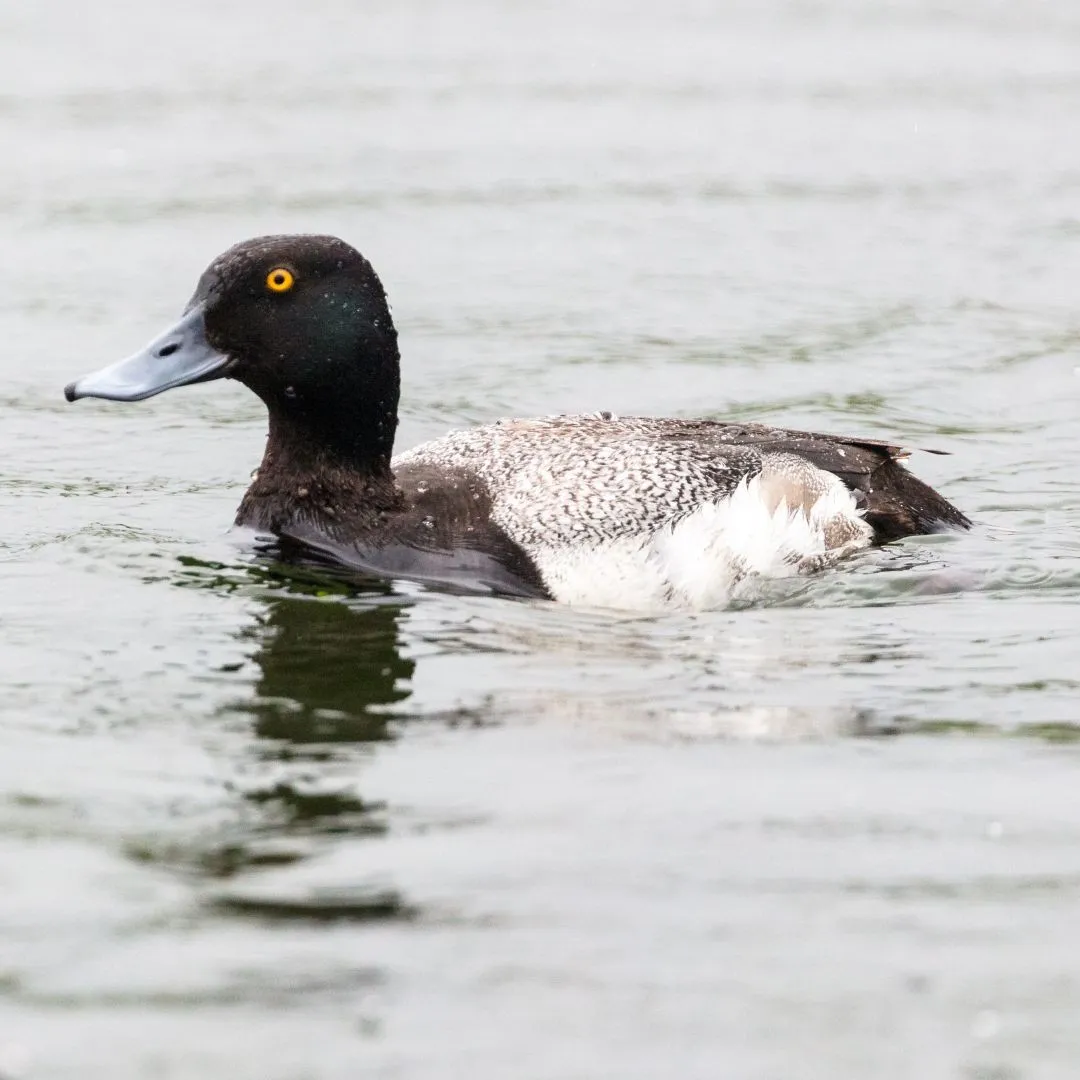
Photo: NPS/Jacob W. Frank 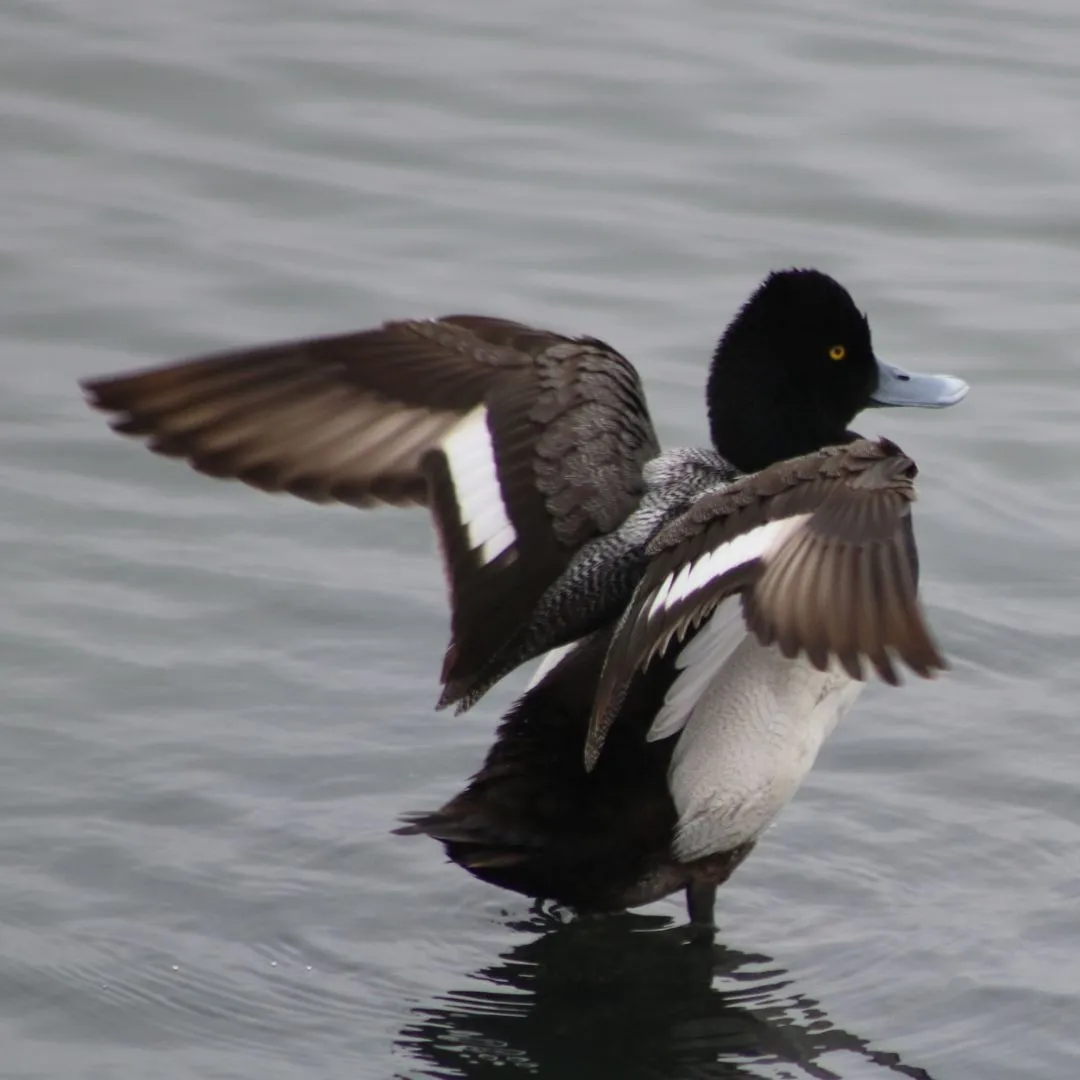
Photo: Liz Julian/USFWS 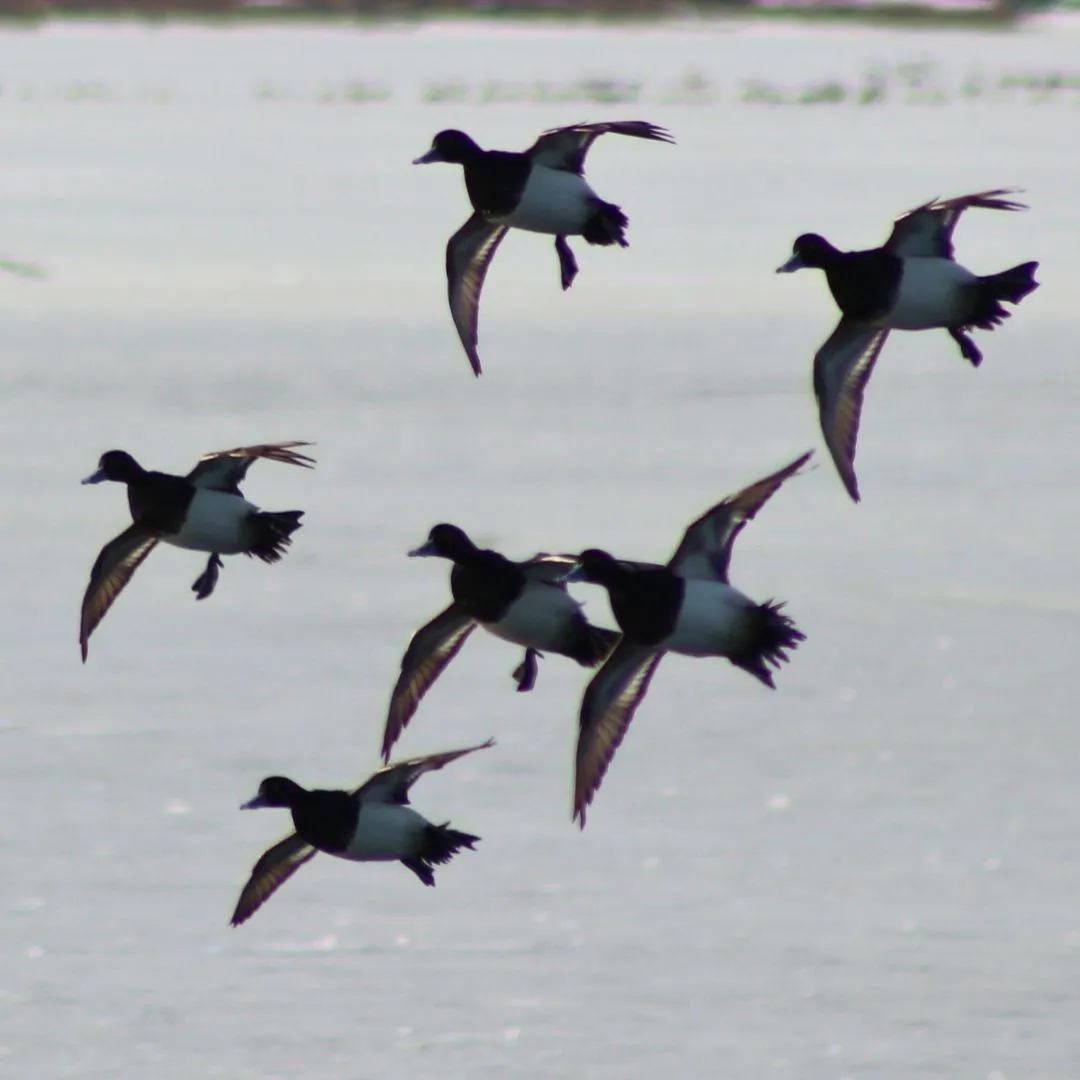
Photo: Liz Julian/USFWS