Ring-necked Duck
Aythya collaris
Alternate names: Ringneck, Black jack, Ringbill
- Length
- 17 in
- Weight
- 2.5 lb
- Wingspan
- 24–29 in
Calls
Ringneck Ducks are visual divers, not vocal responders – Whistles and calls are less effective than motion, decoy spacing, and raft shape. Neither males or females vocalize much compared to dabbling ducks.
- Males: Deep, muffled “brrt” or “prrrt” grunt, sometimes a short, rolling whistle during display or courtship.
- Females: Soft, nasal “quack” or “kuk-kuk” sound, rarely given except during close social contact or nesting.
Drake
Males give soft, short whistles and low grating or purring notes, most often heard during courtship on northern breeding waters. The tone is subdued and carries only a short distance. During migration and winter, drakes are typically silent and rarely call in flight.
Hen
Females produce low, rough quacks and brief grunting notes. These calls are muted and given at close range, usually during interactions on the water. They lack the loud, ringing quality of most dabbling duck hens and are seldom heard from far away.
When You'll Hear Them
Vocal activity peaks in spring and early summer on breeding wetlands. In fall and winter on inland lakes and coastal waters, Ring-necked Ducks are usually quiet even in large rafts.
Overview
The ring-necked duck is a medium-sized diving duck that can be tricky to identify by its name alone, as the chestnut ring around its neck is hard to see in the field.
They are often confused with scaup species but can be differentiated by their bill markings and steep head shape. Ringnecks prefer small, shallow wetlands and ponds, and are fast, erratic flyers, presenting a challenge for hunters.
Identification
Peaked head, white ring on blue-gray bill, black back (male), subtle neck ring, steep profile, diving habits
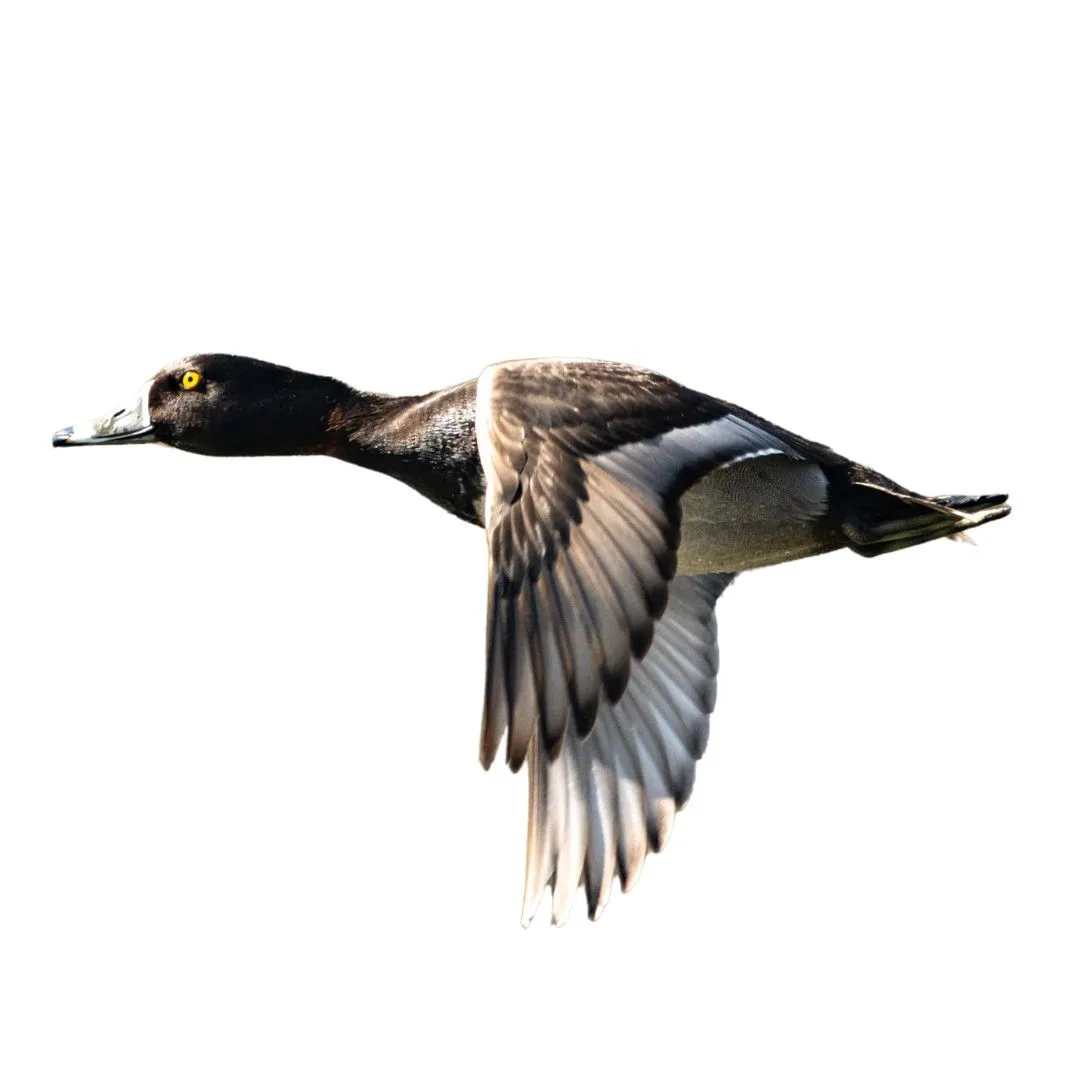
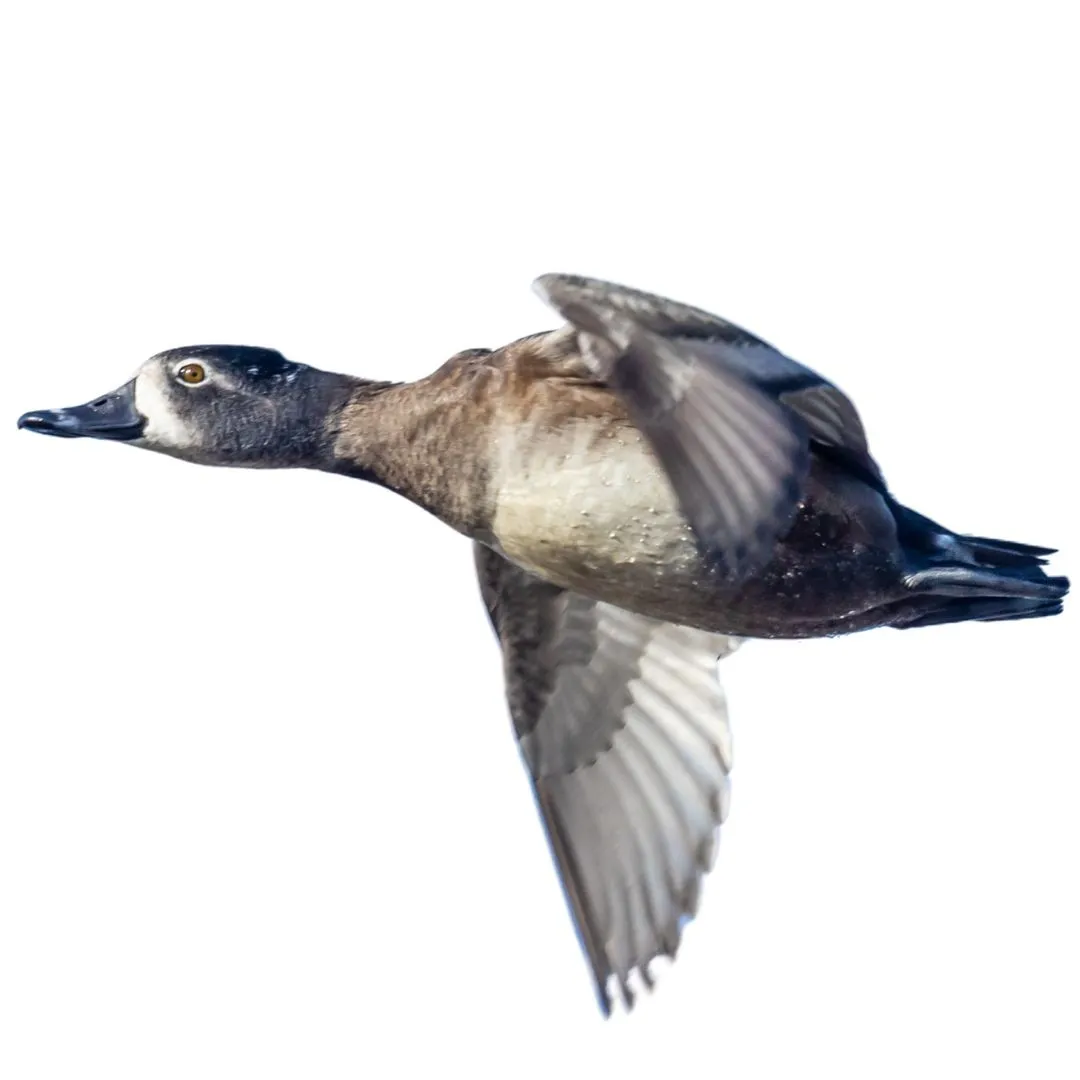
Ring-necked Ducks are compact diving ducks with a tall, peaked head and sharp profile that stands out in mixed flocks. They sit fairly high on the water for a diver and show a clean, angular look compared to round-headed scaup. In flight, look for quick wingbeats and a gray wing stripe limited to the secondaries, not extending to the wingtip. Hunters often confuse them with scaup, but ring-necks look slimmer with a narrower bill and more pointed head shape.
Drake
Drakes show a black back and chest with crisp white sides and a sharp white wedge rising up the flank. The bill has a bold white ring near the tip and a thin white band at the base. In flight, the gray wing stripe is narrower than on scaup and does not reach the outer primaries.
Hen
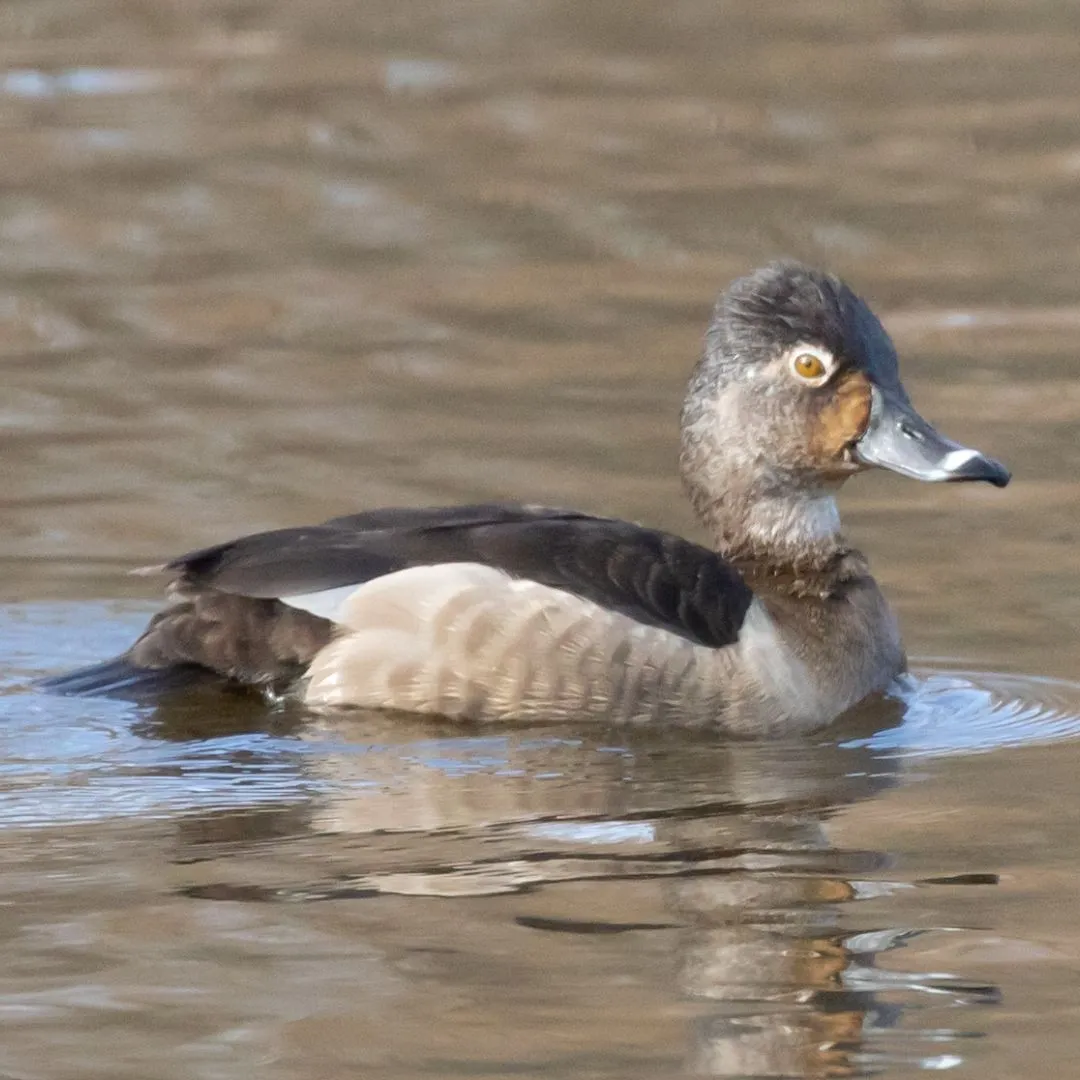
Hens are brown with a pale face and a clear white eye ring that shows well at close range. The bill shows a pale band near the tip, though less bold than the drake. Compared to hen scaup, they look more angular with a peaked crown and lack the broad, round-headed profile of scaup.
Range
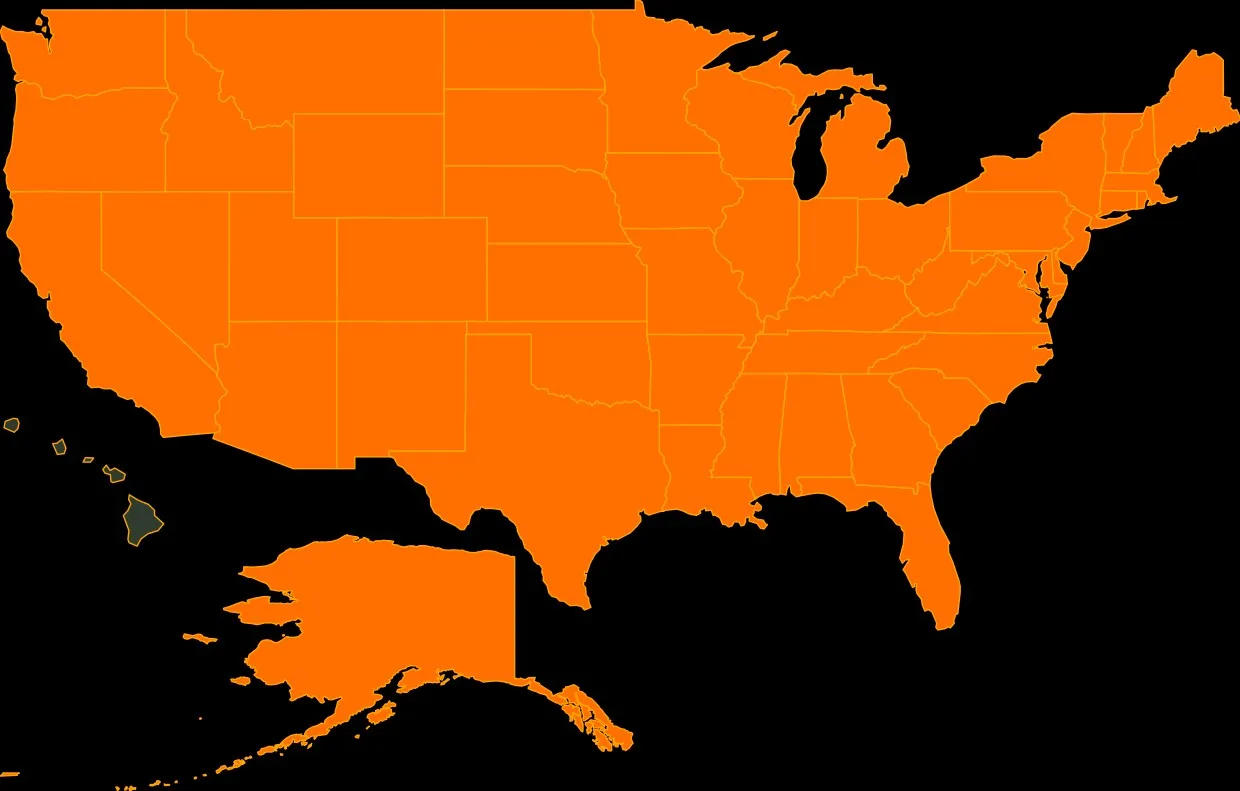
Year-Round
Ring-necked Ducks occur somewhere in North America throughout the year, but few areas hold them continuously. Limited overlap of late-wintering and early-breeding birds may occur in parts of the Pacific Northwest and interior West. Most populations move seasonally between northern breeding grounds and southern wintering regions.
Breeding
Ring-necked Ducks breed primarily across the boreal forest of Canada and Alaska. Core breeding areas include interior Alaska, northern British Columbia, Alberta, Saskatchewan, Manitoba, Ontario, Quebec, and the northern Great Lakes region. They nest on forested lakes, bogs, and freshwater wetlands within boreal landscapes.
Winter
In winter, Ring-necked Ducks are widespread across the southern United States and into Mexico. Major wintering concentrations occur along the Atlantic Coast, Gulf Coast, Pacific Coast, and across inland reservoirs and large lakes throughout the South and Southwest. They are common on freshwater lakes and sheltered coastal waters.
Migration Timing
Fall migration typically begins in September, with peak southbound movements in October and November along all major flyways. Spring migration occurs from February through April, as birds move north toward boreal breeding wetlands soon after ice recedes.
Related Species
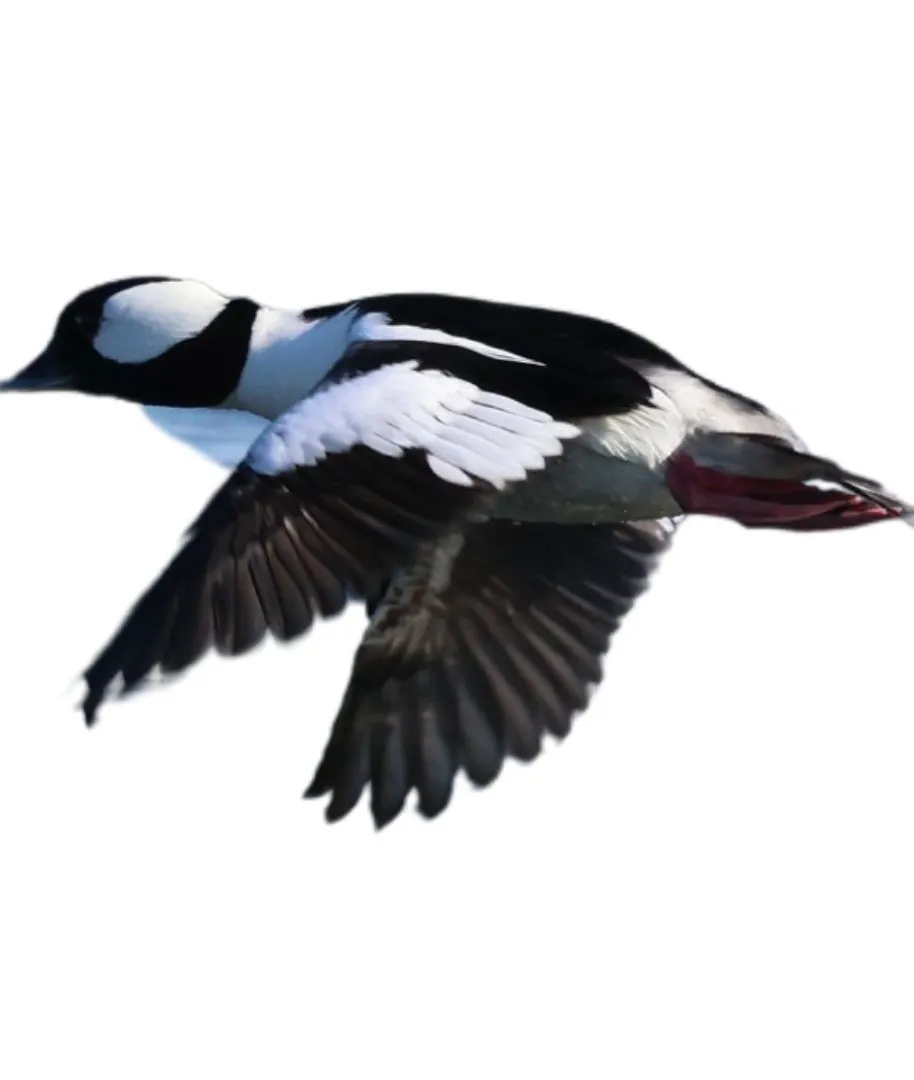
How to ID It
- Medium-sized diving duck with peaked rear crown and tall, angular head profile
- Slim body with relatively long neck compared to scaup
- Bill shows bold white ring near tip and thin white band at base
- Drake has black back and chest with sharp white side wedge
- Hen is brown with pale face and clear white eye ring
- In flight: In flight, shows gray wing stripe confined to secondaries, not extending to wingtip
- Smaller and more angular than scaup with narrower bill
- Tail is short and squared, typical of diving ducks
Key Facts
- Bill Color (Drake)
- Gray with white ring
- Bill Color (Hen)
- Dark gray with pale band
- Primary Habitat
- Lakes, ponds, reservoirs
- Breeding Habitat
- Boreal wetlands, forested lakes
- Winter Habitat
- Inland lakes, coastal bays
- Migration Pattern
- Strong migrant; widespread flyways
- North America Status
- Common and widespread
Habitat
Primary Habitat. Ring-necked Ducks are most strongly associated with freshwater wetlands, forested lakes, ponds, and marshes. They prefer small to medium-sized lakes and quiet water with a mix of open water and submerged or emergent vegetation. Compared to many other diving ducks, they use shallower wetlands and wooded ponds more frequently, especially during the breeding season.
Seasonal Habitat Differences. During breeding, Ring-necked Ducks use boreal wetlands, forested lakes, bogs, and marshy ponds across northern North America. They favor freshwater systems surrounded by trees and dense shoreline cover. In migration and winter, they shift to larger inland lakes, reservoirs, river backwaters, and protected coastal bays. They commonly use freshwater lakes in the southern United States and are less tied to open ocean than many sea ducks.
Landscape Features to Look For. Look for quiet freshwater ponds, wooded lakes, marsh edges, and vegetated shorelines during spring and summer. In fall and winter, scan inland reservoirs, natural lakes, and sheltered coastal lagoons with broad open water and limited wave action.
Frequently Asked Questions
How do you identify a Ring-necked Duck in the field?
Ring-necked Ducks are compact diving ducks with a tall, peaked head and sharp, angular profile. The bold white ring near the tip of the bill is a strong field mark at close range. In flight, they show a gray wing stripe limited to the secondaries, unlike scaup whose white stripe extends farther across the wing.
Where are Ring-necked Ducks found in North America?
Ring-necked Ducks breed across the boreal forest of Canada and Alaska. In winter, they are widespread across the southern United States, including inland lakes, reservoirs, and coastal bays. They occur in all major flyways during migration and are common on freshwater lakes and ponds.
What habitats do Ring-necked Ducks prefer?
Ring-necked Ducks use freshwater wetlands, forested lakes, ponds, and marshes. During breeding, they favor wooded lakes and bogs in northern regions. In migration and winter, they commonly occupy inland reservoirs, large lakes, river backwaters, and protected coastal waters with open water and moderate depth.
Are Ring-necked Ducks migratory?
Yes, Ring-necked Ducks are strong seasonal migrants. Most birds leave northern breeding wetlands in fall before freeze-up and move south across all major flyways. Spring migration begins in late winter as birds return north to boreal breeding areas soon after ice recedes.
What species are commonly confused with Ring-necked Ducks?
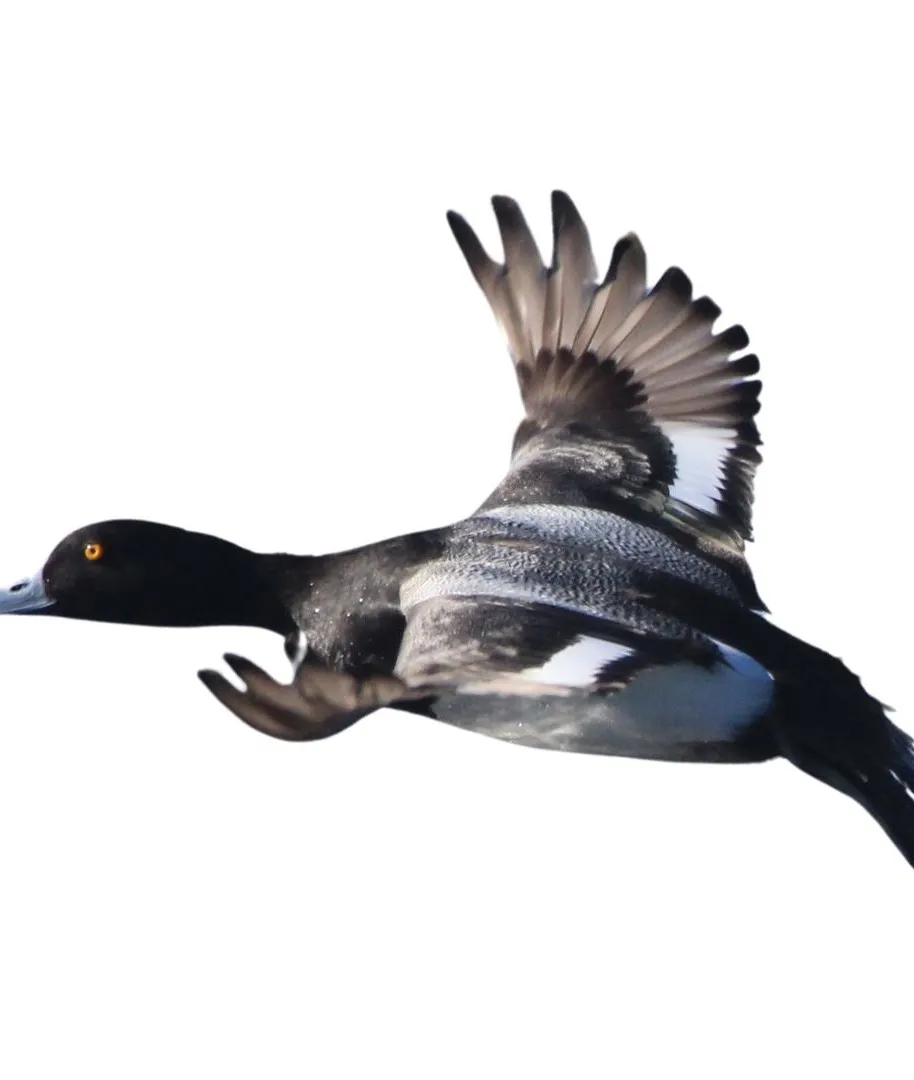
Ring-necked Ducks are most often confused with Greater and Lesser Scaup. Ring-necked Ducks appear slimmer with a more peaked head and a narrower bill. The gray wing stripe is more limited than on scaup, and scaup lack the bold white ring near the bill tip.
Do Ring-necked Ducks actually have a ring around the neck?
The faint chestnut neck ring on the male Ring-necked Duck is rarely visible in the field. Most identification relies on the head shape, bill markings, and flank pattern rather than the subtle neck ring.
In the Field
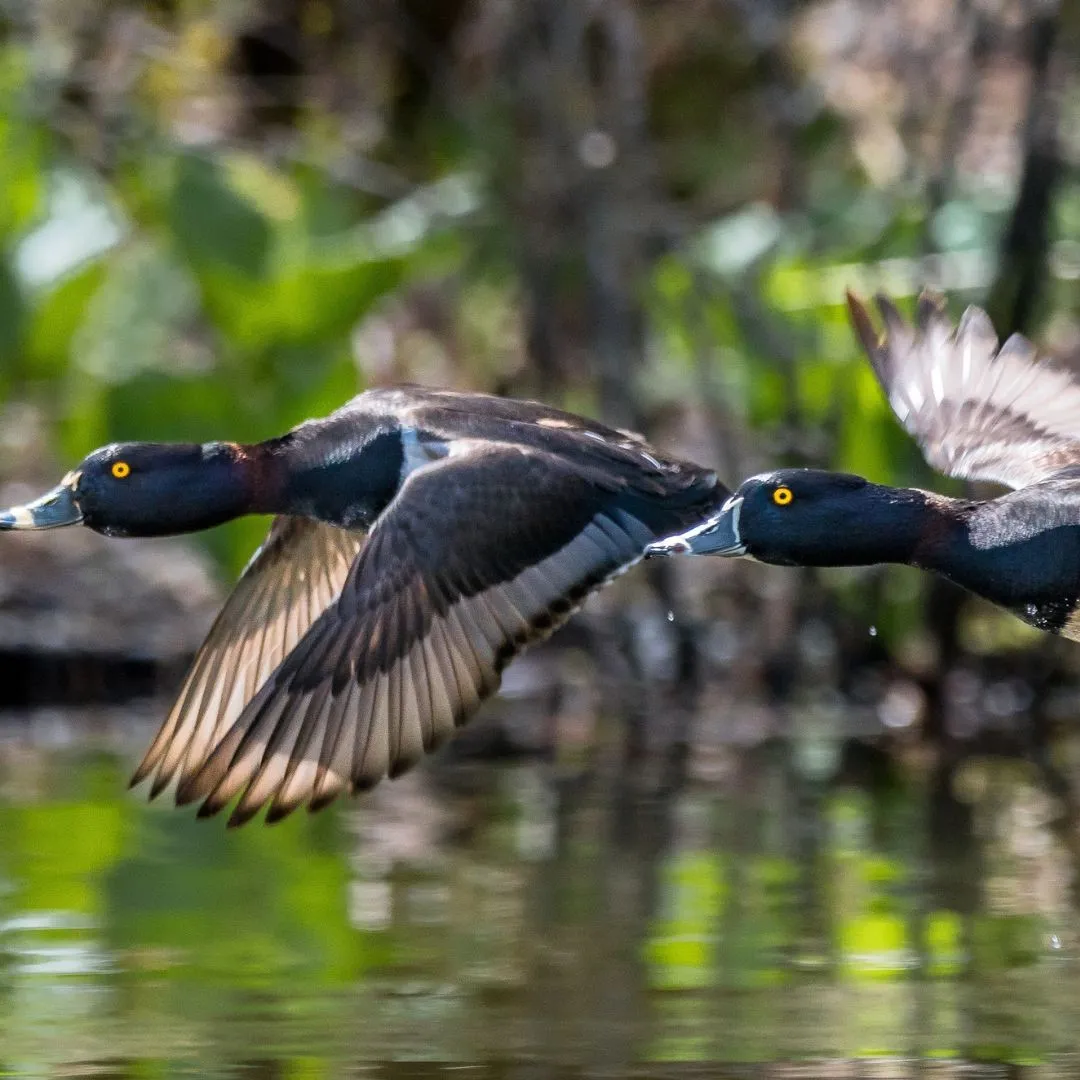
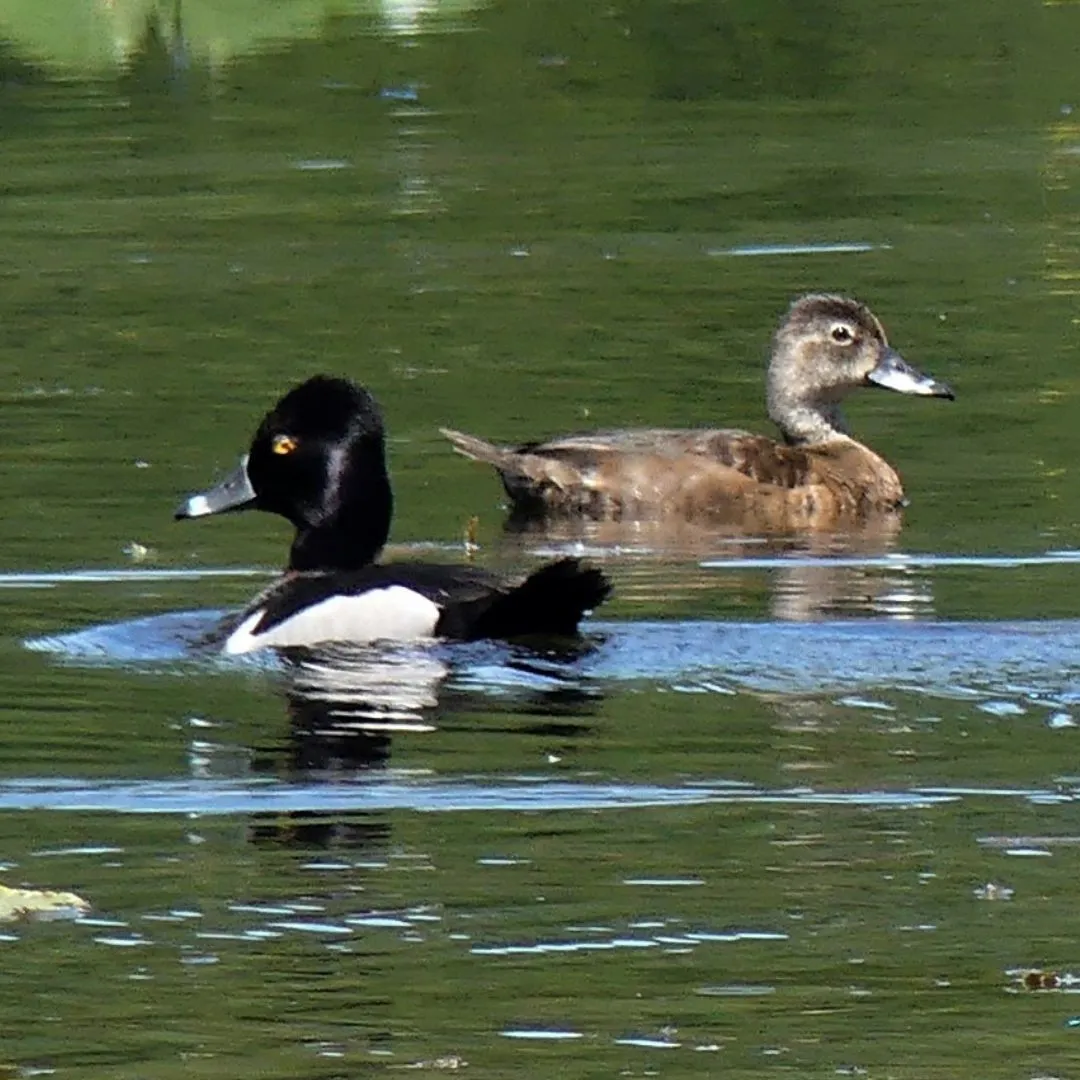
Photo: Sharleen Puckett/USFS