Ruddy Duck
Oxyura jamaicensis
Alternate names: Stiff-tail
- Length
- 15.5 in
- Weight
- 1.33 lb
- Wingspan
- 22–24 in
Calls
Ruddy Ducks are generally quiet outside the breeding season but can be noticeable during spring courtship.
- Males: Breeding males produce low, rapid tapping or bubbling sounds during courtship, paired with short nasal notes.
- Females: Females give short, low grunts and muted quacks used at close range.
Drake
Breeding males produce a series of low, rapid tapping or bubbling sounds made during display, along with short nasal notes. These sounds are given on the water during courtship, often accompanied by head and tail movements. In migration and winter, drakes are mostly silent and rarely call in flight.
Hen
Females give low, short quacks and soft grunting notes. The calls are subdued and do not carry far, typically heard only at close range during interactions on the water. They lack the ringing, loud quality of dabbling duck hens.
When You'll Hear Them
Vocalizations are most common in spring and early summer on breeding wetlands. During fall and winter on lakes and coastal waters, Ruddy Ducks are usually quiet even in mixed flocks.
Overview
The ruddy duck is a small, stout diving duck known for its stiff, upright tail and unique breeding plumage.
These ducks are commonly found in marshes, ponds, and lakes, diving frequently to feed on aquatic insects and plants.
Their small size, fast diving, and upright tails make them easily identifiable in the field.
Identification
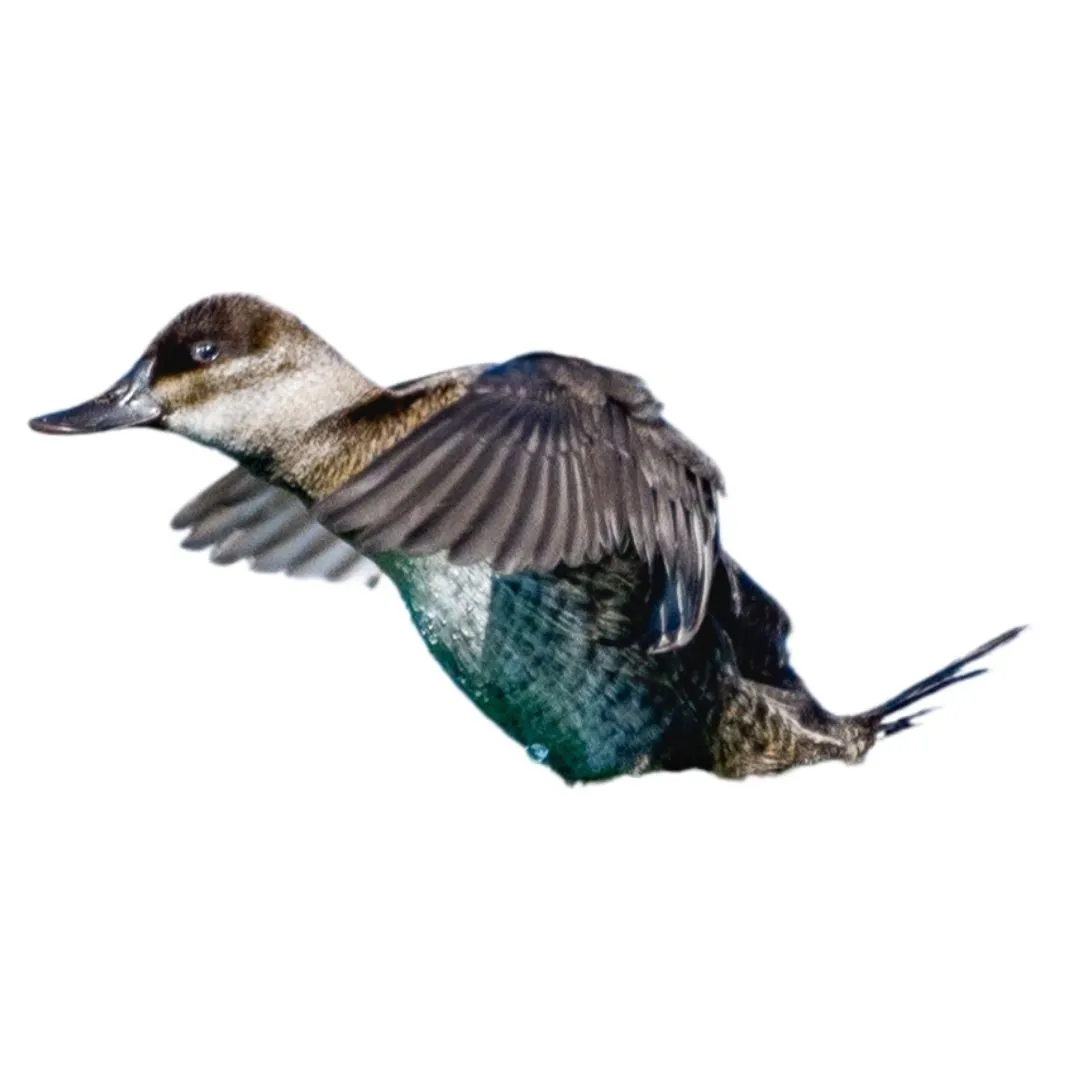
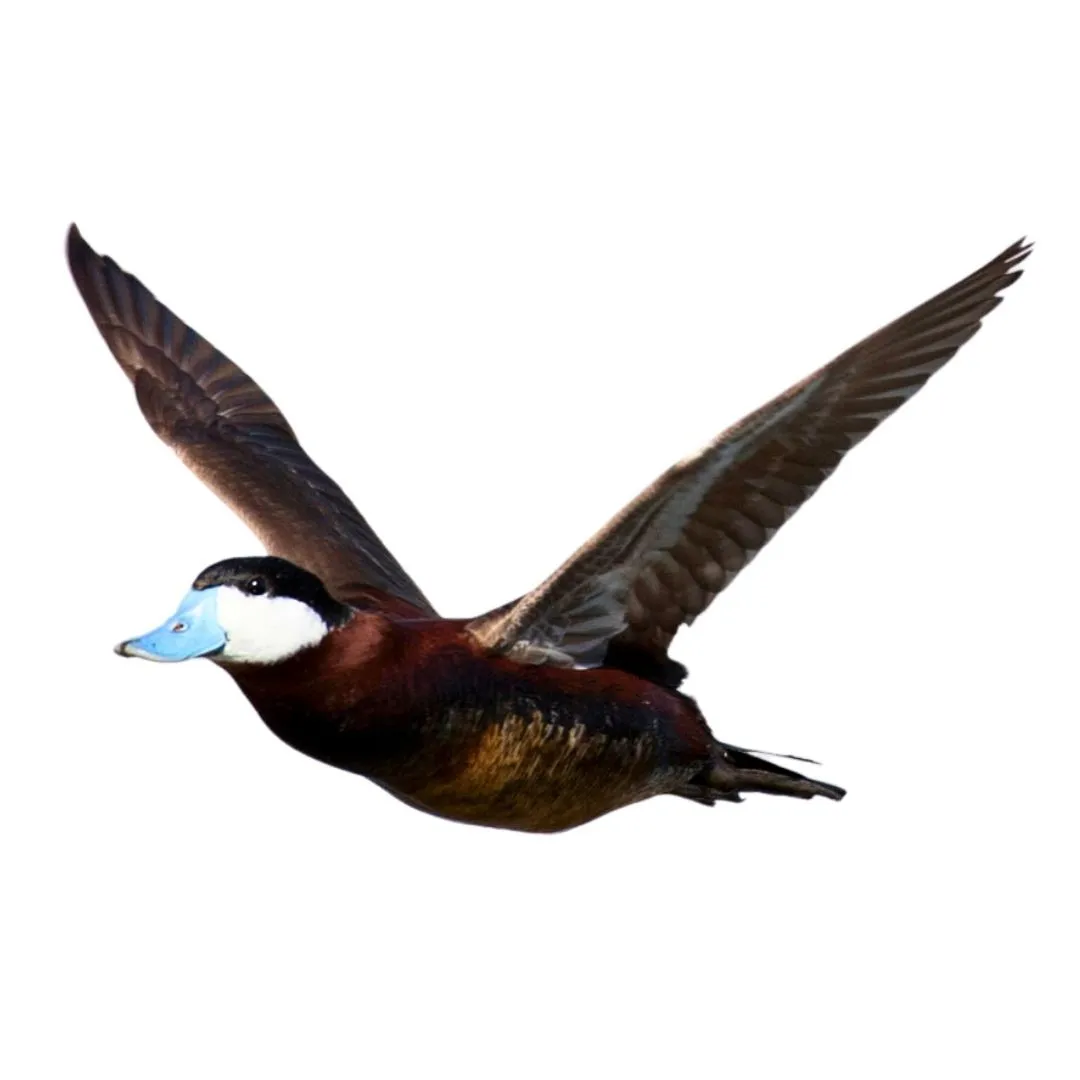
Stiff, upright tail, bright blue bill (breeding male), chestnut body (breeding male), dark cap and cheek stripe (female), small size, diving behavior
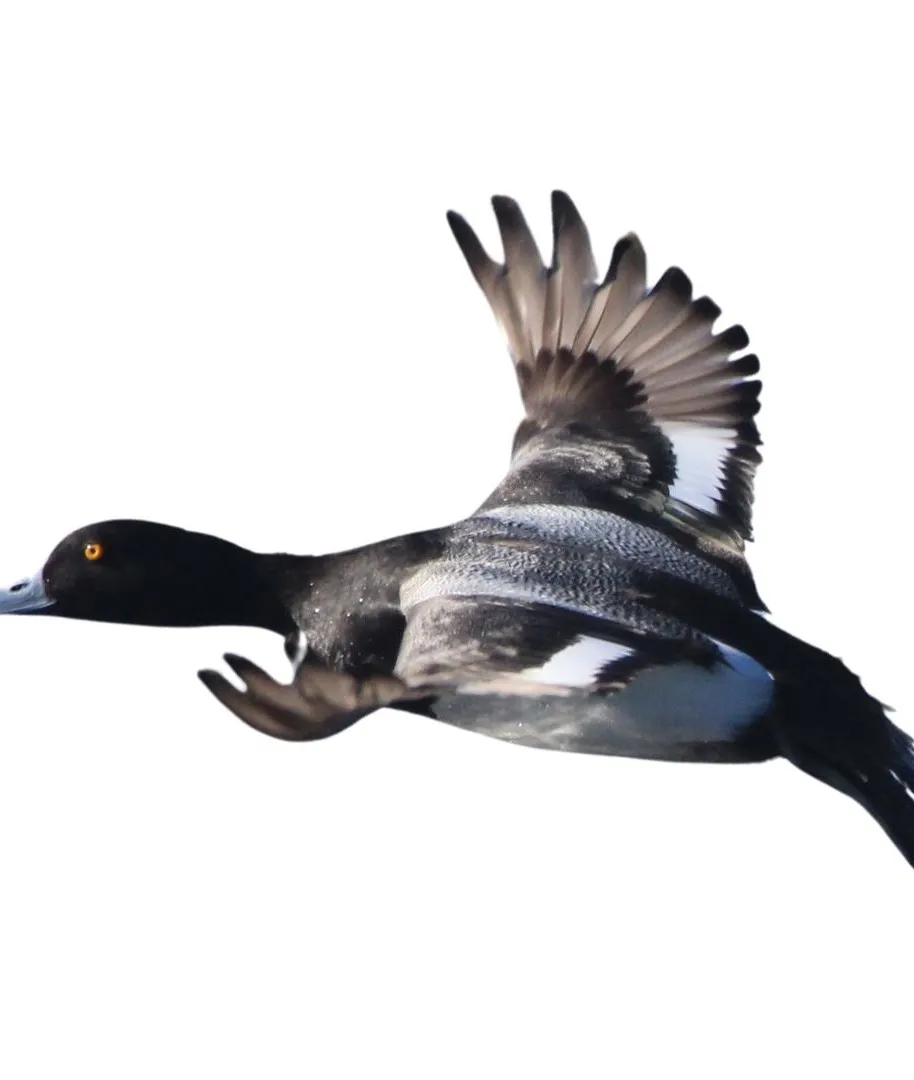
Ruddy Ducks are small, compact diving ducks with a thick neck, large bill, and short body that sits low on the water. The stiff, narrow tail often held straight up is the fastest way to pick them out in a mixed group. They have quick wingbeats and a tight profile in flight, without a bold white wing stripe. Hunters sometimes mistake them for small scaup, but scaup lack the upright tail and have a longer, flatter back.
Drake
In breeding season, drakes show a chestnut body, black cap, and bright blue bill that stands out at close range. The white cheek contrasts sharply with the dark cap. In non-breeding plumage, males turn brown and resemble hens, but the bulky bill and cocked tail still separate them from other diving ducks.
Hen
Females are brown overall with a dark cap and a pale cheek stripe. They share the same compact build and stiff tail, which is often held upright even at rest. Compared to hen scaup, they look smaller, shorter-bodied, and show no white wing stripe in flight.
Range
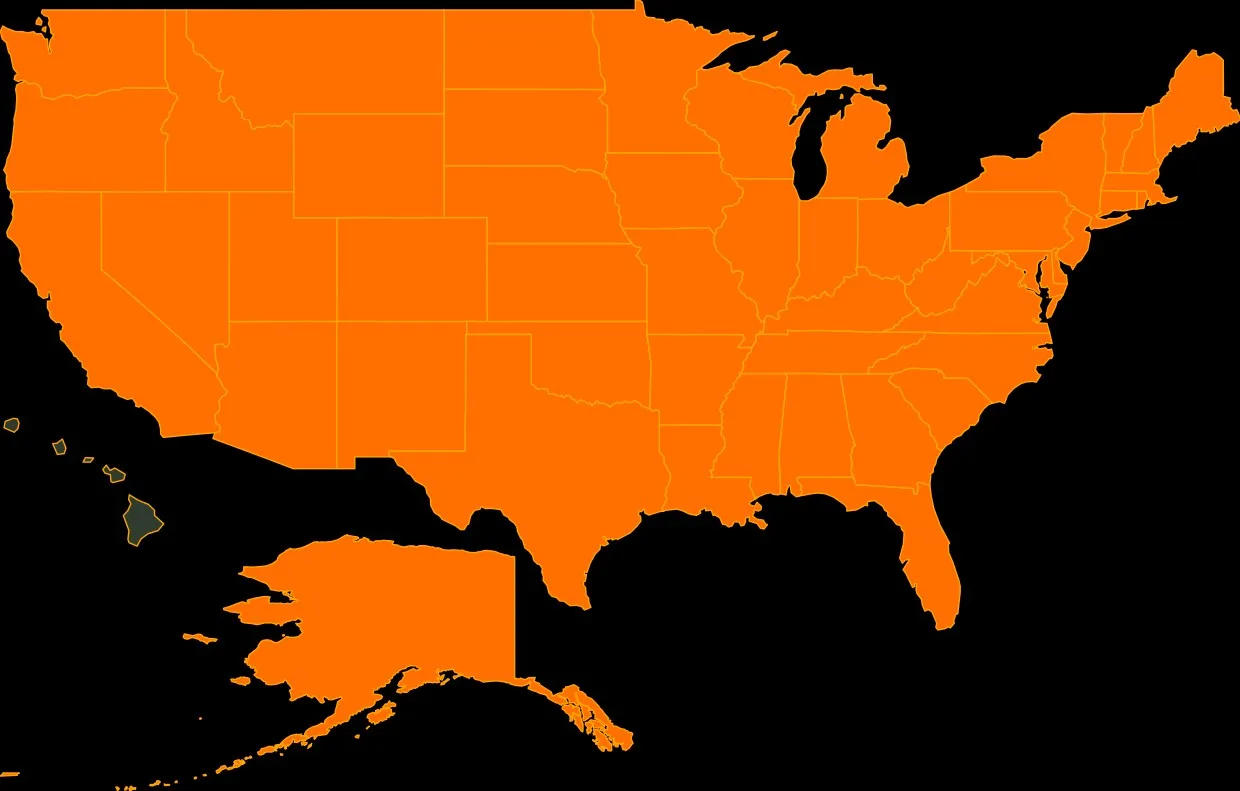
Year-Round
Ruddy Ducks occur somewhere in North America throughout the year, but few areas hold the same birds year-round. Small resident or semi-resident populations persist in parts of California, the Great Basin, and portions of the southern United States where wintering and breeding ranges overlap.
Breeding
Ruddy Ducks breed primarily across the Prairie Pothole Region of the north-central United States and southern Canada. Core breeding areas include the Dakotas, Montana, southern Alberta, Saskatchewan, and Manitoba. They also nest locally in the Great Basin and interior western states, using freshwater wetlands within grassland and prairie landscapes.
Winter
Most Ruddy Ducks winter in the southern United States and Mexico. Major wintering areas include the Gulf Coast, southern Atlantic Coast, inland reservoirs of Texas and the Southwest, California’s Central Valley, and large lakes in Mexico. Smaller numbers winter along both coasts and on large inland waters with open water.
Migration Timing
Fall migration typically begins in September, with peak southbound movement in October and November. Spring migration occurs from February through April, as birds move north to prairie and interior western breeding wetlands soon after ice recedes.
Related Species
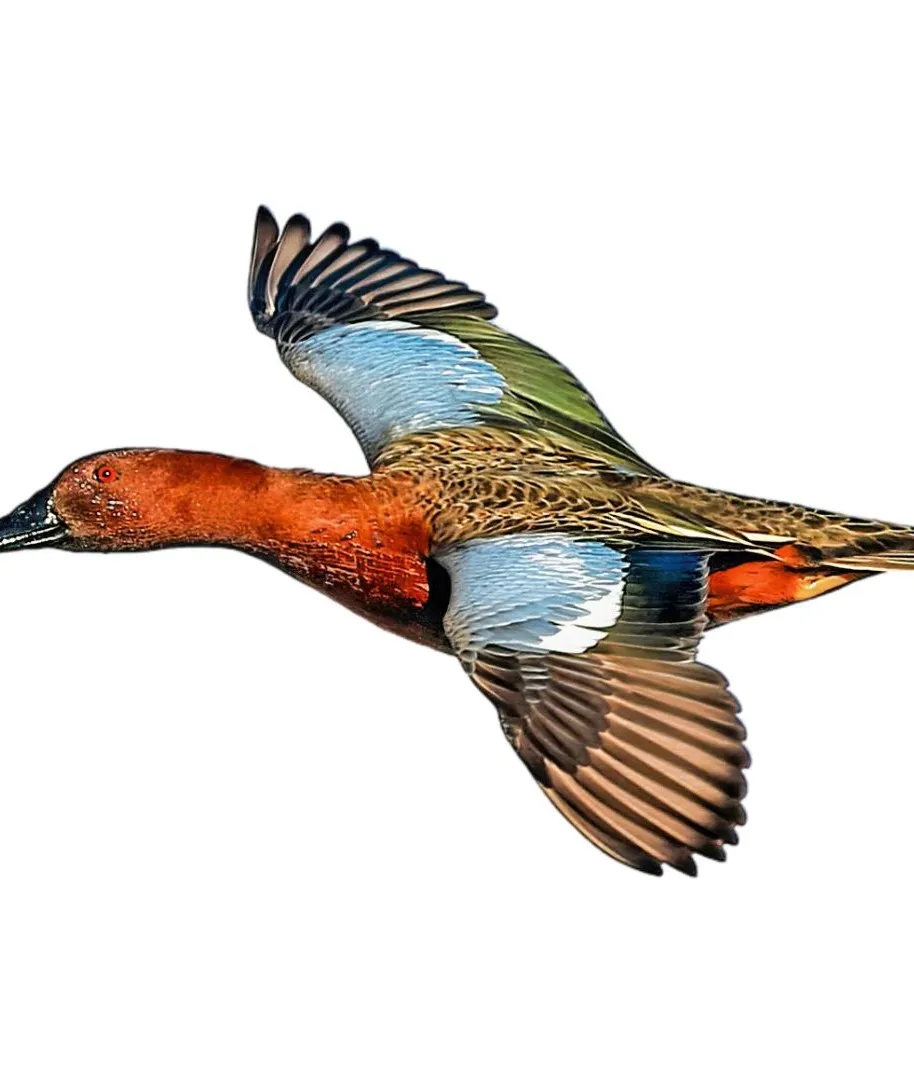
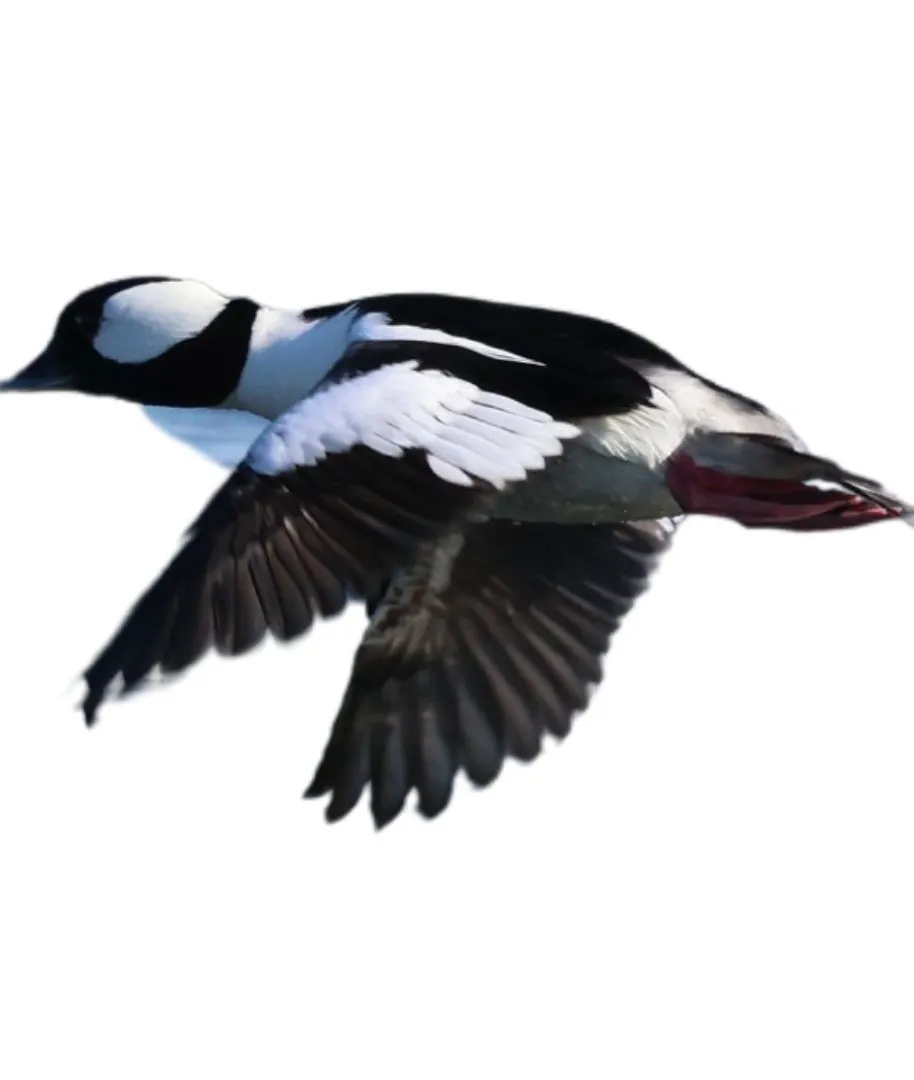
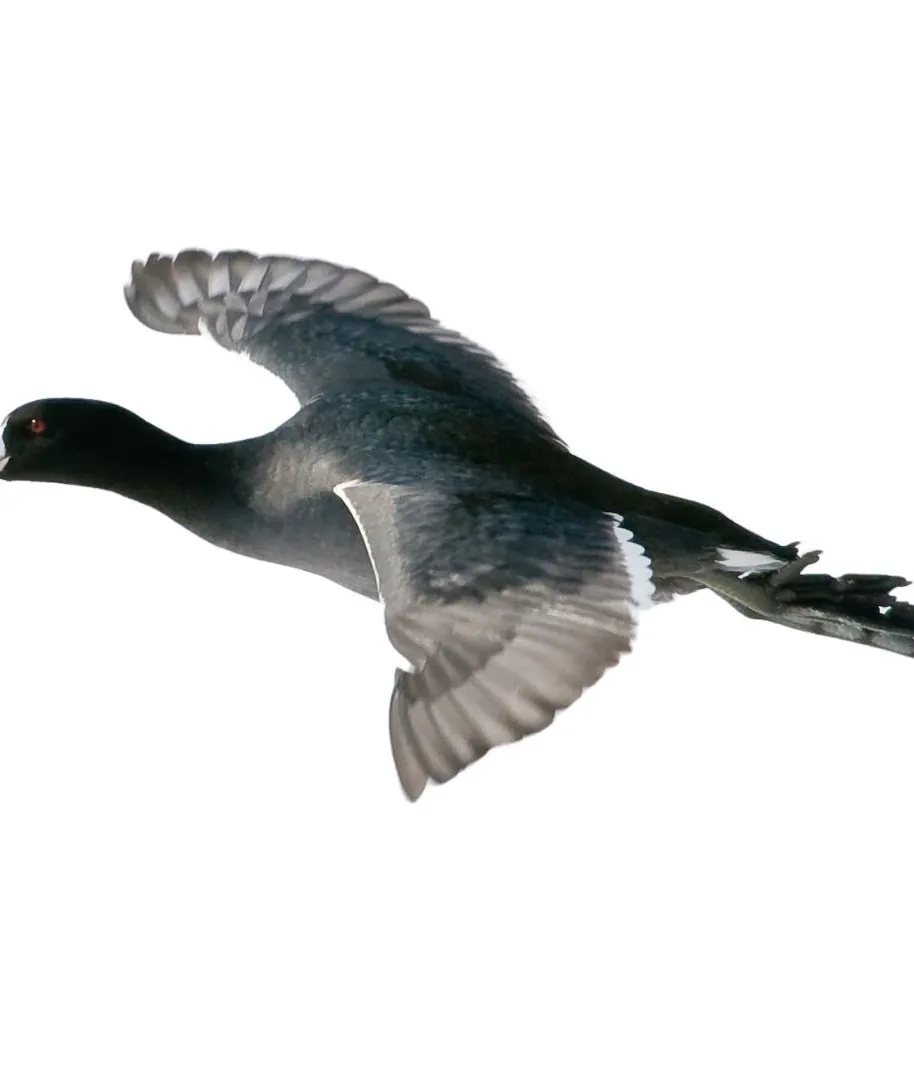
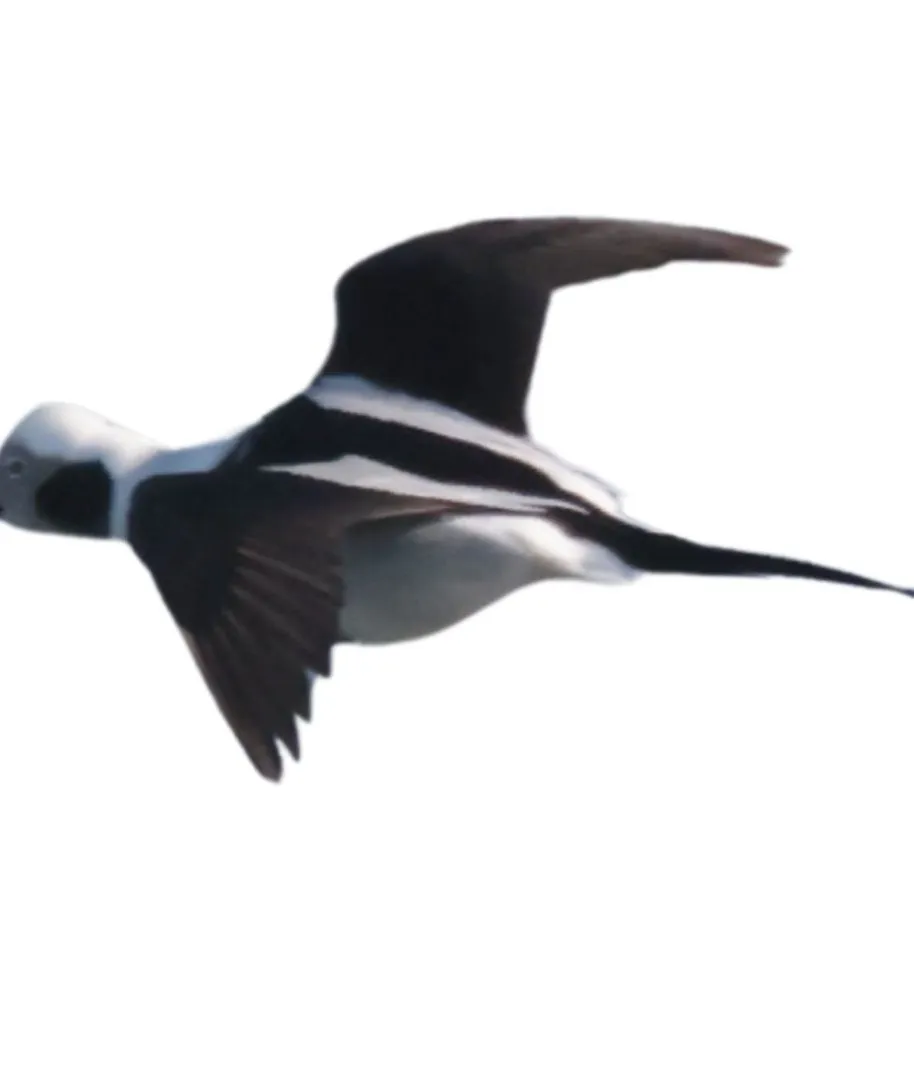
How to ID It
- Small, compact diving duck with thick neck and short body
- Stiff, narrow tail often held cocked upright above the water
- Large, broad bill appears swollen compared to body size
- Drake in breeding plumage shows chestnut body, black cap, and bright blue bill
- Drake in nonbreeding plumage is dull brown with darker crown and pale cheek
- Hen is brown with a dark cap and pale cheek stripe
- In flight: In flight, wings are short and rapid, with no bold white wing patch
- Smaller size and upright tail separate it from scaup and other diving ducks
Key Facts
- Bill Color (Drake)
- Bright blue, breeding
- Bill Color (Hen)
- Dark gray to black
- Primary Habitat
- Marshes, ponds, lakes
- Breeding Habitat
- Prairie wetlands, marshes
- Winter Habitat
- Large lakes, coastal bays
- Migration Pattern
- Short to medium-distance migrant
- North America Status
- Common and widespread
Habitat
Primary Habitat. Ruddy Ducks are most strongly associated with freshwater wetlands, including marshes, ponds, shallow lakes, prairie potholes, and managed impoundments. They prefer areas with dense emergent vegetation such as cattails and bulrushes mixed with open water. Unlike dabbling ducks, they use slightly deeper water where they can dive, often in small to medium-sized lakes within grassland and prairie landscapes.
Seasonal Habitat Differences. During the breeding season, Ruddy Ducks concentrate in prairie wetlands and freshwater marshes across the north-central United States and southern Canada. They favor shallow lakes and marshes with thick cover for nesting. In migration and winter, they shift to larger lakes, reservoirs, coastal bays, estuaries, and saline lakes, often using open water zones rather than flooded fields or shallow marsh edges.
Landscape Features to Look For. Look for marshy ponds and shallow lakes with a mix of open water and dense vegetation during spring and summer. In fall and winter, scan large inland lakes, coastal lagoons, and sheltered bays with broad open water where diving ducks raft together offshore.
Frequently Asked Questions
How do you identify a Ruddy Duck in the field?
Ruddy Ducks are small, compact diving ducks with a thick neck and short body. The stiff tail often held upright is the most reliable field mark at any distance. Breeding males show a bright blue bill and chestnut body, while females and nonbreeding males are brown with a pale cheek stripe.
Where are Ruddy Ducks found in North America?
Ruddy Ducks breed mainly in the Prairie Pothole Region of the north-central United States and southern Canada. In winter, they occur across the southern United States, Mexico, coastal bays, large inland lakes, and major reservoirs. Smaller populations remain year-round in parts of the West and Southwest.
What habitats do Ruddy Ducks prefer?
Ruddy Ducks use freshwater wetlands such as marshes, ponds, shallow lakes, and prairie potholes during breeding. In migration and winter, they shift to larger lakes, reservoirs, saline lakes, estuaries, and coastal bays. They favor open water areas suitable for diving rather than shallow flooded fields.
Are Ruddy Ducks migratory?
Yes, Ruddy Ducks are short to medium-distance migrants. Most birds leave northern breeding wetlands in fall before freeze-up and move south to open water in the southern United States and Mexico. Spring migration begins in late winter as birds return north soon after ice recedes.
What species are commonly confused with Ruddy Ducks?
Ruddy Ducks are sometimes confused with scaup because both are diving ducks that raft on open water. Ruddy Ducks are smaller, more compact, and show a stiff upright tail that scaup lack. In flight, Ruddy Ducks do not show the bold white wing stripe seen on scaup.
What do Ruddy Ducks eat?
Ruddy Ducks feed mainly on aquatic invertebrates, including insect larvae, crustaceans, and small mollusks. They also consume aquatic plants and seeds. Unlike dabbling ducks, they dive below the surface to forage, often in deeper portions of wetlands and lakes.
In the Field
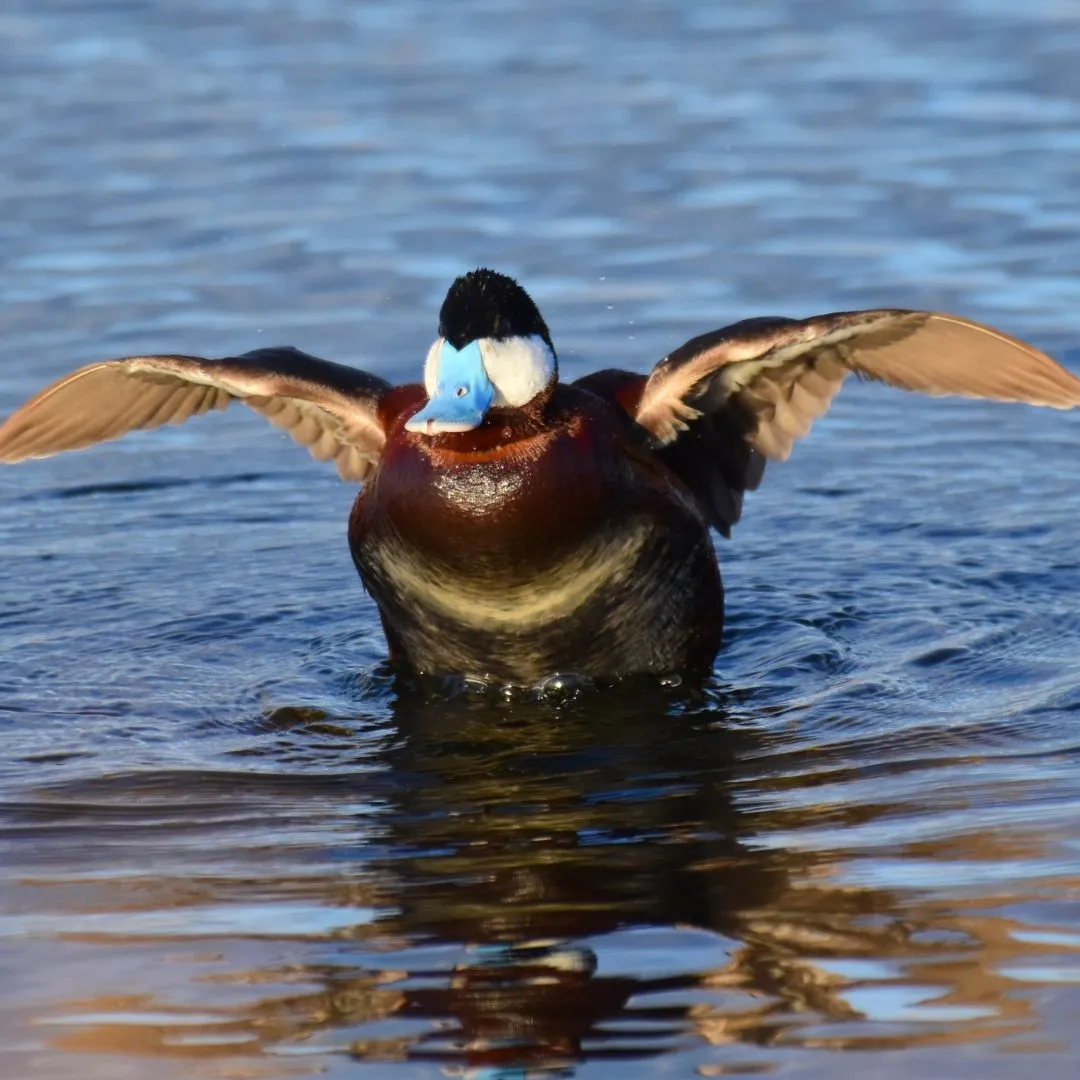
Photo: Tom Koerner/USFWS 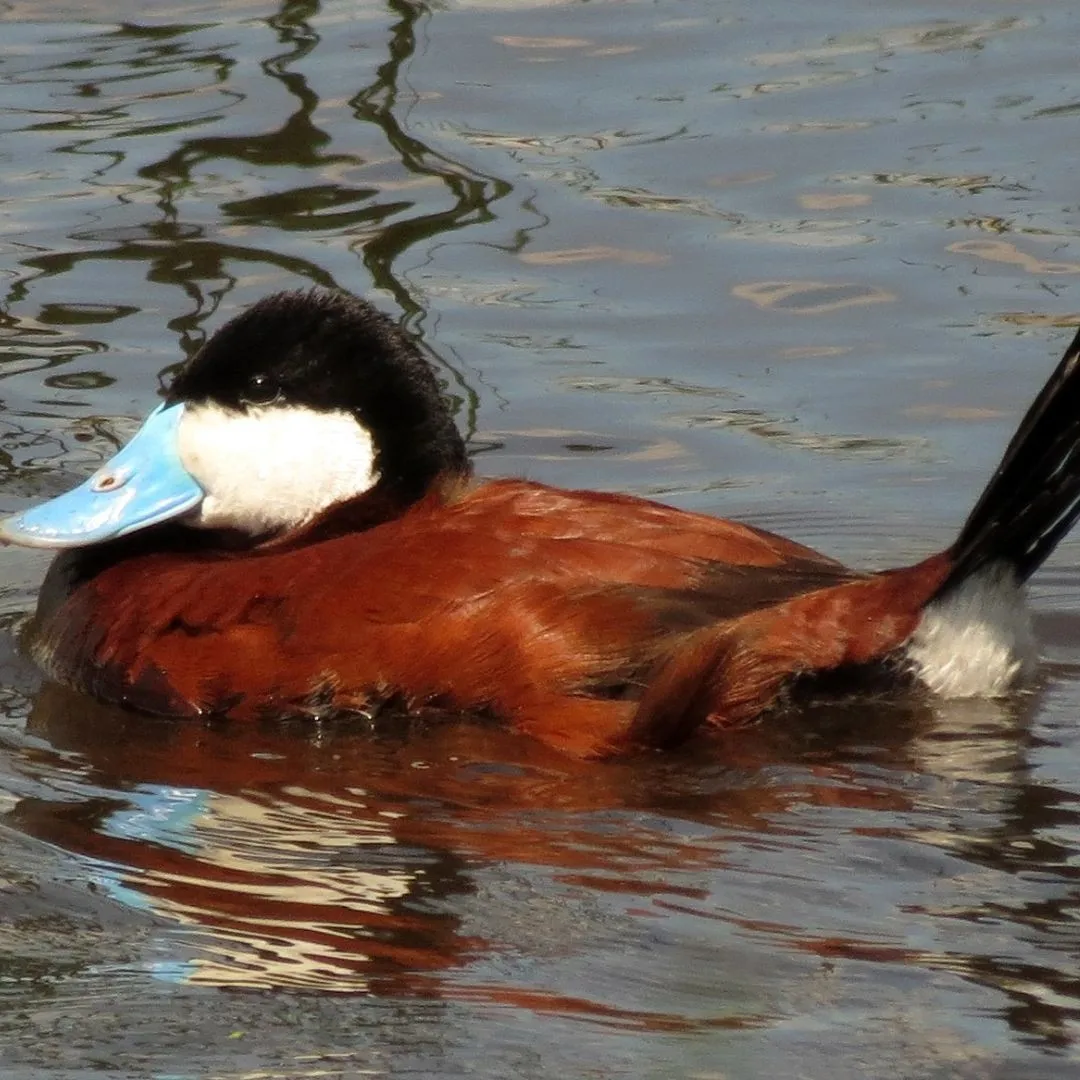
Photo: Alex Galt/USFWS 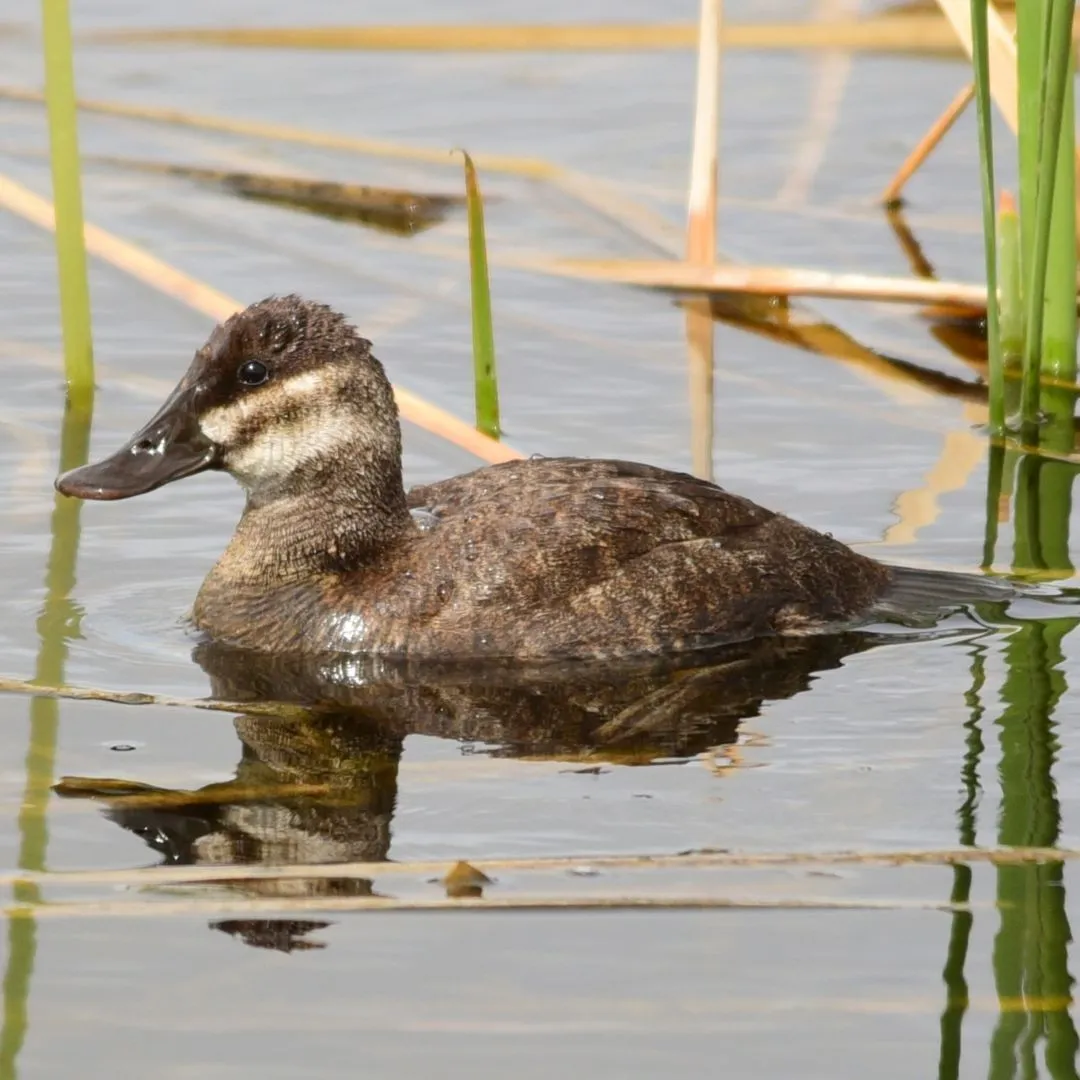
Photo: Tom Koerner/USFWS