Mexican Duck
Anas diazi
Alternate names: Mexican Mallard, Dusky Mallard, Gray Mallard, Dirty Mallard
- Length
- 21 in
- Weight
- 2.33 lb
- Wingspan
- 32–37 in
Calls
Mexican Ducks respond well to standard Mallard calls, particularly soft hen quacks and lonesome hen sequences, though they tend to shy away from aggressive calling. Scouting local movement patterns and keeping calling subtle and realistic is often more effective than volume.
- Males: Low, reedy rasp delivered in short bursts, subdued and mostly heard during courtship or close interaction.
- Females: Strong, even series of mid-pitch quacks, slightly flatter and less ringing than a Mallard hen.
Drake
The drake gives a low, raspy, reedy call that is soft and short, most often heard during courtship or close interactions with other birds. It lacks the volume and carrying quality of the hen’s call and is usually heard at close range rather than from birds in flight.
Hen
The hen gives a series of strong, clear quacks similar to a Mallard hen but often slightly flatter and lower in tone. She uses these calls for contact, alert responses, and when interacting with other ducks. The cadence is steady and familiar to anyone who has heard a hen Mallard.
When You'll Hear Them
Vocalizations are most noticeable during the breeding season and when small groups are interacting on the water. Hens call more frequently than drakes, especially in alert situations or when separated from other birds.
Overview
Mexican Ducks are a regionally common but often overlooked dabbling duck of the American Southwest, where they are a familiar sight to hunters who spend time on rivers, stock tanks, and agricultural wetlands. Because of their close resemblance to Mallards, they are frequently misidentified, especially at a distance.
Unlike Mallards, Mexican Ducks lack bold, high-contrast coloration. Both drakes and hens appear dark, mottled brown to gray overall, with no iridescent green head or clean white neck ring. Their muted appearance helps them blend into arid and semi-arid environments, particularly in low light.
Mexican Ducks are highly adaptable, using a variety of habitats including slow-moving rivers, reservoirs, shallow marshes, flooded fields, and man-made water sources. As dabbling ducks, they feed by tipping up in shallow water, grazing on aquatic vegetation, seeds, and invertebrates, rather than diving.
These birds are largely resident or short-distance movers, meaning local birds often remain in the same general area throughout the season. They are typically most active during early morning and late evening, moving between feeding and loafing areas, and can be wary due to constant local pressure.
Identification
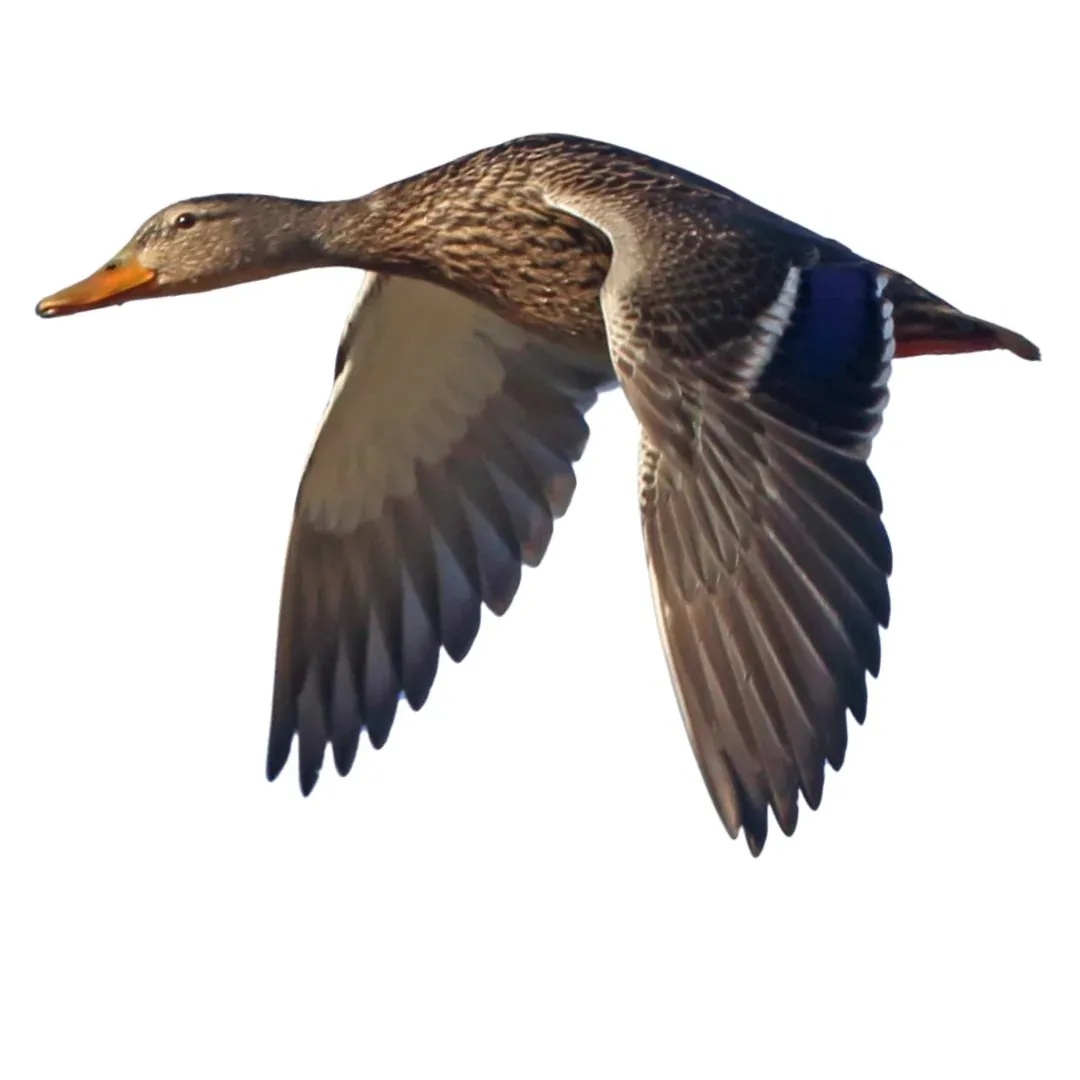
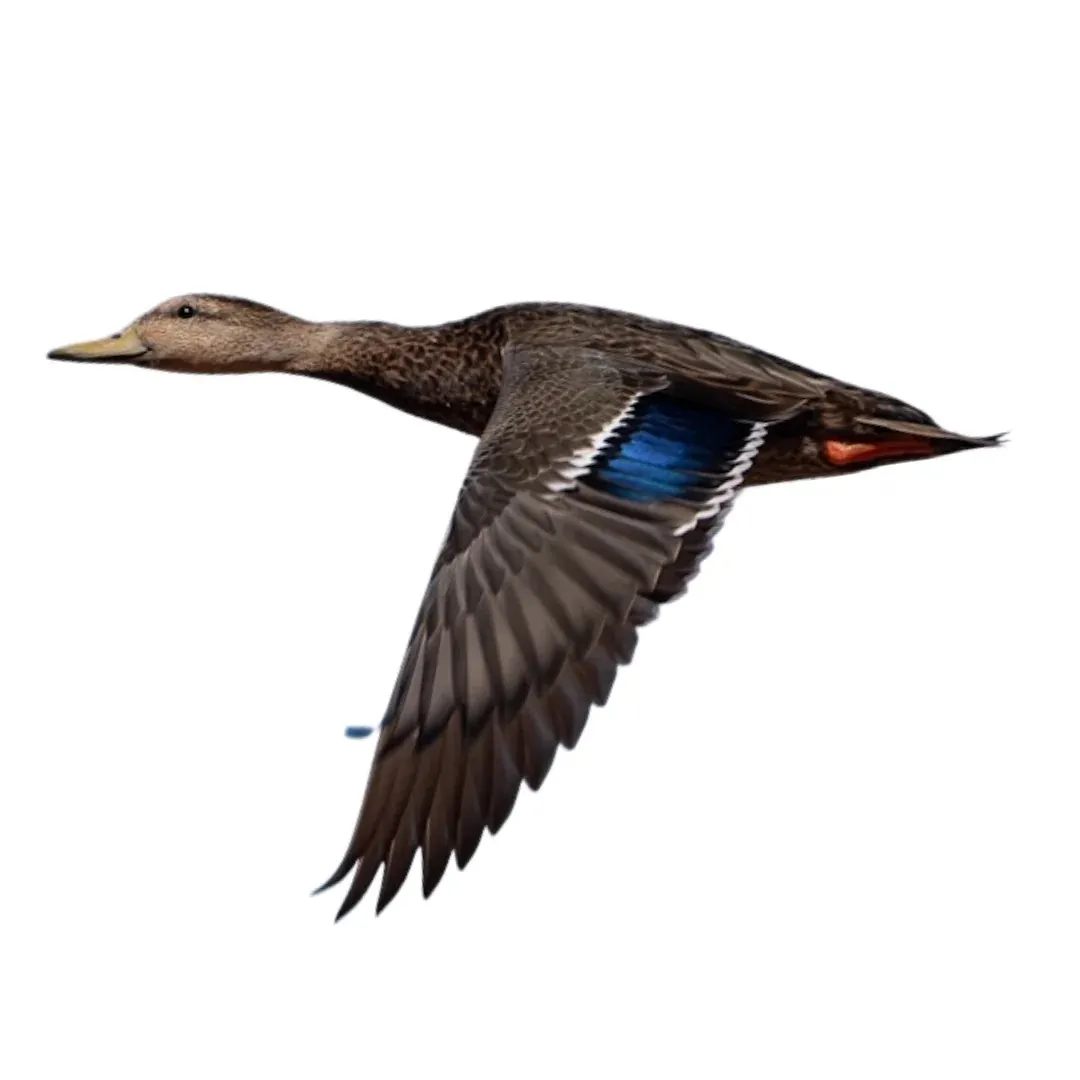
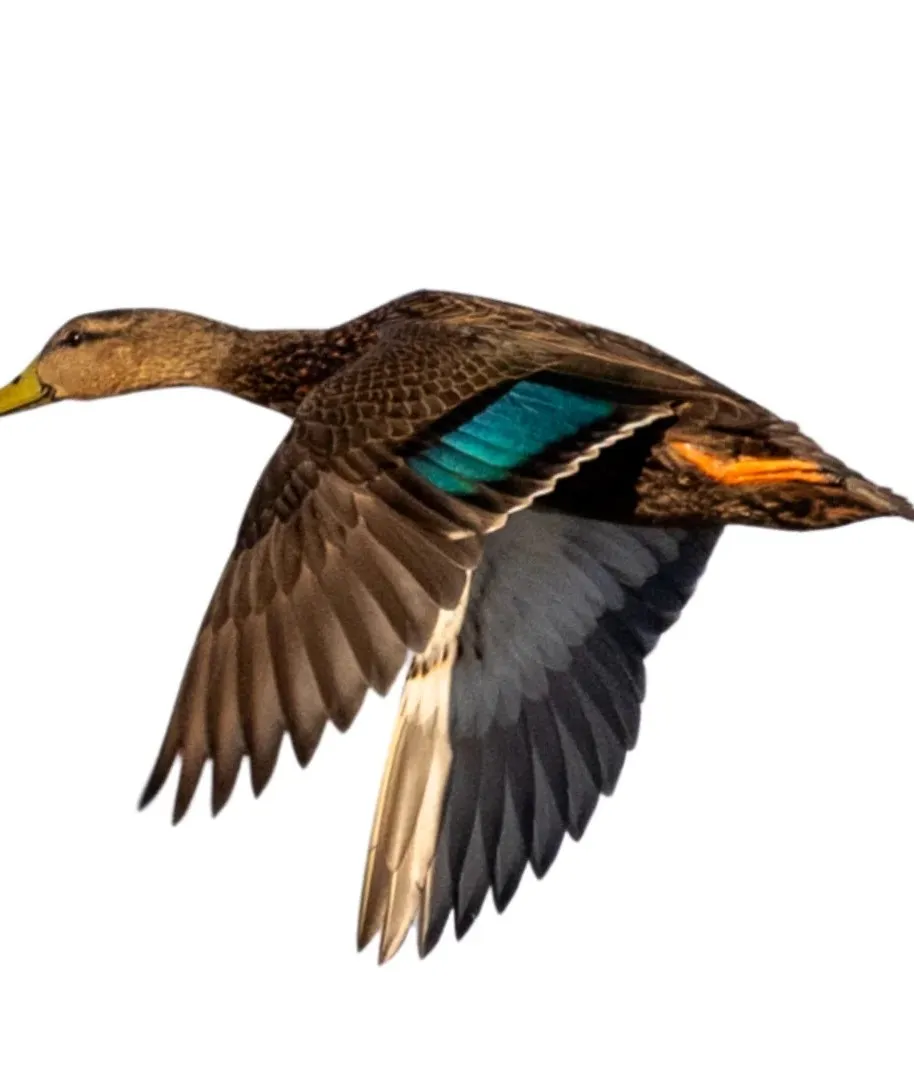
Mexican Ducks are medium sized dabbling ducks that look similar to a dark hen Mallard. They have a compact body, rounded head, and steady wingbeat in flight. Overall they appear uniformly brown with little contrast in the face or body. In the air, look for a blue speculum without the bold white borders that stand out on Mallards.
Drake
Males lack the Mallard’s green head and white neck ring. Instead, they show a dark, mottled brown-gray head and a dull yellow to olive bill. In flight, drakes appear uniformly dark, with no clean white belly or sharp contrast. The speculum is present but usually muted.
Hen
Females resemble hen Mallards but are typically darker and more heavily mottled, with less facial contrast. The bill is usually olive to yellowish with dark blotching, rather than bright orange. In flight, the dusky body tone separates them from classic Mallard hens, while the blue speculum with white borders helps distinguish them from gadwall or mottled duck.
Range
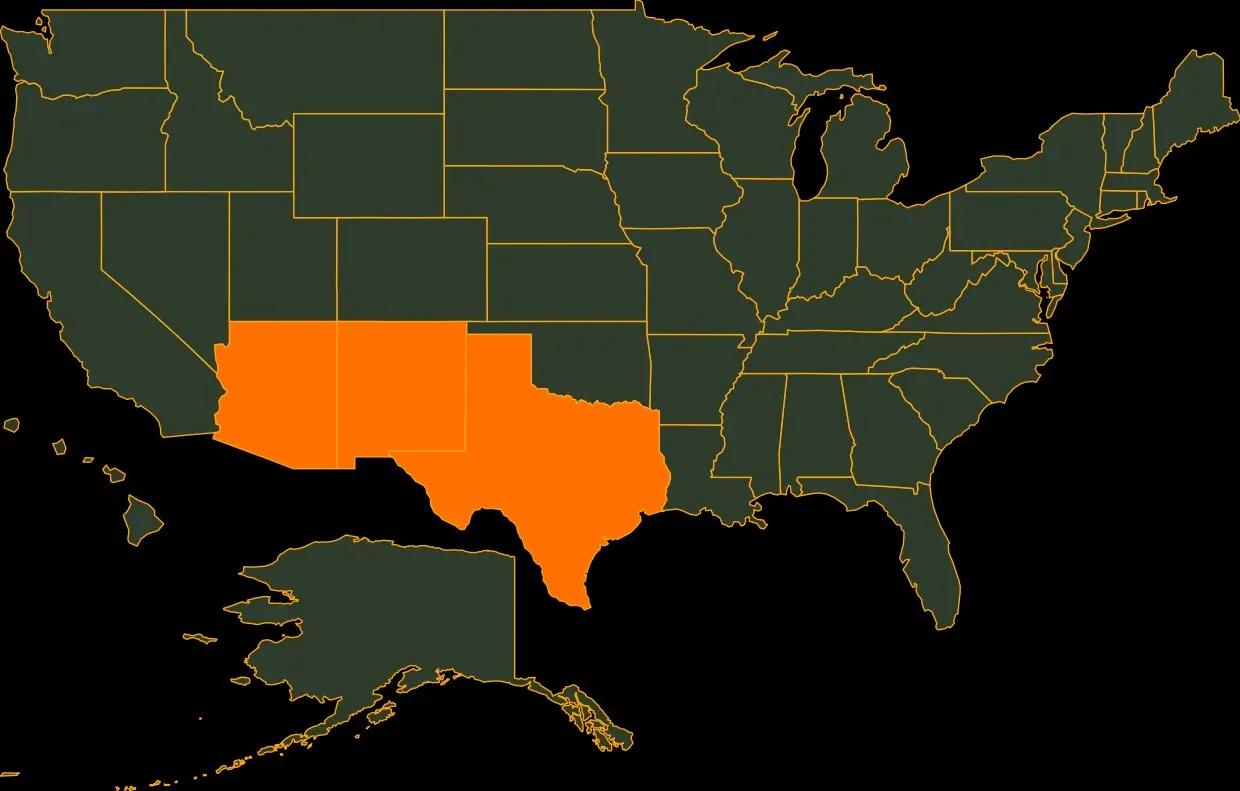
Year-Round
The Mexican Duck occurs year-round in the southwestern United States and throughout much of central and northern Mexico. In the United States, it is most consistently found in southern Arizona, southwestern New Mexico, and parts of western Texas. Most individuals remain within this general region throughout the year.
Breeding
Breeding takes place within the same core range, including desert river valleys, inland basins, and agricultural regions of the Southwest and across the Mexican Plateau. In the United States, nesting is concentrated along river systems such as the Rio Grande and in associated wetlands and reservoirs of southern Arizona and New Mexico.
Winter
The winter range closely mirrors the breeding distribution. Mexican Ducks remain in the Southwest and Mexico, with some localized movements toward larger rivers, reservoirs, and irrigated valleys. There is no broad southward shift comparable to long-distance migratory dabbling ducks.
Migration Timing
Mexican Ducks are largely resident and do not follow major North American flyways. Seasonal movements are short and localized, often influenced by water availability, drought, or cold weather rather than fixed migration periods.
Related Species
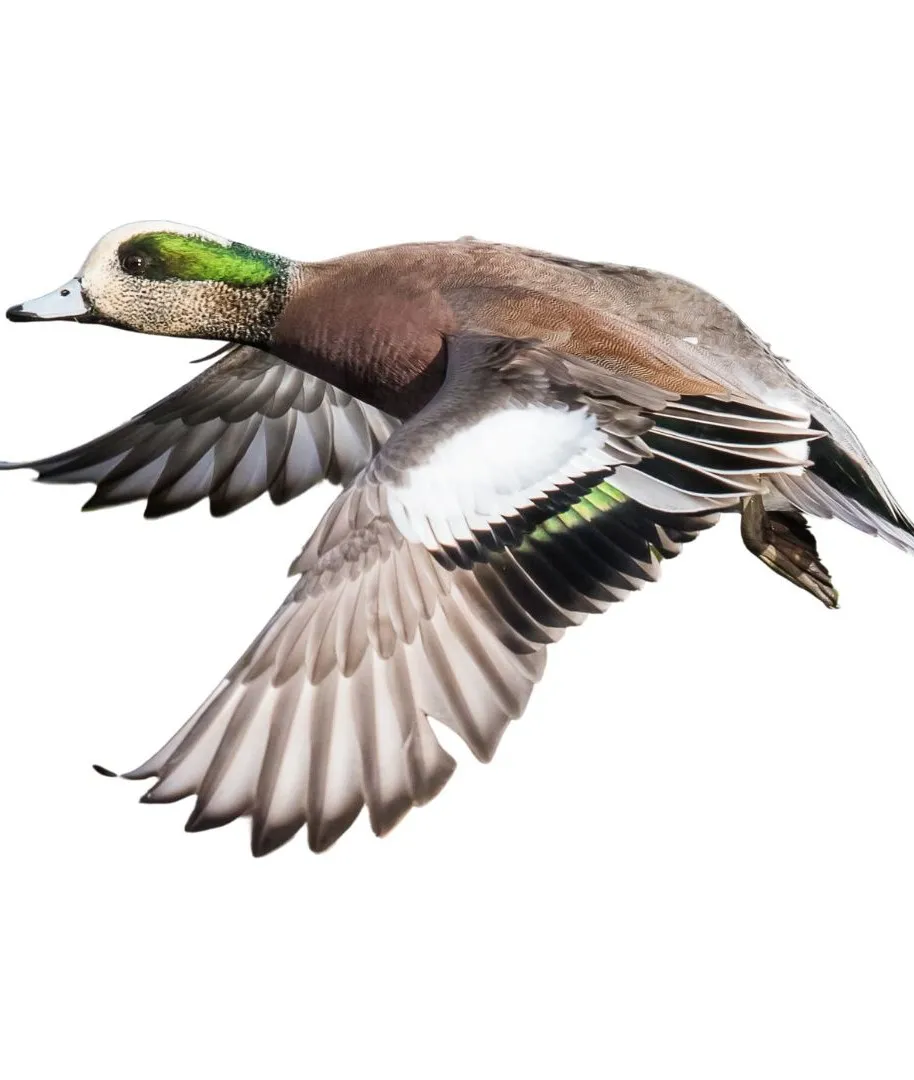
How to ID It
- Medium-sized dabbling duck with a compact body and rounded head similar to a Mallard hen.
- Overall dark brown mottled plumage with little contrast between body and face.
- Blue to blue-green speculum lacks bold white borders in flight.
- Drake shows a dull yellow to olive bill without bright coloration.
- Hen has an orange-brown bill with dark saddle, usually less vivid than a Mallard hen.
- Face pattern is plain with a weak or absent eye stripe.
- In flight: In flight, appears uniformly dark with no strong white wing flash.
- Differs from Mallard by darker body, reduced facial contrast, and absence of thick white speculum borders.
Key Facts
- Bill Color (Drake)
- Dull yellow to olive
- Bill Color (Hen)
- Orange-brown with dark saddle
- Primary Habitat
- Freshwater wetlands, rivers, marshes
- Breeding Habitat
- Inland marshes, ponds, river backwaters
- Winter Habitat
- Same as breeding range
- Migration Pattern
- Mostly resident, local movements
- North America Status
- Localized Southwest resident
Habitat
Primary Habitat. Mexican Ducks are strongly associated with freshwater wetlands in arid and semi-arid regions of the southwestern United States and Mexico. They use marshes, shallow ponds, river backwaters, reservoirs, and slow-moving streams. In desert landscapes, they rely on permanent water sources such as irrigation canals, flooded agricultural fields, and managed wetlands. They prefer shallow water with emergent vegetation and nearby grassy or brushy cover for nesting.
Seasonal Habitat Differences. Because Mexican Ducks are largely resident, habitat use remains similar year-round. During the breeding season, they focus on freshwater marshes, river edges, and ponds with dense shoreline vegetation. Outside of breeding, they may expand into reservoirs, stock tanks, and agricultural wetlands where stable water is available, especially during dry periods.
Landscape Features to Look For. Look for low-elevation river valleys, desert grasslands with ponds, and irrigated farmland near rivers such as the Rio Grande. Shallow wetlands bordered by cattails, bulrush, or brushy uplands are typical. In dry country, any permanent freshwater source with vegetated edges can hold Mexican Ducks.
Frequently Asked Questions
How do you identify a Mexican Duck?
A Mexican Duck looks like a darker, less contrasting Mallard hen with a uniformly brown mottled body and a plain face. In flight, it shows a blue speculum without the bold white borders typical of Mallards. The drake lacks a green head and instead has mottled brown plumage similar to the hen.
Where are Mexican Ducks found?
Mexican Ducks are found year-round in the southwestern United States, including southern Arizona, New Mexico, and parts of western Texas, and throughout much of central and northern Mexico. Their range is centered on inland river valleys, reservoirs, and agricultural regions rather than coastal areas.
Do Mexican Ducks migrate?
Mexican Ducks are largely resident and do not undertake long-distance migration. Most birds remain within the same general region throughout the year. Seasonal movements are typically short and influenced by water availability, drought conditions, or local weather rather than continental flyways.
What habitat do Mexican Ducks prefer?
Mexican Ducks prefer freshwater wetlands such as marshes, ponds, river backwaters, reservoirs, and irrigation canals. In arid landscapes, they rely on permanent water sources, including flooded agricultural fields and managed wetlands. They are most common in low-elevation river valleys with shallow water and shoreline vegetation.
How can you tell a Mexican Duck from a Mallard?
Mexican Ducks are darker overall and show less facial contrast than female Mallards. In flight, they lack the thick white borders framing the blue speculum that Mallards display. Male Mexican Ducks also lack the bright green head seen on male Mallards, retaining mottled brown plumage year-round.
Do Mexican Ducks hybridize with Mallards?
Mexican Ducks can hybridize with Mallards where their ranges overlap. Hybrids may show mixed traits such as partial white wing borders or increased facial contrast. In some areas of the Southwest, this overlap has made careful identification important for distinguishing pure Mexican Ducks from hybrids.
In the Field
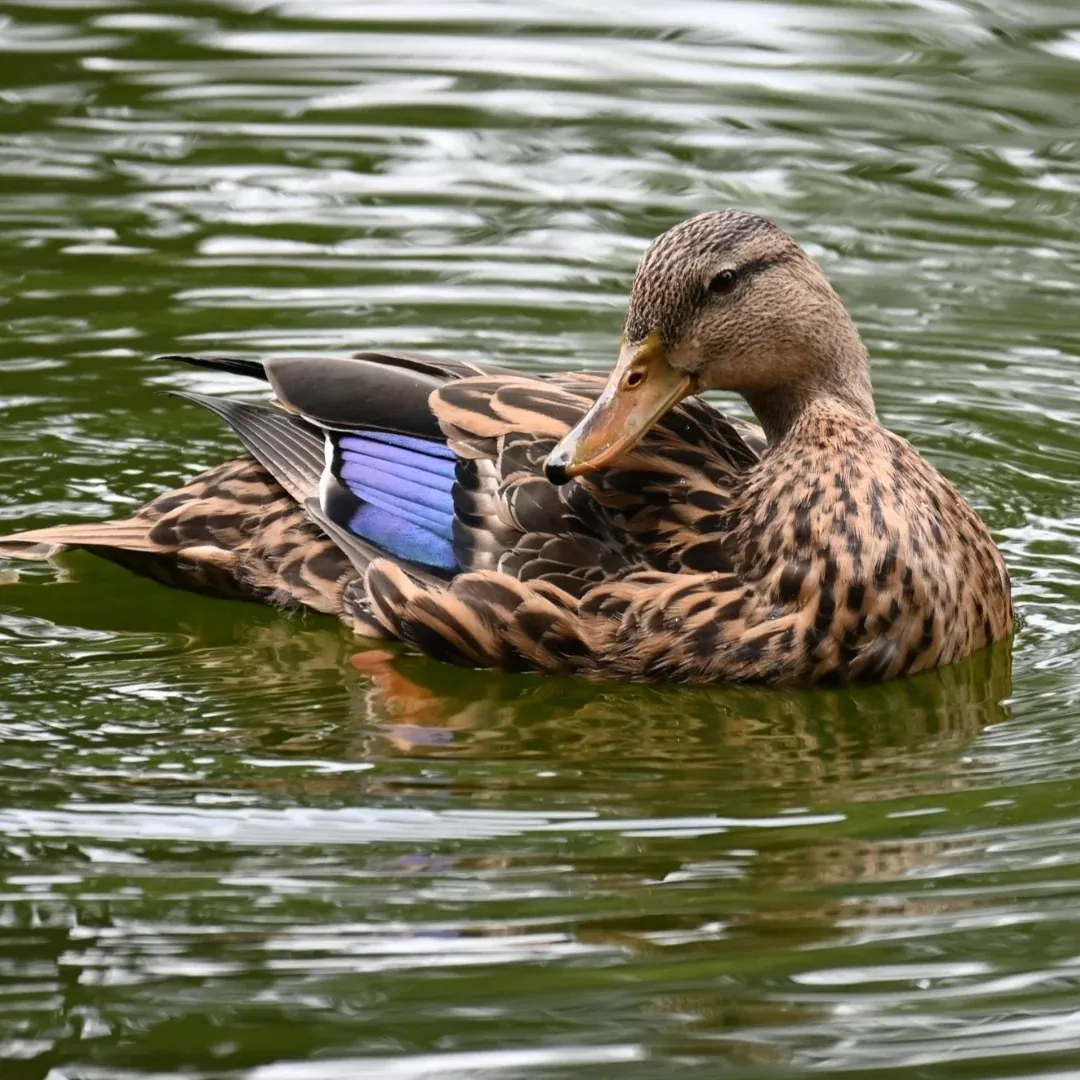
Photo: Israel Cortés 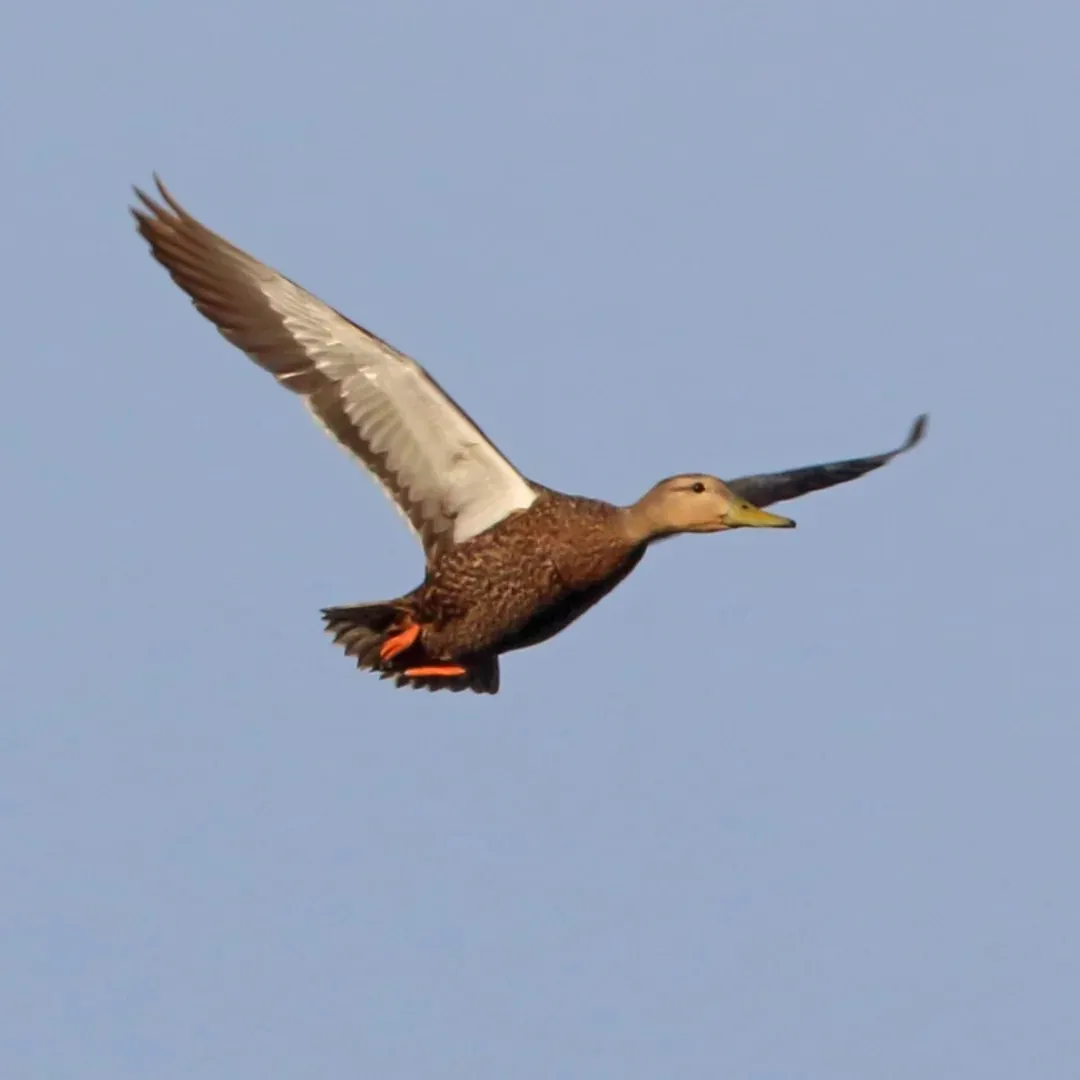
Photo: Nigel Voaden 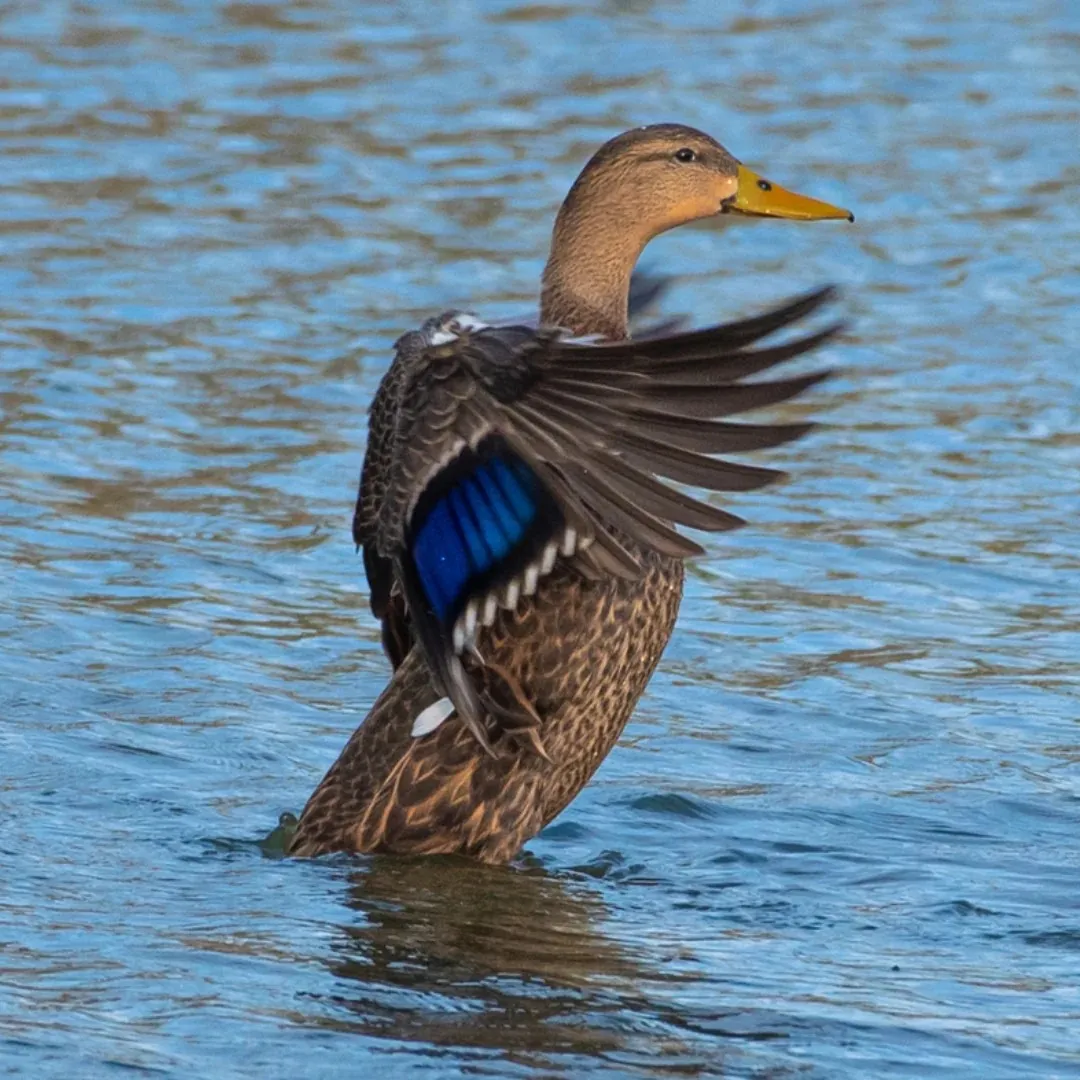
Photo: Josmar Olivares