Mallard
Anas platyrhynchos
Alternate names: Greenhead, Wild Duck, Common Duck
- Length
- 20–26 in
- Weight
- 2.5–3.5 lb
- Wingspan
- 32–39 in
- Range
- All four North American flyways
Calls
Hens give the classic descending "quack-quack-quack" — the benchmark every duck call is tuned against. Drakes add a quieter, raspy feed chuckle when working a spread.
Drake
The drake gives a low, raspy, reedy call that is softer and shorter than the hen’s voice. It is most often heard during courtship, close interaction with other ducks, or when birds are circling at short range. The tone is subdued and does not carry as far as the hen’s call.
Hen
The hen gives the classic loud, clear series of quacks that most people associate with ducks. Her call is strong, rhythmic, and carries well across water. Hens use it for contact, alert situations, and while interacting with other birds, and it is commonly heard when flocks are approaching or trading overhead.
When You'll Hear Them
Vocal activity peaks during the breeding season and whenever birds are interacting in groups. Hens call more frequently than drakes and are the primary source of loud calling in both flight and on the water.
Overview
The benchmark of duck calling and the most recognizable duck in North America. Mallards dabble in nearly any wetland, from farm ponds to flooded timber, which makes them the first species most hunters learn to call — and the one every other species gets compared to.
- Found in nearly every wetland type, from farm ponds to flooded timber
- The most abundant and widespread duck in North America
- Often the first species hunters learn to identify and call
Identification
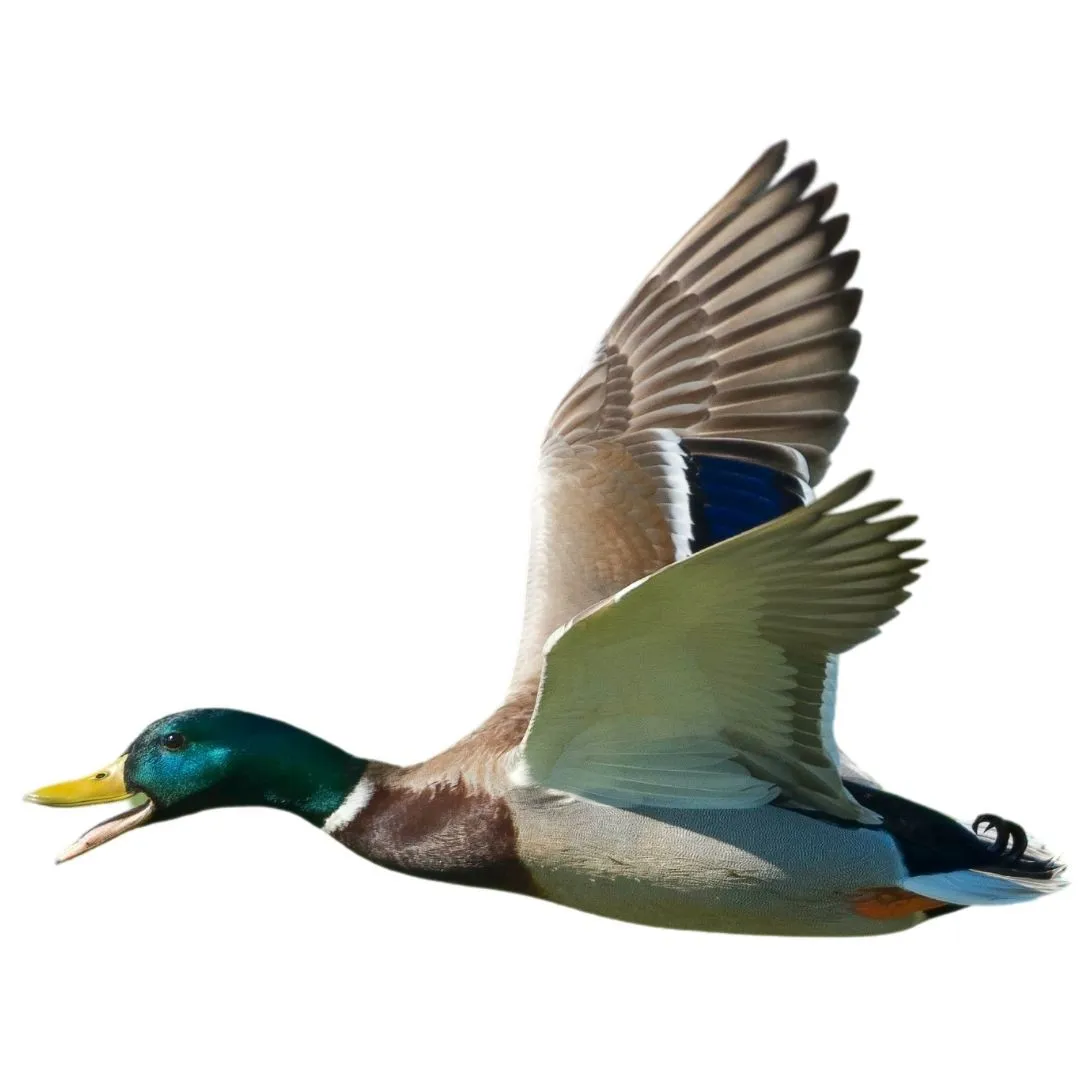
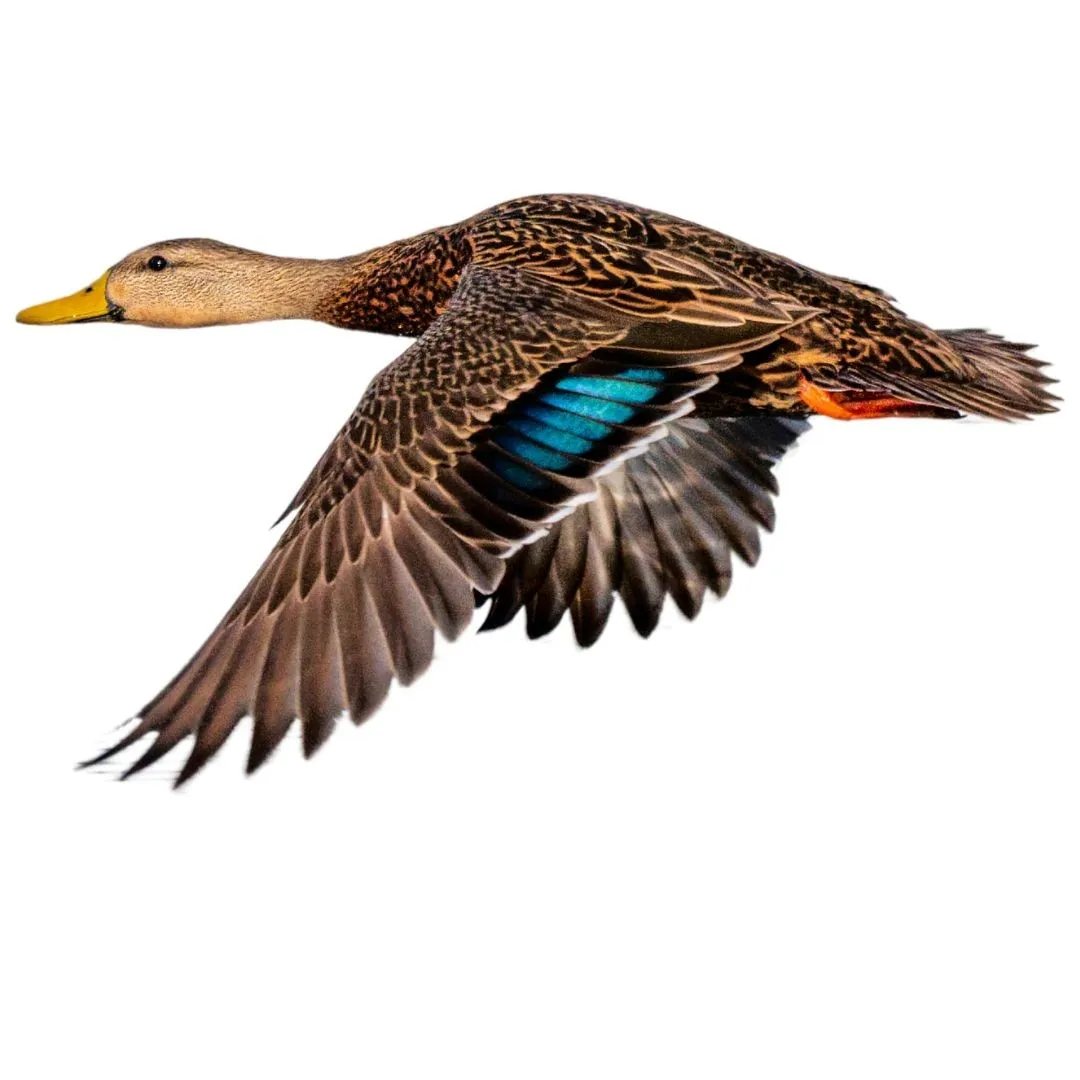
Mallards are large, hardy dabbling ducks found across most of North America. They favor marshes, flooded fields, rivers, and urban ponds. In flight, look for a steady, slow wingbeat, a broad profile, and a blue speculum bordered with white on both wings. Their vocalizations (especially the hen’s loud, classic quack and the drake’s raspy “raeb-raeb”) are key identifiers when birds are circling or trading. The mallard’s size, shape, and sound separate them from smaller birds like teal or faster fliers like pintails.
Head
The drake's head is the single fastest way to identify a Mallard.
An iridescent green head, sometimes looking blue-black in low light, sits above a crisp white neck ring that separates it from the chestnut-brown breast. Hens lack the green entirely, showing a plain brown head with a dark eye-stripe and an orange-and-black mottled bill.
Bill
Bill color splits clean by sex.
Drakes carry a bright, unmarked yellow bill. Hens show a duller orange bill mottled with black, which also helps separate them from a Black Duck hen's more uniformly dark bill.
Wing
The speculum is the giveaway in flight.
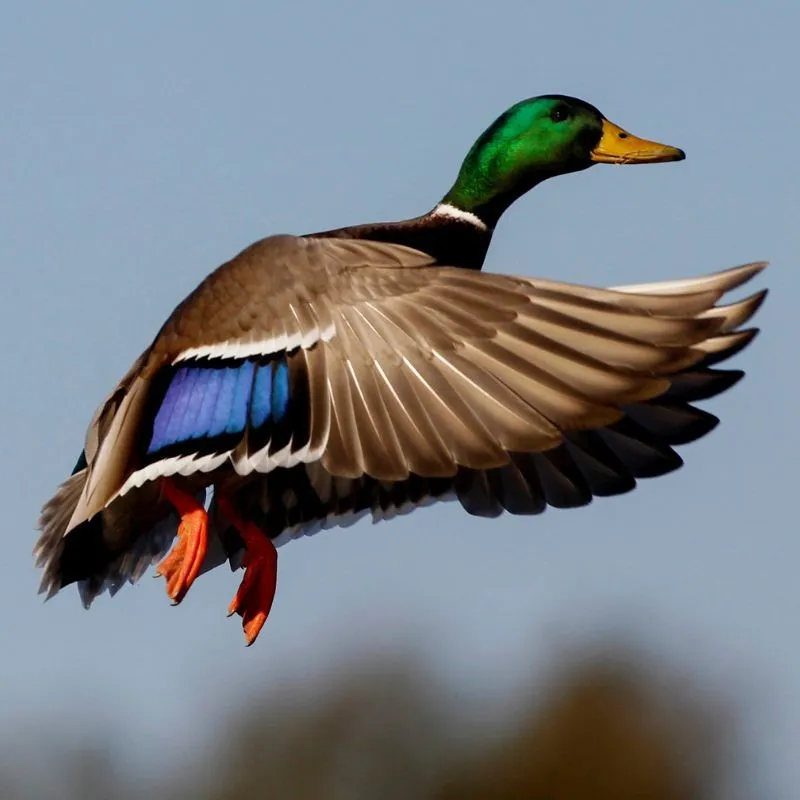
Both sexes show an iridescent blue speculum bordered top and bottom in crisp white — one of the most reliable in-flight marks of any dabbler, visible even at a distance or in poor light.
Body
A big-bodied dabbler built for almost any water.
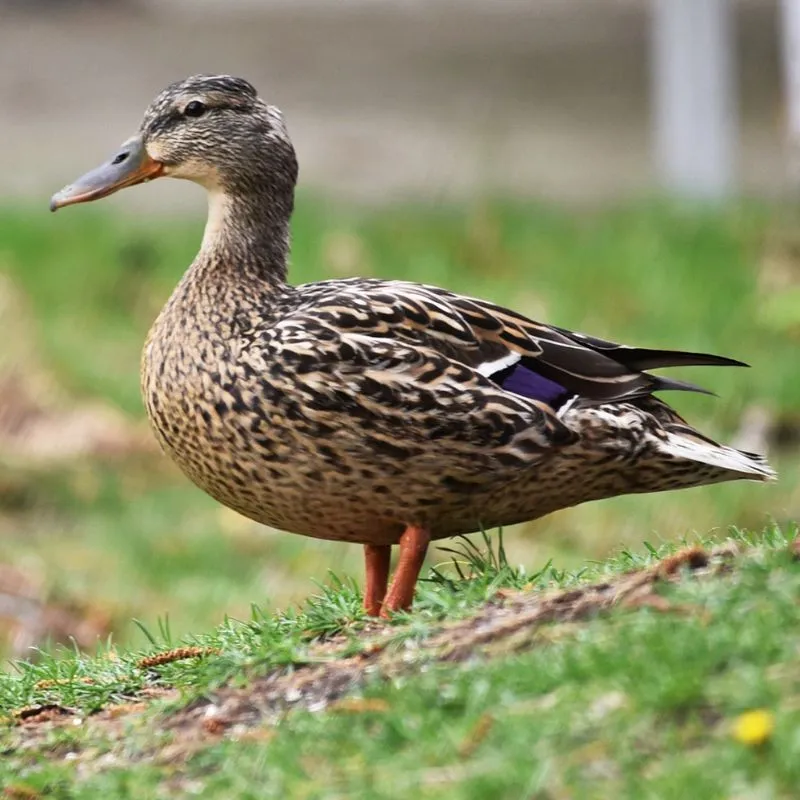
Drakes show a chestnut breast, gray flanks, and curled black tail feathers on top with white beneath. Hens are mottled brown throughout, built heavier and rounder than most other dabblers their size.
Drake
Males have a green head, white neck ring, chestnut breast, and gray sides. In the air, they show a clean white belly, pale underwings, and a dark rump with curled black tail feathers. No other duck combines that color and contrast in flight.
Hen
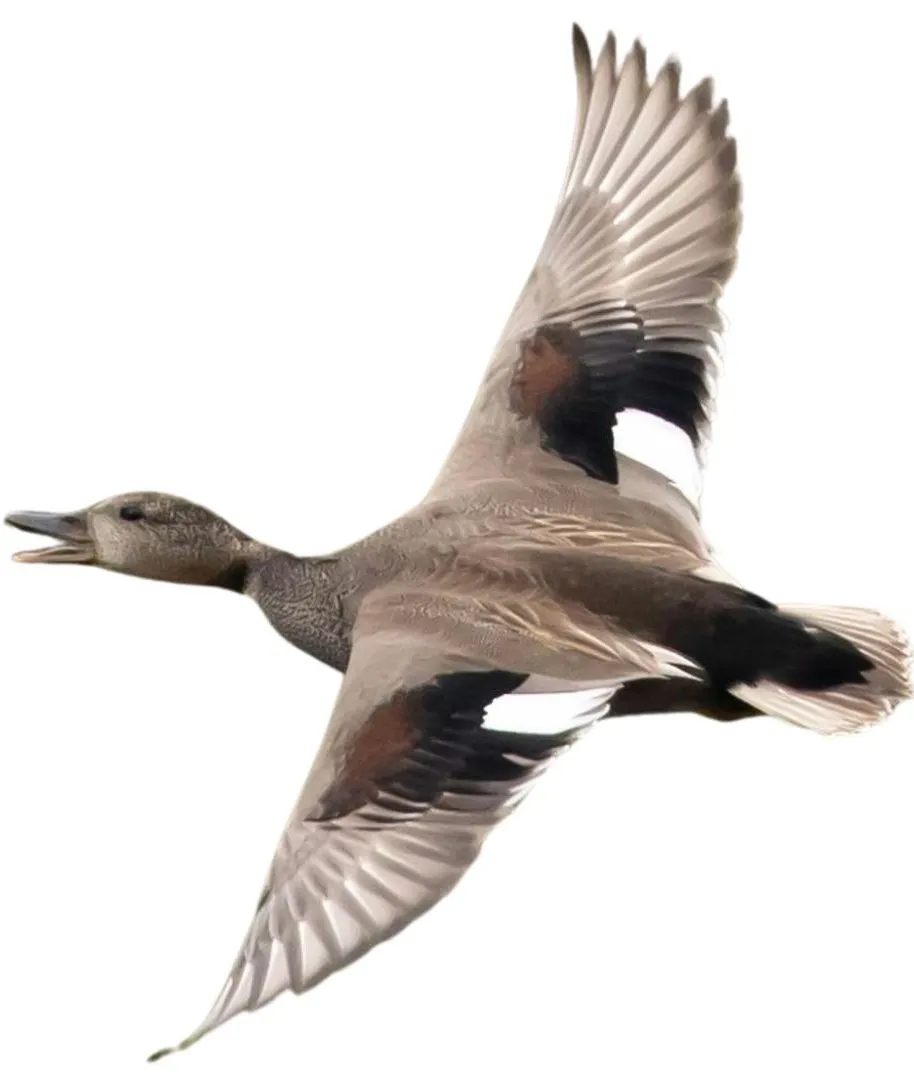
Females are mottled brown with a lighter face and an orange bill blotched with black. They share the same wingbeat and speculum as males, but their loud quack is the giveaway. Compared to a gadwall or mottled duck, the blue wing patch with white trim is a reliable ID.
Range
There's nowhere in North America a Mallard won't show up.
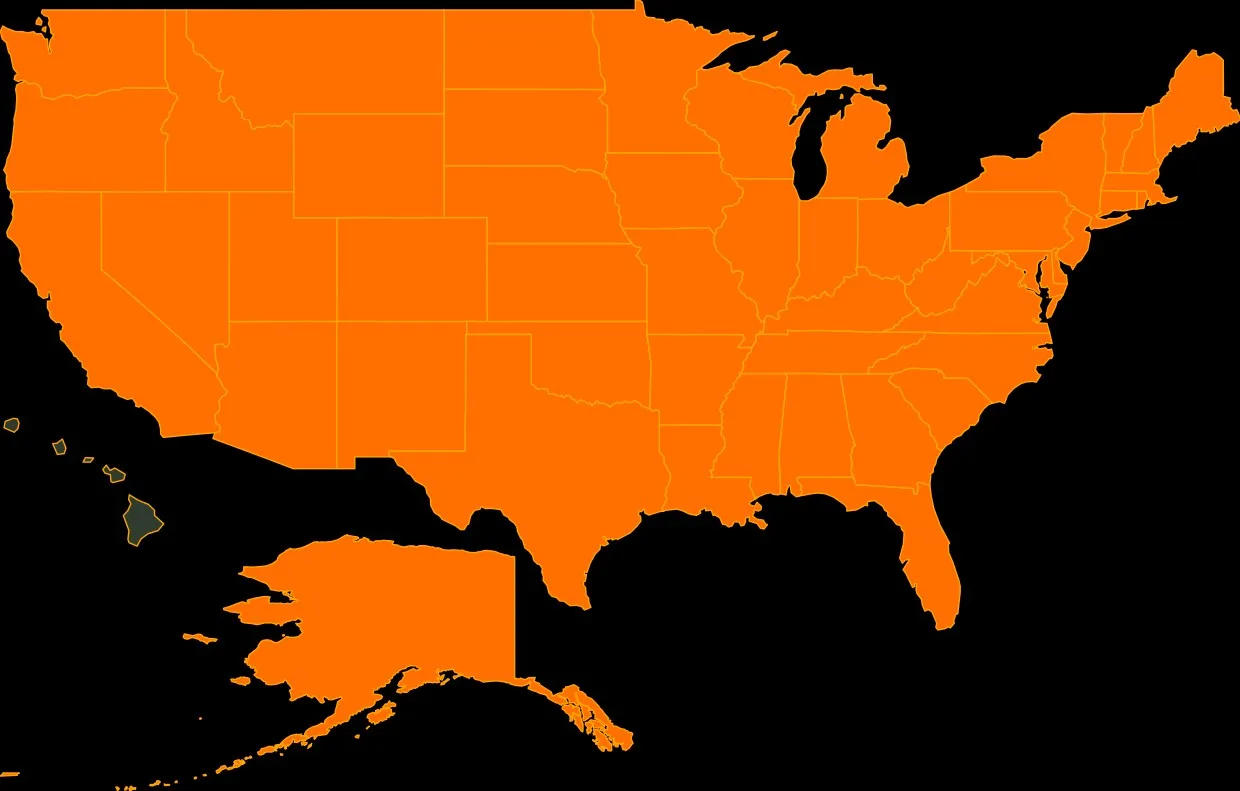
Mallards breed and winter across all four flyways, from big-water refuges to farm ponds and roadside ditches. That flexibility is exactly why they're the benchmark species — if you've hunted anywhere on the continent, you've likely called one in.
Year-Round
Mallards occur year-round across much of the United States, especially in the Pacific Northwest, the Midwest, parts of the Northeast, and along major river systems. In southern Canada and the northern United States, they are present seasonally, while many populations remain through winter in areas with open water.
Breeding
Mallards breed across most of Canada, Alaska, and the northern United States, with strong concentrations in the Prairie Pothole Region of the Dakotas and southern Canada. Breeding also occurs in parts of the western United States and across the northern Great Plains, as well as in some eastern states.
Winter
During winter, Mallards shift south from Canada and the northern tier of the United States into the southern United States and Mexico. Large numbers concentrate along the Mississippi Flyway, Central Flyway, and Pacific Flyway, especially in major river valleys and coastal regions.
Migration Timing
Fall migration generally begins in September and continues through November, driven by freezing conditions in northern breeding areas. Spring migration typically occurs from February through April, with birds moving north as ice recedes and breeding habitat becomes available.
Related Species
How to ID It
- Drake: iridescent green head, yellow bill, white neck ring above a chestnut breast
- Drake: curled black feathers at the tail
- Hen: mottled brown overall with an orange-and-black bill
- blue speculum bordered in white, visible in flight
Key Facts
- Bill Color (Drake)
- Yellow
- Bill Color (Hen)
- Orange with black blotches
- Primary Habitat
- Marshes, ponds, wetlands
- Breeding Habitat
- Prairie potholes, marshes
- Winter Habitat
- Wetlands, rivers, flooded fields
- Migration Pattern
- Partial migrant; major flyways
- North America Status
- Widespread and abundant
Habitat
Primary habitat. Mallards are highly adaptable and use a wide range of freshwater wetlands, including marshes, ponds, shallow lakes, river backwaters, and prairie potholes. They prefer shallow water with emergent vegetation such as cattails and bulrush for feeding and nesting. Mallards are also common in flooded agricultural fields, reservoirs, and urban ponds. They favor lowland areas with reliable water and nearby grassy cover.
Seasonal differences. During the breeding season, Mallards concentrate in prairie potholes, freshwater marshes, and shallow ponds with dense shoreline vegetation. Outside of breeding, they expand into larger lakes, major rivers, flooded fields, and coastal estuaries where open water remains available. In colder regions, they shift to ice-free water such as large rivers and reservoirs.
What to look for. Look for shallow wetlands with mixed open water and vegetation, especially in grassland regions and river valleys. Prairie pothole country in the northern Great Plains is prime breeding habitat. In fall and winter, check flooded crop fields, broad marsh systems, and sheltered river backwaters with easy access to grain and aquatic plants.
Frequently Asked Questions
How do you identify a Mallard?
A Mallard is a large dabbling duck with a broad body and steady wingbeat. The drake shows a green head and white neck ring, while both sexes display a blue speculum bordered in white in flight. The hen is mottled brown with an orange bill marked by black. Size and the bold wing patch are reliable field marks.
Where are Mallards found?
Mallards are found across most of North America in wetlands, ponds, rivers, and agricultural areas. They breed widely across Canada and the northern United States and winter throughout the southern United States and Mexico. They are one of the most widespread duck species on the continent.
Do Mallards migrate?
Many Mallards migrate, especially those breeding in Canada and the northern United States. They move south in fall along the Mississippi, Central, and Pacific Flyways and return north in spring. In milder regions with open water, some populations remain year-round.
What habitat do Mallards prefer?
Mallards use a wide range of freshwater wetlands, including marshes, shallow lakes, prairie potholes, river backwaters, and flooded crop fields. They prefer shallow water with emergent vegetation and nearby upland cover for nesting. They also adapt well to reservoirs and urban ponds.
How can you tell a Mallard from a Mottled Duck?
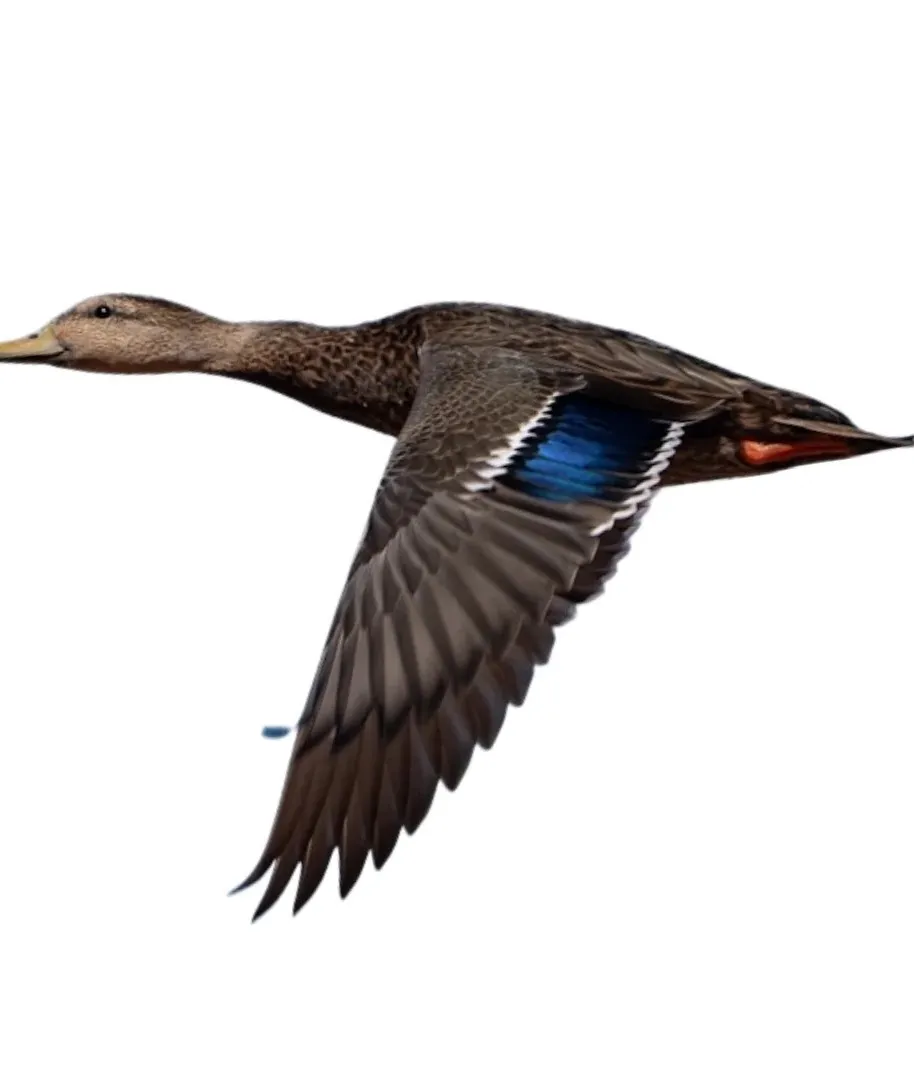
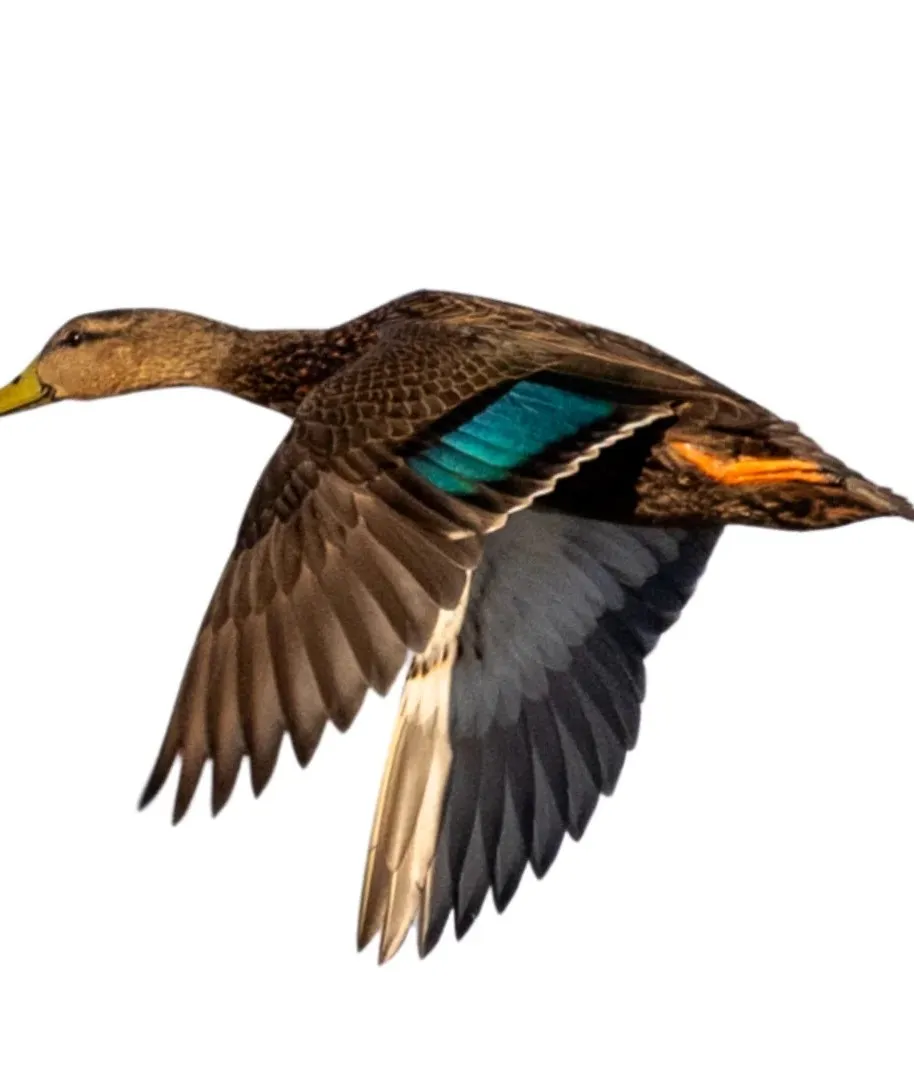
Mallards show brighter contrast and thick white borders framing the blue speculum in flight. Mottled Ducks appear darker overall and lack bold white wing borders. Male Mallards have a green head, while male Mottled Ducks remain mottled brown year-round.
Are Mallards abundant?
Mallards are one of the most abundant and widely distributed ducks in North America. Populations are generally stable, supported by adaptable habitat use and strong breeding numbers in the Prairie Pothole Region. They are a key species in continental waterfowl management programs.
In the Field
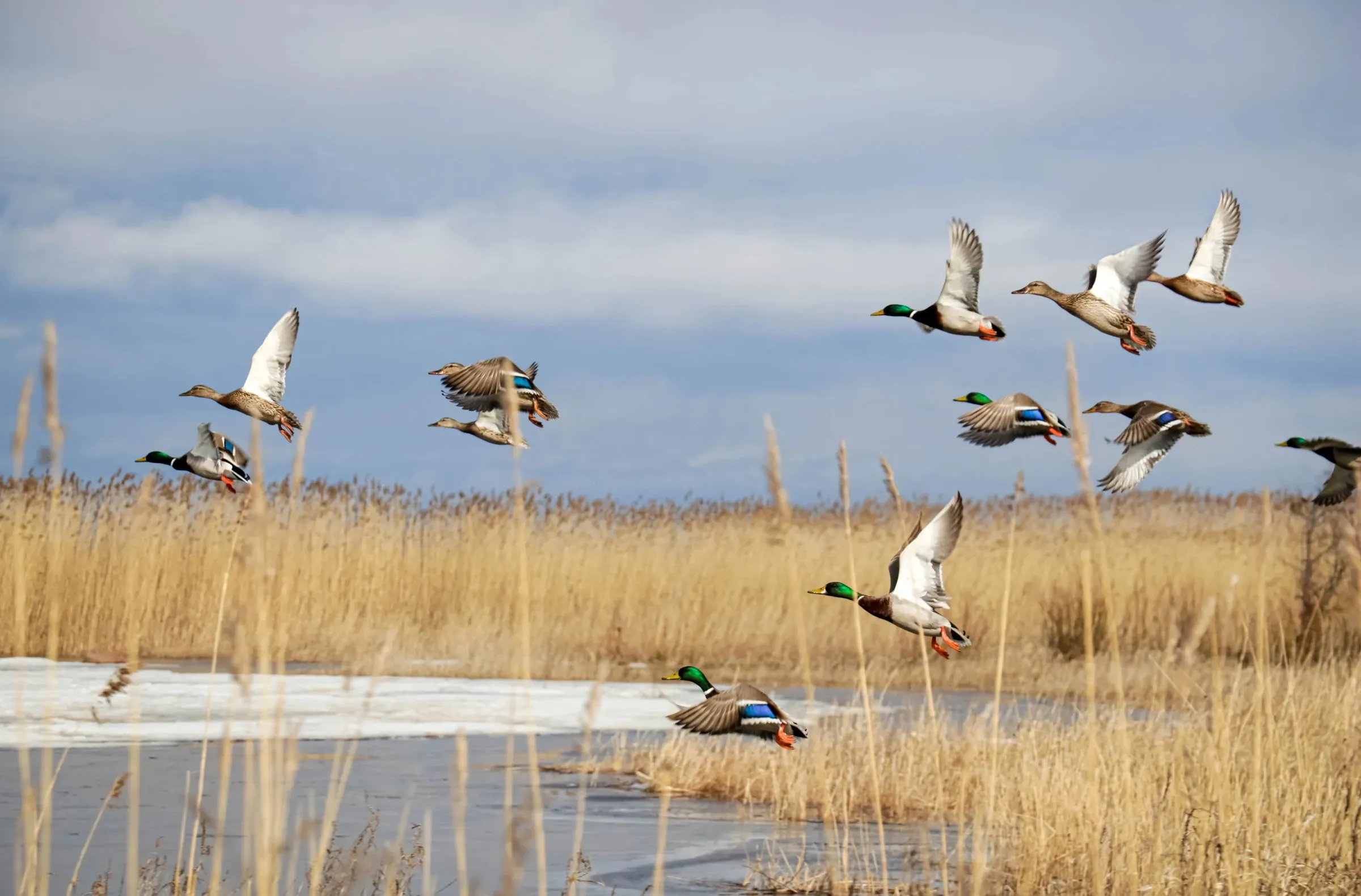
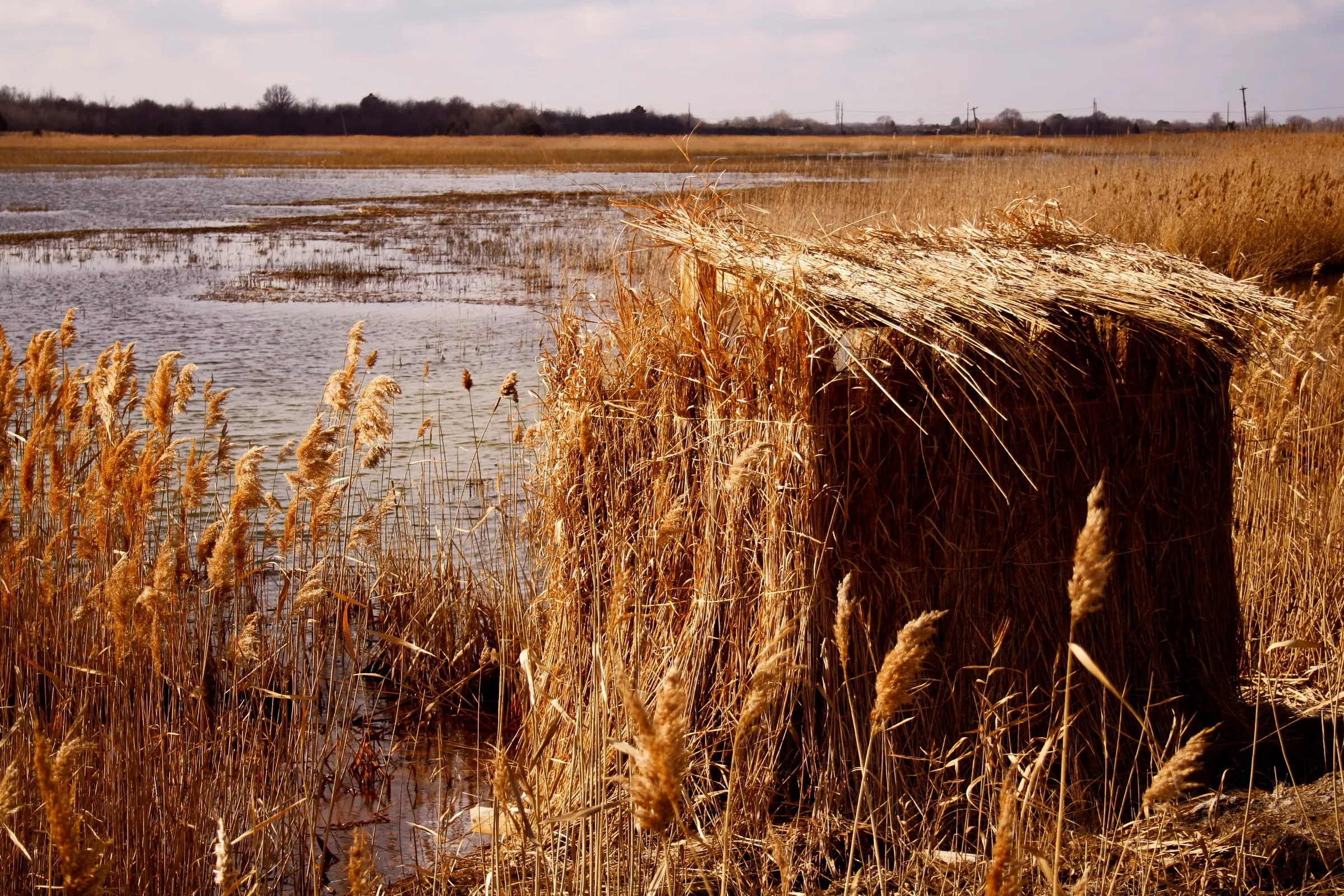
Mallards LandingA pair of drakes finishing over open water. Marsh HabitatTypical dabbling water — flooded reed beds and slow current. Feeding on the MoveA drake works a flooded field at first light. 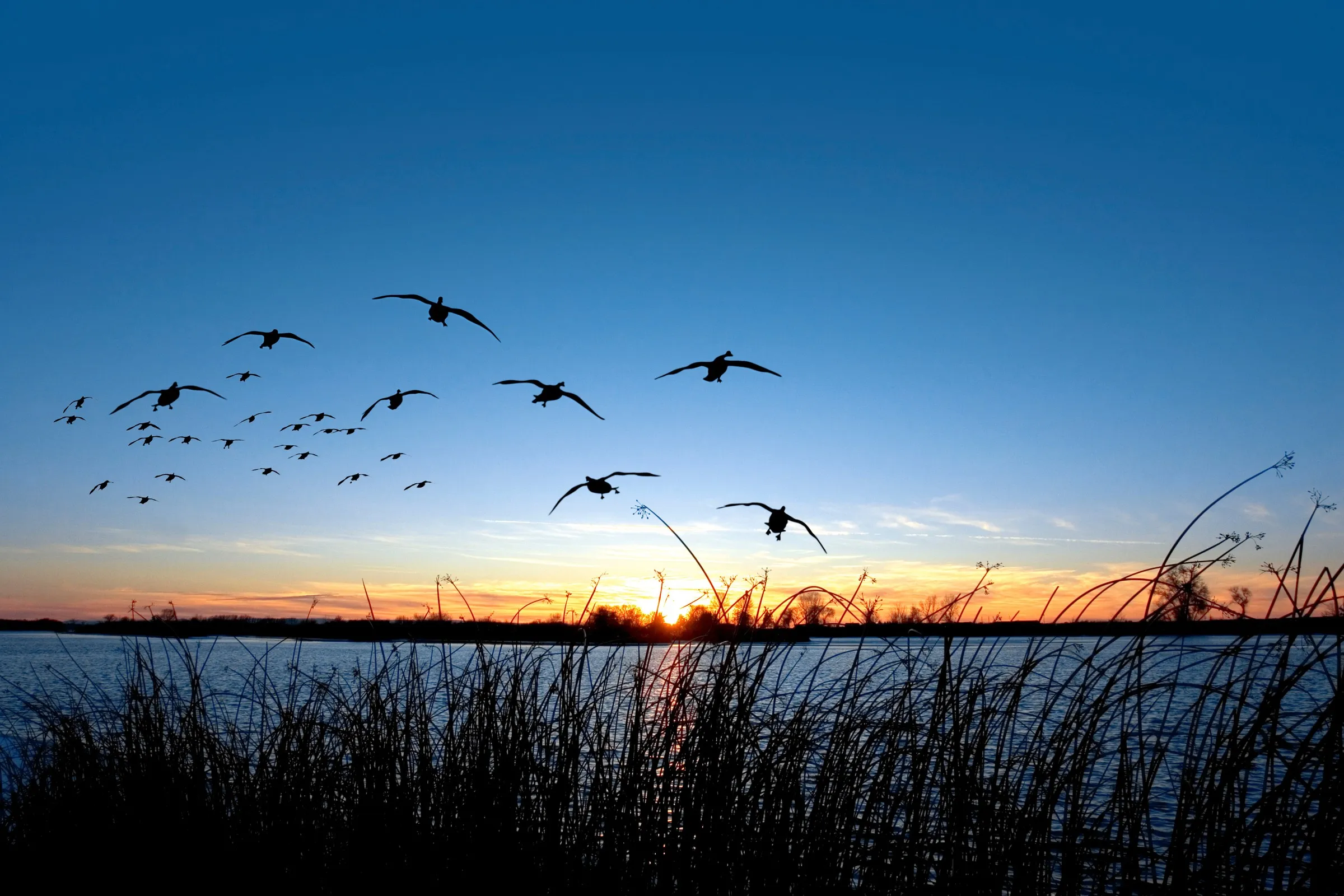
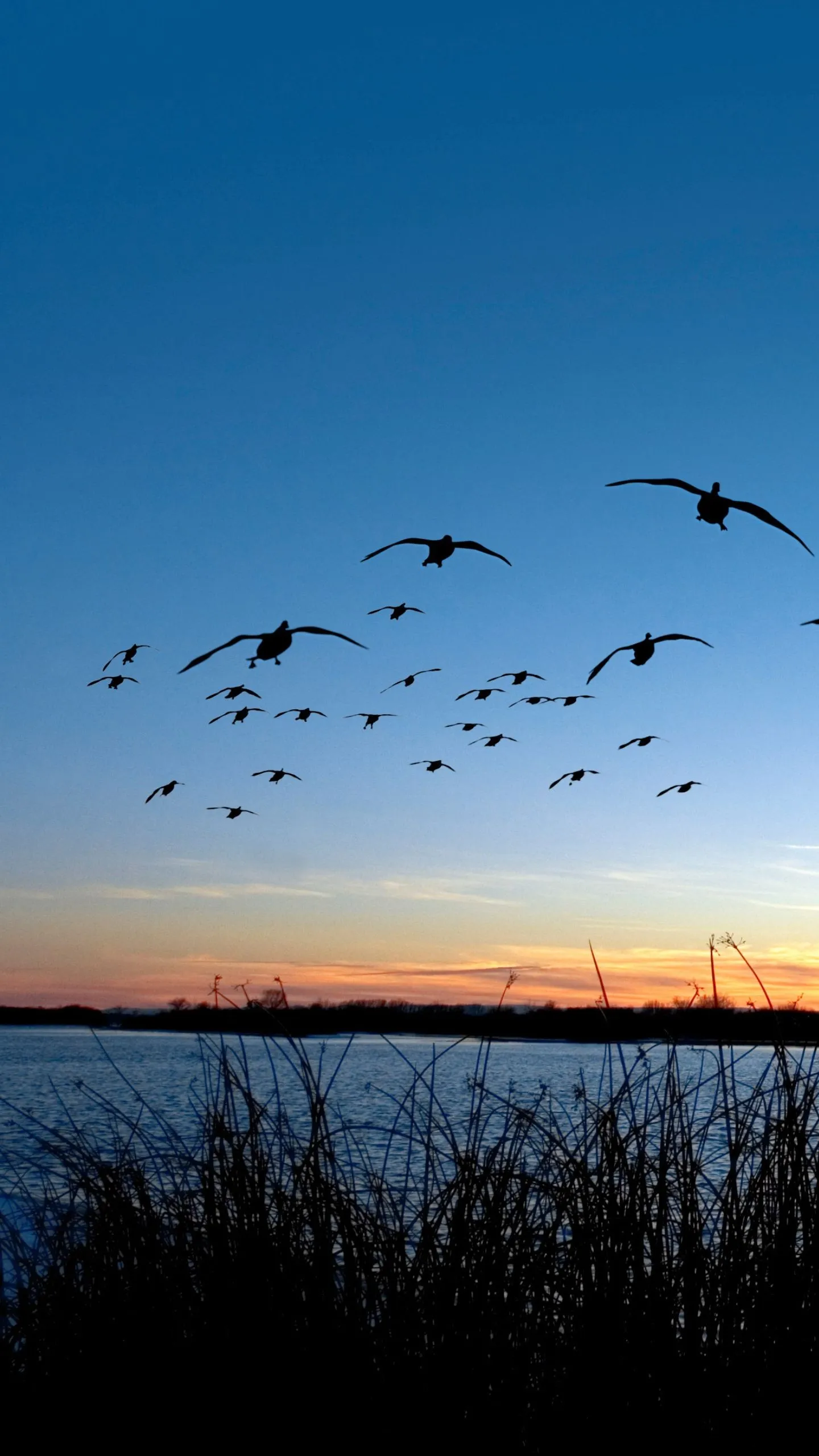
Evening FlightA mixed flock heads to roost as light fades. Hen at RestThe orange-and-black bill is the quickest way to rule out a Black Duck hen.Photo: Courtney Celley/USFWS