Black Duck
Anas rubripes
Alternate names: Black Mallard, Dusky Duck
- Length
- 21–23 in
- Weight
- 2–3.25 lb
- Wingspan
- 34–37 in
- Range
- Primarily the Atlantic Flyway — breeds across eastern Canada and the Northeast, winters along the Atlantic coast
Calls
A hen's quack sounds close to a Mallard's, but usually deeper and more insistent — old-timers call it a "coarser" quack.
Drake
Males give a low, raspy kwek-kwek call, short and clipped in tone, used most often as a contact note while feeding or during courtship interactions at close range. The sound is deeper and more muffled than a mallard hen’s quack, and can easily be overlooked in a noisy marsh. In flight, drakes are generally quiet.
Hen
Females produce a loud, classic quack that is nearly identical to a mallard hen and is one of the stronger vocalizations in the marsh. The call is delivered in descending sequences, bold and carrying, and is often the first sound that tips off a hunter to birds working nearby cover. Hens are the more vocal of the two sexes and will call readily when alert or while feeding.
When You'll Hear Them
Vocal activity in black ducks peaks during late winter and early spring courtship, when drakes become more active with their raspy kwek-kwek calls around prospective hens. During fall migration and the hunting season, black ducks are generally quiet and tight-lipped, which which can make over-calling easy to do. Occasional hen quacks are the most frequent calls you will hear from birds working a decoy spread or moving through tidal marsh cover.
Overview
A wary bird of secluded backwaters and salt marsh, closely related to the Mallard and prone to hybridizing with it. Pure Black Duck numbers have declined for decades, which makes a clean sighting — or a clean shot — worth logging.
- Favors secluded backwaters and salt marsh over open water
- Closely related to the Mallard and prone to hybridizing with it
- Population has declined for decades, making sightings worth logging
Identification
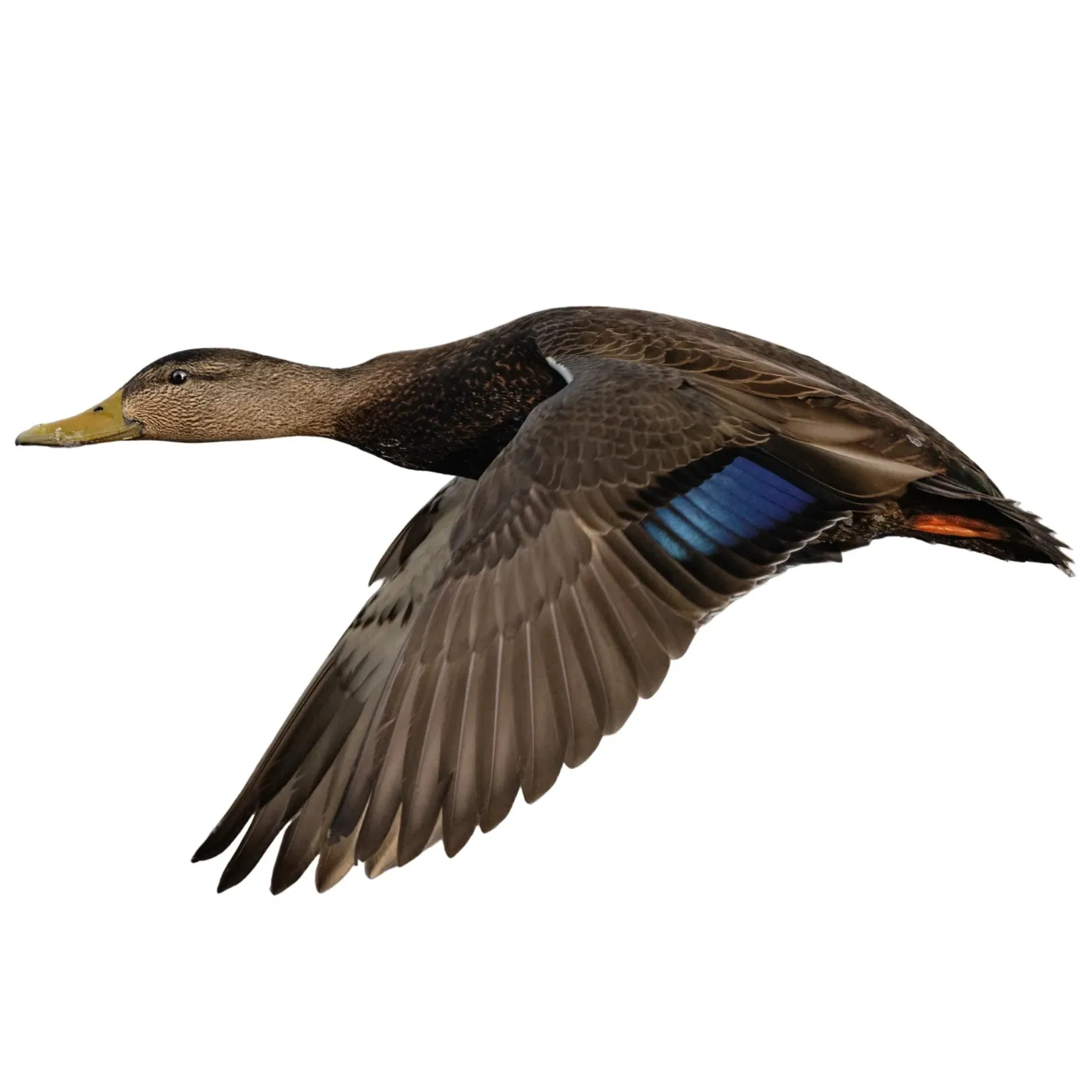
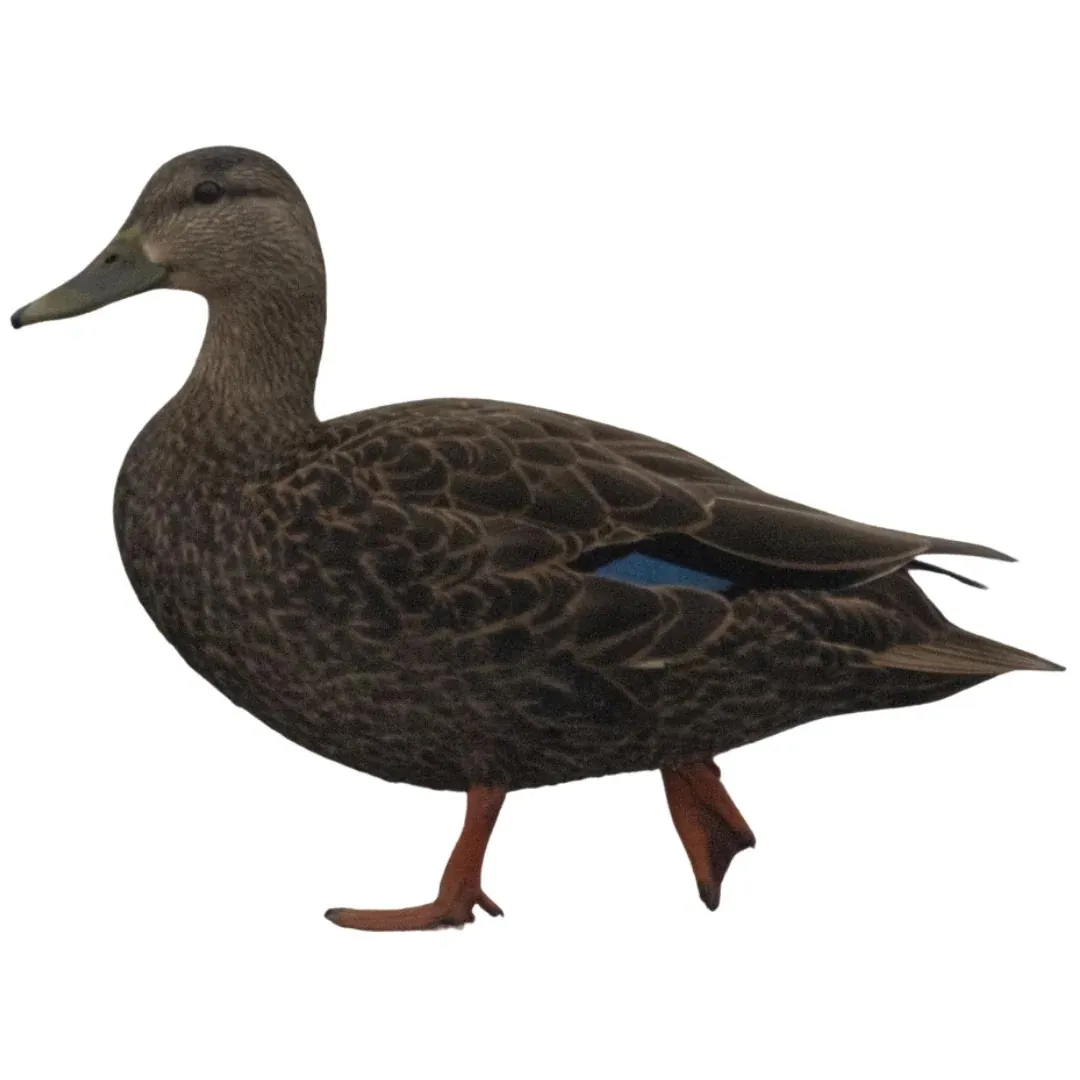
Dark brown-black body, violet-blue wing patch (speculum) with little to no white border, olive bill (male), similar plumage in both sexes, coastal wetland habitat, larger size
American Black Ducks have a dark brown plumage that sets them apart from nearly every other puddle duck at a glance. Both sexes look nearly identical, making them one of the harder birds to sex in the field. The blue-purple speculum with minimal (if any) white bordering and lighter head further separate them from dark hen mallards in mixed flocks.
Head
A pale head on a dark body is the tell.
Both sexes show a buff-colored head and neck that contrasts sharply against a body so dark brown it can look black on the water — the opposite of the Mallard's more uniform coloring.
Bill
Olive, not yellow — and often marked.
Drakes carry a plain olive-yellow bill, while hens show a duller bill, often with dark spotting. Neither sex has the clean yellow of a Mallard drake, which is a fast way to rule out a Mallard on a dark-bodied bird.
Wing
A violet speculum with little white to see.
The speculum runs violet rather than blue, with little to no white border — a key difference from the Mallard's crisply bordered blue patch. Bright white underwings are the best mark of all, visible well before the bird is close.
Body
Dark, heavy, and built for rough water.
The body is a uniform dark chocolate-brown, heavier-looking than a Mallard of the same length. There's no curled tail feather on the drake, and no bright breast color to break up the silhouette.
Drake
Males are dark brown with a lighter brown head and a yellowish bill. In the air, they appear darker than mallards, with contrast between the light underwing and dark body. The reduced white bordering on the wing patch and the solid, shadowy appearance are helpful characteristics to key in on.
Hen
Females are slightly lighter brown with a duller, olive colored bill. Their body color and wing pattern match the male’s, but the bill color can help tell them apart when birds are on the water or in hand. Compared to mallard hens, Black Ducks look darker overall and lack the strong color contrast and white wing borders.
Range
An Atlantic Flyway specialist, and a wary one.
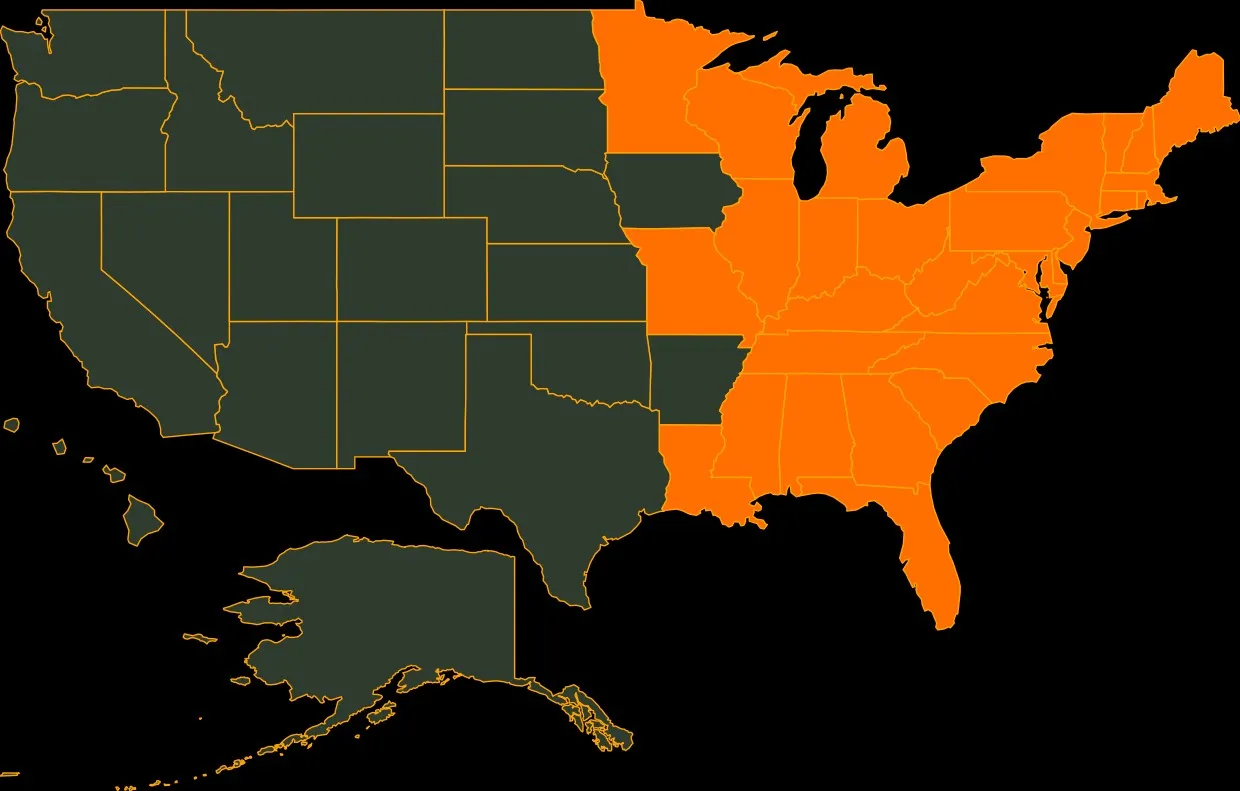
Black Ducks breed across eastern Canada and the Northeast, wintering along the Atlantic coast in salt marsh and secluded backwater. They rarely show up in numbers west of the Mississippi, and they flare sooner than a Mallard would from the same spread.
Year-Round
American Black Ducks have a limited year-round presence in parts of the northeastern United States and maritime Canada where breeding and wintering ranges overlap, particularly in coastal New England and Atlantic Canada. The majority of the population is migratory, moving between northern breeding grounds and southern wintering areas along the eastern seaboard.
Breeding
Breeding occurs primarily across the boreal forests, bogs, and freshwater marshes of eastern Canada, from the Maritime Provinces west through Quebec and Ontario and north into Labrador. Smaller numbers breed in the northeastern United States, particularly in New England and the Great Lakes region. The highest breeding densities are found in forested wetland systems rather than open prairie habitat.
Winter
In winter, black ducks concentrate heavily along the Atlantic coast from New England south through the Mid-Atlantic states, with major populations using coastal marshes, tidal estuaries, and inland wetlands from Maine to the Carolinas. Smaller numbers push into the Mississippi Flyway, particularly during severe freeze events that push birds off their preferred coastal wintering areas.
Migration Timing
Fall migration typically begins in October and runs through November as birds move south ahead of freeze-up across the northeastern breeding range. Spring migration runs from February through April as birds push back north. Black ducks tend to linger in their northern wintering areas as long as open water remains available.
Related Species
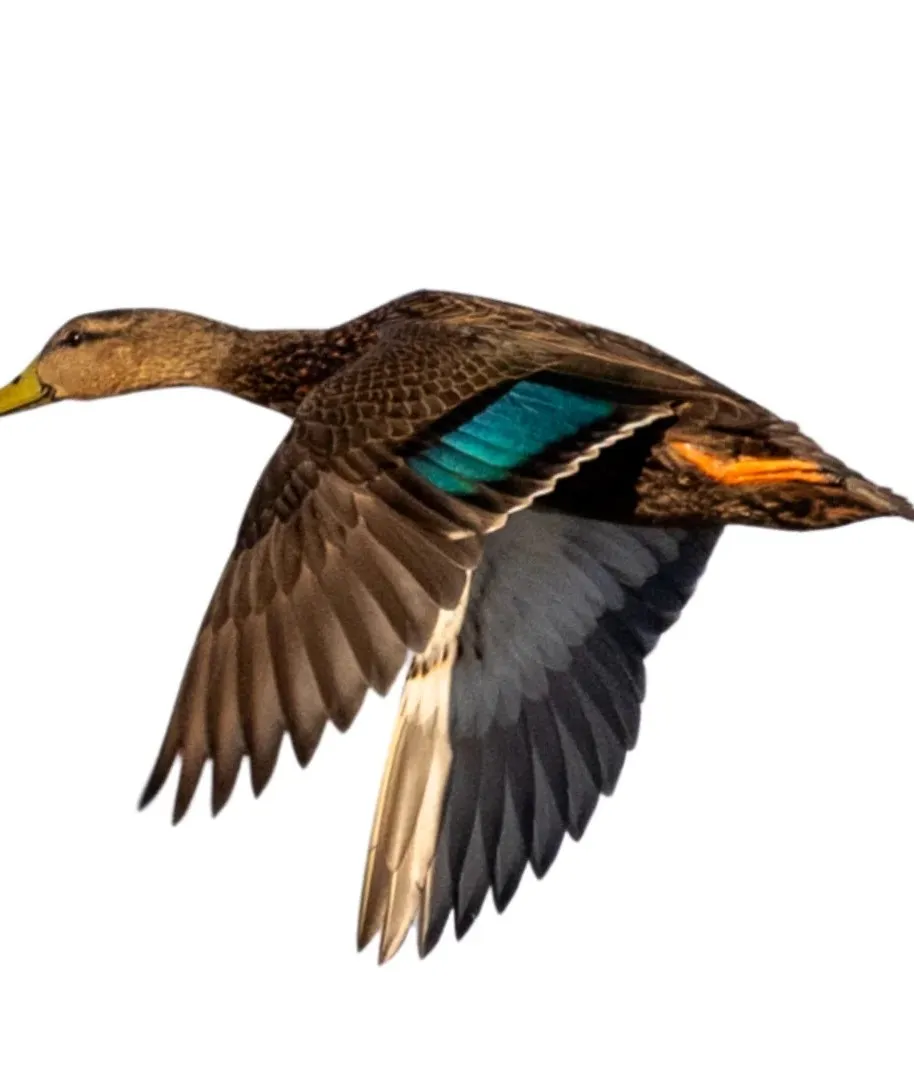
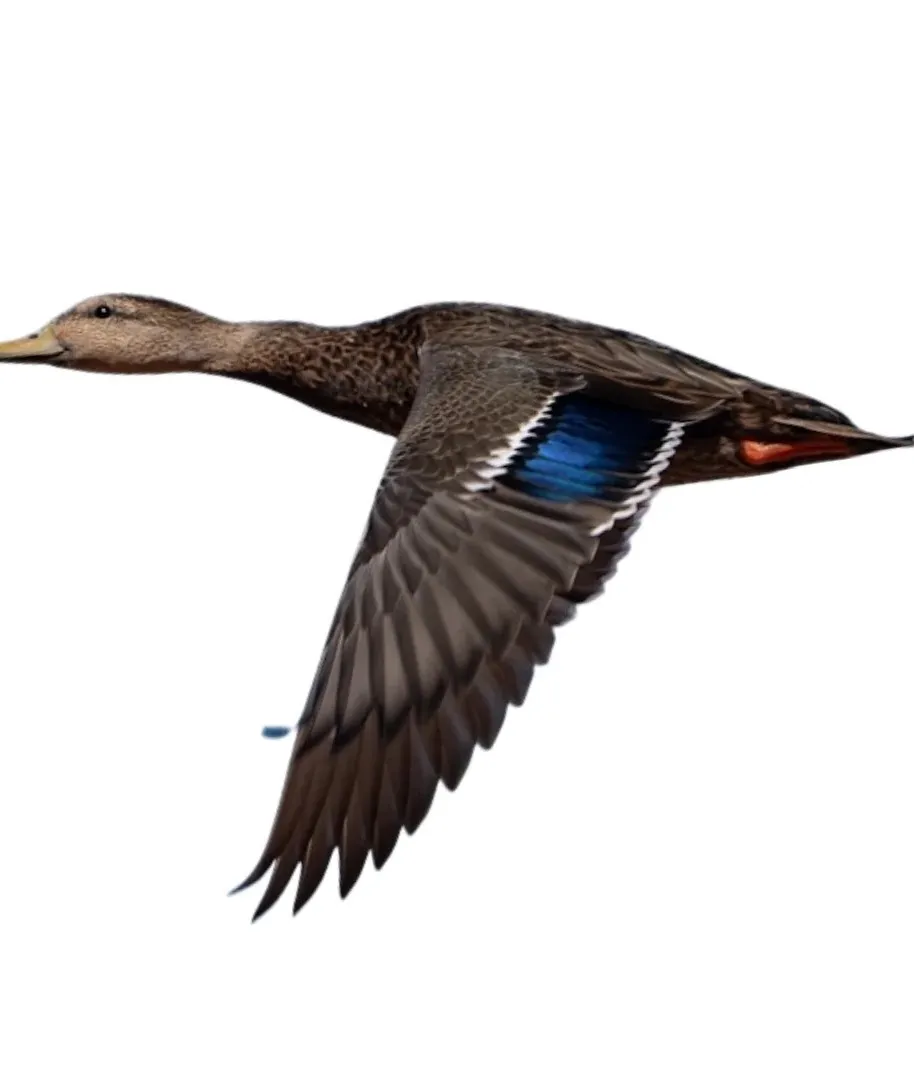
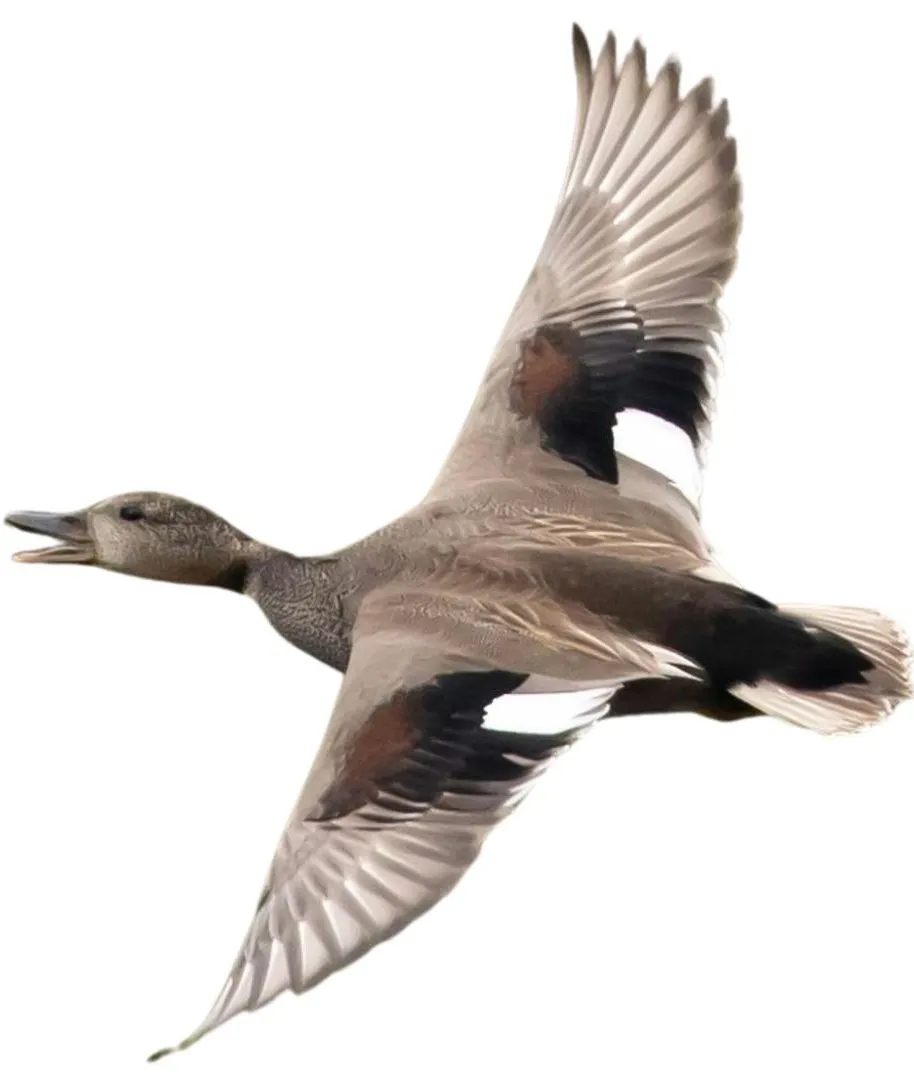
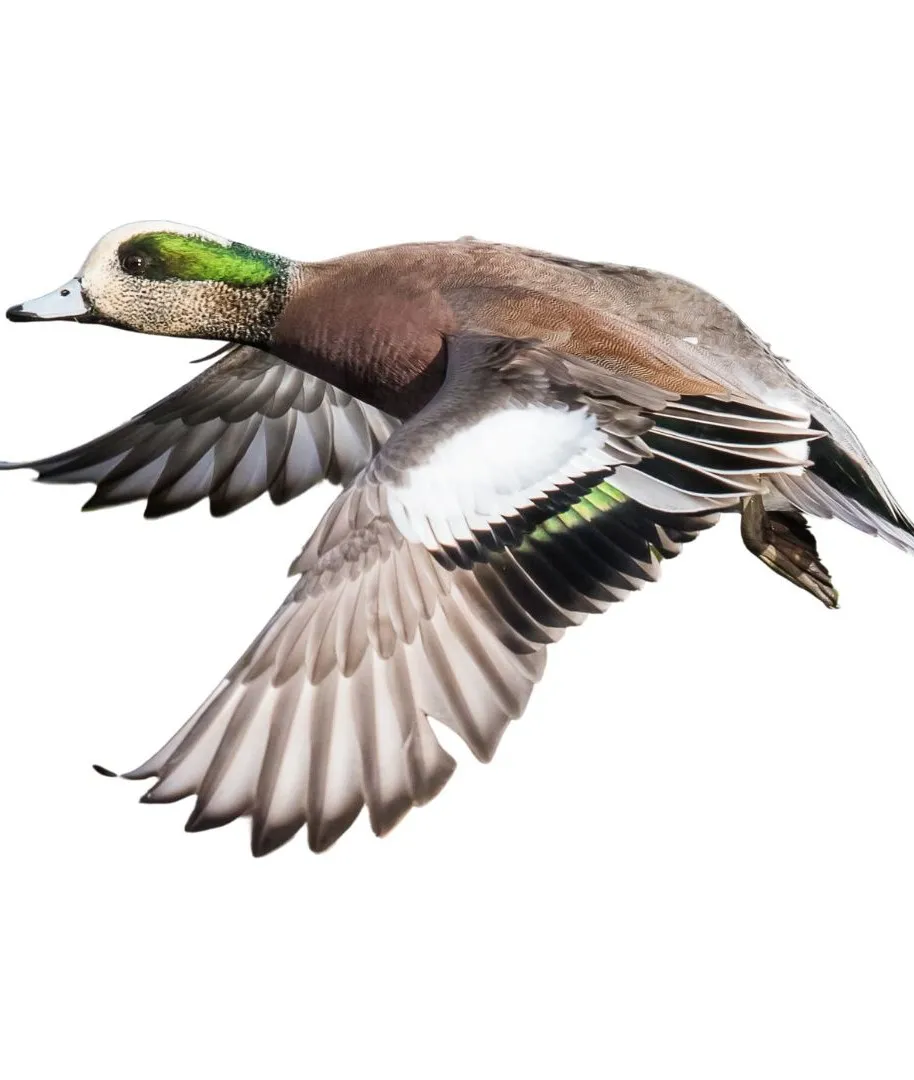
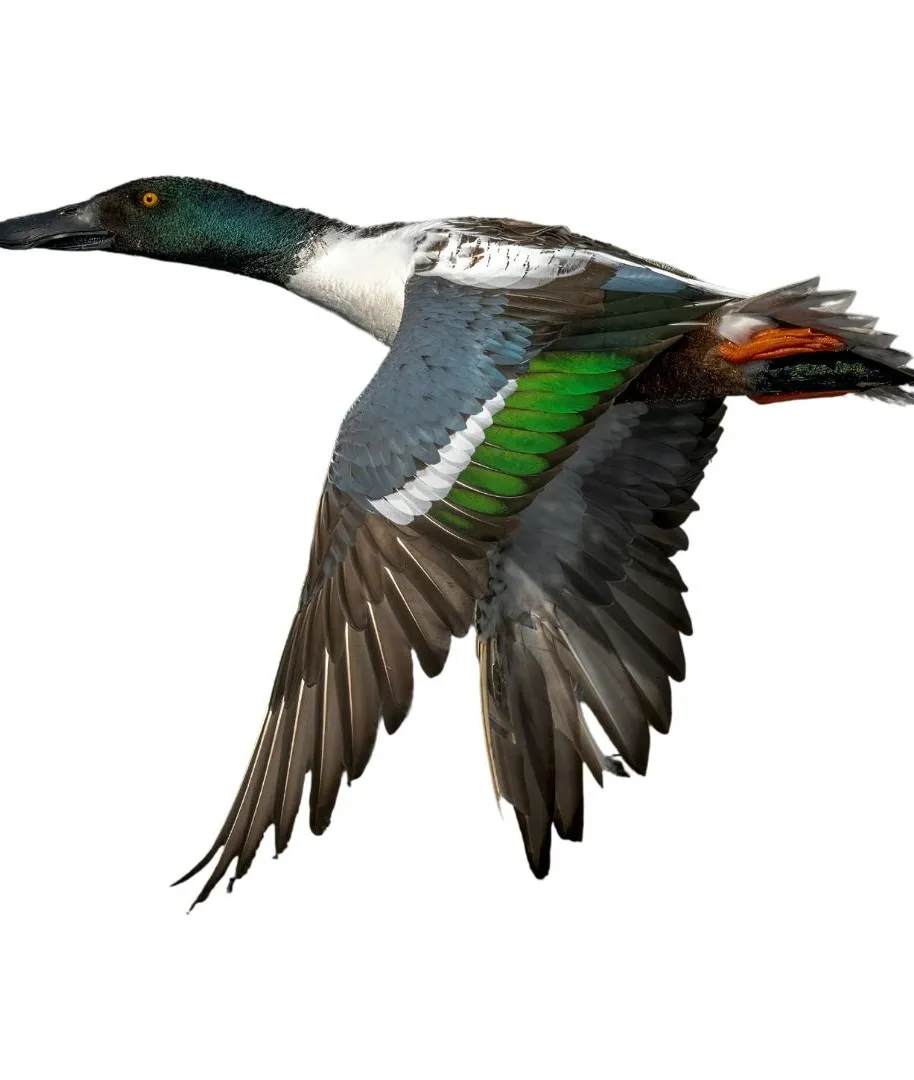
How to ID It
- Dark chocolate-brown body with a paler, buff-colored head and neck
- Violet speculum with little to no white border, unlike the Mallard's
- Bright white underwings that flash in flight, visible from a distance
- Warier and quicker to flare than a Mallard in the same spread
Key Facts
- Bill Color (Drake)
- Olive-yellow
- Bill Color (Hen)
- Olive-green to dull orange
- Primary Habitat
- Salt marshes, tidal creeks, coastal estuaries
- Breeding Habitat
- Northeastern forests, bogs, freshwater marshes
- Winter Habitat
- Atlantic coast marshes, estuaries, inland wetlands
- Migration Pattern
- Short to medium-distance migrant
- North America Status
- Declining; Atlantic Flyway specialist
Habitat
Primary Habitat. American Black Ducks are often found in salt marshes, tidal creeks, estuaries, and coastal wetlands along the Atlantic coast, making them one of the most likely dabblers to be found in saltwater. Inland, they tend to be found in freshwater marshes, beaver ponds, bogs, forested wetlands, and river backwaters. They prefer areas with dense cover close to open water and are far more tolerant of brackish and tidal environments than most puddle ducks.
Seasonal Habitat Differences. During the breeding season, black ducks occupy boreal bogs, beaver flowages, forest-edge marshes, and freshwater ponds across northeastern Canada and the northeastern United States. In fall and winter they shift heavily toward coastal salt marshes, tidal flats, and estuaries along the Atlantic coast. During severe freeze events, birds will push inland to open marshes and agricultural wetlands when their preferred coastal areas ice over.
Frequently Asked Questions
How do you identify a Black Duck?
American Black Duck can be identified through it’s dark brown body (much darker than a mallard hen), the blueish purple speculum that does not have much (if any) white border, and the large white underwing. These three points will help you identify a black duck from similar species such as hen mallards, mottled ducks, and Mexican ducks.
Where do American Black Ducks live?
American Black Ducks breed across the forests, bogs, and freshwater marshes of northeastern Canada and the northeastern United States, from the Maritime Provinces through New England and the Great Lakes region. In winter, they concentrate heavily along the Atlantic coast from New England south through the Mid-Atlantic states, using coastal salt marshes, tidal estuaries, and inland wetlands. During severe freeze events, birds push further south and inland to find open water.
What habitat do American Black Ducks prefer?
Black ducks prefer tidal marshes, coastal estuaries, and salt marsh creeks along the Atlantic coast. Inland, they use beaver ponds, forested wetlands, and freshwater marshes with dense emergent cover nearby. They favor tight, vegetated edges over open water and are more tolerant of brackish and saltwater environments than most dabbling ducks.
Are Black Ducks migratory?
Yes, American Black Ducks are migratory. Most birds breed across northeastern Canada and the northeastern United States and winter along the Atlantic coast from New England to the Carolinas. Migration is concentrated in the Atlantic Flyway, with smaller numbers moving through the Mississippi Flyway during severe freeze events.
In the Field
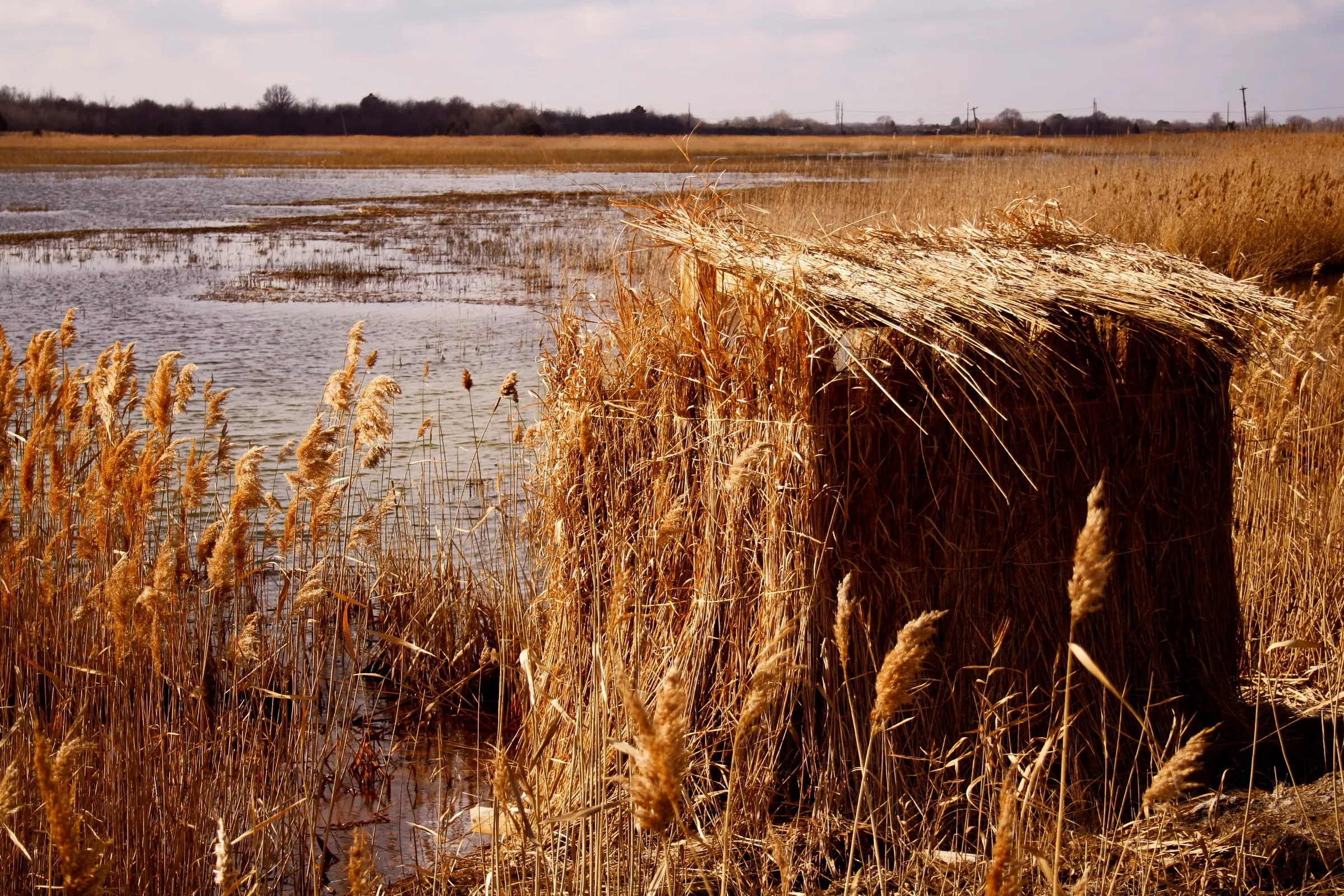
Secluded BackwaterBlack Ducks favor quiet, sheltered water over open marsh. 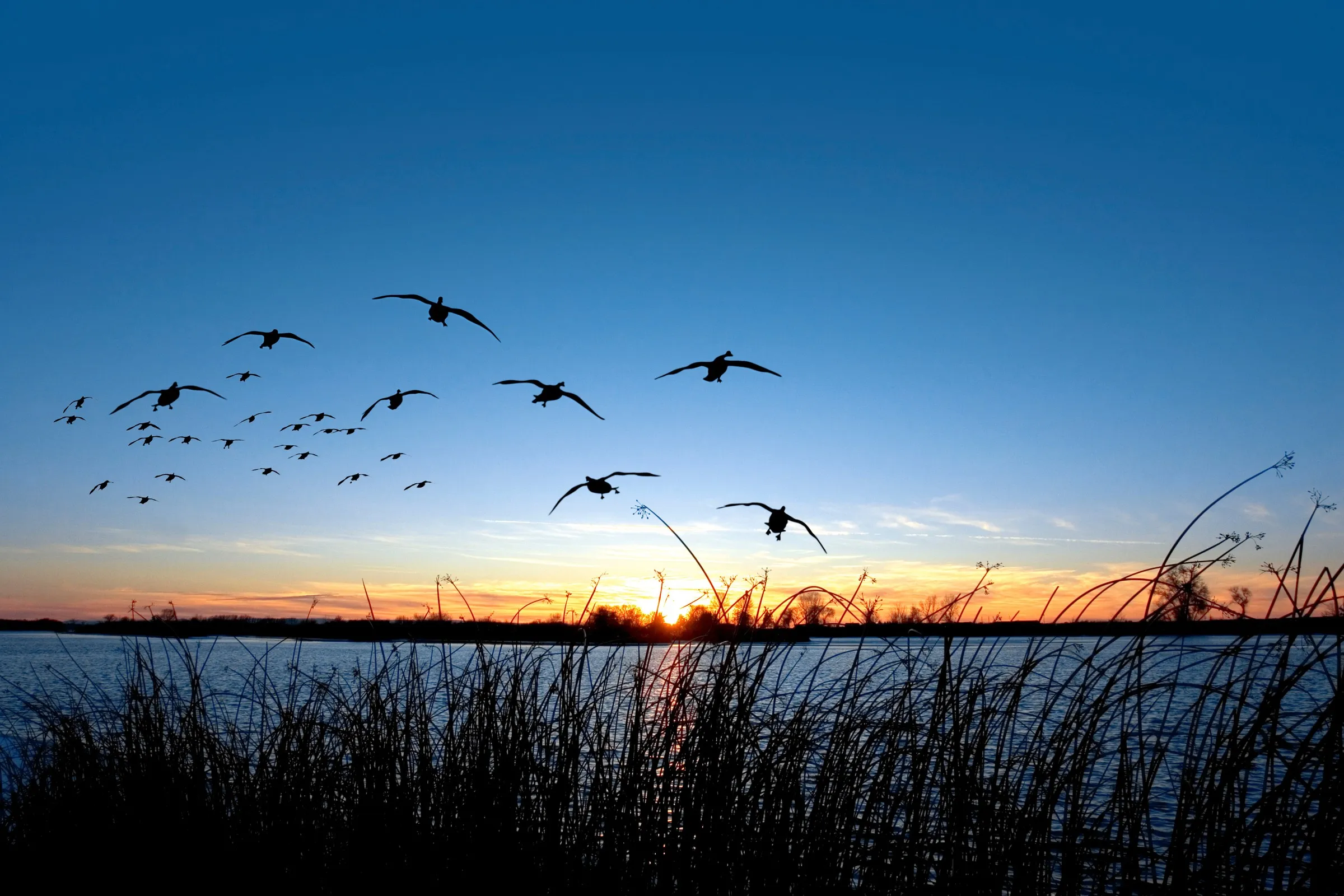
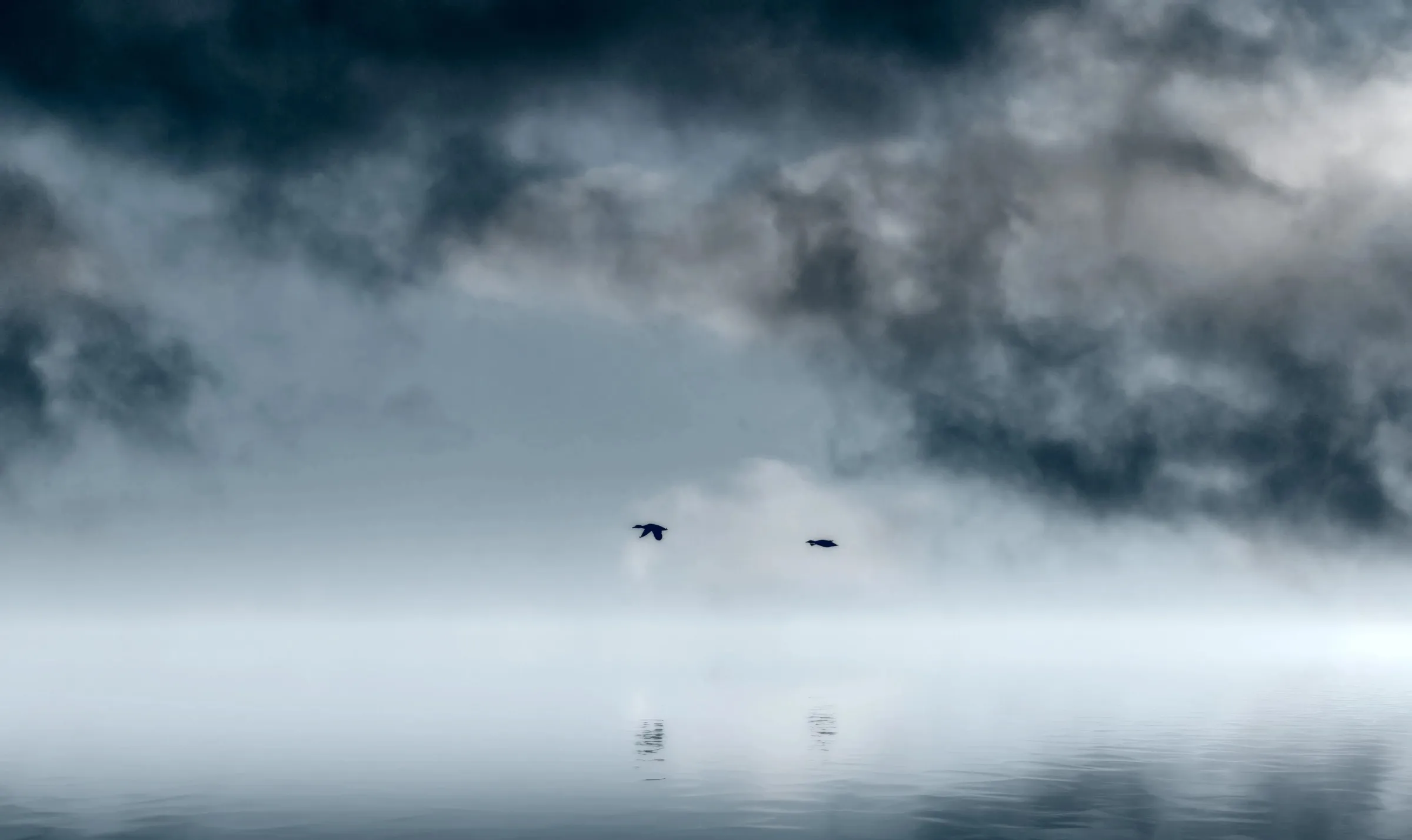
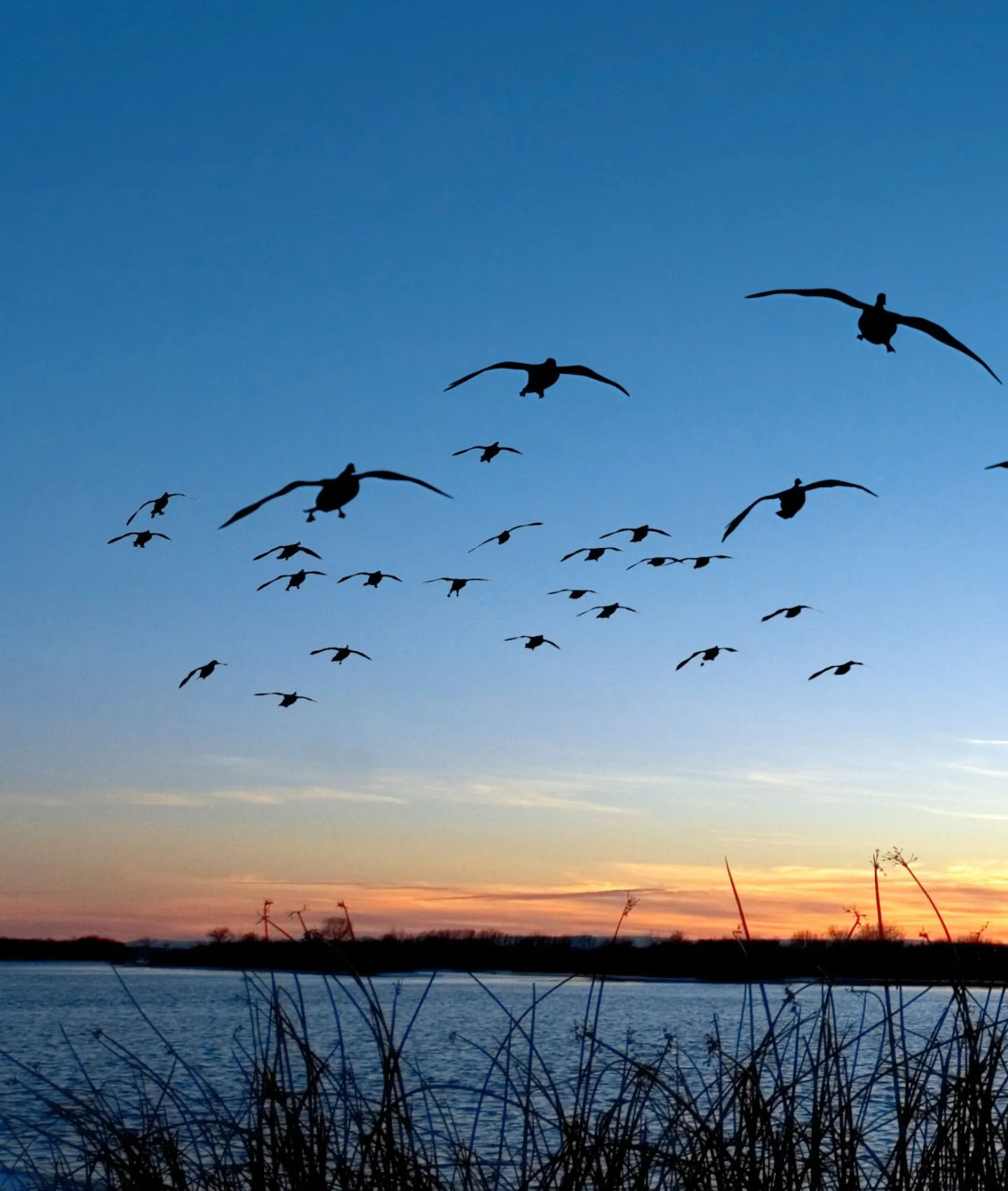
Flock at DuskSilhouettes at last light — exactly when a clean ID gets hard. Low-Light SilhouetteWary and quick to flare, even in poor light. 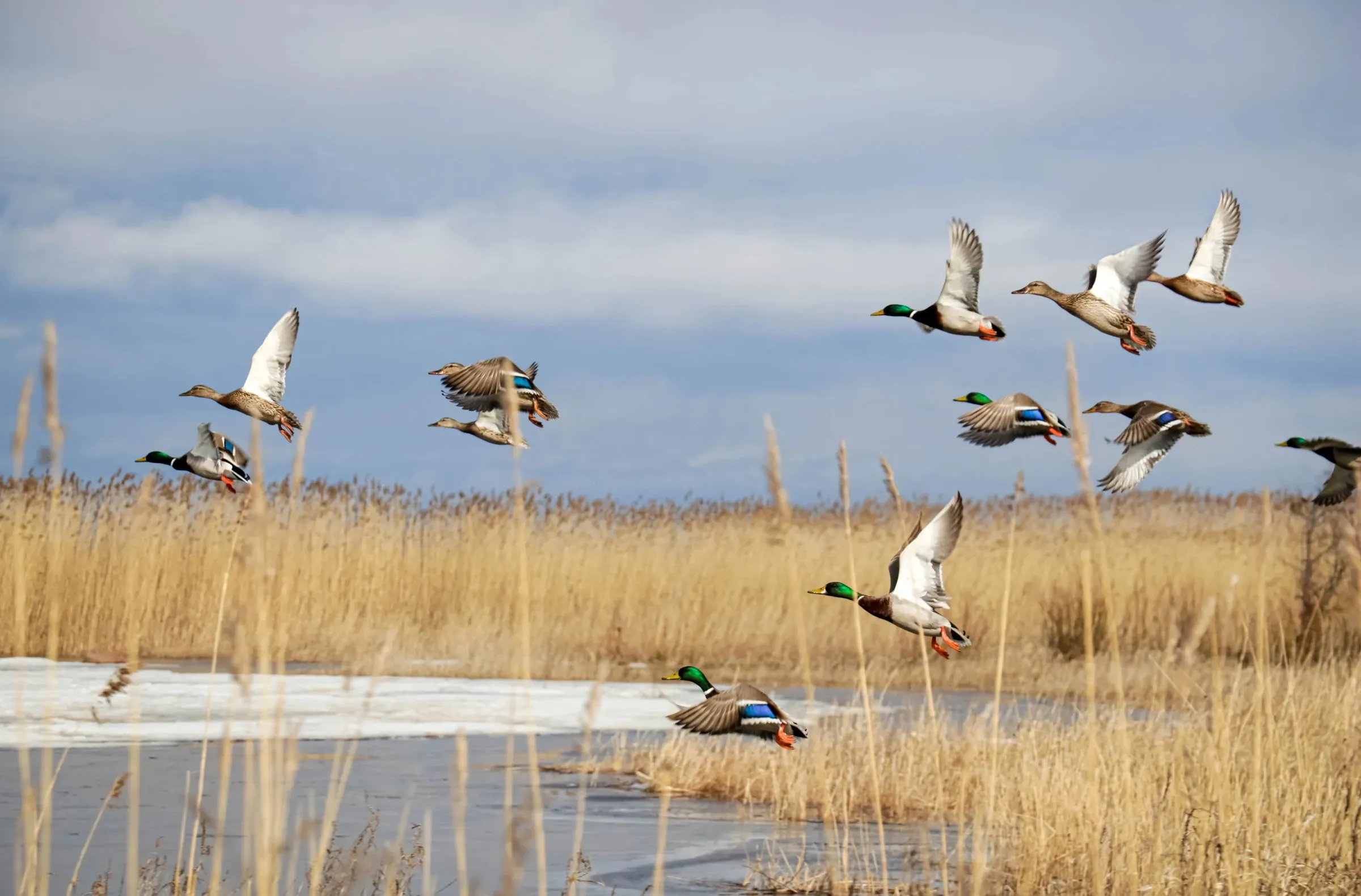
Mixed CompanyBlack Ducks often mix with Mallards in the same raft.